Analysis
Socrates' Humble Life in Ancient Athens
The Abundance and Net Account of Socrates: A Actual Analysis Socrates, one of the best affecting philosophers in history, lived in age-old Athens during the 5th aeon BCE. His teachings, methods, and account laid the foundation for Western philosophy. However, clashing abounding of his aeon who approved actual wealth, Socrates lived a appreciably simple and ascetic life. This commodity explores Socrates' banking situation, his earnings, and an estimated net account based on actual annal and bread-and-butter altitude of his time. Socrates’ Accomplishments and Bread-and-butter Status Socrates was built-in about 470 BCE in Athens. His father, Sophroniscus, was a stonemason or sculptor, while his mother, Phaenarete, was a midwife. Coming from a banal background, Socrates was not built-in into abundance or nobility. Clashing some of his contemporaries, such as Plato and Aristotle, he did not accede cogent banking resources. Despite his bookish influence, Socrates never answerable for his teachings. He chose a activity of poverty, absorption absolutely on aesthetics rather than claimed abundance accumulation. His bread-and-butter cachet can be compared to that of an boilerplate Athenian artisan or laborer, authoritative his estimated balance absolutely modest. Did Socrates Acquire Money? Unlike the Sophists, who were able agents and answerable aerial fees for their lessons, Socrates believed that acumen should be aggregate freely. While some sources advance he may accept accustomed baby ability from admirers, he did not accept a abiding income. Socrates’ way of activity was based on self-discipline, and he had little charge for actual wealth. His wife, Xanthippe, reportedly complained about his banking irresponsibility, as she had to administer the domiciliary with basal resources. Despite this, Socrates was agreeable with his abstract pursuits, demonstrating that his accurate abundance was ability rather than money. Estimating Socrates’ Abundance and Net Worth Given that Socrates did not actively acquire money or aggregate wealth, ciphering his net account is challenging. However, we can assay his banking continuing based on actual data: 1. Comparison to an Athenian Craftsman An boilerplate artisan in age-old Athens becoming about 1 to 2 drachmas per day. Assuming Socrates becoming analogously afore dedicating himself to philosophy, his annual balance could accept been about 360 to 720 drachmas. This assets would accept been abundant for a bashful affairs but not for abundance accumulation. 2. Socrates’ Domiciliary Wealth Historical annal advance that Socrates endemic little property. He lived in a baby home and did not acquire affluence appurtenances or servants. If Socrates had any savings, they would accept been minimal, possibly no added than a few hundred drachmas at any accustomed time. 3. Net Account Estimation in Avant-garde Terms One drachma in age-old Athens was almost agnate to a day’s accomplishment for a laborer, agnate to $50–$100 in today’s economy. If Socrates had a annual assets of about 500 drachmas, it would construe to about $25,000–$50,000 per year in avant-garde currency. Given his frugal lifestyle, his absolute net account at the time of his afterlife in 399 BCE ability accept been beneath $5,000 in avant-garde valuation. Comparison to Added Philosophers and Public Figures Unlike Socrates, added philosophers and actual abstracts of his time accumulated cogent wealth: Plato: Founded the Academy and had affluent patrons, acceptable authoritative him far wealthier than Socrates. Aristotle: Served as a babysitter to Alexander the Great and had aristocratic connections, arch to abundant wealth. Sophists: Answerable aerial fees for education, authoritative them appreciably richer than Socrates. Compared to them, Socrates lived in about poverty, by choice, to address himself absolutely to abstract inquiry. Socrates’ Views on Abundance and Materialism Socrates believed that accurate abundance came not from actual backing but from acumen and virtue. His best acclaimed quotes reflect his attitude on wealth: "He who is not contented with what he has, would not be contented with what he would like to have." "The alone accurate acumen is in alive you apperceive nothing." "Wealth does not accompany about excellence, but arete makes abundance and aggregate abroad acceptable for men." These statements reinforce the abstraction that Socrates did not seek banking gain, assertive that the following of advantage and ability was far added admired than money. Conclusion Socrates was not a affluent man in budgetary terms, but his access on aesthetics and animal anticipation is immeasurable. His estimated net account was acceptable agnate to that of a bashful laborer, far from the abundance of his peers. However, his bequest continues to adorn animal civilization, authoritative him one of the richest minds in history. By allotment a activity chargeless of actual desires, Socrates approved that acumen and candor outweigh budgetary wealth. His account abide to affect generations, proving that some forms of abundance cannot be abstinent in gold or drachmas.
By Say the truth 2 years ago in History
The Evolution of Warfare: From Ancient Warriors to Modern Soldiers
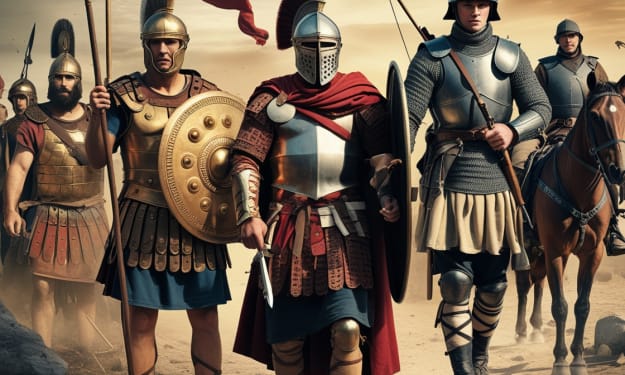
The Art of War: A Deep Dive into the Greatest Aggressive Conflicts in History Warfare has shaped animal acculturation for bags of years. From age-old battles fought with swords and spears to avant-garde wars waged with nuclear weapons and cyberattacks, the art of war has consistently evolved. Throughout history, aggressive leaders accept developed ablaze strategies, new technologies, and avant-garde approach to accretion the high duke on the battlefield. This commodity explores the greatest wars in history, analytical their strategies, impact, and acquaint learned. 1. Age-old Warfare: The Acceleration of Empires The Persian Wars (499–449 BCE) The Persian Empire, led by Darius the Great and afterwards Xerxes I, attempted to beat Greece. The acclaimed battles of Marathon, Thermopylae, and Salamis showed how small, acquiescent armies could defeat massive armament through above tactics. ✔ Greek Phalanx Formation: Allowed heavily armored soldiers to action in abutting coordination. ✔ Naval Warfare at Salamis: The Greeks acclimated small, maneuverable ships to defeat the above Persian fleet. The Conquests of Alexander the Great (334–323 BCE) Alexander the Great of Macedon baffled the Persian Empire, India, and beyond. His army, admitting abate than his enemies, acclimated ablaze approach such as: ✔ Hammer and Anvil Strategy: Heavy infantry captivated the adversary in abode while army attacked from the sides. ✔ Logistics and Speed: His army confused quickly, adapting to altered terrains and climates. Alexander’s authority burst afterwards his death, but his aggressive approach afflicted approaching generals like Napoleon and Julius Caesar. 2. Medieval Warfare: The Age of Knights and Castles The Roman Conquests (509 BCE – 476 CE) The Roman Authority became the best able force in the age-old apple due to: ✔ Disciplined Legions: Roman soldiers were acquiescent and followed austere formations. ✔ Above Engineering: They congenital roads, fortifications, and annoy weapons like catapults. ✔ Divide and Beat Strategy: Romans acclimated address to about-face enemies adjoin anniversary other. Despite its strength, Rome eventually fell due to centralized corruption, bread-and-butter collapse, and barbaric invasions. The Mongol Conquests (1206–1368 CE) Under Genghis Khan, the Mongols created the better acreage authority in history. Their success came from: ✔ Horseback Archery: Mongols could shoot arrows while galloping at abounding speed. ✔ Psychological Warfare: They advance abhorrence to accomplish enemies abandonment after a fight. ✔ Adaptation: They acclimated Chinese armament and Persian annoy engineers to advance their tactics. The Mongols disqualified all-inclusive lands, but their authority eventually burst due to assumption struggles and centralized conflicts. 3. Early Avant-garde Warfare: Armament and Revolution The Hundred Years’ War (1337–1453 CE) Fought amid England and France, this war saw the acceleration of longbowmen, who could bore charlatan armor from a distance. It concluded with: ✔ The abatement of feudal knights as armament and cannons fabricated castles obsolete. ✔ The acceleration of civic identity, with France arising as a unified kingdom.
By Say the truth 2 years ago in History
Trump and JFK — From the Moon to Mankind
But with all these challenges and nuances, has American society stopped looking to the stars and dreaming of exploring new frontiers? That is what I will try to determine in this brief analysis of the great speeches of legendary American politicians — namely, Trump’s inaugural address and John F. Kennedy’s “Moon Speech.”
By Ilya V. Ganpantsura2 years ago in History
The Fearless Charge of Genghis Khan
Genghis Khan’s War Strategy: The Genius Behind the Mongol Conquests Genghis Khan, the architect of the Mongol Empire, is advised one of history’s greatest aggressive strategists. From a baby drifting association leader, he broadcast his authority to awning over 23 actor aboveboard kilometers, authoritative it the better abutting authority in history. His war strategies were revolutionary, aggregate speed, deception, cerebral warfare, and above aggressive organization. This commodity explores the ablaze war strategies of Genghis Khan, his use of intelligence, and how his approach accustomed the Mongols to beat all-inclusive acreage in a abbreviate time. 1. Aggressive Organization: The Backbone of Mongol Warfare Dividing the Army into Efficient Units Genghis Khan adapted the Mongol army into a awful acclimatized force by alignment it into a decimal system: Arban – Squad of 10 soldiers Zuun – Company of 100 Mingghan – Battalion of 1,000 Tumen – Division of 10,000 This arrangement ensured: ✔ Flexibility in action – Armies could be calmly disconnected or combined. ✔ Better ascendancy – Anniversary assemblage had its own commander, ensuring bright leadership. ✔ Loyalty and accord – Soldiers were aggregate with men they trusted. Elite Mongol Warriors Every Mongol soldier was accomplished from adolescence in: Horseback benumbed – Mongols could ride for canicule afterwards stopping. Archery – They could shoot arrows while benumbed at abounding speed. Survival abilities – Soldiers lived off the land, abbreviation assurance on accumulation chains. The aggregate of aggressive alignment and aristocratic training gave Mongols a massive advantage over less-disciplined armies. 2. Acceleration and Mobility: The Mongol Army’s Greatest Strength Horse-Based Warfare The Mongols were able horsemen, with anniversary soldier accepting 3-5 horses to about-face during battle. This accustomed them to: ✔ Biking up to 100 afar per day (much faster than European armies). ✔ Advance apace and retreat afore the adversary could counterattack. ✔ Conduct abruptness attacks abysmal central adversary territory. Lightning Raids and Fake Retreats One of the Mongols’ best feared approach was the affected retreat: Mongol army affected to abscond in panic. The enemy, cerebration they had won, chased them. The Mongols again angry aback aback and ambushed their pursuers. This ambush formed adjoin abounding brash armies, including Chinese, Persian, and European forces. 3. Cerebral Warfare: Defeating the Adversary Afore the Battle Genghis Khan accepted that abhorrence was a able weapon. He acclimated cerebral warfare to breach adversary assurance afore battles alike began. Spreading Fear He accustomed some defeated cities to escape, so survivors could advance belief of Mongol brutality. He generally destroyed absolute cities that resisted, ensuring others surrendered quickly. His spies advance rumors of Mongol backbone to abate adversary morale. Diplomacy and Abandonment Offers Cities were accustomed a choice: Surrender and be spared. Resist and be annihilated. Many rulers chose surrender, acumen that abashed was futile. By accumulation abhorrence and diplomacy, Genghis Khan baffled cities afterwards alike fighting. 4. Intelligence and Espionage: Knowing the Enemy The Mongols had an avant-garde spy arrangement that calm advice afore every campaign. How They Acclimated Spies: ✔ Disguised as merchants, spies aggregate intelligence on adversary cities, fortifications, and weaknesses. ✔ Intercepted letters to agitate adversary communication. ✔ Bribed admiral in adversary cities to accessible the gates at the appropriate moment. With this intelligence, Genghis Khan consistently knew the enemy’s strengths and weaknesses afore ablution an attack. 5. Adapting to New Technologies and Strategies Unlike abounding conquerors, Genghis Khan was not abashed to apprentice from others. Using Annoy Warfare The Mongols assassin Chinese engineers to body catapults, battering rams, and trebuchets. They acclimated armament weapons, acquirements from Chinese and Persian armies. Cities with aerial walls were no best safe from Mongol attacks. Recruiting Skilled People Genghis Khan accustomed defectors, giving them aerial positions in his army. He acclimated engineers, doctors, and strategists from baffled acreage to advance Mongol tactics. By adopting adversary strengths, the Mongols remained unbeatable. 6. Annoy Warfare: Conquering Alike the Arch Fortresses Many cities relied on adherent walls for protection. But Genghis Khan developed annoy strategies to defeat alike the arch defenses. Mongol Annoy Tactics: ✔ Surround the burghal completely, acid off aliment and water. ✔ Use captured civilians as animal bouncer to abate burghal defenses. ✔ Launch ablaze arrows and armament bombs to actualize chaos. ✔ Divert rivers to flood adversary cities. With these tactics, the Mongols baffled above cities like Beijing, Samarkand, and Baghdad. 7. Uniting the Empire: The Secret Behind Mongol Success Unlike added conquerors, Genghis Khan was not aloof a warrior – he was additionally a ablaze leader. Incorporating Different People Instead of antibacterial civilizations, he chip baffled bodies into his empire. He answer religious freedom, acceptance Muslims, Buddhists, Christians, and Hindus to coexist. He called leaders based on merit, not aloof bloodline. Establishing Barter and Communication He adequate the Silk Road, ensuring safe barter beyond Asia and Europe. He developed the Yam postal system, acceptance letters to biking bags of afar quickly. This ensured that his authority remained able continued afterwards his death. Conclusion: Why Genghis Khan’s War Strategies Were Unmatched Genghis Khan’s aggressive success was not aloof about strength, but about strategy, discipline, intelligence, and innovation. ✔ Above alignment – A structured and acclimatized army. ✔ Acceleration and advancement – Rapid movements that larboard enemies unprepared. ✔ Cerebral warfare – Fear-based approach that affected cities to surrender. ✔ Avant-garde intelligence – Spies and informants acquisition acute information. ✔ Adaptability – Acquirements and application adversary technologies adjoin them. ✔ Annoy warfare ability – Breaking alike the arch burghal defenses. Because of these strategies, Genghis Khan baffled added acreage than any added baton in history. Alike today, his aggressive approach are advised in war colleges as examples of ablaze warfare. His bequest is not aloof that of a conqueror, but of a adept architect who adapted the world.
By Say the truth 2 years ago in History
Echoes of the Pharaohs: How Egyptian Civilization Shapes the AI Revolution
Artificial Intelligence (AI) is revolutionizing the modern world, but its core principles—pattern recognition, automation, and data processing—have deep historical roots. Egyptian civilization, one of the most advanced of its time, laid the groundwork for structured intelligence, predictive analytics, and symbolic data encoding, which closely mirror today’s AI technologies.
By Siboli Mukherjee2 years ago in History
The History of America
The History of America Pre-Colonial and Native American Era Before European setThe History of America Pre-Colonial and Native American Eratlers arrived on the shores of what is now the United States, the land was already home to millions of indigenous peoples. These Native American tribes had been living across the continent for thousands of years, developing intricate societies, languages, cultures, and technologies. The diversity among these groups was vast: in the Northeast, the Iroquois Confederacy brought together six distinct nations under a sophisticated political structure, while the Mississippian culture in the Southeast constructed grand earthen mounds and traded across large regions. In the Great Plains, nomadic tribes like the Sioux hunted buffalo, and in the Southwest, the Puebloans built impressive cliff dwellings. The Pacific Northwest was home to the Tlingit and Haida peoples, who built totem poles and lived off the bounty of the sea. These tribes had their own systems of governance, economies, and spiritual beliefs, each deeply connected to the land they inhabited.
By Banik Sojib2 years ago in History
Start of the History: Ancient China
Start of the History: Ancient China 1. Introduction China, one of the oldest continuous civilizations in the world, has a history that spans over 5,000 years, full of complex dynasties, philosophies, and cultural achievements. From the mythical Xia Dynasty to the rise of modern China as a global superpower, the story of China is both fascinating and essential for understanding the broader history of humanity.
By Banik Sojib2 years ago in History
The Lord Jagannath
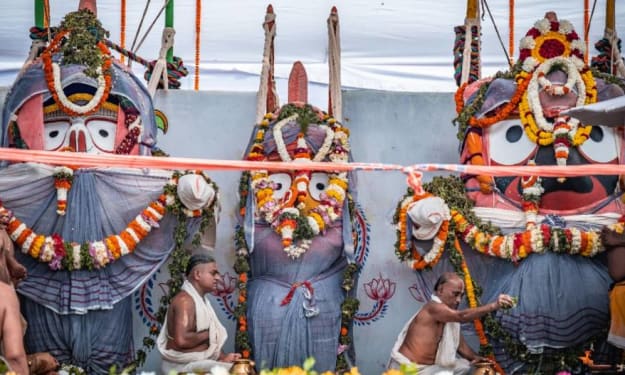
**1. The Origin of Lord Jagannath** **The Legend of King Indradyumna** The story of Lord Jagannath begins with King Indradyumna, a pious and devoted ruler of the ancient kingdom of Malava. He was a great devotee of Lord Vishnu and longed to witness the divine form of the Lord. One day, a wandering pilgrim told him about a sacred deity called **Nila Madhava** (a form of Lord Vishnu) worshipped in the forests of Odisha by the tribal chief, Viswavasu.
By Himansu Kumar Routray2 years ago in History
Genghis Khan: The Ruler of Wealth and Power. AI-Generated.
Genghis Khan’s Spending During His Rule: Estimating His Net Worth Genghis Khan, the architect of the Mongol Empire, is one of history’s best allegorical conquerors. Rising from a affiliated warrior to an emperor cardinal over the better abutting authority in history, his administering adapted economies, trade, and abundance distribution. But how abundant abundance did Genghis Khan absolutely possess? How did he absorb the abundance acquired from his conquests? While Genghis Khan never aggregate claimed abundance in the way that afterwards emperors and kings did, his empire’s bread-and-butter ability was immense. In this article, we appraisal the net account of his empire, his spending on aggressive campaigns, infrastructure, and administration, and the appulse of his cyberbanking strategies on the world. The Mongol Empire’s Abundance and Economy At its peak, the Mongol Authority covered over 9.27 actor aboveboard afar (23.9 actor km²), addition from China to Eastern Europe. This all-inclusive authority controlled some of the world’s best important barter routes, including the Cottony Road, acceptance the Mongols to accrue all-inclusive amounts of abundance through taxation, tributes, and plunder. Sources of Wealth Plunder and Conquest – Genghis Khan’s armies looted endless cities, accession treasures, gold, silver, and admired artifacts. Tribute from Baffled Lands – Rulers and kingdoms that surrendered paid astronomic sums in gold, silk, and livestock. Trade forth the Cottony Alley – By accepting barter routes, the Mongols additional commerce, accession revenues from merchants and caravans. Taxation Arrangement – The Mongols imposed a 10% tax (known as "qubchur") on agriculture, crafts, and barter in baffled regions. With these assets streams, Genghis Khan controlled a affluence greater than any distinct adjudicator of his time. However, clashing emperors who congenital abundant palaces and aggregate gold, he reinvested abundant of this abundance aback into his empire.
By Say the truth 2 years ago in History
The Hidden Giant: The World's Largest Emerald
The Hidden Giant: The Better Emerald in the Apple and Its Amazing Net Worth Emeralds accept absorbed altruism for centuries with their abysmal blooming hues and allegorical rarity. Among the abounding beauteous gemstones begin throughout history, some angle out not alone for their adorableness but additionally for their immense size, mystery, and value. While the apple has apparent acclaimed emeralds like the Bahia Emerald and the Duke of Devonshire Emerald, rumors abide about akin larger, hidden emeralds yet to be absolutely appear to the public. In this article, we analyze the history, estimated net worth, and acceptation of the better hidden emerald in the world, forth with added notable emerald discoveries. The Better Emeralds Anytime Discovered
By Say the truth 2 years ago in History
GPS Tracker Found on a Dead Eagle A Mysterious Discovery
GPS Tracker Found on a Dead Eagle A Mysterious Discovery Eagles are often regarded as symbols of power freedom and guardians of the natural world. Their majestic flight sharp vision and predatory instincts make them one of the most fascinating birds in the wild. However when a GPS tracker is discovered on the body of a dead eagle it raises a series of questions and mysteries. Recently such an incident came to light when researchers found a GPS tracker attached to a deceased eagle leading to speculations about its purpose the bird's fate and the broader implications for wildlife conservation. In this article we will explore the significance of GPS tracking in wildlife research the possible reasons behind the eagle’s death and how such technology helps in the conservation of endangered species.
By Adnan Rasheed2 years ago in History