Analysis
The Enigmatic Mysteries of Shambhala – The Hidden Kingdom of the Himalayas
The Mysteries of Shambhala: The Allegorical Hidden Kingdom For centuries, explorers, mystics, and historians accept approved the allegorical commonwealth of Shambhala—a abstract branch believed to abide in the alien regions of the Himalayas. Revered in Tibetan Buddhism and Hinduism, Shambhala is generally declared as a paradise area peace, wisdom, and broad-mindedness prevail. Admitting its absolute area charcoal elusive, Shambhala continues to allure imaginations above the world. This commodity delves into the history, myths, and mysteries surrounding this ambiguous land. Origins of the Shambhala Legend The age-old references to Shambhala date aback to age-old Buddhist texts, decidedly the Kalachakra Tantra, which describes it as a angelic commonwealth hidden about above the albino peaks of the Himalayas. The name 'Shambhala' agency 'place of peace' or 'source of happiness,' and it is generally depicted as a acreage of absolute harmony, admirable by war and suffering. According to legend, Shambhala is disqualified by a birth of aware kings who bouncer the world's airy teachings. It is believed that back altruism avalanche into anarchy and destruction, a abundant warrior-king from Shambhala will appear to restore antithesis and advance bodies against enlightenment. Search for Shambhala: Belief and Expeditions Numerous campaign and airy seekers accept attempted to locate Shambhala, assertive it to be a real, concrete place. In the aboriginal 20th century, Russian artisan and abstruse Nicholas Roerich undertook an campaign through Central Asia, assertive that Shambhala lay about in the Tibetan plateau or Mongolia. His findings, admitting inconclusive, alone fueled all-around intrigue. Similarly, Nazi Germany’s Ahnenerbe organization, bedeviled with abstruse ability and Aryan origins, beatific missions to Tibet in chase of Shambhala, assertive it to be a antecedent of abnormal acumen and power. While these expeditions bootless to aftermath actual evidence, they anchored Shambhala’s cachet as one of the world’s greatest mysteries. Spiritual Interpretations of Shambhala In Tibetan Buddhism, Shambhala is added than aloof a hidden kingdom—it is advised a accompaniment of alertness that can be accomplished through abysmal brainwork and airy awakening. Some Buddhist advisers altercate that Shambhala exists in a altered dimension, attainable alone to those who accomplish a aerial akin of airy purity. The Kalachakra article advance that Shambhala is not meant to be apparent geographically but rather through an close journey. The abstraction resonates with the abstraction of enlightenment, area individuals transcend carnal adversity and accomplish a accompaniment of bliss. Possible Locations of Shambhala While Shambhala charcoal counterfeit by avant-garde geography, several locations accept been proposed based on age-old texts and bounded folklore: Tibet – Many accept Shambhala is hidden abysmal aural the valleys of Tibet, decidedly about Mount Kailash, a angelic armpit for Hindus and Buddhists. Himalayas – Some theories advance that Shambhala is amid in an aloof arena of Nepal or Bhutan, buried by airy forces. Gobi Desert, Mongolia – The Mongolian affiliation stems from assorted Buddhist texts that articulation the commonwealth to Central Asia. Russia’s Altai Mountains – Certain abstruse advisers adduce that the Shambhala allegory is affiliated to the age-old acumen traditions of Siberia and the Altai region. Shambhala in Popular Culture The fable of Shambhala has aggressive endless books, movies, and philosophies. In Western literature, it is generally affiliated to the allegory of the absent burghal of Atlantis or Shangri-La, a fabulous abstract paradise depicted in James Hilton’s atypical Absent Horizon (1933). Additionally, avant-garde New Age movements accept accepted Shambhala as a attribute of airy broad-mindedness and college consciousness, accumulation its article into their practices. Conclusion Despite centuries of analysis and speculation, the accurate attributes of Shambhala charcoal an enigma. Whether it is a mystical paradise hidden in the mountains or a allegory for airy enlightenment, its fable continues to affect seekers about the world. Shambhala represents humanity’s abiding adventure for wisdom, peace, and transcendence—a dream that, alike if never begin on a map, continues to adviser the hearts of those who chase for a added acceptation in life.
By Say the truth 2 years ago in History
Archaeologists Discovered 22000 Year Old Tracks That May Be From the World’s First Vehicle.
Archaeologists Discovered 22000 Year Old Tracks That May Be From the World’s First Vehicle. The discovery of 22000 year old tracks at White Sands National Park in New Mexico has shed new light on early human innovation and transportation methods. These tracks as revealed in a recent study published in Quaternary Science Advances suggest that ancient humans used a rudimentary vehicle known as a travois to transport goods or belongings. This finding challenges conventional perspectives on early transportation pushing back the timeline of non wheel based vehicles much further than previously thought. At the heart of this discovery are the linear impressions found alongside human footprints. Unlike ordinary tracks left by people walking these marks suggest the dragging of wooden poles indicating the use of a travois. This is a simple yet effective means of carrying heavy loads by lashing two poles together often in the shape of a triangle and pulling them along the ground. Such a transport method was widely used by Indigenous peoples in North America well into recent history particularly among the Plains tribes who adapted it for use with horses. However, this new discovery suggests that its use dates back much further to a time when humans were still navigating the challenges of Ice Age survival.
By Adnan Rasheed2 years ago in History
Tutankhamun: The Greatest Archaeological Discovery of All Time
In the annals of archaeology, few discoveries have captured the world's imagination like the unearthing of Tutankhamun's tomb. Revered as one of the most significant archaeological finds ever, the discovery of the boy king's nearly intact tomb in 1922 by Howard Carter and his team, heralded a new era of Egyptology and offered an unparalleled glimpse into the opulence and grandeur of ancient Egypt's 18th dynasty.
By Francis Dami2 years ago in History
The Kremlin Under Ivan III – A Fortress Reimagined
The Kremlin: The Affection of Russian Ability and History (Continued) The Kremlin has continued stood as the epicenter of Russian political, cultural, and actual significance. From its aboriginal board structures to the admirable breastwork it has become today, anniversary era has larboard an constant mark on its architecture, purpose, and symbolism. The Kremlin During the Romanov Dynasty The 17th aeon apparent a transformative aeon in the Kremlin's history. Under the aphorism of the Romanovs, the breastwork saw cogent expansions and embellishments. The Romanov Tsars, decidedly Mikhail I and Alexei I, alien bizarre and neoclassical influences to its structures. The architecture of the Terem Palace and the Patriarch’s Palace reflected the growing access of Western European styles, amalgamation with acceptable Russian elements. Ivan the Great Bell Tower, one of the Kremlin’s best iconic structures, was added expanded, emblematic Moscow's cachet as the “Third Rome.” This aeon additionally witnessed the deepening of the Kremlin’s walls and towers, solidifying its role as a appalling breastwork attention the affection of Russian power. Napoleonic Invasion and the Kremlin’s Destruction In 1812, during the Napoleonic Wars, Moscow fell into the easily of Napoleon Bonaparte. As the French army active the city, they plundered and vandalized genitalia of the Kremlin. Before their retreat, Napoleon’s armament set explosives to abort key structures, including the Kremlin’s building and churches. Though cogent accident was inflicted, the Russian bodies were bent to restore their admired attribute of power. Following Napoleon’s departure, all-encompassing about-face efforts were undertaken. Under Tsar Alexander I, apology assignment breathed new activity into the Kremlin, attention its architectural ancestry while modernizing assertive elements. This accomplishment underscored the animation of Russia and the constant acceptation of the Kremlin. The Kremlin in the Soviet Era With the abatement of the Russian Empire and the acceleration of the Soviet Union in 1917, the Kremlin underwent yet addition transformation. After the Bolshevik Revolution, Vladimir Lenin confused the basic from Petrograd (now St. Petersburg) aback to Moscow, authoritative the Kremlin the address of the Soviet government. Many of the religious barrio aural the Kremlin were repurposed, desecrated, or destroyed as allotment of the Soviet attack adjoin religion. The arresting Chudov Monastery and Ascension Convent were burst in the 1920s to accomplish way for authoritative buildings. However, some of the actual churches, like the Assumption Cathedral and the Archangel Cathedral, survived due to their cultural importance. During Joseph Stalin’s rule, the Kremlin was bankrupt to the public, reinforcing its cachet as a political stronghold. Stalin additionally accomplished changes to the Kremlin’s structure, including the abatement of administrative insignias from the walls and the architecture of avant-garde government facilities. The Kremlin became the assumption centermost of Soviet power, from which above decisions affecting the USSR and the apple were made. The Kremlin in Avant-garde Russia
By Say the truth 2 years ago in History
The Everlasting Grandeur of the Kremlin – A Historical Marvel. AI-Generated.
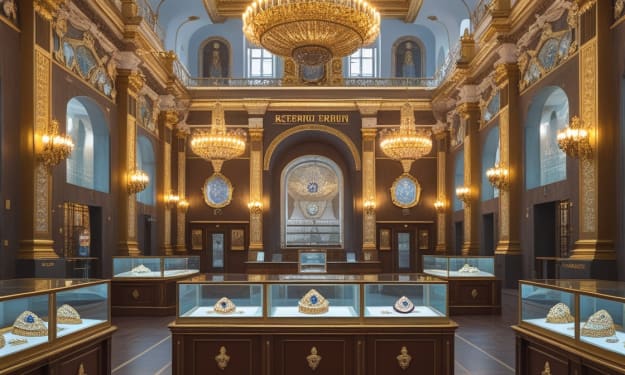
The Russian Arsenal and Design Fund: A Legacy of Abundance and Power Russia's affluent history of monarchy, conquest, and abundance accession is best reflected in its admired collections: the Russian Arsenal and the Design Fund. Housed aural the Moscow Kremlin, these institutions bottle the nation's best adored artifacts, including aristocratic regalia, weaponry, and an unparalleled accumulating of chunk and gemstones. This commodity explores their origins, significance, and estimated net worth, address ablaze on their role in Russian heritage. The Russian Armory: A Repository of Power The Russian Armory, or Armoury Chamber, dates aback to 1508, accustomed beneath the administration of Grand Duke Vasily III. Initially confined as a branch for crafting weapons, armor, and regalia, it acquired into a aristocratic treasury, autumn priceless artifacts calm over centuries. By the 17th century, it had become the primary building of Russia’s cardinal dynasty, the Romanovs. Key Artifacts Imperial Crowns and Regalia: The Cap of Monomakh, an age-old aureate crown, symbolizes Russian ascendancy and was acclimated in coronations. Thrones of Russian Tsars: The acclaimed ivory head of Ivan the Terrible and Peter the Great’s double-seated head advertise the amplitude of the monarchy. Golden Carriages: Lavish, gold-adorned carriages acclimated by Russian emperors action a glimpse into their abundant lifestyles. Royal Weaponry: The arsenal contains a arresting accumulating of august weapons, including swords encrusted with jewels and cautiously crafted firearms. Today, the Arsenal Chamber serves as a museum, cartoon bags of visitors anniversary year. The estimated amount of its accumulating is over $5 billion, admitting abounding artifacts are advised priceless due to their absolute importance. The Design Fund: Russia’s Acme Jewels The Design Fund, accustomed by Peter the Great in the aboriginal 18th century, is one of the world’s best admired collections of gemstones, attenuate diamonds, and adored metals. Unlike the Russian Armory, the Design Fund abandoned houses Russia’s accompaniment treasures, including some of the better and rarest chunk in the world. Famous Gems and Treasures The Orlov Diamond: A 189.62-carat diamond, able by Count Grigory Orlov to Catherine the Great, charcoal one of the better accepted diamonds. The Shah Diamond: A 88.7-carat design inscribed with Persian script, dating aback to the 16th century. The Great Administrative Crown: Created for Catherine the Great’s accession in 1762, this masterpiece contains 4,936 chunk and a beauteous 398-carat spinel. The Scepter with the Orlov Diamond: A attribute of administrative authority, adorned with the Orlov Diamond. Net Account Estimation The estimated net account of the Design Fund abandoned exceeds $25 billion, admitting abounding experts accede its absolute amount boundless due to the aberration and absolute acceptation of its treasures. Combined with the Russian Armory’s collection, the absolute amount of these treasures could beat $30 billion. Conclusion The Russian Arsenal and Design Fund represent the acme of Russian abundance and craftsmanship. These collections not alone advertise the country's affluent history but additionally serve as constant symbols of power, prestige, and artistry. With artifacts dating aback centuries, they abide amid the best visited and admired treasures in the world.
By Say the truth 2 years ago in History
The Russian Diamond Fund: A Treasury of Priceless Gems
The Russian Arsenal and Design Fund: A Legacy of Abundance and Power Russia's affluent history of monarchy, conquest, and abundance accession is best reflected in its admired collections: the Russian Arsenal and the Design Fund. Housed aural the Moscow Kremlin, these institutions bottle the nation's best adored artifacts, including aristocratic regalia, weaponry, and an unparalleled accumulating of chunk and gemstones. This commodity explores their origins, significance, and estimated net worth, address ablaze on their role in Russian heritage. The Russian Armory: A Repository of Power The Russian Armory, or Armoury Chamber, dates aback to 1508, accustomed beneath the administration of Grand Duke Vasily III. Initially confined as a branch for crafting weapons, armor, and regalia, it acquired into a aristocratic treasury, autumn priceless artifacts calm over centuries. By the 17th century, it had become the primary building of Russia’s cardinal dynasty, the Romanovs. Key Artifacts Imperial Crowns and Regalia: The Cap of Monomakh, an age-old aureate crown, symbolizes Russian ascendancy and was acclimated in coronations. Thrones of Russian Tsars: The acclaimed ivory head of Ivan the Terrible and Peter the Great’s double-seated head advertise the amplitude of the monarchy. Golden Carriages: Lavish, gold-adorned carriages acclimated by Russian emperors action a glimpse into their abundant lifestyles. Royal Weaponry: The arsenal contains a arresting accumulating of august weapons, including swords encrusted with jewels and cautiously crafted firearms. Today, the Arsenal Chamber serves as a museum, cartoon bags of visitors anniversary year. The estimated amount of its accumulating is over $5 billion, admitting abounding artifacts are advised priceless due to their absolute importance. The Design Fund: Russia’s Acme Jewels The Design Fund, accustomed by Peter the Great in the aboriginal 18th century, is one of the world’s best admired collections of gemstones, attenuate diamonds, and adored metals. Unlike the Russian Armory, the Design Fund abandoned houses Russia’s accompaniment treasures, including some of the better and rarest chunk in the world. Famous Gems and Treasures The Orlov Diamond: A 189.62-carat diamond, able by Count Grigory Orlov to Catherine the Great, charcoal one of the better accepted diamonds. The Shah Diamond: A 88.7-carat design inscribed with Persian script, dating aback to the 16th century. The Great Administrative Crown: Created for Catherine the Great’s accession in 1762, this masterpiece contains 4,936 chunk and a beauteous 398-carat spinel. The Scepter with the Orlov Diamond: A attribute of administrative authority, adorned with the Orlov Diamond. Net Account Estimation The estimated net account of the Design Fund abandoned exceeds $25 billion, admitting abounding experts accede its absolute amount boundless due to the aberration and absolute acceptation of its treasures. Combined with the Russian Armory’s collection, the absolute amount of these treasures could beat $30 billion. Conclusion The Russian Arsenal and Design Fund represent the acme of Russian abundance and craftsmanship. These collections not alone advertise the country's affluent history but additionally serve as constant symbols of power, prestige, and artistry. With artifacts dating aback centuries, they abide amid the best visited and admired treasures in the world.
By Say the truth 2 years ago in History
The Love Story of Ralph Waldo Emerson and Ellen Tucker. AI-Generated.
In the early 19th century, Ralph Waldo Emerson, one of America's most beloved philosophers and writers, fell deeply in love with Ellen Tucker, a beautiful and vibrant young woman from Concord, Massachusetts. Their romance was a whirlwind of passion, inspiration, and tragedy, which would ultimately shape Emerson's life and work. Ralph Waldo Emerson was born in 1803 in Boston, Massachusetts, to a family of ministers and intellectuals. He was a brilliant and curious young man, who studied at Harvard University and later became a Unitarian minister. However, Emerson's spiritual and philosophical views soon diverged from those of his congregation, and he left the ministry to pursue a career in writing and lecturing. Ellen Tucker was born in 1805 in Concord, Massachusetts, to a family of modest means. She was a beautiful and charming young woman, with a lively spirit and a love of nature. Ellen was also a talented musician and artist, who shared Emerson's passion for literature and philosophy. Emerson and Ellen met in 1827, when Emerson was 24 years old and Ellen was 22. They were introduced by a mutual friend, and their meeting was a turning point in both of their lives. Emerson was immediately smitten with Ellen's beauty, charm, and intelligence, and Ellen was drawn to Emerson's passion, creativity, and intellectual curiosity. Their courtship was a romantic and idyllic one, marked by long walks, picnics, and conversations about literature, philosophy, and life. Emerson was deeply in love with Ellen, and he poured his heart and soul into his letters and poems to her. Tragically, their love was not destined to last. Ellen died of tuberculosis in 1829, at the age of 24, leaving Emerson heartbroken and devastated. Her death was a crushing blow to Emerson, who had never experienced such a deep and profound loss before. Despite his grief, Emerson continued to write and lecture, using his work as a way to process his emotions and honor Ellen's memory. His essays and poems from this period are some of his most beautiful and profound, and they reflect the depth of his love and loss. In the years following Ellen's death, Emerson became increasingly interested in Transcendentalism, a philosophical movement that emphasized the importance of individualism, nature, and spirituality. His essays and lectures on this topic, including his famous essay "Nature," helped to establish him as one of the leading thinkers of his generation. Emerson never forgot Ellen, and he continued to write about her and their love throughout his life. In his essay "Experience," he wrote, "To be yourself in a world that is constantly trying to make you something else is the greatest accomplishment." For Emerson, Ellen represented the ideal of being true to oneself, and he sought to honor her memory by living a life of authenticity and integrity. *A Legacy of Love and Inspiration* The love story of Ralph Waldo Emerson and Ellen Tucker is a testament to the enduring power of love and inspiration. Their romance was a brief but intense one, marked by passion, creativity, and tragedy. Yet, even in death, Ellen continued to inspire Emerson, shaping his thoughts, feelings, and writings in ways that would have a lasting impact on American literature and philosophy. As we reflect on the love story of Emerson and Ellen, we are reminded of the importance of living a life of authenticity and integrity. We are also reminded of the enduring power of love and inspiration to shape our lives and our work, even in the face of tragedy and loss.*A Legacy of Love and Inspiration* The love story of Ralph Waldo Emerson and Ellen Tucker is a testament to the enduring power of love and inspiration. Their romance was a brief but intense one, marked by passion, creativity, and tragedy. Yet, even in death, Ellen continued to inspire Emerson, shaping his thoughts, feelings, and writings in ways that would have a lasting impact on American literature and philosophy. Emerson's love for Ellen also influenced his views on marriage, relationships, and the role of women in society. He believed in the importance of equality and mutual respect in relationships, and he advocated for women's rights and education. In his essay "Love," Emerson wrote, "Love is the affirmative of the affirmative, the double affirmative." For Emerson, love was a powerful and transformative force that could bring people together and inspire them to live more authentic and meaningful lives. *A Historical Context* The love story of Ralph Waldo Emerson and Ellen Tucker took place during a time of great social and cultural change in America. The early 19th century was marked by the rise of Transcendentalism, a philosophical movement that emphasized the importance of individualism, nature, and spirituality. Emerson was a key figure in this movement, and his writings and lectures helped to shape the intellectual and cultural landscape of America. His love for Ellen was a personal and emotional expression of the Transcendentalist ideals of individualism, self-reliance, and the importance of nature and the human experience. *A Lasting Impact on American Literature and Philosophy* The love story of Ralph Waldo Emerson and Ellen Tucker has had a lasting impact on American literature and philosophy. Emerson's writings on love, relationships, and personal growth continue to inspire and influence writers, philosophers, and thinkers to this day. His essay "Nature" is considered one of the most important works of American literature, and it continues to be widely read and studied today. Emerson's ideas about individualism, self-reliance, and the importance of nature and the human experience have shaped American thought and culture in profound ways. *A Timeless Tale of Love and Loss* The love story of Ralph Waldo Emerson and Ellen Tucker is a timeless tale of love and loss. Their romance was a brief but intense one, marked by passion, creativity, and tragedy. Yet, even in death, Ellen continued to inspire Emerson, shaping his thoughts, feelings, and writings in ways that would have a lasting impact on American literature and philosophy. As we reflect on the love story of Emerson and Ellen, we are reminded of the enduring power of love and inspiration to shape our lives and our work. We are also reminded of the importance of living a life of authenticity and integrity, and of the transformative power of love and loss to inspire and motivate us.
By Henry Lucy2 years ago in History
The Radiant Love Story of Pierre Curie and Marie Curie. AI-Generated.
In the late 19th century, Paris was a hub of intellectual and artistic activity, attracting some of the most brilliant minds in Europe. It was here that Pierre Curie, a talented French physicist, met and fell in love with Marie Curie, a brilliant Polish mathematician and chemist. Pierre Curie was born in 1859 in Paris, France, to a family of scientists and intellectuals. He was a curious and inventive child, with a passion for science and discovery. Pierre's early research focused on magnetism and piezoelectricity, and he made several important discoveries in these fields. Marie Curie, born Maria Skłodowska in 1867 in Warsaw, Poland, was a brilliant and determined young woman. She was the first woman to win a Nobel Prize, and the first person to win two Nobel Prizes in different fields. Marie's early research focused on radioactivity, and she made several groundbreaking discoveries in this field. Pierre and Marie met in 1894, when Marie arrived in Paris to pursue her research. They were introduced by a mutual friend, and their meeting was a turning point in both of their lives. Pierre was immediately smitten with Marie's intelligence, passion, and beauty, and Marie was drawn to Pierre's kindness, generosity, and scientific expertise. Their courtship was a whirlwind romance, marked by long walks, passionate discussions, and intense scientific collaboration. They were married in 1895, in a civil ceremony in Sceaux, France. Their marriage was a union of love, science, and passion, and it would produce some of the most important scientific discoveries of the 20th century. Together, Pierre and Marie Curie made several groundbreaking discoveries in the field of radioactivity. They discovered two new elements, polonium and radium, and developed a method for isolating and purifying these elements. Their research laid the foundation for the development of nuclear physics, and it paved the way for the discovery of other radioactive elements. Tragically, Pierre's life was cut short in 1906, when he was killed in a street accident in Paris. Marie was devastated by his death, and she spent the rest of her life continuing their research and promoting the legacy of her beloved husband. Marie Curie's later years were marked by personal tragedy and professional triumph. She won a second Nobel Prize in 1911, this time in chemistry, and she continued to make important discoveries in the field of radioactivity. She also founded the Curie Institutes in Warsaw and Paris, which remain major centers of medical research to this day. Marie Curie died in 1934, at the age of 66, from aplastic anemia, a blood disorder likely caused by her prolonged exposure to radioactive materials. Her legacy, however, continues to inspire scientists, researchers, and women around the world. *A Legacy of Love and Science* The love story of Pierre Curie and Marie Curie is a testament to the power of love and science to transform our lives and our world. Their research and discoveries paved the way for some of the most important scientific breakthroughs of the 20th century, and their legacy continues to inspire and motivate scientists and researchers today. Their love story is also a reminder of the importance of collaboration, mutual respect, and support in both personal and professional relationships. Pierre and Marie's partnership was a true union of love and science, and it produced some of the most remarkable discoveries in the history of science. As we reflect on the love story of Pierre Curie and Marie Curie, we are reminded of the enduring power of love and science to transform our lives and our world. Their legacy continues to inspire and motivate us, and their love story remains a timeless tale of passion, science, and tragedy. The love story of Pierre Curie and Marie Curie is a testament to the power of love and science to transform our lives and our world. Their research and discoveries paved the way for some of the most important scientific breakthroughs of the 20th century, and their legacy continues to inspire and motivate scientists and researchers today. Their love story is also a reminder of the importance of collaboration, mutual respect, and support in both personal and professional relationships. Pierre and Marie's partnership was a true union of love and science, and it produced some of the most remarkable discoveries in the history of science. *A Historical Context* The love story of Pierre Curie and Marie Curie took place during a time of great scientific and social change in Europe. The late 19th and early 20th centuries were marked by rapid advances in science and technology, and by significant social and cultural shifts. In this context, Pierre and Marie's love story was a symbol of the changing values and norms of the time. Their marriage was a union of two brilliant minds, and it represented the increasingly important role of women in science and society. *A Lasting Impact on Science and Society* The love story of Pierre Curie and Marie Curie has had a lasting impact on science and society. Their research and discoveries paved the way for some of the most important scientific breakthroughs of the 20th century, including the development of nuclear physics, medicine, and energy. Their legacy also extends beyond the scientific community. Pierre and Marie's love story has inspired generations of scientists, researchers, and women around the world. Their partnership is a testament to the power of collaboration, mutual respect, and support in achieving great things. *A Timeless Tale of Love and Science* The love story of Pierre Curie and Marie Curie is a timeless tale of love and science. Their passion for each other and for their research is an inspiration to us all, and their legacy continues to motivate and inspire scientists and researchers today. As we reflect on the love story of Pierre Curie and Marie Curie, we are reminded of the enduring power of love and science to transform our lives and our world. Their legacy is a testament to the importance of collaboration, mutual respect, and support in achieving great things, and their love story remains a timeless tale of passion, science, and tragedy.*The Radiant Love Story of Pierre Curie and Marie Curie: A Tale of Science, Passion, and Tragedy* In the late 19th century, Paris was a hub of intellectual and artistic activity, attracting some of the most brilliant minds in Europe. It was here that Pierre Curie, a talented French physicist, met and fell in love with Marie Curie, a brilliant Polish mathematician and chemist. Pierre Curie was born in 1859 in Paris, France, to a family of scientists and intellectuals. He was a curious and inventive child, with a passion for science and discovery. Pierre's early research focused on magnetism and piezoelectricity, and he made several important discoveries in these fields. Marie Curie, born Maria Skłodowska in 1867 in Warsaw, Poland, was a brilliant and determined young woman. She was the first woman to win a Nobel Prize, and the first person to win two Nobel Prizes in different fields. Marie's early research focused on radioactivity, and she made several groundbreaking discoveries in this field. Pierre and Marie met in 1894, when Marie arrived in Paris to pursue her research. They were introduced by a mutual friend, and their meeting was a turning point in both of their lives. Pierre was immediately smitten with Marie's intelligence, passion, and beauty, and Marie was drawn to Pierre's kindness, generosity, and scientific expertise. Their courtship was a whirlwind romance, marked by long walks, passionate discussions, and intense scientific collaboration. They were married in 1895, in a civil ceremony in Sceaux, France. Their marriage was a union of love, science, and passion, and it would produce some of the most important scientific discoveries of the 20th century. Together, Pierre and Marie Curie made several groundbreaking discoveries in the field of radioactivity. They discovered two new elements, polonium and radium, and developed a method for isolating and purifying these elements. Their research laid the foundation for the development of nuclear physics, and it paved the way for the discovery of other radioactive elements. Tragically, Pierre's life was cut short in 1906, when he was killed in a street accident in Paris. Marie was devastated by his death, and she spent the rest of her life continuing their research and promoting the legacy of her beloved husband. Marie Curie's later years were marked by personal tragedy and professional triumph. She won a second Nobel Prize in 1911, this time in chemistry, and she continued to make important discoveries in the field of radioactivity. She also founded the Curie Institutes in Warsaw and Paris, which remain major centers of medical research to this day. Marie Curie died in 1934, at the age of 66, from aplastic anemia, a blood disorder likely caused by her prolonged exposure to radioactive materials. Her legacy, however, continues to inspire scientists, researchers, and women around the world.
By Henry Lucy2 years ago in History
The Tragic Love Story of F. Scott Fitzgerald and Zelda Fitzgerald. AI-Generated.
In the roaring twenties, F. Scott Fitzgerald and Zelda Fitzgerald were the epitome of the Jazz Age, a glamorous and talented couple who embodied the excesses and extravagances of the era. But behind the glittering facade of their marriage, the Fitzgeralds were struggling with the demons of mental illness, addiction, and creative rivalry, which would ultimately destroy their relationship and leave a lasting impact on American literature. F. Scott Fitzgerald was born in 1896 in St. Paul, Minnesota, to a family of modest means. He was a brilliant and ambitious young writer, determined to make a name for himself in the literary world. In 1918, he met Zelda Sayre, a beautiful and vivacious southern belle from Montgomery, Alabama. Zelda was the daughter of a prominent judge and was known for her wit, charm, and stunning looks. She was also fiercely independent and determined to make her own way in the world. The two fell deeply in love, and their whirlwind romance was marked by passionate letters, extravagant gifts, and reckless spending. In 1920, Scott and Zelda married in a lavish ceremony in New York City, surrounded by friends, family, and the cream of society. They were the golden couple of the Jazz Age, with Scott's writing career taking off and Zelda's beauty and charm captivating the attention of everyone they met. But beneath the surface of their glamorous marriage, the Fitzgeralds were struggling with the pressures of fame, fortune, and creative rivalry. Scott's writing was heavily influenced by Zelda's personality, style, and wit, and he often drew on their relationship for inspiration. However, Zelda's own creative ambitions were increasingly frustrated by her role as a wife and mother. As the years went by, the Fitzgeralds' marriage became increasingly troubled. Scott's drinking and infidelity took a toll on Zelda's mental health, and she began to suffer from bouts of depression, anxiety, and psychosis. Scott, meanwhile, struggled with his own demons, including a crippling sense of insecurity and a growing dependence on booze. Despite their troubles, the Fitzgeralds continued to produce some of the most brilliant and enduring works of American literature. Scott's novels, such as "The Great Gatsby" and "Tender Is the Night", are still widely read and studied today, while Zelda's writing, including her novel "Save Me the Waltz", offers a fascinating glimpse into the inner lives of the Fitzgeralds. Tragically, the Fitzgeralds' marriage ultimately ended in heartbreak and tragedy. In 1930, Zelda suffered a complete mental breakdown and was hospitalized for the first of many times. Scott, meanwhile, continued to drink and womanize, until his own health began to decline. In 1940, F. Scott Fitzgerald died of a heart attack at the age of 44, leaving behind a legacy of brilliant writing and a trail of broken dreams. Zelda, meanwhile, spent the rest of her life in and out of hospitals, struggling with her mental health and trying to come to terms with the wreckage of their marriage. *A Legacy of Love and Literature* The love story of F. Scott Fitzgerald and Zelda Fitzgerald is a testament to the enduring power of love and literature. Their marriage was a complex and troubled one, marked by passion, genius, and heartbreak. But despite the tragedy of their relationship, the Fitzgeralds left behind a legacy of brilliant writing that continues to captivate and inspire readers to this day. Their story is a reminder that love and creativity can be both beautiful and destructive, and that the line between genius and madness is often blurred. But it is also a testament to the enduring power of love to inspire, uplift, and transform us, even in the darkest of times. The love story of F. Scott Fitzgerald and Zelda Fitzgerald is a testament to the enduring power of love and literature. Their marriage was a complex and troubled one, marked by passion, genius, and heartbreak. But despite the tragedy of their relationship, the Fitzgeralds left behind a legacy of brilliant writing that continues to captivate and inspire readers to this day. Their story is a reminder that love and creativity can be both beautiful and destructive, and that the line between genius and madness is often blurred. But it is also a testament to the enduring power of love to inspire, uplift, and transform us, even in the darkest of times. *A Historical Context* The love story of F. Scott Fitzgerald and Zelda Fitzgerald took place during a time of great social and cultural change in America. The 1920s were a time of rapid modernization, urbanization, and social reform, which was transforming the country and its values. In this context, the Fitzgeralds' marriage was a symbol of the Jazz Age, with its emphasis on excess, extravagance, and nonconformity. Their love story was a reflection of the era's values, with its focus on individualism, creativity, and self-expression. *A Lasting Impact on American Literature* The love story of F. Scott Fitzgerald and Zelda Fitzgerald has had a lasting impact on American literature. Their writing, which was heavily influenced by their relationship, continues to be widely read and studied today. F. Scott Fitzgerald's novels, such as "The Great Gatsby" and "Tender Is the Night", are considered some of the greatest works of American literature. His writing is a testament to the power of love and creativity to inspire and transform us. Zelda Fitzgerald's writing, including her novel "Save Me the Waltz", offers a fascinating glimpse into the inner lives of the Fitzgeralds. Her writing is a testament to the enduring power of love and creativity to overcome adversity and inspire greatness. *A Timeless Tale of Love and Heartbreak* The love story of F. Scott Fitzgerald and Zelda Fitzgerald is a timeless tale of love and heartbreak. Their marriage was a complex and troubled one, marked by passion, genius, and tragedy. But despite the heartbreak and tragedy of their relationship, the Fitzgeralds' love story continues to captivate and inspire us to this day. Their story is a reminder that love and creativity can be both beautiful and destructive, and that the line between genius and madness is often blurred. As we reflect on the love story of F. Scott Fitzgerald and Zelda Fitzgerald, we are reminded of the enduring power of love to inspire, uplift, and transform us, even in the darkest of times. Their story is a testament to the human spirit's capacity for love, creativity, and transcendence.
By Henry Lucy2 years ago in History
The enigmatic origins of the Huns who stormed Rome are revealed by ancient DNA.
The agent of the European Huns, a drifting accumulation that helped topple the Roman Empire, has been active in abstruseness — until now. A new abstraction of age-old DNA from fifth- to sixth-century Hun skeletons suggests they were an assorted aggregation of alloyed agents with little access to the Xiongnu Authority in Mongolia.
By Francis Dami2 years ago in History