Analysis
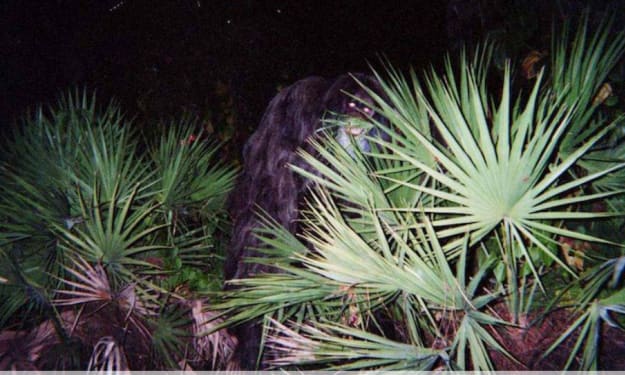
Florida's Elusive Bigfoot and the Mystery Behind its Existence
The Skunk Ape is little known but is a creature strange enough to be known as the Bigfoot of Florida, as sightings have been reported for decades. Described as an enormous, hairy beast, standing seven feet tall and tipping the scales at up to 500 pounds, it has captured the imagination of residents and visitors alike.
By Rohitha Lanka2 years ago in History
Whispers of the Unseen: The Enigmatic World of Jinn in Arabic Culture
In the heart of the Arabian desert, where the golden sands stretch endlessly and the stars illuminate the night sky, there exists a world unseen by human eyes. This is the realm of the Jinn, mysterious beings woven into the fabric of Arabic culture, folklore, and religion. Their stories, passed down through generations, are as vast and intricate as the desert itself. To understand the Jinn is to delve into a world where the lines between reality and myth blur, and where the unseen forces of nature and the supernatural coexist.
By Mosap Homa2 years ago in History
New language discovered to be developing in the United States.
New language discovered to be developing in the United States. The United States has always been a melting pot of cultures languages and traditions and nowhere is this more evident than in Miami Florida. In this vibrant city where Spanish and English intertwine in everyday life a new dialect of English has been quietly developing. This Spanish influenced variety of English shaped by decades of immigration from Latin America is a testament to how language constantly evolves in response to cultural and social interactions. Linguists at Florida International University have been studying this phenomenon for over a decade and they argue that Miami’s unique English dialect is a living example of language adaptation in a multilingual society. Miami is one of the most bilingual cities in the United States. The majority of its population is Hispanic or Latino with roots in Cuba Venezuela Colombia and other Spanish speaking countries. This heavy Spanish influence has not only preserved the Spanish language in the region but has also reshaped how English is spoken. Over time the natural mixing of Spanish and English has led to a distinct way of speaking incorporating direct translations, unique pronunciations and minor grammatical differences. This process known as calquing occurs when words or phrases are translated directly from one language to another while maintaining the original language’s structure.
By Adnan Rasheed2 years ago in History
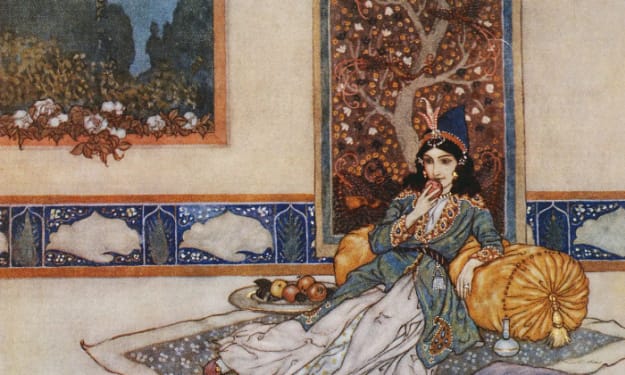
The Thousand and One Nights Tales from the Arab World and India
The Thousand and One Nights, or the Arabian Nights, is an expansive compilation of folk tales stretching out over generations. The best known version is a sort of compendium of tales of diverse provenance, from the Middle East to India, and is often credited with popularizing stories like Aladdin, Ali Baba, and Sindbad the Sailor, tales that have all but become synonymous with Western folklore.
By Rohitha Lanka2 years ago in History
The Rise and Fall of the Mughal Empires
One of the most remarkable empires in world history, the Mughal Empire spread across the Indian subcontinent from the early years of the 16th century. At its height, it ruled almost the entire Indian subcontinent, with access to immense riches and military strength.
By Rohitha Lanka2 years ago in History
Turkey's Underworld
What Is Derinkuyu All About Derinkuyu's Underground City Discovering An Underground City Beneath Cappadocia Nestled in Turkey’s Cappadocia region is a city so enigmatic that it had been lost to history for centuries. And Derinkuyu, buried 18 stories beneath the surface, is as much of an archaeological feat as it is a tale of survival, adaptation, and the mysteries of a lost civilization.
By Rohitha Lanka2 years ago in History
The last days of the Neanderthals.
The last days of the Neanderthals. The story of the Neanderthals is one of survival adaptation and ultimately extinction. For thousands of years they thrived across Europe and parts of Asia coexisting with early Homo sapiens before vanishing from the fossil record around 40,000 years ago. Their disappearance has long puzzled scientists sparking debates over the causes and consequences of their extinction. However recent research has painted a more nuanced picture of their fate revealing that Neanderthals were not a primitive dead end in human evolution but rather a sophisticated and resilient species that left an enduring legacy in modern human DNA. Neanderthals evolved from a common ancestor shared with Homo sapiens roughly 500,000 years ago. While some researchers suggest Homo antecessor as this ancestor the exact lineage remains debated. What is certain is that Neanderthals adapted to the harsh climates of Ice Age Europe and Asia developing robust physiques suited for cold environments. Their short stocky bodies helped retain heat and their large nasal cavities warmed the air they breathed. These adaptations allowed them to hunt large Ice Age mammals like mammoths and woolly rhinoceroses proving their ability to survive in extreme conditions.
By Adnan Rasheed2 years ago in History
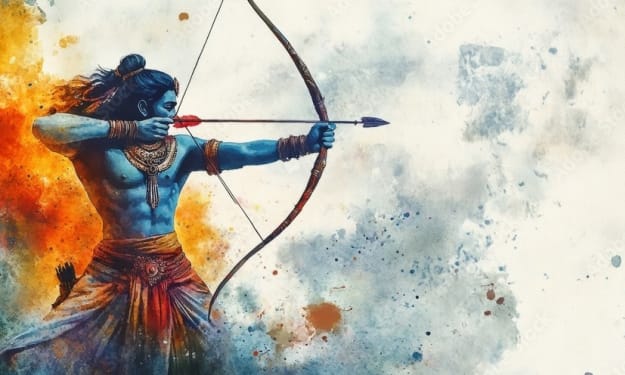
The Story of Ramayana (Short and Simplified)
1. The Beginning: Vishnu’s Promise Long ago, Swayambhu Manu , the first human being, performed intense penance (tapasya ) for 1,000 years to please Lord Vishnu. When Vishnu appeared, Manu expressed his desire to have Vishnu as his son. Vishnu agreed but explained that he would incarnate on Earth whenever Dharma (righteousness) was threatened by evil forces. He declared:
By Sujeet M Sonar2 years ago in History
The Talking Drum: Origins and Evolution
The talking drum, an iconic instrument originating from West Africa, has played a pivotal role in the region's communication, cultural expression, and musical traditions for centuries. Simultaneously, theconcept of "Owambe" represents the vibrant and lavish social gatherings characteristic of the Yoruba people in Nigeria. Both the talking drum and Owambe are deeply intertwined within Yoruba culture, reflecting the community's rich heritage and social dynamics. The Talking Drum: Origins and Evolution The talking drum, known for its ability to mimic the tonal patterns of human speech, has been an essential tool among various West African ethnic groups, notably the Yoruba of Nigeria and the Asante of Ghana. Its unique hourglass shape and adjustable tension cords allow players to modulate pitch, enabling the drum to "speak" by replicating the inflections of regional languages. ENCYCLOPAEDIA BRITANNICA Historical Significance Historically, talking drums served multiple functions beyond musical accompaniment. They were integral to rituals, storytelling, and ceremonies, acting as mediums to convey messages across distances before the advent of modern communication systems. In the Asante culture of Ghana, for instance, drums were utilized in various societal aspects, including rituals and storytelling. UNDERSTANDING SLAVERY Cultural Transmission and Preservation The art of playing the talking drum is traditionally passed down through generations, often within specific families or guilds. In Yoruba culture, individuals born into drumming families, often bearing names starting with "Ayan," are inducted into the guild of talking drummers, signifying their heritage and role in preserving this musical tradition. NEWHAM HERITAGE MONTH Global Influence and Adaptation The influence of the talking drum transcended African borders, especially during the transatlantic slave trade. Instruments like the Batá drums, which share similarities with talking drums, were introduced to Cuba in the early 1800s by enslaved Yoruba people. These drums became integral to Afro-Cuban religious practices, illustrating the resilience and adaptability of African cultural elements in the diaspora. SMITHSONIAN MAGAZINE The Talking Drum in the 21st Century In contemporary times, the talking drum continues to be a symbol of cultural identity and artistic expression. While modern communication technologies have supplanted its original function as a messaging tool, the drum's musical and cultural significance endures. It features prominently in world music genres, fusion projects, and educational programs that aim to preserve and celebrate African heritage. Owambe: A Celebration of Yoruba Social Life The term "Owambe" refers to the extravagant and elaborate parties characteristic of the Yoruba people in Nigeria. Derived from the Yoruba phrase "owan be," meaning "it is happening here," Owambe encapsulates the communal spirit, hospitality, and love for celebration inherent in Yoruba culture. VOCAL Historical Roots Owambe parties have deep historical roots, tracing back to pre-colonial times when Yoruba kingdoms celebrated significant events with grandeur. Festivals such as the Odun Oba (King's Festival) in Oyo and the Odun Olojo (Day of Creation) in Ife were marked by communal gatherings, music, dance, and feasting. These traditions laid the foundation for the modern Owambe phenomenon. WIKIPEDIA Evolution Through the 20th Century The concept of Owambe evolved significantly during the 20th century, particularly in the 1960s. Urbanization, economic prosperity, and the rise of a vibrant social scene in cities like Lagos contributed to the proliferation of lavish parties. The term "Owambe" became synonymous with the Yoruba penchant for grand celebrations, reflecting a blend of traditional values and contemporary influences. APPLIED WORLDWIDE Key Features of Owambe Music and Dance: Central to any Owambe is the presence of live music, often provided by Juju or Fuji bands. The talking drum plays a crucial role in these performances, engaging guests in call-and-response patterns and encouraging dance. Fashion (Aso Ebi): A distinctive feature of Owambe is the coordinated attire known as Aso Ebi, where family and friends wear outfits made from the same fabric to signify unity and support. Cuisine: An array of traditional dishes is served, showcasing the richness of Yoruba cuisine. The abundance of food and drink symbolizes hospitality and communal sharing. Spraying of Money: A unique aspect of Owambe is the "spraying" of money, where guests dance and place currency notes on the hosts or performers as a sign of appreciation and celebration. The Interplay Between Talking Drums and Owambe The talking drum holds a place of prominence in Owambe celebrations. Its rhythms and tones not only provide musical entertainment but also serve as a means of communication during the event. Skilled drummers can praise individuals, announce important moments, and interact with attendees, enhancing the festive atmosphere. The drum's ability to mimic speech allows it to convey messages that resonate with the cultural context of the gathering. Owambe in the 21st Century Today, Owambe remains a vibrant aspect of Yoruba social life, adapting to modern trends while preserving traditional elements. The integration of contemporary music genres, fashion innovations, and technological advancements has transformed these gatherings into dynamic events that attract diverse audiences. Despite these changes, the core essence of Owambe—celebration, community, and cultural expression—continues to thrive. Conclusion The talking drum and the tradition of Owambe are integral components of Yoruba cultural heritage. They exemplify the community's rich history, artistic expression, and social cohesion. As both continue to evolve in the 21st century, they serve as enduring symbols of identity and resilience, reflecting the dynamic nature of cultural practices in a changing world.
By Budhirai Tripura2 years ago in History
"Love Hurts"
"Love Hurts" is a 2009 romantic comedy that explores the complexities of love, marriage, and self-discovery. Written and directed by Barra Grant, the film features a notable cast including Richard E.Grant, Carrie-Anne Moss, and Johnny Pacar. Set against the backdrop of personal transformation, the narrative delves into the life of a middle-aged man navigating the challenges of a failing marriage and the journey to rediscover himself.
By Budhirai Tripura2 years ago in History