Analysis
The Sage who killed for living.
Deep in the heart of ancient India, where dense forests whispered secrets and rivers sang songs of time, there lived a man named Ratnakar. He was not an ordinary man-he was feared far and wide as a ruthless bandit. His life was steeped in violence, his hands stained with blood, and his soul burdened by sin. Yet, this is the story of how Ratnakar transformed into Maharshi Valmiki, the revered sage and author of one of humanity’s greatest epics- the Ramayana . A Dark Beginning
By Sujeet M Sonar2 years ago in History
Best City to Visit in Italy for Tourists
Italy is a dream destination for travelers worldwide, offering a mix of history, culture, breathtaking landscapes, and exquisite cuisine. From its sun-kissed coastlines to its majestic mountains, every region of Italy tells a unique story. While many cities in Italy are worth visiting, Rome stands out as the best city for tourists. The Eternal City, as it is often called, is a perfect blend of history, art, and modern charm, making it an ideal place to explore for any traveler. In this guide, we’ll dive deep into why Rome is the best tourist city in Italy and highlight some other must-visit destinations.
By SHAKIB HUSSEN2 years ago in History
From Misunderstanding to Modern Understanding of Women's Health
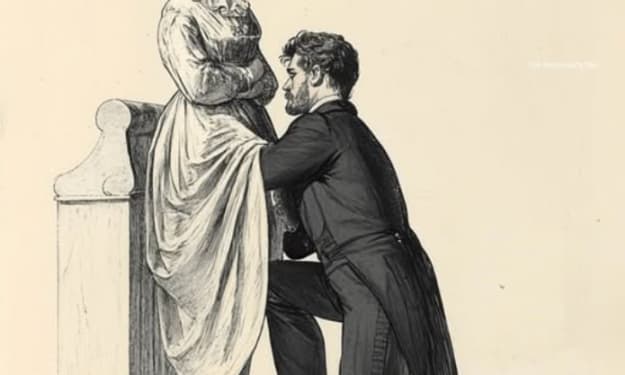
The Evolution of Hysteria A term once so ubiquitous in both medical and societal discourse regarding women, serves as a potent example of the misconceptions and biases that have plagued the history of women's health.
By Rohitha Lanka2 years ago in History
The Brutalist
"The Brutalist," directed by Brady Corbet, is a 2024 epic period drama that delves into the life of László Tóth, a Hungarian-Jewish architect and Holocaust survivor, as he navigates the complexities of post-war America. The film has garnered critical acclaim for its compelling narrative, stellar performances, and innovative production techniques. Plot Overview Set in the aftermath of World War II, "The Brutalist" follows László Tóth, portrayed by Adrien Brody, who immigrates to the United States with aspirations of rebuilding his life and career. Accompanied by his wife, Erzsébet (Felicity Jones), a journalist and fellow Holocaust survivor, László confronts the challenges of assimilating into a new culture while striving to establish himself in the architectural world. His journey takes a pivotal turn when he encounters Harrison Lee Van Buren (Guy Pearce), a wealthy industrialist who becomes both a benefactor and a source of profound conflict. The narrative intricately explores themes of ambition, exploitation, and the immigrant experience, set against the backdrop of America's evolving architectural landscape. Inspirations and Themes While "The Brutalist" is not a direct biographical account, it draws inspiration from real-life figures and historical events. Co-writers Brady Corbet and Mona Fastvold infused the character of László Tóth with attributes reminiscent of renowned architects such as Marcel Breuer and László Moholy-Nagy. The film's title and architectural focus serve as metaphors for post-war trauma and resilience, reflecting the stark and unadorned style of Brutalist architecture. The narrative delves into the exploitation of immigrant talent and the complexities of pursuing the American Dream in a society rife with systemic challenges. ENTERTAINMENT WEEKLY Cast and Performances Adrien Brody's portrayal of László Tóth has been widely lauded, earning him the Academy Award for Best Actor at the 97th Academy Awards. His immersive approach to the role showcases his dedication to capturing the nuances of a character marked by profound personal and professional struggles. Felicity Jones delivers a poignant performance as Erzsébet, embodying the resilience and complexity of a woman navigating her own survivor's guilt and aspirations. Guy Pearce's depiction of Harrison Lee Van Buren adds depth to the narrative, presenting a character whose support is intertwined with underlying motives. EN.WIKIPEDIA.ORG Production and Cinematic Techniques The production of "The Brutalist" faced several challenges, including delays due to the COVID-19 pandemic and geopolitical events. Filming locations spanned across Hungary and Italy, with Budapest and its environs doubling for 1950s Philadelphia and rural Pennsylvania. The film was shot using the VistaVision process, a technique that captures images horizontally on 35mm film stock, providing a higher resolution and a distinct visual aesthetic. This choice reflects Corbet's intent to authentically represent the era's cinematic style. EN.WIKIPEDIA.ORG AI Integration and Controversy "The Brutalist" garnered attention for its innovative use of artificial intelligence (AI) in post-production. To enhance the authenticity of Hungarian dialogue, AI tools from Respeecher were employed to refine the pronunciation of actors Adrien Brody and Felicity Jones. Despite initial dialect coaching, the filmmakers sought to perfect the accents to meet native speakers' expectations. This approach sparked discussions about the role of AI in filmmaking, with some critics expressing concerns over its implications. Director Brady Corbet addressed the controversy by emphasizing that the AI usage was limited to dialogue editing and did not alter the actors' performances. EN.WIKIPEDIA.ORG Musical Score and Accolades The film's score, composed by English musician Daniel Blumberg, has been integral to its emotional resonance. Blumberg collaborated closely with Corbet over seven years to develop a soundtrack that complements the film's narrative depth. The score features contributions from notable musicians, including pianists John Tilbury and Sophie Agnel, and saxophonist Evan Parker. This collaboration resulted in a haunting and evocative musical backdrop that garnered the Academy Award for Best Original Score in 2025. AS.COM Critical Reception and Box Office Performance Upon its release, "The Brutalist" received critical acclaim for its direction, screenplay, performances, cinematography, and score. The film's ambitious 215-minute runtime, complete with an intermission, was noted as a bold artistic choice that harkened back to classic epic cinema. At the 97th Academy Awards, the film secured ten nominations, winning three, including Best Actor for Adrien Brody, Best Cinematography, and Best Original Score. Financially, "The Brutalist" proved successful, grossing $41.5 million worldwide against a modest budget of $9.6 million. EN.WIKIPEDIA.ORG Availability For audiences interested in experiencing "The Brutalist," the film is currently available in theaters and on streaming platforms such as Amazon Prime. Its availability across multiple platforms ensures that viewers can engage with this cinematic work at their convenience. ENTERTAINMENT WEEKLY Conclusion "The Brutalist" stands as a testament to the power of storytelling, blending historical inspirations with contemporary cinematic techniques. Through its exploration of identity, ambition, and the immigrant experience, the film offers a poignant reflection on the human condition. The collaborative efforts of the cast and crew, coupled with innovative production choices, have culminated in a work that resonates with audiences and critics alike, solidifying its place in modern cinema. Disclaimer The information provided in this Article post is for general informational and educational purposes only. While we strive to ensure accuracy, we do not guarantee that all information is up-to-date or error-free. The content is based on personal opinions and experiences and should not be considered professional advice.
By Budhirai Tripura2 years ago in History
Camille Monfort
History abounds with mysterious characters whose lives make reality and myth seem interchangeable. Among them is Camille Monfort, one of France's great opera singers whose name is eternally associated with Belém, Brazil's Amazonian city. Legendary for her looks, otherworldly voice, and unconventional life, Camille became the subject of a chilling tale one that speaks of vampirism and immortality.
By Dumpling Pumpkin2 years ago in History
Japan's Greatest Swordsman and the Fight That Killed Him
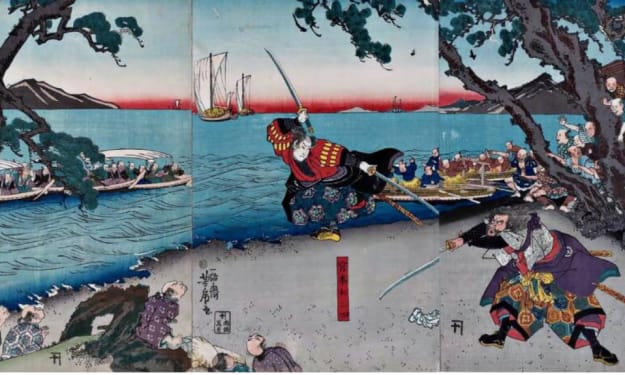
The Epic Rivlry That Helped Define Jananese Martial Arts History Though Japanese history boasts colorful accounts of warriors whose martial prowess and bravery can transcend the ages, few tales are as legendary as that of Sasaki Kojiro.
By Rohitha Lanka2 years ago in History
10 Things You Use Daily That Were Invented for a Completely Different Purpose
10 Things You Use Daily That Were Invented for a Completely Different Purpose Introduction The most iconic inventions often begin as accidents. Take the microwave oven—burn from melted candy in a WWII engineer’s pocket—or Play-Doh, a failed wallpaper cleaner turned childhood staple. These everyday items hide origin stories so bizarre, they feel like plot twists in a sci-fi novel.
By Dinesh Maurya2 years ago in History
An Ancient World Through the Eyes of Wonderfully Preserved Mummies
Such stories are usually the work of journalists or scientists working on their own remits. Leave it to Science on the BBC Radio to examine how they came to be by introducing the mysterious Chinchorro mummies of the Atacama Desert.
By Rohitha Lanka2 years ago in History
The Power of Self-Editing: A Writer's Epiphany
What is Self-Editing? At its core, self-editing is the process of revising your own work to improve clarity, coherence, style, and accuracy. Unlike initial drafts that are often raw and filled with imperfections, self-editing is about refining and polishing those ideas. It involves analyzing everything from sentence structure to word choice, pacing, and overall flow.
By Malik Kashif2 years ago in History
Historic Study Finds Signs of Soul Departing Body at Death
New Scientific Discoveries have come up with surprising new evidence that can provide more insight about what happens to us after death. Experts believe that brain activity in the last moments near death has shown that something intangible could leave the body perhaps the 'soul' in the final moments of life. A rare study on the very nature of consciousness and brain waves among dying patients reveals this radical conclusion.
By Rohitha Lanka2 years ago in History