Analysis
"The Brave Rajput Queen's Legend"
"The Brave Rajput Queen's Legend" Rajasthan was renowned in the 16th century for its majestic forts and ferocious soldiers. One of the most well-known tales from this area was that of Queen Padmavati, a monarch whose bravery, wit, and selflessness became legendary. Her tale is not just one of courage but also of insight, fortitude, and the victory of right over wrong.
By Rajoan Islam2 years ago in History
💲 Why Is the Dollar Symbol an “S”? The Surprising History Behind America’s Most Recognized Sign
Introduction: Have You Ever Wondered Why 💵 Is Marked with an “S”? We use it every day. It’s printed on every bill, seen in every spreadsheet, and flashed across every price tag—but few stop to ask: Why is the dollar symbol ($) shaped like an “S”?
By Karl Jackson2 years ago in History
The Hidden Kingdom of Shambhala. AI-Generated.
The last Culture and Wealth of Shambhala: A Lost Treasure of Mystical Riches Throughout history, stories of concealed cities, forgotten kingdoms, and fantastical treasures have fascinated people. Among these narratives, few are as mysterious and long-lasting as the legend of Shambhala, a fabled kingdom believed to be concealed deep within the Himalayas. Esteemed in Buddhist, Hindu, and Tibetan traditions, Shambhala represents not only a physical location but also a symbol of spiritual awakening and material prosperity. According to the legend, this kingdom is filled with immense riches, ancient knowledge, and extraordinary treasures that have remained undiscovered by explorers, conquerors, and treasure hunters alike for ages. Origins of the Legend The roots of Shambhala are deeply embedded in ancient spiritual texts. The idea first surfaced in Hindu scriptures, specifically the Vishnu Purana, where it was mentioned as the birthplace of Kalki, Lord Vishnu's final incarnation, who will end the current age (Kali Yuga) and bring forth a new time of peace and abundance. However, the legend of Shambhala truly blossomed in Tibetan Buddhism. Tibetan writings portray Shambhala as a utopian realm, concealed in the snowy mountains, where enlightened beings coexist in harmony and prosperity. The Buddhist master Padmasambhava, active in the 8th century, is credited with disseminating teachings about Shambhala, highlighting its dual nature as both a tangible and spiritual domain. Shambhala’s Hidden Wealth Beyond its spiritual importance, Shambhala has long been connected to vast material wealth. Legends depict the kingdom as teeming with precious gems, gold, silver, and rare minerals. The leaders of Shambhala are said to safeguard these riches not out of greed, but as a representation of the kingdom’s abundance and integrity. It is believed that the treasures of Shambhala have remained untouched for ages, hidden from the outside world to protect them from those seeking power and profit.
By Say the truth 2 years ago in History
The Lost Wealth of Submerged Dwaraka
The Net Worth of Dwaraka: A Hidden Treasure of Ancient India Dwaraka, a name deeply etched in Indian history and mythology, is renowned as the mythical kingdom of Lord Krishna. Considered one of the seven ancient cities (Sapta Puri), Dwaraka is believed to have been a thriving and prosperous city, brimming with opulence, trade, and cultural riches. Modern archaeological discoveries and ancient texts have fueled debates about the city's immense wealth, the legacy of its hidden treasures, and its estimated net worth. The Origins of Dwaraka According to the Mahabharata and Puranas, Dwaraka was established by Lord Krishna after he migrated from Mathura. The city was said to have been constructed by divine architects and adorned with gold, silver, precious gems, and intricate palaces. Dwaraka’s strategic location along the Arabian Sea also made it a bustling port city, contributing to its immense economic wealth. The Prosperity of Ancient Dwaraka Ancient texts describe Dwaraka as a city of unparalleled luxury and sophistication. The kingdom's economy flourished due to trade, agriculture, and its status as a cultural hub. Precious gems, spices, silk, and rare metals were traded, while palaces and temples were reportedly adorned with gold and rare jewels. The city’s opulence extended beyond material wealth. Dwaraka was known for its architectural marvels, grand temples, and advanced urban planning, including well-paved roads, drainage systems, and fortified walls. These attributes highlighted the kingdom's wealth and technological prowess. Submergence of Dwaraka One of the most intriguing aspects of Dwaraka is its mysterious disappearance. According to legend, after the death of Lord Krishna, the city was submerged in the Arabian Sea as foretold. This event, believed to have occurred over 5,000 years ago, has led to centuries of speculation about the treasures that might still lie beneath the ocean. Archaeological Discoveries In the 1980s, marine archaeologists discovered remnants of an underwater city near the modern city of Dwarka in Gujarat. These findings included stone structures, pottery, anchors, and remnants of walls, which provided compelling evidence that the mythical city might have been real. The archaeological site has been likened to an ancient Atlantis, with speculations about hidden treasures that could be buried beneath the sea. If these treasures were to be discovered, their historical and monetary value would be incalculable. Estimating the Net Worth of Dwaraka Calculating the net worth of a city like Dwaraka requires considering its historical wealth, trade connections, and the potential value of its submerged treasures. The following aspects contribute to an estimate of its ancient net worth: Gold and Jewels: Ancient texts describe Dwaraka’s palaces and temples as being adorned with gold, diamonds, and other precious gems. If these treasures remain submerged, their combined value could run into billions of dollars. Artifacts and Antiquities: The artifacts and relics discovered underwater have immense historical significance. If fully excavated and authenticated, these relics could fetch millions on the global antiquities market. Trade Wealth: Dwaraka’s strategic location as a trade hub would have added significantly to its wealth. The value of its trade in spices, textiles, and metals could be estimated in today’s terms to reflect a thriving economy. Tourism and Cultural Heritage: In modern times, Dwaraka continues to attract millions of pilgrims and tourists, contributing significantly to the local economy. Speculative Net Worth Considering these factors, it is plausible to estimate that the ancient city of Dwaraka, in today’s terms, could have had a net worth of several billion dollars. Its wealth would have been comparable to other ancient cities such as Babylon or Rome, given its prominence, trade connections, and the luxurious lifestyle described in ancient texts. The Legacy of Dwaraka Despite its submergence, the legacy of Dwaraka lives on. Modern Dwarka, located near the archaeological site, is a significant pilgrimage center, attracting visitors from across the globe. The city’s temples, particularly the Dwarkadhish Temple, continue to symbolize the ancient city’s religious and cultural heritage. The story of Dwaraka also raises important questions about the intersection of mythology and history. As archaeological techniques continue to improve, future discoveries may provide more concrete evidence about the city’s wealth, layout, and ultimate fate. Conclusion The net worth of ancient Dwaraka is a fascinating topic that combines history, mythology, and archaeology. While much of its wealth remains hidden beneath the sea, the city’s legacy as a symbol of prosperity, devotion, and architectural grandeur continues to inspire awe. Whether through further underwater excavations or the continued preservation of its cultural heritage, Dwaraka remains one of the most enigmatic and potentially richest lost cities in human history.
By Say the truth 2 years ago in History
The Magnificence of Ancient African Empires. AI-Generated.
The Rich History and Resources of Ancient Africa: Part 1 Africa, often described as the cradle of humanity, has played a pivotal role in shaping world history. From the powerful empires of the past to its vast reserves of natural resources, Africa’s legacy is one of wealth, resilience, and cultural innovation. This article, the first in a nine-part series, delves into the ancient history, resources, and estimated economic impact of Africa's early civilizations, focusing on the period before European colonization.
By Say the truth 2 years ago in History
The Golden Age of Ancient Africa. AI-Generated.
The Wealth and Influence of Ancient African Empires Africa’s history is a rich tapestry woven with stories of kingdoms that flourished, built empires, and amassed wealth through trade, natural resources, and cultural achievements. While much of Africa's ancient history is overshadowed in mainstream narratives, the continent played a central role in global trade, resource extraction, and innovation for centuries. In this article, we’ll explore the legacy of prominent African empires, focusing on the wealth they accumulated and how natural resources and trade routes played a crucial role in shaping their dominance. 1. The Mali Empire: A Center of Wealth and Scholarship The Mali Empire, established in the 13th century, became one of the wealthiest empires in history due to its abundant gold reserves. Its most famous ruler, Mansa Musa, often cited as the richest person in history, put Mali on the world map when he embarked on a pilgrimage to Mecca in 1324. His caravan reportedly included thousands of attendants, camels carrying gold, and luxurious gifts that he distributed along the way, causing economic inflation in some regions. Mali’s economy thrived on gold, salt, and ivory trade. The empire’s cities, including Timbuktu and Gao, were not only trading hubs but also centers of learning. Timbuktu housed libraries and universities that attracted scholars from across Africa and beyond, cementing Mali’s reputation as a center of wealth and intellect. 2. The Kingdom of Aksum: Trade Hub of the Ancient World The Kingdom of Aksum, located in present-day Ethiopia and Eritrea, was a dominant trading empire from around 100 AD to the 7th century. Aksum controlled key trade routes connecting the Roman Empire, India, and the Arabian Peninsula. Its port city of Adulis facilitated the exchange of goods such as gold, ivory, spices, and textiles. Aksum was also known for minting its own gold and silver coins, a rare achievement in the ancient world that reflected its economic strength. The kingdom adopted Christianity in the 4th century, further boosting its influence and shaping its cultural legacy. The towering obelisks of Aksum remain architectural marvels, symbolizing the kingdom’s advanced engineering skills and wealth. 3. The Riches of the Great Zimbabwe The Great Zimbabwe civilization, flourishing between the 11th and 15th centuries, is another testament to Africa’s historical wealth. Its massive stone structures, including the Great Enclosure, were built without mortar, showcasing the advanced architectural techniques of the time. The economy of Great Zimbabwe was driven by gold mining and trade. The civilization was part of a larger trade network that extended to the Swahili Coast, the Middle East, and even China. Artifacts such as Chinese porcelain and Arabian glass have been found at Great Zimbabwe, indicating its role in global trade. 4. The Swahili Coast: Maritime Trade Powerhouse Stretching along the eastern coast of Africa, the Swahili Coast was a thriving maritime trading network that linked Africa to the Indian Ocean world. Cities like Kilwa, Mombasa, and Zanzibar were prosperous trade centers dealing in gold, ivory, spices, and slaves. The Swahili traders developed a unique culture that blended African, Arab, and Persian influences. The wealth generated from trade allowed these city-states to flourish, building coral-stone mosques, palaces, and trading posts that showcased their prosperity. 5. The Kingdom of Benin: Art, Trade, and Power The Kingdom of Benin, located in present-day Nigeria, was renowned for its sophisticated artistry and economic strength. The Benin Bronzes, intricate plaques and sculptures made from brass and bronze, are world-famous examples of the kingdom’s artistic legacy. Benin was a major player in the trans-Saharan trade, dealing in ivory, pepper, and textiles. Its powerful military and centralized government allowed it to maintain control over trade routes and expand its influence. 6. The Role of Natural Resources in Africa’s Wealth Africa’s natural wealth played a central role in the prosperity of its ancient empires. The continent’s vast reserves of gold, diamonds, copper, and other minerals made it a coveted region for trade and exploration. Gold: Gold from West Africa fueled the wealth of empires like Ghana, Mali, and Songhai. It was a key commodity in the trans-Saharan trade and was exchanged for salt, textiles, and other goods. Ivory: Ivory was highly prized in ancient times and was a major export from regions like the Congo Basin and the Swahili Coast. Salt: Known as “white gold,” salt was as valuable as gold in ancient Africa. It was essential for preserving food and was traded across the Sahara Desert. 7. Africa’s Lasting Legacy The wealth and influence of Africa’s ancient empires continue to inspire awe and admiration. However, the legacy of these civilizations is often overlooked in global narratives. Understanding the history of Africa’s wealth helps to challenge misconceptions and highlight the continent’s significant contributions to world history. Conclusion Africa’s ancient empires were centers of wealth, trade, and cultural achievement that played a crucial role in shaping global history. From the gold-laden caravans of Mansa Musa to the towering obelisks of Aksum, these civilizations left behind a legacy that endures to this day. As we uncover more about Africa’s past, it becomes clear that the continent’s history is one of resilience, innovation, and immense wealth. In the next part, we will delve deeper into the rise and fall of specific African empires, exploring the factors that contributed to their success and the challenges they faced. Stay tuned for part 3 of this series on Africa’s historical treasures.
By Say the truth 2 years ago in History
The Evolution and Impact of "Cool" in Modern Culture. AI-Generated.
Introduction The term "cool" has undergone a remarkable transformation throughout history, evolving from a simple descriptor of temperature to a multifaceted symbol of style, demeanor, and cultural significance. This article delves into the etymology of "cool," its adoption into popular vernacular, and its pervasive influence across various domains of modern culture.
By Brad Williams2 years ago in History
The Lost Treasures of America: Hidden Wealth Waiting to Be Discovered
America’s Greatest Absent Treasures: History, Mystery, and the Hunt Throughout history, America has been a acreage of befalling and fortune. But alongside its riches, the country holds some of the world’s greatest alien treasures. From charlatan gold to hidden caches of Civil War wealth, endless legends allege of fortunes still cat-and-mouse to be found. This commodity explores the better abundance that charcoal missing in the United States, delving into its history, the attempts to balance it, and the accessible net account of these hidden riches. The Absent Confederate Gold Arguably one of the best acclaimed missing treasures in American history is the Absent Confederate Gold. This fable dates aback to the final canicule of the Civil War in 1865, aback Confederate President Jefferson Davis allegedly fled with a massive sum of gold, silver, and jewels from the Confederate treasury. Estimates advance that as abundant as $500,000 in gold (worth over $9 billion today due to aggrandizement and gold amount increases) was secretly transported away, never to be begin again. The Adventure Behind the Treasure As Union armament bankrupt in on Richmond, Virginia, the Confederate capital, Davis and his admiral ordered the actual treasury funds to be confused south. According to accounts, a alternation accustomed the gold larboard Richmond with an escort of Confederate troops. About forth the journey, the gold disappeared. Some theories advance it was hidden in the base of Georgia, active in the mountains of North Carolina, or absent in a river escape gone wrong. Searches and Theories
By Say the truth 2 years ago in History
The Lost Treasure of the Knights Templar. AI-Generated.
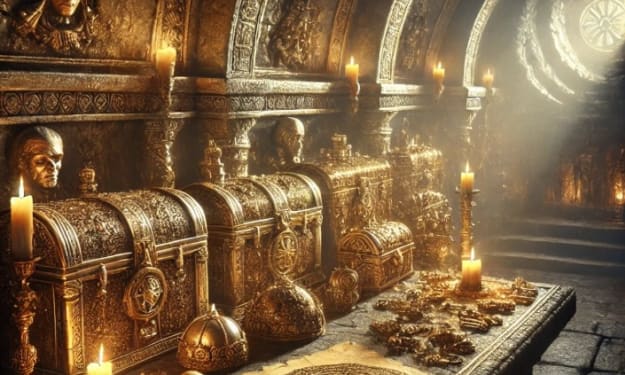
The Absent Abundance of the Knights Templar – A Hidden Affluence Through the Ages The Knights Templar, one of the best abstruse and able aggressive orders of the medieval era, is accounted to accept accumulated an doubtful fortune. Their treasure, consisting of gold, jewels, angelic relics, and actual documents, allegedly vanished back the Templars were afflicted in the aboriginal 14th century. Over the centuries, endless explorers, abundance hunters, and historians accept approved to bare the fate of this absent fortune, but its abode abide a mystery. The Rise of the Templar Wealth Founded about 1119 AD, the Knights Templar were initially accustomed to assure Christian pilgrims traveling to the Holy Land. However, their access and ability grew rapidly, and they became one of the wealthiest organizations in Europe. The Templars developed an avant-garde cyberbanking system, managing lands, castles, and alike an aboriginal anatomy of banking. Many European monarchs and nobles entrusted their abundance to the Templars, added accretion their riches. Their all-inclusive assets included: Gold and argent from donations and conquests. Precious artifacts such as the Holy Grail and the Ark of the Covenant, according to legends. Valuable manuscripts and religious charcoal from Jerusalem. The Fall of the Knights Templar By the backward 13th century, the ability of the Knights Templar became a blackmail to European rulers, decidedly King Philip IV of France. Struggling with cyberbanking debt to the Templars, Philip orchestrated their downfall. On Friday, October 13, 1307, bags of Templars were arrested, including their Grand Master, Jacques de Molay. Many were bent and executed, while the adjustment was clearly disbanded by Pope Clement V in 1312.
By Say the truth 2 years ago in History