Analysis
Global markets in freefall as Trump digs in on tariff ‘medicine’
In a week marked by heightened economic anxiety, global markets have taken a steep dive as U.S. President Donald Trump doubles down on his controversial tariff strategy, calling it the “medicine” needed to cure what he describes as unfair trade practices by America’s largest trading partners. While Trump insists the long-term benefits will outweigh the short-term pain, investors and economists alike are warning of serious consequences for the global economy.
By Md polash Ali2 years ago in History
10 Scientific Facts Found in Ancient Indian Texts Centuries Before Modern Discovery
10 Scientific Facts Found in Ancient Indian Texts Centuries Before Modern Discovery Long before Newton dropped his apple and Einstein bent space-time, the ancient sages of India were penning down ideas that today’s scientists are only beginning to understand. Hidden in the verses of texts like the Rigveda, Sushruta Samhita, and Bhagavata Purana are shockingly accurate descriptions of scientific phenomena—ranging from gravity and atomic theory to surgical procedures and time dilation. While often dismissed as mythology or philosophy, these texts are treasure troves of forgotten knowledge. Here are 10 extraordinary scientific concepts that appear in ancient Indian scriptures long before they were "discovered" by modern science. You probably haven’t heard of half of them. --- 1. Speed of Light – Accurately Described in Rigveda Commentary. A 14th-century commentary by Sayana on the Rigveda states that light travels 2,202 yojanas in half a nimesha. Converted to modern units, this results in approximately 186,000 miles per second—the exact speed of light. This was centuries before science could even attempt to measure it. 2. Atomic Theory – Proposed by Sage Kanada. The Vaisheshika Sutras describe "anu" (atoms) as the smallest indivisible units that make up all matter. Sage Kanada even wrote about how these atoms combine and interact—long before Dalton’s atomic theory in the 19th century. 3. Water Cycle – Clearly Outlined in the Vedas. Texts like the Rigveda and Manusmriti mention the Sun evaporating water, which forms clouds and returns as rain—an accurate outline of the water cycle, described in spiritual texts long before science formalized the concept. 4. Gravity – Mentioned in Surya Siddhanta. The ancient astronomical text Surya Siddhanta, composed over 1,200 years before Newton, mentions that Earth has a gravitational force that pulls objects toward itself. It even attempts to explain planetary motion. 5. Time Dilation – Implied in Mahabharata. In a story from the Mahabharata, King Kakudmi and his daughter Revati visit Brahma’s realm for a few minutes. When they return, thousands of years have passed on Earth—a tale eerily similar to Einstein’s theory of time dilation. 6. Multiverse – Described in Bhagavata Purana. This text speaks of multiple universes, each governed by a different Brahma. The idea that many universes coexist independently aligns with the multiverse theory explored in quantum physics today. 7. Surgery and Anesthesia – Detailed in Sushruta Samhita. This ancient surgical manual from 600 BCE describes over 300 surgeries and 120 instruments. It also mentions the use of wine as an anesthetic—centuries before the invention of modern anesthesia. 8. Flying Machines – Outlined in Vaimanika Shastra. Describes “Vimanas” powered by mercury engines and anti-gravity technology. Though controversial, the level of detail (materials, aerodynamics) in these texts has intrigued even aerospace researchers. 9. Evolution – Reflected in Dashavatara (Ten Incarnations) The sequence of Vishnu’s avatars—fish, amphibian, boar, half-man, dwarf, and so on—uncannily matches the stages of Darwinian evolution, from aquatic life to complex human forms. 10. Cyclic Universe – Described in Vishnu Purana. The universe is said to undergo endless cycles of creation and destruction, mirroring current cosmological theories like the cyclic or oscillating universe model being explored in modern physics. Conclusion: While many of these ancient ideas were cloaked in metaphors or symbolic language, their core concepts align remarkably with modern scientific understanding. These aren’t just coincidental similarities—they challenge our assumptions about the origins of science itself. Maybe it’s time we stop calling these texts mere “mythology” and recognize them as early scientific thought wrapped in the poetic language of spirituality. Start writing...
By Riya mandal2 years ago in History
“The Emperor’s Sword: Conquest of Chu”. AI-Generated.
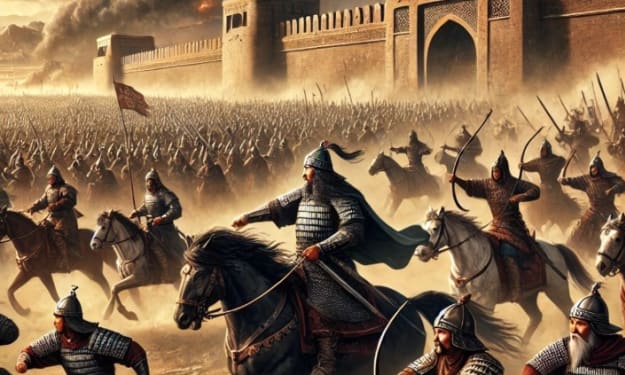
the fall of Han, the Qin army’s appetite for conquest only grew stronger. Their next and most formidable adversary lay in the south—the powerful State of Chu. Unlike the relatively smaller and politically fractured states Qin had defeated earlier, Chu was a colossus. Spanning vast fertile lands, steeped in rich cultural traditions, and renowned for its seasoned warriors, Chu had long been a thorn in the side of Qin's ambitions. For King Zheng of Qin, the future First Emperor, subjugating Chu would not only be a strategic necessity but a personal crusade to establish unquestionable supremacy over all the Warring States. The war with Chu was more than just a clash of swords—it was a battle of minds, tactics, and political maneuvering. Chu, under the command of General Xiang Yan, was not to be underestimated. Xiang Yan was a skilled commander and strategist, a man capable of rallying massive forces and striking fear into even the most disciplined Qin formations. Prelude to Invasion Qin’s chancellor, Li Si, and the legendary general Wang Jian urged caution. They understood that rushing into Chu’s expansive territory without proper planning could end in disaster. Qin had seen such a failure before—when a rash invasion years earlier ended in heavy losses. This time, Wang Jian proposed a different plan: a slow, calculated invasion with overwhelming force. King Zheng entrusted the campaign to Wang Jian but kept another rising star, General Meng Tian, in reserve. Wang Jian, a seasoned warrior known more for his patience than aggression, demanded an enormous army—reportedly over 600,000 men. At first, Zheng thought this excessive and was tempted to replace him. But eventually, he agreed, understanding that the risk of underestimating Chu was too great. The Art of Delay Rather than launching an immediate offensive, Wang Jian built forts along the borders, slowly inching his army forward while giving the appearance of passivity. The Chu generals, misled by this slow advance, relaxed their defenses, thinking Qin had grown fearful or indecisive. In reality, Wang Jian was waiting for the perfect moment to strike—a moment when Chu was least prepared. That moment came after months of stillness. In a sudden wave of attacks, Qin armies surged into Chu territory, overwhelming border forts and driving deep into the countryside. Clash of Titans General Xiang Yan responded fiercely, assembling Chu’s finest warriors for a counterattack. What followed was one of the most ferocious battles in Chinese history. Tens of thousands fell on both sides. The rivers ran red with blood, and the fields were trampled into mud by the weight of armored infantry. But Wang Jian had anticipated this. He feigned retreat, luring Xiang Yan into a false sense of victory. As the Chu army advanced, Wang Jian’s reserves—kept hidden behind forested hills—launched a surprise flanking attack, surrounding the Chu forces in a deadly pincer movement. Xiang Yan fell in battle, and with him, the spirit of Chu began to crumble. City after city surrendered. Qin soldiers, disciplined and ruthless, stormed the strongholds of Chu, executing commanders who resisted and integrating local forces who pledged allegiance. The End of Chu With the death of its greatest general and the fall of its capital, the State of Chu officially ceased to exist. What had once been one of the richest and most formidable kingdoms in ancient China now lay under the control of Qin. Qin’s conquest of Chu was more than a military victory—it was a turning point in Chinese history. The subjugation of Chu sent a message to the remaining states: resistance was futile. King Zheng’s vision of a unified China was now closer than ever.
By Say the truth 2 years ago in History
Rise from Qin: The First Step to Chinese Unification. AI-Generated.
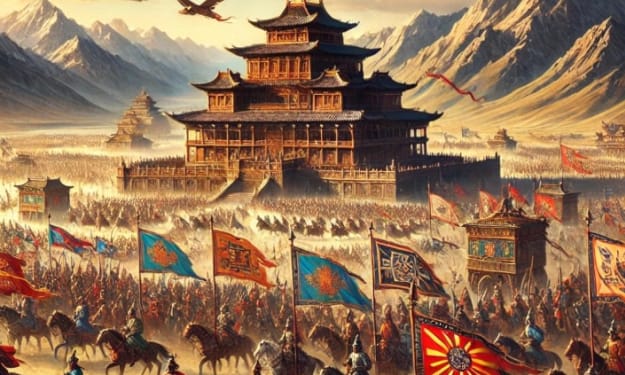
Rise from Qin: The First Step to Chinese Unification In the annals of world history, few figures loom as large as Qin Shi Huang, the first Emperor of a unified China. Before he wore the yellow robes of the Son of Heaven, he was known as Ying Zheng, a young king from the western frontier state of Qin. His rise marked the beginning of one of the most transformative periods in Chinese history. This first part of the series explores the early life of Ying Zheng and how the Kingdom of Qin, once considered a barbaric backwater by its eastern rivals, rose to dominate the Warring States. The Warring States: A Nation Divided Before unification, China was a fractured landscape of seven dominant states: Qi, Chu, Yan, Han, Zhao, Wei, and Qin. This period, known as the Warring States (475–221 BCE), was characterized by constant warfare, shifting alliances, and the rise and fall of powerful warlords. Philosophical schools like Confucianism, Daoism, and Legalism flourished amid this chaos, each offering solutions to disorder. Qin, situated in the far west near what is now Shaanxi Province, was long regarded as culturally inferior by the eastern states. However, it had key advantages: fertile lands, access to the Wei River, and a robust military tradition. Its rulers had adopted Legalism, a philosophy emphasizing strict laws, centralized authority, and merit-based governance, thanks to the reforms of Shang Yang in the 4th century BCE. These reforms turned Qin into a powerhouse. The Birth of Ying Zheng Ying Zheng was born in 259 BCE during a time of both internal and external tension. His father, Yiren, was a Qin prince held hostage in the rival state of Zhao. According to some accounts, Ying Zheng’s mother was a concubine of merchant background, further complicating his legitimacy. Eventually, Yiren was released and returned to Qin, where he was enthroned as King Zhuangxiang, thanks to the political maneuvering of the powerful minister Lü Buwei. When Zhuangxiang died in 247 BCE, Ying Zheng ascended to the throne at the age of 13. Due to his youth, the administration was handled by Lü Buwei, who acted as regent. Some historians believe Lü Buwei may have been Ying Zheng’s true father, though this remains speculative. What is clear is that Ying Zheng was raised amidst palace intrigue and political maneuvering, which likely influenced his later obsession with control and loyalty. Seizing Power: The End of the Regency By 238 BCE, Ying Zheng had reached maturity and staged a coup at the age of 21 to remove Lü Buwei from power. In doing so, he asserted his authority over the Qin court and began consolidating power. His early years as king were marked by purges of rival factions, the appointment of capable generals, and the centralization of authority. One of his most important allies during this period was Li Si, a brilliant Legalist scholar who helped Ying Zheng refine Qin’s administrative system and prepare for large-scale warfare. Together, they laid the groundwork for national conquest, focusing on tax reform, military logistics, and infrastructure projects such as road construction and canal systems that would allow armies to move swiftly across territories. The Qin Army: Forged for Conquest Qin's military success was not solely due to Ying Zheng's ambition; it was also the result of institutional strength. The army was highly organized and disciplined, drawing from the Legalist ideals of meritocracy and loyalty. Officers were promoted based on battlefield performance, not noble birth, a revolutionary idea at the time. Additionally, the state invested in advanced weaponry and siege technologies. Crossbows, iron weapons, and formidable cavalry units made the Qin army one of the most fearsome in the ancient world. The Great Wall, or at least early forms of it, was already being constructed in the north to ward off nomadic invasions, showcasing Qin’s commitment to defense and long-term strategy. Diplomatic Manipulation
By Say the truth 2 years ago in History
The Emergence of the First Emperor
He proclaimed himself "Qin Shi Huang," translating to "First Emperor of Qin," and enacted extensive modifications to centralize authoritystandardizing currencies, weights, measures, laws, and even the written language. He initiated monumental infrastructure initiatives such as the initial iteration of the Great Wall and an extensive national road network. However, his most extravagant undertaking was his tomb, safeguarded by the Terracotta Army, a site that would remain undiscovered for over 2,000 years. Yet, despite all his achievements, Qin Shi Huang was profoundly preoccupied with an aspect he could not master: mortality. The Emperor's Fascination with Immortality Qin Shi Huang’s dread of death was intense. As he advanced in age, he became increasingly engulfed by the notion of eternal existence. He dispatched envoys and alchemists throughout China and beyond in search of the fabled Elixir of Immortality. It is said that he even commanded expeditions to the Eastern Sea in pursuit of Penglai, a mythical isle where immortals resided. Among his trusted sages was an alchemist named Xu Fu, who professed to possess knowledge of life-extending potions. Ironically, some of these mixtures were thought to contain mercurya hazardous substance that may have expedited the emperor’s demise rather than averting it. An Untimely Death Away from Home In 210 BCE, while on a significant inspection expedition of eastern China, Qin Shi Huang abruptly fell ill and passed away in Shaqiu, distant from the capital of Xianyang. He was merely 49 years of age. His death was hidden for several weeks by Prime Minister Li Si and Chief Eunuch Zhao Gao, who feared disorder and possible insurrection. They conveyed his remains back to the capital in a chariot filled with decomposing fish to obscure the odor of decay. His younger son, Huhai, was installed as emperor through forged edicts, while the legitimate heir, Fusu, was compelled to take his own life. This clandestine and tumultuous transition established the foundation for the rapid collapse of the Qin Dynasty. Hypotheses Regarding His Demise Historians persist in deliberating the true cause of Qin Shi Huang’s death. Various hypotheses prevail: Mercury Poisoning: Many contend that he succumbed to unintentional mercury poisoning, originating from the elixirs of immortality prescribed by his court alchemists. Ironically, the very potions intended to confer eternal life may have culminated in his end. Natural Causes or Stroke: Ancient accounts, particularly those from historian Sima Qian, indicate he suffered a severe illness, potentially from overexertion, stress, or a stroke induced by hypertension. Assassination or Internal Conspiracy: In light of the significant power struggle that arose following his demise, some theorize that he may have been poisoned by individuals within his own court, such as Zhao Gao, who subsequently engineered the deaths of numerous royal family members. Mythical Curse: According to folklore, after failing to locate the elixir of life during a distant expedition, Xu Fu may have placed a curse on the emperor. While legendary, this narrative contributed to the lore surrounding his death. Legacy of an Immortal Vision Notwithstanding his early death, Qin Shi Huang bequeathed an extraordinary legacy. His Terracotta Army, unearthed in 1974 adjacent to his vast, yet unopened mausoleum, astonished the world. Thousands of life-sized warriors, each possessing unique characteristics, safeguard his tomb, potentially defending him in the afterworld.
By Say the truth 2 years ago in History
Dawn on an Empty Beach
When Liang set foot on the sand, the horizon was a soft brushstroke of purple and gold. The only marks were his dark footprints, which gradually vanished into the flow of breathing. The world had not yet recalled to be noisy, and the sea mist chill the air.
By MD SHAMIM RANA2 years ago in History
How Japan’s Aging Population is Driving Technological Advancement
How Japan’s Aging Population is Driving Technological Advancement Discover how Japan’s aging crisis is fueling world-changing innovations in robotics, healthcare, and AI — transforming elderly care into a global model of technological progress.
By MystiTech Hub2 years ago in History
The World’s Most Disliked Countries in 2024 – Understanding the Global Perception
Introduction In a time when the world is more interconnected than ever, global perception carries significant weight. Nations are judged not just by their policies or leaders but by their international behavior, media portrayal, and historical context. A recent global survey conducted by the International Statistics Organization in 2024 has revealed a list of the 15 most disliked countries in the world. While such lists spark heated debate, they also invite deeper reflection. Why are some countries so disliked? Is it due to politics, war, culture, or something more complex? Let’s explore the reasons behind this ranking and the broader implications of such global opinions. The 2024 List: Top 15 Most Disliked Countries 1. China 2. United States 3. Russia 4. North Korea 5. Israel 6. Pakistan 7. Iran 8. Iraq 9. Syria 10. India 11. United Kingdom 12. Japan 13. Saudi Arabia 14. Germany 15. Nigeria This list might raise eyebrows, but it reflects a global sentiment shaped by many interconnected factors. --- Geopolitical Power and Controversy The countries at the top—China, the United States, and Russia—are not just global superpowers but also frequent players in international conflict and political manipulation. Their foreign policies often create division. China's aggressive stance in the South China Sea, surveillance concerns, and treatment of minority populations (like the Uyghurs) has drawn global criticism. The U.S. is frequently disliked for its military interventions, perceived cultural dominance, and polarizing foreign policy. Meanwhile, Russia’s war in Ukraine and its authoritarian internal politics have severely damaged its global image. These countries’ roles in world affairs naturally place them in the spotlight—making their actions highly scrutinized and often controversial. --- Human Rights and Authoritarianism Many nations on this list have been repeatedly criticized for their human rights records. North Korea, known for its closed society, lack of freedoms, and dictatorship, faces near-universal condemnation. Iran and Saudi Arabia, despite their unique cultural and religious heritage, are often accused of oppressing women, silencing dissent, and restricting freedoms. Even democratic nations like India and Israel face accusations—India for increasing religious intolerance and suppression of minority voices, and Israel for its ongoing conflict with Palestinians. Global audiences tend to react strongly to perceived injustices, especially when these issues dominate international headlines. --- Wars, Terrorism, and Instability Countries like Iraq, Syria, and Pakistan have been at the center of regional and global conflicts for decades. Although many of their people are victims of violence and foreign intervention, these nations are often associated with terrorism, war, and instability. Western media, in particular, has played a significant role in reinforcing these perceptions. Nigeria, too, suffers from internal conflicts and extremist groups like Boko Haram, which adds to its unfavorable image internationally. It’s important to note that public opinion doesn’t always distinguish between governments, radical factions, and ordinary citizens—an unfortunate generalization that fuels misunderstanding. --- Colonial Legacy and Cultural Clashes The presence of the UK, Germany, and Japan on this list may seem surprising at first glance. However, the colonial history of the United Kingdom and Germany's 20th-century wars still cast a long shadow. Japan, while technologically advanced and peaceful today, faces criticism from its Asian neighbors for failing to fully reckon with its World War II past. In addition, cultural friction plays a role in how certain populations view others. When traditions, values, or ideologies clash, mutual respect often gives way to mistrust or even resentment. --- The Role of Global Media Perception is powerfully shaped by media narratives. News outlets, social media, and film industries play a massive role in influencing how one country sees another. For example, Hollywood often portrays certain regions (especially the Middle East or Asia) through a lens of conflict, extremism, or backwardness. Likewise, state-run media in various countries may intentionally paint other nations as enemies or threats, reinforcing public fear and animosity. This cycle of media-driven judgment has created deep stereotypes—some of which are far removed from the actual experiences of those living in these nations. --- Perception vs. Reality It’s crucial to understand that public perception doesn’t always reflect the truth. Most people in these countries live normal lives, seek peace, and want progress. The dislike toward a country often stems from the actions of a government, specific policies, or dominant media portrayals—not the culture or people as a whole. Such rankings, while useful for discussion, can also reinforce harmful stereotypes if not handled with care. They remind us how easy it is to judge from afar—and how important it is to approach international opinions with nuance. --- Conclusion The 2024 list of the most disliked countries is not just a popularity chart—it is a mirror reflecting how deeply intertwined our world has become. Political decisions, historical grievances, media influence, and cultural differences all contribute to global opinion. While some criticism is justified, other elements are rooted in misunderstanding or bias. To build a more compassionate and informed world, we must look beyond headlines and recognize the complexity within each country. After all, a nation is more than its politics—it’s its people, its history, and its hope for the future.
By Insect Legends2 years ago in History
Why Japanese Education Became a Role Model for the World
How Discipline, Innovation, and Cultural Values Shaped Japan’s Exceptional Learning System When the world thinks of educational excellence, Japan often stands out. With high-performing students, orderly classrooms, and impressive literacy rates, Japan’s education system is widely admired. But what lies behind this success? The answer is a powerful blend of cultural tradition, post-war reform, and an unwavering commitment to continuous improvement.
By MystiTech Hub2 years ago in History
Google: Beyond the Search Bar
The history of the name Google is well-known to many people. A Googol is the number that results when 1 is added to 100 zeros. The word Googol became Google due to a misspelling while writing, and the name has remained unchanged since then. Even though many people know this information, what many do not know is that the search engine was originally named Backrub. Let's find out some interesting and lesser-known facts about Google.
By Mahfujur Rahman2 years ago in History