Analysis
“The Last Light of the Day”
Rasel was born in a calm riverside town where life moved gradually, just like the pontoons coasting over the calm waters. The sky there was continuously wide and open, painted with delicate clouds amid the day and stars at night. His house was a little one—mud dividers, a tin roof, and the commonplace scent of dairy animals' waste smoke in the early morning. But what it needed in extravagance, it made up for in adore.
By Jonayat Al Habib2 years ago in History
Choosing the Right Video Surveillance Installation Company in Florida
In today’s world, ensuring the safety of your home or business is more important than ever. With rising concerns about security, video surveillance systems have become a go-to solution for property owners across Florida. Whether you’re protecting a cozy residence in Southwest Florida or a bustling commercial space in Miami, partnering with a reliable video surveillance installation company in Florida can make all the difference. But with so many options available, how do you choose the right one? This blog explores what to look for in a surveillance provider and why Innerlink Security & Sound, LLC stands out as a top choice in the Sunshine State.
By Innerlink security and sound2 years ago in History
Dominican Republic nightclub collapse kills 98
Dominican Republic nightclub collapse kills 98 On the night of April 8, 2025, tragedy struck Santo Domingo, the capital of the Dominican Republic, when the roof of the renowned Jet Set nightclub collapsed during a merengue concert. The catastrophic event resulted in the deaths of at least 98 individuals and left over 160 others injured.
By Muhammad Hayat2 years ago in History
Love Before Marriage in Islam: Natural Instinct or Sinful Act?. AI-Generated.
In Islam, love before marriage: a sinful act or a natural instinct? Love, attraction, and emotional connection between a man and a woman—these are all natural instincts gifted by Allah. It's normal to be drawn to, admire, or even fall in love with someone. Our "natural disposition" includes this emotional response. Therefore, if love does not involve physical intimacy, why is it considered haram (forbidden) or even a grave sin in Islam? This question not only arises in the minds of modern youth but also in the hearts of many devout believers who struggle to understand the balance between love and religious boundaries. Let us explore this topic through the lens of Islam, society, and morality.
By Nurul Islam2 years ago in History
Scientists Announce They Have Resurrected the Dire Wolf
9 April 2025 In an innovation that blurs the boundaries A group of geneticists who are torn between science fiction and reality and now paleobiologists declared that they have successfully restored Canis dirus, the extinct dire wolf.
By moyensefat2 years ago in History
The Sunrise of the Lighthouse Keeper
First Day The waves were restless and hissed like ancient secrets, and the water was a somber slate-gray. The lighthouse, a lone sentinel rising above ragged rocks and storm-salted air, remained steadfast on the brink of the cliff as usual. Wexley Point lighthouse keeper Jonathan Hale observed the horizon with the silent awe of a man who had mastered the language of solitude.
By MD SHAMIM RANA2 years ago in History
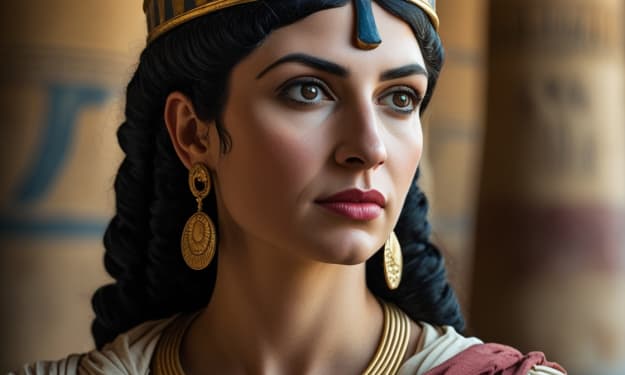
Cleopatra’s Lost Fortune: The Untold Mystery of Egypt’s Last Queen. AI-Generated.
Cleopatra’s Lost Fortune: The Untold Mystery of Egypt’s Last Queen In the grand tapestry of ancient history, few figures evoke as much intrigue and fascination as Cleopatra VII, the last Pharaoh of Egypt. Known as much for her intellect and political acumen as her beauty, Cleopatra ruled at a time of both immense opportunity and growing Roman influence. But beyond her tragic love stories and royal lineage lies an enduring enigma: what happened to Cleopatra’s legendary wealth? When Cleopatra ascended the throne of Egypt in 51 BCE, she inherited a nation whose coffers overflowed with the riches of millennia. Egypt, strategically located at the crossroads of Africa, the Middle East, and the Mediterranean, was the breadbasket of the ancient world. Its fertile Nile Delta, thriving trade ports like Alexandria, and ancient tombs packed with gold and artifacts made the kingdom one of the wealthiest on Earth. The Ptolemaic dynasty, of Macedonian Greek origin and founded by one of Alexander the Great’s generals, had ruled Egypt since 305 BCE. By Cleopatra's time, it had amassed wealth through trade in grain, papyrus, perfumes, and exotic luxuries. The Library of Alexandria was not only a hub of knowledge but also a symbol of Egypt’s cultural and economic dominance. Cleopatra herself was no passive heiress. Fluent in nine languages and deeply involved in administrative affairs, she revitalized Egypt’s economy through reforms, devaluing currency to stimulate trade and stabilizing grain distribution to avoid famine. Her personal wealth grew alongside the state’s, and she was said to be one of the richest individuals of her time. However, her fortunes would become entangled with two of Rome’s most powerful men: Julius Caesar and Mark Antony. With Caesar, she formed a political alliance and romantic relationship that helped secure her throne. After his assassination in 44 BCE, she turned to Mark Antony, with whom she had three children and shared power in the eastern Roman territories. Mark Antony and Cleopatra’s combined wealth was legendary. Together, they held dominion over vast swathes of territory rich in resources, and their court in Alexandria was said to rival or even surpass that of Rome. Historical sources describe opulent feasts, golden thrones, and ships laden with treasure. Cleopatra reportedly possessed not just gold and silver, but emerald mines, pearls, and artistic masterpieces. But this golden age was short-lived. In 31 BCE, their forces were defeated by Octavian (later Augustus Caesar) at the Battle of Actium. With their political and military power collapsing, Antony and Cleopatra retreated to Egypt. One year later, facing inevitable defeat, they both died by suicide—Cleopatra famously through the bite of an asp, although that account is debated. And then, the trail of her treasure vanishes. Roman records suggest Octavian seized much of Cleopatra's wealth upon his conquest of Egypt. It is said he used it to fund his rise as Emperor and stabilize the Roman economy. But many historians believe not all of it was captured. Cleopatra, ever cunning and strategic, may have hidden a portion of her treasure in anticipation of defeat. Legends persist of treasure-laden tombs buried beneath the sands of Egypt, or sunken hoards beneath the waters near Alexandria. In particular, the lost city of Thonis-Heracleion, recently discovered submerged off the Egyptian coast, has yielded some clues about Egypt’s vast maritime wealth, but no definitive link to Cleopatra’s missing fortune. Another mystery lies in the location of her final resting place. Ancient sources suggest Cleopatra and Antony were buried together in a grand mausoleum near Alexandria. Archaeologists, including renowned Egyptologist Dr. Zahi Hawass, have spent years searching for this lost tomb, hoping it may contain not only their remains but possibly the last cache of Cleopatra’s riches. The allure of Cleopatra’s lost wealth continues to captivate adventurers and scholars alike. Could it be hidden in a secret chamber beneath ancient temples? Was it smuggled out of Egypt by loyalists? Or did it truly pass into the hands of Rome, vanishing into history? What remains undeniable is that Cleopatra’s legacy, like her fortune, has withstood the test of time. Her tale is not merely one of love and tragedy, but of power, strategy, and a mysterious treasure that may still lie hidden beneath the sands of her fallen kingdom.
By Say the truth 2 years ago in History
The Golden Depths of India: The Untold Narrative of Kolar Gold Fields
Ancient Beginnings: Gold Prior to Empire The history of gold extraction in the Kolar area extends back more than 2,000 years. Archaeological findings indicate that the early inhabitants of South India were cognizant of the gold beneath their feet and had devised rudimentary methods of extraction. Ancient temples and writings reference the dazzling wealth of the Kolar region, and some historians even speculate that gold from these mines may have embellished the courts of the Chola and Vijayanagara empires. Nonetheless, it was during the British colonial period that KGF evolved from local artisanal mining into an industrial behemoth. Colonial Exploitation and the Emergence of an Industrial Colossus In the late 19th century, British engineers and geologists discerned the immense potential concealed beneath Kolar’s rugged landscape. In 1871, Michael Lavelle, an Irish soldier, acquired the rights to mine gold in the vicinity. Although his initial endeavors yielded modest profits, it was his discovery that ignited interest from British enterprises, particularly the John Taylor and Sons Company, which would ultimately dominate gold production in KGF for decades. By the early 1900s, KGF housed one of the deepest mines worldwide, descending more than 3,000 meters (over 10,000 feet) into the earth. It was equipped with state-of-the-art technology for the era: electric lifts, subterranean railways, and advanced ventilation systems. British colonial authorities established a township surrounding the mines complete with bungalows, clubs, churches, and even a golf course earning KGF the moniker “Little England. ” Golden Glory: Wealth, Labor, and Heritage During its peak production years, particularly between 1900 and 1956, KGF yielded nearly 800 tonnes of gold. It significantly contributed to the British economy and subsequently to the reserves of independent India. However, this gold was acquired at a considerable human cost. Tens of thousands of Indian laborers many hailing from Tamil Nadu and Karnataka labored in arduous underground conditions. They endured long hours, perilous cave-ins, substandard air quality, and exposure to mercury and other hazardous substances utilized in refining processes. Despite the adversities, KGF fostered a vibrant cultural life. It became one of the earliest locales in India to achieve full electrification (in 1902), thanks to the nearby hydroelectric facility at Shivanasamudra. Schools, hospitals, and churches prospered in the region, forming a distinctive Anglo-Indian community that remains proud of its heritage. The Decline of the Gold Giant By the 1970s, the Kolar mines began to exhibit indicators of depletion. The deeper the miners excavated, the more challenging and costly it became to extract gold. The government of India, which had assumed control of operations through Bharat Gold Mines Ltd (BGML), found it progressively difficult to justify the expenditures. In 2001, following several years of deficits and labor conflicts, the mines were officially closed. Thousands of laborers lost their employment, and the once-thriving KGF township descended into deterioration. Myth, Legacy, and Contemporary Pop Culture Even after their closure, the myth of KGF persisted. Locals recounted stories of untouched gold deposits and concealed chambers buried deep underground. These narratives fueled tales of hidden wealth, inspiring literature and cinema. In recent times, the Kannada-language film series “KGF” has reignited interest in the region’s history, depicting a dramatized version of the gold rush, mafia conflicts, and uprising. Although the films took artistic liberties, they highlighted the stark realities and splendor of a bygone age. Reopening the Gold Veins? Recently, efforts have been made to revive gold mining in the Kolar region. The Indian government has proposed plans to auction the mines to private enterprises, hoping that contemporary technology may render extraction viable once more. Environmental issues, land rights, and economic feasibility continue to pose significant obstacles. Nonetheless, if even a fraction of KGF’s estimated remaining gold reserves purported to be valued in the billions can be mined, it could once again transform the region’s prospects. Conclusion The narrative of Kolar Gold Fields transcends mere gold. It encompasses ambition, colonization, innovation, sacrifice, and pride. The mines may be quiet today, but the legacy of KGF runs deep within the hearts of those who once called it home and in the substrata of the land that may still shimmer with secrets waiting to be discovered.
By Say the truth 2 years ago in History
The Secret Behind Japan’s Economic Boom in the 1960s and 70s
Imagine a country reduced to rubble, its cities flattened, its economy shattered, and its people devastated by war. Now, imagine that same country becoming the second-largest economy in the world within just two decades. Sounds impossible? This is not a fairy tale — it’s the real story of Japan. And the secret behind its stunning transformation lies not in luck, but in vision, discipline, and relentless innovation.
By MystiTech Hub2 years ago in History