Analysis
Metal Steel Distributors - Need Metals
Metal steel distributors play a very important role in helping businesses and industries get the steel they need. Steel is a strong material used to make all sorts of things, from buildings to cars to kitchen appliances. But how do businesses get the steel they need for these projects? That's where metal steel distributors come in!
By Muhammad Ijaz2 years ago in History
Discover Patrick Henry’s Legacy, Beyond His Revolutionary ‘Give Me Liberty or Give Me Death’ Speech
Tourists frequently cram themselves into the seats of a plain white church in Richmond, Virginia, to witness a reenactment of a speech that was first delivered there on March 23, 1775, 250 years ago. Here, in front of George Washington and Thomas Jefferson, Patrick Henry spoke to his fellow Virginia colonists, concluding with the famous quote, "Give me liberty or give me death!" That sentence, a passionate appeal that Americans have often used to express their dedication to freedom, has reverberated across the ages.
By moyensefat2 years ago in History
The Weight of Living: How Minds Have Endured Through Time
The first thing Clara noticed about the old soldier was his hands. They rested on the sanitarium’s dining table, palms upturned, as if waiting for invisible weights to be placed in them. The fingers trembled slightly—not from age, Clara thought, but from some deeper, unseen burden.
By Historical Stories2 years ago in History
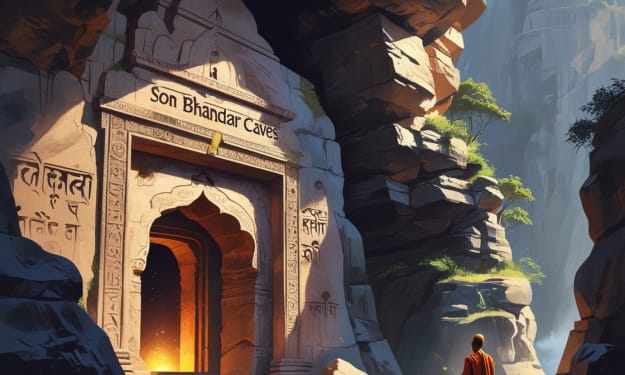
Son Bhandar Caves: Bihar’s Hidden Vault of Gold and History. AI-Generated.
The Son Bhandar Caves of Bihar: Vaults of History and Enigma In the serene city of Rajgir, situated amidst the craggy Vaibhagiri Hills in Bihar, are two ancient rock-carved chambers referred to as the Son Bhandar Caves. Frequently eclipsed by more renowned Buddhist locations such as Nalanda and Bodh Gaya, these caves possess their own allure. Originating from the 3rd or 4th century AD, the Son Bhandar Caves are enveloped in enigma, with regional tales asserting they were formerly utilized to conceal a vast royal treasure. Sculpted from a singular rock face and inscribed with characters in the ancient Brahmi script, the caves represent a combination of architectural accuracy, historical significance, and folkloric fascination. This article delves into the origins, structure, and persistent legends associated with the Son Bhandar Caves, illuminating one of India’s lesser-explored archaeological treasures. 1. The Location and Configuration Situated within the Rajgir Wildlife Sanctuary, the Son Bhandar Caves comprise two adjacent rock-cut chambersone large and one smallercarved into the cliffside. They are frequently compared stylistically to the more famed Barabar Caves, which were fashioned during the Mauryan Empire. The larger chamber features a rectangular form with a smooth interior wall surface, whereas the smaller one appears incomplete or more weathered. Both caves have been hewn from solid granite and are reachable by a stone pathway leading from the plains below. The site, providing sweeping views of Rajgir, suggests it may have once fulfilled strategic or religious functions. 2. Historical Context and Gupta Link Researchers assign the Son Bhandar Caves to the Gupta era (320–550 AD), regarded as a golden period for Indian artistry, literature, and temple construction. While preceding Mauryan caves were predominantly affiliated with the Ajivika sect, the Son Bhandar Caves are thought to have ties with Jainism. This notion is bolstered by the inscription in Brahmi script engraved near the entrance of the cave. It is inscribed in Gupta-period lettering and is said to assert that the caves were created for Jain ascetics. Jain sculptures, presumed to have been added later, were also unearthed within the caves, further supporting the concept that these served as sites for spiritual retreat. 3. The Tale of the Golden Hoard What distinguishes the Son Bhandar Caves from other rock-cut structures is the tale linked with their designation. In Hindi, “Son Bhandar” translates directly to “Store of Gold. ” According to local folklore: The larger chamber is reputed to be a concealed treasury of King Bimbisara, the ruler of Magadha and a contemporary of the Buddha. The entrance to this treasure is supposedly sealed behind a substantial stone door equipped with a concealed mechanism. A cryptic inscription on the wall, if accurately decoded, is purported to disclose the method to access the vault. The treasure remains undisturbed due to challenges in interpreting the inscription and apprehension about disturbing the site. The conviction persists that unimaginable wealth of gold and gemstones lies hidden beyond that sealed barrier. Numerous unsuccessful endeavors have been made over the centuries to unlock the alleged treasure chamber, including efforts during the British colonial period. 4. Archaeological Importance Beyond the myths, the caves possess significant archaeological value:
By Say the truth 2 years ago in History
The Hidden Passage of Hyderabad: Unearthing the Charminar Tunnel Mystery
Beneath the Minarets: Revealing the Concealed Passage of Charminar, Hyderabad In the core of Hyderabad, the historic Charminar rises as a splendid emblem of Indo-Islamic architecture and the heritage of the Qutb Shahi dynasty. Erected in 1591 by Sultan Muhammad Quli Qutb Shah, the edifice has fascinated historians, tourists, and locals for centuries. While the four minarets above ground are celebrated by all, there exists a lesser-known, considerably more enigmatic legend that resides belowthe presence of a clandestine subterranean tunnel that supposedly links Charminar to Golkonda Fort, approximately 11 kilometers distant. This article delves into the historical, architectural, and cultural backdrop of the Charminar Tunnelscrutinizing its genesis, the myth versus reality discourse, its purported function, and the persistent intrigue it evokes among adventurers and scholars. 1. The Inception of Charminar: Monument of Affliction and Pride To grasp the tunnel, one must first revisit the genesis of Charminar. It was erected as a symbol of victory following the cessation of a lethal plague that had ravaged Hyderabad. Some narratives suggest the Sultan vowed to construct a mosque if his populace were spared from the epidemic. The outcome was not merely a site of worship but a central element of urban planning, with Charminar as the nucleus of a grid-patterned city. Strategically positioned at the convergence of historical trade routes, Charminar served as a venue for both commerce and culture. However, beyond its external magnificence, the structure may have concealed defensive secretsincluding escape passages beneath the surface. 2. The Myth of the Tunnel: Charminar to Golkonda For centuries, oral traditions, local legends, and colonial accounts have alluded to a tunnel extending from Charminar to Golkonda Fort, the epicenter of Qutb Shahi authority prior to the establishment of Hyderabad. According to these narratives: The tunnel acted as a secret route for the royals during times of siege. It was expansive enough to facilitate movement on foot or horseback. It connected to various underground chambers and potentially even concealed treasure troves. What perpetuates the legend is that numerous ancient structures in the vicinityparticularly near Mecca Masjid and Purani Havelihave exhibited sealed entrances or enigmatic chambers beneath them, which locals believe to be remnants of this underground network. 3. Archaeological Indications and Theories Over the years, several minor excavations and unintended findings have alluded to subterranean cavities near Charminar and Golkonda. In 2008, laborers excavating in the old city reportedly uncovered a stone-paved pathway beneath a structure adjacent to Charminar, igniting renewed interest in the tunnel hypothesis. Nonetheless, the Archaeological Survey of India (ASI) has not officially corroborated the existence of a tunnel. Their justifications include: Structural safety concerns: Excavating beneath centuries-old monuments could jeopardize their stability. Urban development: Much of the route is now heavily constructed with markets, residences, and roads. Absence of consistent documentation: Despite oral histories, written records from the Qutb Shahi period do not definitively confirm the existence of such a tunnel. However, Hyderabad's traditional guardiansresidents, historians, and enthusiasts of folkloreremain steadfast in their beliefs. Numerous individuals propose that the tunnel has been either obstructed or partially collapsed but was once a completely operational passageway. 4. Function and Tactical Design If the tunnel indeed existed, its tactical significance cannot be undervalued. During the 16th and 17th centuries, political intrigues, internal uprisings, and threats from competing kingdoms necessitated the design of subterranean escape routes. Architectural historians observe that Mughal and Persian architecture frequently featured secret tunnels, concealed compartments, and intricate ventilation mechanisms. Considering the Qutb Shahis' Persian heritage and military acumen, it is plausible they integrated similar elements into the urban planning of Hyderabad. 5. The Tunnel in Cultural Tradition and Tourism The notion of a concealed tunnel linking Charminar and Golkonda has evolved into a cultural legend. Tour guides often reference it, residents transmit the tale to younger audiences, and social media perpetuates the myth through occasional “sightings” or rediscoveries. Although largely uncorroborated, the legend contributes a sense of intrigue to Hyderabad’s cultural legacy and amplifies the charm of Charminar and Golkonda. If strategically marketed, it could serve as a tourism narrative that attracts explorers and history enthusiasts alike. 6. Contemporary Relevance and Urban Challenges
By Say the truth 2 years ago in History
"Early Morning Letters from History"
is an idea that can provoke in-depth contemplation on time, human development, and the ways that ancient letters can preserve the knowledge, feelings, and ideas of people from earlier generations. In a "Dao" context, these letters might represent more than just communication; they might represent a profound philosophical investigation of the Tao, the path of least resistance, and life's inherent flow.
By MD SHAMIM RANA2 years ago in History
History and Struggle together with Survival mark the essence of this ancient land known as Palestine.
Since ancient times Palestine has occupied an essential position because of its multi-faceted historical and religious and cultural value. Palestine established itself as the central geographic epicenter where Africa meets Asia to the north of Europe. Today the word Palestine brings up complicated stories about people's identifications and their fight against displacement together with ongoing battles for the establishment of a homeland.
By Helal Ahmed Nibir2 years ago in History
The Struggle of Gaza: A Glimpse into the Heart of Palestine
The Gaza Strip, a small densely populated region along the eastern seaboard of the Mediterranean Sea, is now one of the most symbolically loaded and geopolitically loaded spaces in the world. Part of the State of Palestine, Gaza is home to over 2 million individuals, most of them children, conditions of living as physically as emotionally challenging.
By Arafat Hossain 2 years ago in History
The Legacy of Longevity: A Lesson from Japan
The Legacy of Longevity: A Lesson from Japan The Mystery Begins In the year 2045, Aarav, a passionate journalist from Kolkata, India, stood on the breezy coastline of Okinawa. Unlike most reporters who chased headlines, Aarav pursued meaning. He had one mission: to uncover the hidden truths behind Japan’s extraordinary longevity and share it with a restless world drowning in stress, poor health, and fast living.
By MystiTech Hub2 years ago in History
The Story of Two Best Friends
Once upon a time, in a small town nestled between rolling hills and sparkling rivers, lived two inseparable best friends: Ali and Zainab. They had known each other since childhood, growing up together in a neighborhood where everyone knew each other’s name. Their bond was unique, built on shared laughter, secrets, and countless adventures. They were the kind of friends who understood each other without words, who knew each other’s thoughts just by looking at a smile or a frown. Their friendship was the epitome of trust, love, and unspoken understanding.
By Walid Khan2 years ago in History
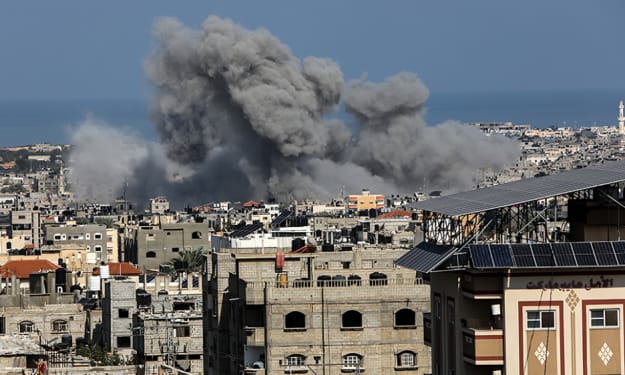
Israel reportedly plans to seize Rafah after a Gaza City strike kills at least 23 people.
**At least 23 people are killed in a strike in Gaza City as Israel reportedly plans to seize Rafah** At least 23 Palestinians have been killed in an Israeli airstrike on Gaza City, according to reports from local authorities, marking the most recent escalation of the ongoing conflict in Gaza. The attack, which occurred on April 10, 2025, targeted a densely populated area, causing significant destruction and casualties. This incident demonstrates the region's ongoing violence, which has seen a significant rise in military operations and airstrikes since the conflict re-emerged last year. Humanitarian aid workers and civilians were reportedly actively dispersing supplies when the strike struck, according to reports. Numerous aid workers were among the victims, illustrating the toll that the conflict is taking on those attempting to assist the afflicted population of the region. As rescue workers continue to sift through the rubble, it is possible that the number of casualties will continue to rise. Many of the wounded are said to be in critical condition.
By Amir Hossain2 years ago in History