Analysis
Love like black tea
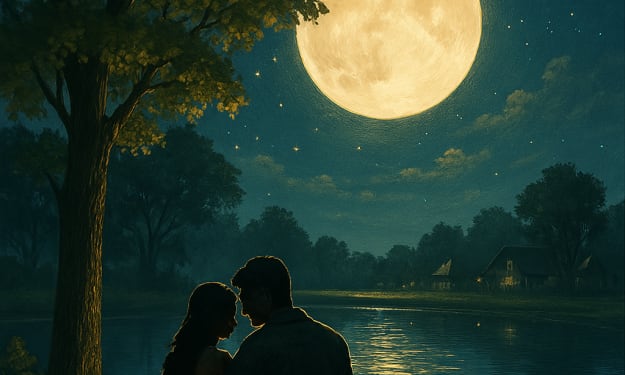
Love like black tea It was deep at night. Outside the window, a gentle rain was falling silently. Maya was sitting in the dim light inside the room. A cup of black tea in her hand was her favorite, and her love, like that tea, was dark and deep, but not visible to everyone.
By Arshad Ali2 years ago in History
Inside Apple's Internal AI Debate: Tim Cook Approved a Significant AI Investment in 2023, but CFO Luca Maestri Criticized It
Tim Cook, the CEO of Apple, approved a significant push into artificial intelligence (AI) in 2023 with the goal of putting the business at the vanguard of the quickly changing tech race. Luca Maestri, Apple's chief financial officer, reportedly stepped in and drastically cut the proposed budget, igniting an internal discussion about the company's AI strategy, according to a recent New York Times report.
By Riaz Uddin2 years ago in History
I Know What the Hell I’m Doing,’ Trump Says as World Braces for Trade War
In a bold and defiant statement amid growing global concerns over escalating tariffs and economic tensions, former President Donald Trump declared, *“I know what the hell I’m doing,”* during a rally in Ohio, addressing criticisms over his aggressive trade stance.
By Mahenur Dola2 years ago in History
Heath's Silence
He wasn’t rude, just... distant. The townspeople whispered stories—some claimed he had once been a soldier, others said he’d lost his wife and child in a fire. Heath never offered the truth, so no one knew. He lived in the old stone cottage by Willow Lake, a place most avoided because of the eerie quiet that clung to it like fog. Every morning at dawn, Heath would row out onto the lake, alone, and sit still for hours. Some said he was fishing. Others said he was mourning.
By sobuj chandra dash2 years ago in History
The Conflict Between Israel and Palestine: The Past, the Present, and the Way Forward
Introduction One of the modern era's longest, most emotionally charged, and globally significant conflicts is the Israel-Palestine conflict. Beyond the headlines and political statements, it is a story of two peoples with deep historical connections to the same land, struggling for recognition, dignity, and survival. Over the decades, the conflict has witnessed numerous wars, peace negotiations, uprisings, and immense human suffering. The purpose of this article is to provide a comprehensive comprehension of the conflict by tracing its beginnings, examining its current complexity, and assessing the likelihood of peace. 1. Historical Roots of the Conflict
By Md Shahadat Hossain2 years ago in History
Climate Change A Growing Global Concern
Climate Change A Growing Global Concern Climate change has come one of the most burning issues of our time. It refers to significant and continuing changes in the Earth's climate and rainfall patterns over a long period. The term" climate change" is frequently used interchangeably with" global warming," though they are n't exactly the same. While global warming refers specifically to the rise in global average temperatures, climate change encompasses a wider range of changes, including altered rush patterns, rising ocean situations, and more frequent extreme rainfall events.
By Md.Mezabur Rahman Rasel2 years ago in History
China hits back at Trump tariff hike, raises duties on US goods to 125%
On April 11, 2025, China announced a significant escalation in its trade dispute with the United States by raising tariffs on U.S. imports from 84% to 125%. This move directly retaliates against President Donald Trump's earlier decision to increase tariffs on Chinese goods to 145%
By Time Update2 years ago in History
New Museum Examines the History of American Public Housing—and the Stories of Its Residents
Tens of thousands of people were displaced when the Chicago Housing Authority (CHA) started demolishing its own public housing apartments in the early 2000s, despite the agency's assurances that it would soon provide them with new housing and significant community investment.
By moyensefat2 years ago in History
7 Things Roman Gladiators Did That You Won’t Read in History Books.
The image of Roman gladiators as titans of strength, courage, and brutal fighting has been a long-established one, yet much of the popular narrative about them is mythologized or simplified. The gladiators weren’t bloodthirsty fighters battling to the death for the crowd's pleasure. Their lives were much more nuanced, and history has glossed over some interesting elements of their stories. Here are seven things you might not learn in history books about Roman gladiators.
By Pen to Publish2 years ago in History
What is Trump's China tariff strategy?
As Trump improvising. His stunning escalation in tariffs on China this week didn’t follow any meaningful formula. He’s acting, as he always does, like a real estate shark, raising the stakes to intolerable levels to seek leverage. It’s the latest manifestation of the “madman theory,” by which Trump conjures the most extreme of circumstances to try to spook his opponents.
By Mustafa kamal2 years ago in History
Pilot and five tourists die when a helicopter crashes into the Hudson River.
Tragic Event Over the Hudson: Pilot and Five Tourists Die in Helicopter Crash New York City, April 10, 2025 — In a devastating accident that has shaken both locals and visitors alike, a sightseeing helicopter carrying five tourists and a pilot crashed into the Hudson River on Wednesday afternoon, killing all six people onboard. The accident occurred shortly after 2:30 p.m. near Midtown Manhattan, prompting an immediate response from the emergency services but ultimately leading to a tragic outcome. The Incident
By Md Faruk Ali2 years ago in History
Why England Is Rich Today and What It Took from the Indian Subcontinent
England’s historical wealth roots go deep into the colonial era — especially the period of British rule in the Indian subcontinent. They rule Indian subcontinent for 200 years(1757-1947) .They went that subcontinent for business and commerce and took they power by defeating the last independent king of Bangla(Indian subcontinent) named Sirajuddaula. Between the mid-18th century and 1947, the British systematically extracted wealth from India and the broader subcontinent. After the Battle of Plassey in 1757, the British East India Company began extracting massive wealth from Indian rulers, including gold, silver, and other valuables. Economist Dadabhai Naoroji estimated that billions of pounds (in today's value) were drained annually from India to Britain without any equivalent return. They also made exploitation of Agriculture. Indian farmers were forced to grow indigo, cotton, tea, and opium instead of food crops, leading to famines. Systems like the Zamindari system imposed heavy taxes, causing widespread poverty and landlessness. There was Human Exploitation also. Millions of Indians were shipped as indentured laborers to British colonies in the Caribbean, Africa, and Southeast Asia under harsh conditions.
By Tamzid Hasan2 years ago in History