Analysis
NASA Curiosity Rover Finds Largest Organic Molecules on Mars Major Breakthrough in Search for Life.
NASA Curiosity Rover Finds Largest Organic Molecules on Mars Major Breakthrough in Search for Life. In a groundbreaking discovery that reignites the question of life beyond Earth NASA's Curiosity rover has detected the largest organic molecules ever found on Mars. These complex carbon based compounds considered essential building blocks of life were discovered in rock samples analyzed by Curiosity’s onboard instruments in the Gale Crater an area long suspected to have once hosted liquid water.
By Adnan Rasheed2 years ago in History
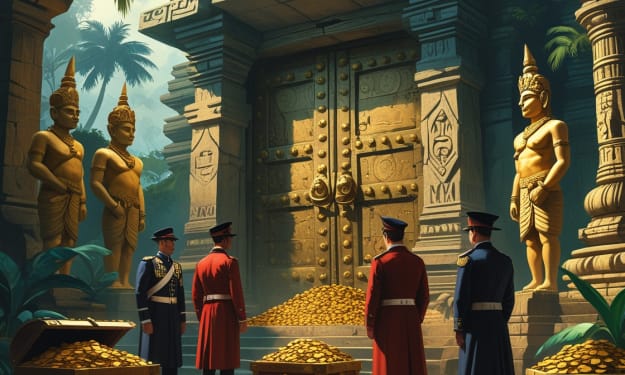
"The Vanished Wealth of the Soviet Empire". AI-Generated.
The Disappeared Fortune of the Soviet Empire: Discovering the Soviet Union’s Concealed Treasures From gold bullion lost amidst the Russian Revolution to invaluable artworks concealed in bunkers throughout Eurasia, the history of the Soviet Union is filled with narratives of vanished wealth, state treasures, and clandestine caches. This article examines the legends, realities, and persistent enigmas regarding the extensive yet elusive riches of the Soviet Empire. The Disappeared Fortune of the Soviet Empire: Discovering the Soviet Union’s Concealed Treasures The Soviet Union was not only one of the most extensive empires in contemporary history by area and military strength, but also a repository of significant wealthboth acknowledged and speculated. Throughout the 20th century, during conflicts, revolutions, and the eventual disintegration of the USSR in 1991, immense quantities of state treasures, cultural artifacts, and individual fortunes essentially vanished. Currently, treasure seekers, historians, and authorities continue to pursue the forgotten fortunes of the Soviet Empire. The Tsar’s Gold – A Revolutionary Enigma The narrative of lost Soviet treasures commences even prior to the establishment of the USSR, during the downfall of the Russian Empire in 1917. As the Bolsheviks toppled the Tsarist government, the imperial family’s private assetsestimated at over $45 billion in present-day valuedisappeared. Tsar Nicholas II’s gold reserves, diamond-studded regalia, Fabergé eggs, and priceless artworks were either concealed, plundered, or clandestinely transported. One of the most enduring myths is that of the “Lost Gold of Kolchak. ” Admiral Alexander Kolchak, a leader of the White Army, assumed control of the Imperial Gold Reserves during the Russian Civil War. Following the defeat of his forces in Siberia in 1920, more than 500 tons of gold bullion remained unaccounted for. Some accounts suggest it sank into Lake Baikal, while others assert it was buried along the Trans-Siberian Railway. Despite decades of investigation, no definitive treasure has ever been located. Stalin’s Covert Bunkers and Art Collections Under Joseph Stalin, the Soviet Union undertook extensive secret initiatives to collect and conceal cultural treasures, many of which had been confiscated from Nazi Germany following World War II. Referred to as “Trophy Art,” this included over 2. 5 million art piecespaintings, sculptures, and rare manuscriptsthat were stored in hidden bunkers and museums under state confidentiality. Some of this artwork was returned post-war, yet a substantial portion remains unaccounted for or stored in undisclosed sites. Speculation endures that Stalin also possessed bunkers filled with gold reserves, foreign currency, and expropriated treasures from occupied regions and adversaries of the state. The Soviet Gold Reserves and Cold War Dispersals During the peak of the Cold War, the Soviet Union maintained one of the largest gold reserves globally. According to some estimates, it possessed over 2,000 metric tons of gold, safeguarded in vaults beneath the Kremlin and within secret facilities across the USSR. As the empire declined in the late 1980s, there were indications that senior officials started relocating gold and assets out of the nation, either for safeguarding purposes or personal advantage. When the USSR disintegrated in 1991, investigators uncovered significant discrepancies in the country’s gold records. Billions in foreign currency reserves had also disappeared. Some speculate that portions of this wealth ended up in offshore accounts, Swiss vaults, or even concealed caches throughout Eastern Europe and Central Asia. The Curse of the Amber Room: A Treasure Still Missing One of the most renowned artistic treasures linked to Soviet losses is the Amber Rooma chamber constructed entirely of amber panels, gold leaf, and mirrors, initially developed in Prussia and presented to Peter the Great in 1716. The room was plundered by the Nazis during World War II and subsequently vanished. The Soviets spent decades in pursuit of it, convinced it had been concealed in a German bunker or a sunken transport vessel. Despite numerous expeditions and even reconstructions, the original Amber Room has never been located. Its current estimated value surpasses $500 million. The Collapse and the Disappearing Billions When the Soviet Union collapsed in 1991, the situation descended into turmoil. State assets were privatized rapidly, oligarchs emerged, and state-operated industries changed ownership. The Soviet National Bank was reportedly drained of over $60 billion in tangible assets, including gold, platinum, and rare earth metals. Multiple investigations disclosed that high-ranking Soviet officials and KGB members executed a systematic transfer of wealth into private ownership or foreign banks. To this day, international audits and legal actions persist in an effort to trace this lost treasure.
By Say the truth 2 years ago in History
How Japan Rose from the Ashes: The Post-War Miracle
How Japan Rose from the Ashes: The Post-War Miracle In 1945, Japan stood at the edge of complete devastation. The end of World War II had left the country in ruins — cities flattened by bombings, millions homeless, industries destroyed, and a society gripped by hunger, fear, and despair. The land of the rising sun had set into darkness.
By MystiTech Hub2 years ago in History
Houston Stuns Duke in Final Four Comeback to Reach NCAA Championship
SAN ANTONIO — In a thrilling Final Four showdown, Houston pulled off an incredible comeback to defeat Duke 70-67, overcoming a 14-point deficit in the final eight minutes. With this stunning victory, the Cougars are now set to face Florida in the NCAA Championship game on Monday night.
By Muhammad Hayat2 years ago in History
The Forgotten Fortunes: Rajasthan’s Vanishing Palaces and Their Lost Legacy
Whispers in the Sand: The Forgotten Palaces of Rajasthan Rajasthan—literally meaning “Land of Kings”—is often celebrated for its grand forts, regal culture, and tales of valiant warriors. Cities like Jaipur, Udaipur, and Jodhpur boast world-renowned palaces such as the City Palace, Hawa Mahal, and Mehrangarh Fort. However, beyond the popular tourist trail lies another Rajasthan—one composed of forgotten palaces, crumbling mansions, and vanishing architectural wonders. These structures, once the pride of princely estates and merchant kingdoms, now lie in ruins, hidden under layers of dust and silence, their stories fading with each passing year. This article explores the fascinating, overlooked world of Rajasthan’s vanishing palaces, their historical importance, and the urgency of preserving this disappearing legacy. 1. The Legacy of Forgotten Royalty Rajasthan was once divided into numerous princely states, or thikanas, each ruled by powerful feudal lords under the larger umbrella of Rajput dynasties. While the capital cities boasted palaces that remain preserved and visited today, hundreds of lesser-known palaces in remote districts like Karauli, Barmer, Shekhawati, Bundi, and Tonk are in disrepair. These estates were not just royal residences but also centers of political power, art, culture, and wealth. From ornate mirror work and hand-painted murals to secret courtyards and underground chambers, they were a testament to the region’s architectural brilliance. Many of these palaces were even grander than some of today’s iconic buildings. Yet after the end of princely rule in 1947 and the eventual abolition of royal privileges in 1971, many of these thikanas were left without adequate income or recognition. Over time, the families moved out, and the palaces fell into decay. 2. Shekhawati – The Fading Open-Air Museum Nowhere is the decline more visible than in Shekhawati, a region once called the "open-air art gallery of Rajasthan." It was home to some of India’s wealthiest merchant families during the 18th and 19th centuries, who built lavish havelis (mansions) adorned with frescoes, gold leaf work, and intricate carvings. Today, most of these havelis—particularly in towns like Mandawa, Nawalgarh, and Fatehpur—are crumbling. Many have broken roofs, faded murals, and are used as storage barns or have been completely abandoned. Historians estimate that more than 2,000 such structures exist, many of them worthy of World Heritage recognition, but less than 10% are maintained. 3. The Royal Estates of Forgotten Forts Beyond Shekhawati, several other thikanas hold palaces that are fading into obscurity: Bundi Palace: Though renowned for its wall paintings, much of the structure remains unrestored. Entire chambers with priceless murals have been left to rot. Karauli Palace: Home to the Yaduvanshi kings, this palace has intricate stonework and halls once gilded with gold. However, tourism is minimal, and preservation efforts are limited. Kuchaman Fort: Perched atop a steep hill, this fort-palace is mostly unknown outside local circles. While a section has been converted into a heritage hotel, vast areas are abandoned. These forts once housed libraries, treasuries, weapon stores, and artworks—many of which have been stolen, lost, or deteriorated due to lack of care. 4. What Was Lost: Treasure, Culture, and Identity Rajasthan’s forgotten palaces weren’t just about stone and mortar. They held: Historical Manuscripts: Genealogies, treaties, and philosophical texts. Treasure Rooms: Coins, jewelry, gold-plated furniture. Royal Paintings: Many now looted or held in private collections abroad. Local Art Forms: Wall art like Pichhwai, Miniature, and Phad paintings, which are vanishing. The cultural identity of many small towns was tied to their palace. As the buildings collapsed, so did traditional crafts, festivals, and a sense of communal pride. 5. Why the Palaces Vanished Several factors have contributed to this decline: Neglect after Independence: Many royal families were left without adequate funds to maintain their properties. Urban Migration: Heirs moved to bigger cities, abandoning ancestral homes. Lack of Government Support: ASI and state bodies often prioritize well-known sites, leaving smaller palaces undocumented. Looting and Encroachment: Several properties have been vandalized, illegally occupied, or stripped for building materials. 6. The Path Forward: Restoring a Legacy Not all hope is lost. A few passionate individuals and NGOs are working to restore forgotten palaces and promote them through heritage tourism. For example: The Neemrana Group has restored several old palaces into boutique hotels.
By Say the truth 2 years ago in History
“The Fortune That Escaped the Empire: British Colonialism’s Greatest Missed Treasures”
The Lost Riches: The Biggest Treasure Missed by the British Empire Throughout the era of colonial expansion, the British Empire plundered immense wealth from its colonies across Asia, Africa, and the Americas. From India's diamonds and spices to Africa’s gold and minerals, Britain amassed unprecedented fortunes. However, history also holds fascinating accounts of enormous treasures that evaded British grasp—treasures buried, lost, or hidden in plain sight, never to be seized by the crown. Among these, one of the most legendary missed fortunes lies in India: the hidden treasures of the Maratha Empire and Tipu Sultan’s lost wealth.
By Say the truth 2 years ago in History
How do tariffs work, and who will they impact? UChicago experts explain. Content Warning. AI-Generated.
Tariffs are one of the oldest tools in international trade policy, yet their impact on the economy can be complex and far-reaching. With global trade tensions on the rise in recent years, understanding how tariffs function — and who they ultimately affect — is more important than ever. Experts at the University of Chicago unpack the mechanics of tariffs and their broader implications for consumers, businesses, and the global economy.
By Md polash Ali2 years ago in History
Trump defends tariffs after markets plunge for second straight day: ‘Economic revolution. Content Warning. AI-Generated.
Trump Defends Tariffs After Markets Plunge for Second Straight Day: ‘Economic Revolution’ Former President Donald Trump has doubled down on his support for tariffs amid a steep market sell-off, insisting that his proposed economic policies, including broad tariffs on foreign imports, are key to what he called an “economic revolution” for the United States.
By Md polash Ali2 years ago in History
China says 'market has spoken' after US tariffs spark selloff
You know what’s funny? I never really cared about things like trade wars or tariffs before. Global economy stuff? Felt like something way out there—nothing to do with my day-to-day life. But now? It kinda feels like those big words are sitting right across from me at the dinner table. So how did this all start? Well, Trump made an announcement—not exactly breaking news, right? But this one hit different. He slapped a new 34% tariff on Chinese goods. Add that to the previous ones, and boom—total tax shoots up to nearly 70%. Crazy, right? And of course, China didn’t just sit there. They fired back with their own set of tariffs and even started holding back on some rare minerals that our tech world runs on. And we? The regular people? We’re stuck in the middle of this ping-pong match. Just the other day, I went out to buy a pair of headphones. Nothing fancy—something I’ve bought before, so I kinda knew the price. But this time? The guy at the shop asked for 600 Taka more than last time. I was like, “Wait… wasn’t this cheaper just a few weeks ago?” And he goes, “Yeah bhai, bringing stuff from China is costlier now. We gotta raise prices too.” That moment hit me. I mean, I’m just trying to listen to music, not fund a trade war. But here it is—global politics messing with my earphones. And it’s not just tech stuff either. Groceries? Prices are creeping up. Rice, lentils, even paper. Paper, man! And then there's the stock market. Don’t even get me started. I had some investments—pretty safe ones too. Thought I was being smart. Then bam! S&P 500 drops 9% in a week. Haven’t seen that kind of fall since the COVID days. I just sat there, staring at my screen, thinking, “Seriously? What now?” I remember this Chinese guy—Guo Jiakun—he once said, “The market has spoken.” Sounded simple at the time. But now? I get it. That sentence isn’t just about numbers. It’s about real people. Their savings, their struggles, their little dreams. And this whole mess? It’s not just about the US and China anymore. Europe’s feeling it. India too. Some countries are rushing to find new trade buddies. Others are trying to push local products into the spotlight. So, I started asking myself—are we just gonna sit and watch this unfold? ‘Cause if we don’t start doing something, even the basics might feel like luxury soon. These days, I try to buy local when I can. Sure, the quality’s not always top-tier, but it feels good—like I’m supporting people around me. But look, I’m not saying I can fix this alone. Nah, this needs everyone—government, business owners, buyers—pulling in the same direction. We can’t stop big countries from doing what they do, but maybe we can soften the blow. One last thing I wanna say—this whole trade war? It ain’t a movie. It’s not something we just watch and then move on. This is real life. One announcement from some leader somewhere, and suddenly your grocery bill goes up, your small business struggles, your plans take a hit. So yeah, maybe it’s time we stop just shaking our heads at the news and start thinking for ourselves. ‘Cause this isn’t just about politics—it’s about our lives."
By Md Motiur Rahman2 years ago in History
The Relationship Between Donald Trump and Imran Khan
The relationship between Donald J. Trump, the 45th President of the United States, and Imran Khan, the 22nd Prime Minister of Pakistan, was a notable chapter in the history of US-Pakistan relations. While their respective political ideologies and domestic contexts differed greatly, both leaders shared a populist style and a penchant for bold rhetoric that shaped their interactions and the broader diplomatic landscape between their nations.
By LegacyWords2 years ago in History
11 Surprising Benefits of Drinking Beetroot Juice Daily
11 Surprising Benefits of Drinking Beetroot Juice Daily Can You Take Apple Cider Vinegar While Pregnant? Menu Right Home Remedies Home/Home Remedies Home Remedies 11 Surprising Benefits of Drinking Beetroot Juice Daily Photo of Dr Maria Dr MariaJanuary 14, 2019 12,189 7 minutes read benefits of drinking beetroot juice daily Reasons why you should Drink Beetroot Everyday Benefits of Drinking Beetroot Juice Daily: Have you ever thought of adding some natural colored food into your diet to make it yummier, tastier and of course healthy? If not, please do think about it as it may prove beneficial for your personal health. We love the colorful dress but that’s not enough, our diet should be colorful to lead a healthy life. There are many vegetables that contain natural color and beetroot is one of them. In a word, beetroot is considered as nature’s blessing for its uncountable health benefits. Through this article, I am going to represent the reason why you should include beetroot into your daily diet from now. So stay with us. What Is Beet Root and what is the Nutrition Value? Beetroot nutrition value: Beetroot or beet is the edible taproot part of the beet plant. The scientific name is Beta Vulgaris. It is a common food ingredient and used n many cuisines worldwide. For this huge nutritional value, it has gained popularity as a superfood and many of its health benefits come from the presence of a huge amount of inorganic nitrate. Usually, beetroot is used as a vegetable, but it has also used in medicine due to it contains some essential nutrients. Usually round-shaped purple-colored beetroot as boiled, roasted or in raw condition. Also, we can make a delicious salad or mixed vegetables. Beetroot is highly nutritious and it can make a healthy addition to your diet. It is packed with essential nutrients like folate, manganese potassium, iron, and vitamin C. Besides this it contains a good percentage of fiber. Calories — 43. Water— 88% Protein— 1.6 g Carbohydrate— 9.6gm Sugar— 6.8gm Fibre— 2.8gm Fat— 0.2gm So it is clear that beetroot is highly packed with dietary fiber, low fat, and low carbohydrate. Besides this, it contains iron and vitamin C. This acts as an antioxidant and improves the immune system and skin health. There are also some plant compounds such as Betanin, inorganic nitrate and Vulgaxanthin found in beetroot. Betanin is responsible for the red color. Reason to Consume Beetroot: If you are health-conscious you must not like to make any compromise with your health and this is the main cause to include beetroot into your diet. As it is a superfood and helps to upgrade your health. Therefore, going natural is the final way o maintain a healthy routine as there is no shortcut for achieving your health goal. Benefits of Drinking Beetroot Juice Daily: 1. Helps to Lower Blood Pressure: Is beetroot good for high blood pressure? Above all we have to keep our heart in a good form and in order to do that blood pressure is the first thing we have to look after. High blood pressure is the cause of many heart diseases including heart attack and cardiovascular failure. Many types of research and studies have shown that beetroot is capable of controlling blood pressure in a short time because of the presence of active nitrate. Our body converts it into nitric acid that helps to expand the bloodstreams. ALSO READ: How to Cure High Blood Pressure Quickly in 7 Days 2. Improve Liver Health: Do beets cleanse your liver? Beetroot is liver-friendly. It is enriched with calcium, Betanin, Vitamin B, iron and anti-oxidants that enables the liver to work properly. It also works to thin the bile so that it can flow smoothly through the small intestine and liver. Beetroot has Betanin, which combines with fiber and both works to remove the toxin from the liver. Moreover, beetroot has Beilein, which is an Indole-derived red and yellow colored pigment and it works as an anti-inflammatory object. So in short beetroot has compounds that work as a cleanser and detoxifier. Thus it ensures a healthy liver on consuming on a daily basis. ALSO READ: 10 Super Foods That Cleanse Your Liver Naturally 3. Ensure Better Skin Health: Do beets help your skin? The humble-looking beetroot has extraordinary effects on the skin. It holds various beauty and health benefits within it. Therefore on consuming it daily may be helpful to prevent different skin problems including acne and pimple. The antioxidants in beetroot help to remove toxin from our body and so if you want to replace your dull-looking skin with glowing skin, a glass of beetroot extract or raw beetroot in a salad is the best way to reach your goal. Besides this, the beet Green, a different variety of beetroot has vitamin A, carotenoid and lutein, which fight free radicals and prevent your skin from premature aging and wrinkles. ALSO READ: Amazing Ways to Get Rid Of Ugly Skin Tags in One Night 4. Fight Against Inflammation: Is beetroot good for inflammation? The constituent present in beetroot is considered to treat therapeutic treatment associated with oxidative stress and inflammation. The betalain pigment acts as potent antioxidants and anti-inflammatory agents. As we are aware that inflammation is the root of many chronic diseases like cancer, obesity, heart and liver diseases and liver dysfunction. Therefore to prevent all these chronic diseases, it’s important to consume vegetables like beetroot as salad or juice daily. It also acts as a safeguard to our body and physiological system. 5. Manage Cholesterol: Does beetroot lower cholesterol? If you are one of those who have high cholesterol, you should consider beetroot into your daily diet immediately as beetroot may help you to reduce the bad cholesterol level. Various studies have shown positive results that support the fact that beetroot can effectively decrease the LDL or bad cholesterol levels in the blood. The soluble fiber in beetroot is capable of enhancing the Good Cholesterol or HDL as it has very low calorie and low-fat content. Therefore it is able to lower the triglycerides in the blood. 6. Assure Good Digestion: Is beetroot good for digestion? A good digestive system is key to healthy living. If you are thinking of including beetroot daily, do it immediately as consumption of beetroot with your daily food may improve your poor digestion capacity. Beetroot is full of soluble fiber that induced the irregular digestive system to function in a proper way. Moreover, the white beetroot juice can remove obstructions of the liver and spleen. Red beetroot also takes a prominent role to maintain abdominal health. 7. Aids In Treating Anaemia: Is beetroot high in iron? Beetroot is rich in rich with Iron. Anemia is the chronic disease of the blood that caused due to the deficiency of iron in the blood cells. So for anemic patients, it’s important to consume iron-rich food to meet up the deficiency. Red Beetroot is exceptionally good to raise hemoglobin in blood as it is enriched with iron, folate and vitamin C which are helpful to absorb iron. Therefore Beetroot consumption regenerates body strength and it also reactivates the red blood cells. RELATED: 10 Best Home Remedies for Anemia 8. Reduce Pain during Menstruation: Are beets good for menstrual cramps? Beetroot is effective to retain body water which is probably the main cause of pain during the menstrual cycle. However, during menopause and menstrual cycle hormone level fluctuate in a great deal causing various discomforts. Beetroot is helpful o balance the hormone level by reducing excess Estrogens and as it is a very rich source of foliate manganese and potassium which stimulates the production of hormones and helps to fight against menstruation cramps. It also reduces fatigue and stress during the period and menopause. 9. Boost up Energy Level During Exercise: Beetroot is a good source of health-friendly nutrients as well as nitrates. Nitrates are beneficial for health as they help to reduce blood pressure and at the same time, they can enhance physical stamina during exercise and sports performance like cycling and athletics. Nitrate turns into nitric oxide and reduces oxygen cost for low-intensity physical exercise and boosts up the energy level for high-intensity muscle exercise. Thus it increases muscle strength and power of endurance during exercise. 10. Good for Heart: Are beets good for the heart? A healthy heart is the sign of a healthy lifestyle and we are ready to turn every stone to keep our heart healthy and stress-free. Beetroot is such a blessed vegetable that it can solve many health problems including keeping the heart in a good condition as it is enriched with inorganic nitrate compounds. The inorganic nitrate compounds include nitrates, nitrites, and nitric oxide. As per research consuming beetroot in any form like juice or raw can lower the blood pressure level and thus indirectly reduce the risk of cardiac arrest. To add more to the list it is worth mentioning that beetroot improves the amount of oxygen supply to the working muscles. If the muscles do not get adequate oxygen they will lose the ability to move which will lead to less physical activities and heart disease. RELATED: 10 Warning Signs Your Heart is Not Working Properly 11. Beneficial For Pregnant Women: Is beetroot juice good in pregnancy? For a pregnant woman, nutrition is the first and foremost factor. So considering the nutrition facts of beetroot we can say that it is a good food to consume in pregnancy. Beetroot has a moderate amount of folic acid and it can promote the growth of the baby inside the embryo. On the other hand, it can also aid in producing red blood cell which is needed for the development of the spinal cord of the baby. The antioxidants in beetroot promote immunity power and healthy bone of the baby. Due to the presence of iron, it prevents anemia and also checks the blood pressure and metabolism rate of the mother. Conclusion: So, friends, I think that the above facts are quite reasonable to make you understand the benefits of drinking beetroot juice daily so that you can get all the health benefits. If you don’t have any allergies or other chronic health problems, you are free to take beetroot in moderate quantities daily as beets are a healthy and powerful vegetable. Only keep the following facts in mind while buying beetroot from the market: • choose beets that are red, firm and round in shape. • Never buy too big beetroot as a big size may indicate that it can appear woody from inside. • Keep aside the beets that have hairy taproot because it indicates that those beets are rough and aged. Lastly, you can incorporate beetroots in any form you want. Such As you can make beetroot juice, or mix beet slice in salads or make mixed vegetable or soup. Beetroot in any form will provide better health for you. So, friends, we hope that after going through the above benefits of drinking beetroot juice daily will surely help you. beetroot benefits beetroot juice beetroot nutrition value benefits of drinking beetroot juice daily benefits of drinking beetroot juice first thing in the morning Drink Beetroot Everyday
By Tariq Hussain 2 years ago in History