Analysis
"The Battle for Water: India’s Strategic Move to Curb Indus River Flows to Pakistan". AI-Generated.
India's Strategic Initiative: The Proposal to Divert the Indus Waters from Pakistan "The Battle for Water: India’s Strategic Move to Curb Indus River Flows to Pakistan" Water has consistently been an essential asset, and few river systems are as geopolitically delicate as the Indus River. Shared between India and Pakistan under the historical Indus Waters Treaty of 1960, the river has long served as a lifeline for both nations. However, escalating tensions, climate change, and strategic requirements have increasingly strained this agreement. Recent reports suggest that the Indian government is actively contemplating initiatives to divert or diminish the flow of Indus river waters into Pakistan, aiming to optimize the usage of its allocation and reduce Pakistan's reliance. This action, if fully implemented, would not only transform agriculture, the economy, and politics in South Asia but could also provoke significant diplomatic repercussions. Background: The Indus Waters Treaty Formally enacted in 1960 with the mediation of the World Bank, the Indus Waters Treaty (IWT) delineated the rivers between the two countries: India acquired jurisdiction over the three eastern rivers: Ravi, Beas, and Sutlej. Pakistan secured control over the three western rivers: Indus, Jhelum, and Chenab. India was permitted limited utilization (irrigation, hydropower) of the western rivers but was prohibited from obstructing their natural flow into Pakistan. The treaty has endured multiple wars and decades of discord, acclaimed as one of the world’s most effective instances of water-sharing diplomacy. Nevertheless, in recent years, India has charged Pakistan with fostering cross-border terrorism. Following major incidents such as Uri (2016) and Pulwama (2019), Indian officials have openly contemplated reassessing the treaty perceiving water as a tool in the geopolitical contest. Current Indian Strategy: Reducing and Diverting Waters Since 2016, Indian policymakers have publicly deliberated on maximizing India’s entitlements under the IWT. Significant projects currently underway or proposed include: Shahpur Kandi Dam Project (Punjab): A dam being constructed to fully exploit the waters of the Ravi River. It will inhibit water from flowing into Pakistan uncontrollably. Ujh Multipurpose Project (Jammu and Kashmir): A dam and storage project on the Ujh, a tributary of the Ravi. Designed to obstruct seasonal flows that presently benefit Pakistan. Second Ravi-Beas Link Project: Revitalizing existing canal systems to redirect excess Ravi waters to the Beas river and other Indian basins. Hydropower Projects on the Western Rivers: India is developing several run-of-the-river projects (such as Ratle on the Chenab and Pakal Dul on the Marusudar River) to maximize hydropower without technically contravening the treaty. Why Is India Pursuing This Course of Action? Several critical factors underpin India’s decision: Security: By diminishing water flow into Pakistan, India undermines Pakistan’s agriculture-centric economy, which significantly depends on the Indus basin. Exploiting Entitled Resources: Experts contend that India has not fully availed itself of its share under the treaty for decades. These new projects seek to address this issue. Climate Change Pressures: With glaciers retreating and precipitation patterns shifting, water scarcity is evolving into a national security concern. India must ensure an adequate water supply for its farmers, industries, and urban centers. Diplomatic Pressure: By indicating a willingness to reduce flows, India exerts pressure on Pakistan during negotiations regarding cross-border terrorism and political disputes. Potential Consequences for Pakistan Pakistan relies on the Indus system for over 90% of its agricultural output and 70% of its potable water. If India effectively reallocates or retains substantial quantities of water: Pakistan may confront severe droughts, especially in the Punjab and Sindh provinces. Food security could deteriorate, as the cultivation of wheat, rice, and cotton is heavily dependent on irrigation. Pakistan's already vulnerable economy would face additional pressures. Heightened frustration may result in international conflicts or even military discord. Pakistani authorities have previously cautioned that any considerable interference with the Indus flow could be interpreted as an “act of hostility. ” What International Law Indicates According to the Indus Waters Treaty, India is technically permitted to construct dams and utilize the water for non-consumptive purposes such as hydropower. Nonetheless, it cannot significantly halt or divert the natural flow of the three western rivers. Therefore, India is required to proceed with cautiondeveloping storage and hydropower initiatives that fall within the treaty’s parameters, or else risk allegations of treaty infringement and international legal disputes. Can India Actually Cease the Indus Waters? Totally terminating the Indus River flow is virtually unfeasible under current treaty commitments without formally withdrawing from the treatya highly perilous and internationally reproved action. However, diminishing the flow by more effectively utilizing India’s allotted water, constructing storage dams, and managing seasonal floods is entirely achievable and already in progress. India’s objective is less about absolute “cessation” and more concerned with: Maximizing the utilization of authorized waters. Restricting surplus flow to Pakistan. Strategically managing the resource for negotiation leverage. Conclusion The Indus River has traversed India and Pakistan for millennia, nourishing civilizations and empires. Today, it has evolved into a symbol of power, politics, and survival in the 21st century. While a complete stoppage may remain improbable, India's initiatives to exploit every drop of its allocation signify a substantial transformation. As tensions escalate, the global community observes whether two nuclear-capable neighbors can navigate the impending water disputes without provoking open hostilities. Ultimately, waternot oilmay emerge as the most precious and contested resource of our era.
By Say the truth about a year ago in History
"China's Lost Fortune: The Rise, Fall, and Legacy of the Empire’s Greatest Treasures" . AI-Generated.
The Concealed Wealth of an Ancient Power: The Tale of China's Preeminent Imperial Treasure For millennia, China emerged as one of the most affluent and formidable civilizations on the planet. Its emperors commanded extensive armies, constructed magnificent marvels, and amassed treasures that defied imagination. Among these, certain collections of gold, jade, porcelain, silk, and invaluable artifacts epitomized not merely opulence, but also imperial sovereignty itself. This article delves into the illustrious imperial treasures of China, placing particular emphasis on the wealth accumulated during the Ming and Qing Dynasties, as well as the eventual fate of these riches. Ancient China's Custom of Wealth Chinese sovereigns historically regarded wealth as an indication of divine favor. From the earliest dynasties, such as the Shang and Zhou (1600–256 BCE), emperors commissioned grandiose tombs, adorned with intricate bronze vessels, jade sculptures, and ceremonial items intended to accompany them into the afterlife. One of the earliest and most renowned treasures was the collection interred with Emperor Qin Shi Huang, China's inaugural emperor, which included the Terracotta Army thousands of life-sized warriors designed to safeguard him in the afterlife. Nevertheless, the pinnacle of Chinese imperial treasure accumulation occurred much later, during the Ming (1368–1644) and Qing (1644–1912) dynasties. The Ming Dynasty: Cornerstone of Imperial Wealth The Ming emperors established the groundwork for China's most extraordinary treasure hoards. They commissioned: Vast quantities of gold and silver through tribute missions and domestic mining operations. Porcelain masterpieces, including the celebrated blue-and-white Ming vases. Jade sculptures, regarded as the purest material symbolizing virtue and eternality. Silk and embroidery, crafted by the finest artisans in Suzhou and Hangzhou. The wealth of the Ming court gained legendary status throughout Asia and beyond. Tributary states such as Korea, Vietnam, and early European visitors, including the Portuguese, were astonished by the riches of the Forbidden City. During this period, the imperial court maintained treasure registries, meticulously documenting rare artifacts, ceremonial items, and precious metals. The Qing Dynasty: Expansion and Consolidation of Wealth Under the Qing Dynasty, the imperial treasure expanded to unprecedented proportions. Emperors Kangxi, Yongzheng, and Qianlong (17th–18th centuries) fervently collected art, calligraphy, and rare books. Military campaigns throughout Central Asia and Tibet yielded immense spoils of war. Extensive tribute missions from the Ryukyu Islands, Vietnam, and Mongol khans enriched the Qing court significantly. The Forbidden City itself evolved into not only a palace but also a vast museum housing millions of artifacts. Perhaps the most significant symbol of Qing wealth was Emperor Qianlong's private art collection, which some historians estimate to have consisted of over a million pieces, including jade seals, paintings, bronzes, and rare manuscripts. By the late 18th century, the Chinese empire may have controlled one-third to half of the world’s monetary silver, predominantly imported through trade with Spain, Mexico, and Europe. In contemporary terms, some historians estimate that the imperial hoard at its zenith would equate to over $1 trillion USD today if not more. Decline and Dispossession: The Plundering of the Imperial Treasure. The calamity of China's imperial artifacts commenced in the 19th century, a period marked by internal insurrections and external incursions. 1. The Opium Wars and the Plunder of the Old Summer Palace In 1860, amidst the Second Opium War, British and French forces invaded Yuanmingyuan, the Old Summer Palace located near Beijing. Yuanmingyuan was reputed to be even more splendid than the Forbidden City, adorned with invaluable art pieces, jewelry, and rare manuscripts. Soldiers pillaged thousands of treasures: jade sculptures, gold figures, ancient porcelain, and historical scrolls. What could not be removed was set ablaze. Numerous items seized during this event still exist in museums and private collections in Britain and France. This plundering ravaged China's imperial riches and persists as a profound injury in the cultural consciousness of the Chinese people. 2. The Decline of the Qing Dynasty (1912) As the Qing Empire disintegrated in the early 20th century: Numerous court eunuchs, soldiers, and opportunists purloined treasures from the Forbidden City. Invaluable items inundated illicit markets in Beijing, Shanghai, and Hong Kong.
By Say the truth about a year ago in History
Suspect charged with murder over Vancouver Filipino festival car ramming, police say victims were aged five to 65
Tragedy at Vancouver's Lapu-Lapu Day Festival: 11 Dead, Dozens Injured in Vehicle Attack A tragic incident occurred at Vancouver's Lapu-Lapu Day Festival, a celebration of Filipino heritage, on April 26, 2025, in the evening. A black Audi Q7 SUV drove into a crowd near East 43rd Avenue and Fraser Street, resulting in the deaths of 11 individuals and injuring over 20 others. The victims' ages ranged from five to sixty-five. Reuters
By Mahmodul hassan mojahidabout a year ago in History
Traversing the Rhenium Market: Present Rates and Predictions for the Future
Rhenium, a scarce and highly prized metal, is essential to industries requiring materials that can withstand extreme conditions. With its melting point, corrosion resistance, and exceptional strength, it is non-substitutable in high-performance applications like aerospace, defense, petrochemical refining, and electronics. With its indispensable role in modern technology, however, the rhenium market is shaped by a unique set of challenges—volatile prices, limited supply, geopolitical risks, and volatile demand.
By Sanjay Panditabout a year ago in History
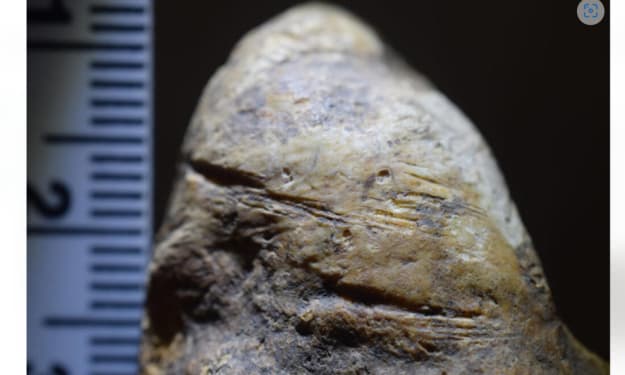
What we know about our human ancestors is altered by a little feature on an animal bone.
Looking once more via the magnifying lens on the fossil`s floor, every one of us, Sabrina Curran, took a deep breath. Illuminated through a sturdy mild placed almost parallel to the floor of the bone, the V-shaped strains have been there in the fossil. There was no mistaking what they meant.
By Francis Damiabout a year ago in History
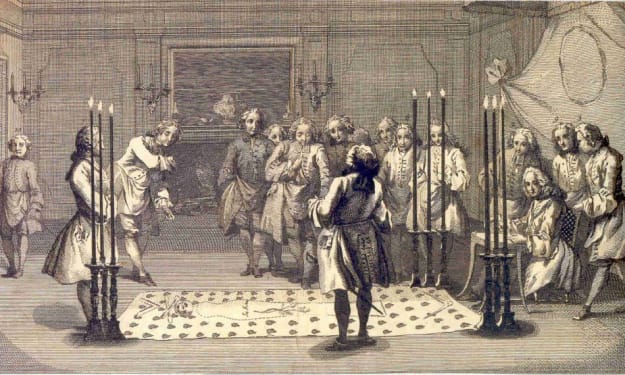
The Secret Society That Built the Modern World
A dark guild of London stonemasons started a revolution in 1717 that would change the world. Instead of chisels or hammers, they used ideas—ideas so powerful that they created nations, overthrew empires, and altered how people thought about freedom. This is the tale of the fraternity of Freemasonry, which transformed medieval workmanship into a model for the contemporary era.
By ChronoCuratorabout a year ago in History
The Tallest Man in History
You may have never seen a man as tall. The tallest man to have ever lived was a humungous 8 feet and 11 inches tall, a record that has yet to be broken! Had he survived to reach adulthood Wadlow would have been more than 12ft 1.7in (229cm) I've always been tall, his claim to fame was built on more than just being that tall and was more of a story about struggle, adaptations to his special circumstances and the legacy he left with the people who knew him". An icon for his size as well as the fact that he was the subject of universal attention during his lifetime as a medical oddity, Wadlow was born on February 22, 1918, in Alton, Illinois.
By Rohitha Lankaabout a year ago in History