Analysis
Trump rallies supporters in Michigan to mark 100 days in office
**Trump Rallies Supporters in Michigan to Mark 100 Days in Office** *Washington Township, MI — April 29, 2017* President Donald Trump marked his 100th day in office with a spirited rally in Washington Township, Michigan, on Saturday evening. Trump decided not to attend the traditional White House Correspondents' Dinner in Washington, D.C. instead of interacting directly with his supporters in a state that was crucial to his victory in the 2016 election. **Celebrating Early Achievements**
By GLOBAL NEWSabout a year ago in History
Trump rallies supporters in Michigan to mark 100 days in office
Introduction On April 29, 2025, President Donald Trump held a rally in Warren, Michigan, to commemorate the 100th day of his second term in office. The event, held at the Macomb County Community College Sports Expo Center, was a major political showcase, gathering thousands of enthusiastic supporters. This rally marked a significant moment in Trump's second term, as he used the occasion to highlight his administration’s achievements, energize his base, and set the tone for the upcoming 2026 midterm elections.
By Mahmodul hassan mojahidabout a year ago in History
"From Highlands to Hegemony: The Rise of the Macedonian Empire"
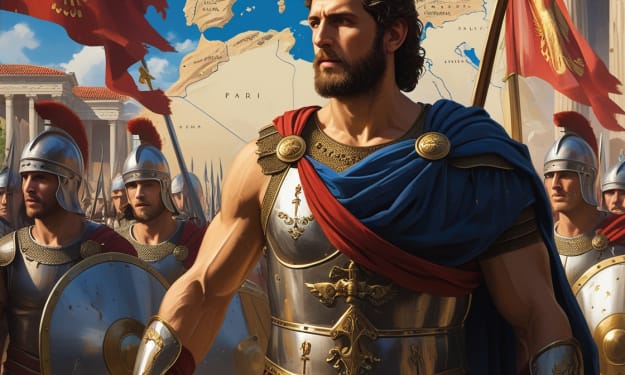
The Emergence of the Macedonian Empire: From Margins to Dominance The Macedonian Empire, one of the most formidable powers of the ancient era, ascended from the rugged, mountainous regions of northern Greece to dominate a significant portion of the known world by the 4th century BCE. Although it existed on the fringes of classical Greek civilization for centuries, the aspirations of two critical monarchsPhilip II and his son, Alexander the Greattransformed Macedonia from a fragmented realm into an empire that extended from the Adriatic Sea to the Indus River. This article examines the intricate and remarkable ascent of the Macedonian Empire, analyzing its political foundations, military advancements, and cultural influence. The Early Kingdom Macedonia was often regarded by southern Greek city-states as a semi-barbaric territory, culturally and politically distinct from the likes of Athens and Sparta. The Macedonian aristocracy traced their ancestry to the Argead dynasty, believed to be descendants of Heracles. Their political framework was less evolved than the democratic or oligarchic systems of the south, with authority concentrated in the hands of warrior-kings who governed over tribal domains. In the early 5th century BCE, Macedonia was a minor power, frequently caught between conflicting Greek states and Persian interests. However, its populace was resilient, proficient in equestrian skills, and adept in irregular warfare. Despite internal discord and pressures from neighboring Illyrians, Thracians, and Greeks, the foundation for unity and expansion was being fortified. Philip II: Architect of Empire The genuine ascent of Macedonia commenced with the rise of Philip II in 359 BCE. A brilliant military tactician and astute diplomat, Philip altered Macedonia’s fortunes in merely two decades. He began by securing his borders and consolidating power domestically. Philip restructured the military, creating the renowned Macedonian phalanx, which utilized longer spears (sarissas) and tighter formations than the conventional Greek hoplite system. This innovation provided his forces a considerable advantage on the battlefield. Philip also invested in siege technologies, cavalry units, and logistical organization, ensuring that Macedonia possessed one of the most modern and efficient militaries in the Greek realm. Diplomatically, he pitted the Greek city-states against one another, intervening when it benefited his interests, employing both marital alliances and force to expand Macedonian influence. By 338 BCE, Philip decisively vanquished a coalition of Greek city-states at the Battle of Chaeronea, establishing Macedonian supremacy over Greece. He founded the Corinthian League, appointing himself as the commander-in-chief, to unite the Greeks in a campaign against their longstanding adversarythe Persian Empire. However, before this campaign could commence, Philip was assassinated in 336 BCE under enigmatic circumstances, bequeathing the throne to his 20-year-old son, Alexander III. Alexander the Great: Expansion and Conquest Alexander inherited a formidable kingdom, a trained military, and a vision of conquest. He swiftly asserted authority, quelling revolts in Greece and eliminating rivals to the throne. In 334 BCE, he initiated his legendary campaign against Persia. Alexander's military brilliance and charisma allowed him to achieve a succession of remarkable victories against significantly larger Persian forces. Notable confrontations included Granicus (334 BCE), Issus (333 BCE), and Gaugamela (331 BCE). Following the conquest of Persepolis, the Persian capital, Alexander adopted the title of Shahanshah (King of Kings), effectively concluding the Achaemenid Empire. However, Alexander’s aspirations did not cease there. He advanced further east, traversing the challenging landscape of Central Asia, ultimately arriving in India. At the Battle of the Hydaspes in 326 BCE, he overcame King Porus, a formidable local monarch, signifying the easternmost extension of the Macedonian Empire. Despite his military triumphs, Alexander faced difficulties in integrating diverse cultures and overseeing the extensive territories he had acquired. His initiatives to amalgamate Greek and Persian customssuch as promoting intermarriage and adopting Persian attirecreated discontent among his Macedonian commanders. In 323 BCE, Alexander passed away unexpectedly in Babylon, likely due to fever, poisoning, or excessive strain. He was merely 32 years old. Legacy and Impact The Macedonian Empire did not remain intact following Alexander's demise. His commandersreferred to as the Diadochipartitioned the empire into several Hellenistic kingdoms, including the Seleucid Empire in Persia, the Ptolemaic Kingdom in Egypt, and the Antigonid dynasty in Macedonia. Notwithstanding the division, Alexander’s conquests left enduring cultural repercussions. Greek emerged as the lingua franca across much of the Near East. Cities like Alexandria in Egypt evolved into hubs of education and culture. The Hellenistic era witnessed a flourishing of science, art, and philosophy, merging Greek and Eastern traditions. Conclusion The ascent of the Macedonian Empire narrates a tale of transformationfrom a marginalized kingdom to the center of one of history's most formidable empires. Under the leadership of Philip II and Alexander the Great, Macedonia capitalized on military advancement, strategic diplomacy, and relentless ambition to alter the ancient world. Although the empire itself was ephemeral, its cultural and political heritage influenced civilizations for centuries to follow.
By Say the truth about a year ago in History
"Sabotage or Mutiny: The Hidden Threats That Sank Great Ships"
Sabotage or Rebellion: Unveiling the Mysteries Behind Enigmatic Maritime Calamities For centuries, the ocean has served as both a conduit and a conflict zoneconnecting continents, transporting empires, and inspiring aspirations of exploration. However, beneath the façade of noble discovery lies a grimmer, obscured truth: vessels lost without rationale, crews disappearing, and debris never recovered. In numerous instances, conjecture has pointed to two ominous alternativessabotage or rebellion. Was it a conspiracy from within? A treachery among the ranks? Or was it a desperate uprising by seafarers pushed to their breaking point? This article delves into the intricate history, motivations, and notable instances surrounding sabotage and rebellion on the open waters, scrutinizing how these dual forces of internal disintegration have transformed the trajectory of maritime history. The Fine Distinction Between Sabotage and Rebellion Although frequently categorized together, sabotage and rebellion are inherently distinct: Sabotage pertains to the intentional dismantling, impairment, or hindrance of a vessel, usually conducted by a crew member or saboteur for political, military, or personal purposes. Rebellion is an overt insurrection or uprising by a ship's crew against the commanding officersoften instigated by severe conditions, unjust command, or ideological convictions. Both actions signify a collapse of order and the ultimate treachery of maritime discipline. Notable Instances of Sabotage or Rebellion 1. The Potemkin Rebellion (1905) One of the most renowned rebellions in naval history unfolded aboard the Russian battleship Potemkin. Discontent stemming from maggot-ridden provisions, severe discipline, and an escalating revolutionary fervor incited sailors to revolt, resulting in the death of several officers and the takeover of the vessel. Although ultimately subdued, the Potemkin rebellion emerged as a symbol of the Russian Revolution, illustrating how social inequity at sea could incite widespread insurrection. 2. The USS Maine (1898): Sabotage or Mishap? The American battleship USS Maine detonated in Havana Harbor, resulting in the deaths of 260 sailors. The United States held Spain accountable, igniting the Spanish-American War. Nonetheless, subsequent investigations indicated that the explosion might have been caused by an internal coal fire rather than foreign aggression. Nevertheless, theories of sabotage linger, including speculation that it was an internal maneuver to justify warfare. The reality remains ambiguous. 3. The Rebellion on the Bounty (1789) Captain William Bligh’s Bounty represents perhaps the most notorious rebellion in Western history. Discontent with Bligh’s severe governance and a yearning for the laid-back lifestyle of Tahiti compelled Fletcher Christian and several sailors to take command of the ship. Bligh and his loyalists were cast adrift in a small boat, yet remarkably survived. The rebels escaped to Pitcairn Island, where some were later apprehended. This incident has since inspired a multitude of literary works and films. Motivations Behind Rebellion What drives crews to risk their lives in revolt? Historically, several factors have contributed to rebellion: Inhumane treatment: Brutality from captains, starvation, and excessive labor could ignite insurrection. Ideological influences: Revolutionary movements or class discontent at sea mirrored broader societal tensions. Isolation and cabin fever: Prolonged voyages in confined spaces can induce psychological strain and distrust. Greed and riches: In certain instances, rebellions were fueled by the ambition to seize treasure or cargo, particularly aboard trading and colonial vessels. Contemporary Illustrations and Cold War Mystique Even in the 20th century, sabotage and insurrection retained significance: Soviet Submarine B-59 (1962): During the Cuban Missile Crisis, Soviet personnel aboard this submarine debated whether to deploy a nuclear torpedo. One individual, Vasili Arkhipov, declined. His choice may have averted WWIII, yet the incident also disclosed how perilously close submariners approached insurrection under duress. INS Khukri (1971): India’s sole naval vessel lost in combat was targeted by a torpedo during the Indo-Pak conflict. While attributed to strategic miscalculations, certain conspiracy theorists propose that sabotage was involved, pointing to the vessel's rapid demise. MV Wilhelm Gustloff (1945): Sunk by a Soviet submarine, the ship carried over 9,000 individuals. Although not officially recognized as sabotage, survivor testimonies imply chaotic command and misinformation could have played a role in its catastrophic outcome. Methods of Sabotage: When Vessels Become Traps Sabotage has manifested in numerous ways: Disabling engines or navigation apparatus Contaminating water or food provisions Severing communication channels Arson or deploying explosive devices During wartime, saboteurs onboard cargo vessels and submarines assumed pivotal roles in intelligence activities. Some even masqueraded as crew members, installing explosives or leaking fuel. Scrutinizing Calamities: Fact or Concealment? Maritime investigations into vessel losses frequently grapple with incomplete data, absent wreckage, and political influences. This has led many to suspect that the reality behind certain catastrophes is obscured. For instance: The Cyclops (1918): Vanished with 309 personnel. Some attribute it to an insurrection stemming from adverse conditions, while others suspect sabotage. No remnants were ever discovered. The Kursk (2000): A Russian submarine that sank, resulting in the deaths of 118 sailors. Official narratives attribute it to a torpedo failure, but some assert that sabotage or internal rebellion was concealed by governmental authorities. Conclusion The ocean harbors secrets older than civilizations. Among them, none are more unsettling than those linked to treachery from within. Sabotage and insurrection strike at the essence of trust, adherence, and the very essence of survival at sea. From ancient triremes to nuclear submarines, the specter of internal disintegration remains ever-present. Whether motivated by desperation, ideology, or avarice, the narratives of sabotage and insurrection remind us that the gravest threats are not always tempests or adversarial fleetsbut rather, human hearts in revolt.
By Say the truth about a year ago in History
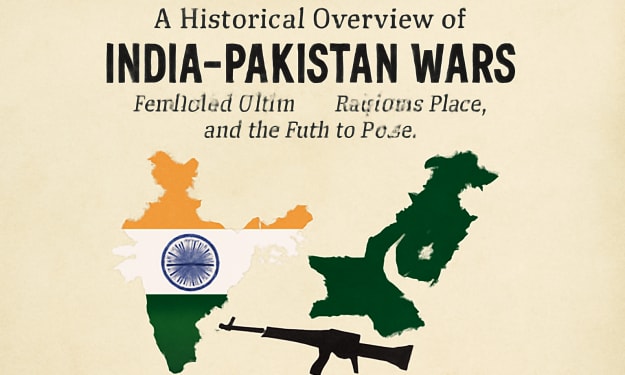
A Historical Overview of India-Pakistan Wars
The relationship between India and Pakistan has been marked by conflict and tension since the two nations gained independence from British rule in 1947. The historical context of their rivalry is complex, rooted in a mix of territorial disputes, religious divides, and national identities. Over the years, India and Pakistan have engaged in several wars and conflicts, significantly influencing South Asia's geopolitics and global security.
By Marid Shahran Orikabout a year ago in History
Göbekli Tepe: The Ancient Enigma That Rewrites History
What if our ancestors were far more advanced than we thought? Picture this: 12,000 years ago, before writing, farming, or cities, hunter-gatherers in what’s now Turkey built a massive temple with 20-ton stones.
By Natik Ahsanabout a year ago in History
Israel commits Gaza genocide under world’s ‘watchful eye’, ICJ told
"The International Criminal Court Hears the Gaza Genocide Case as Israel's War Continues" – The International Court of Justice (ICJ) in The Hague heard harrowing testimony this week as South Africa presented its case accusing Israel of committing genocide in Gaza—a conflict unfolding, as one lawyer put it, "under the world’s watchful eye." The historic hearings have rekindled global debate regarding Israel's military offensive, which has resulted in the deaths of over 34,000 Palestinians, the displacement of 1.9 million people, and the destruction of much of Gaza. "A Calculated Destruction of Life"
By Rakib Hasanabout a year ago in History
“Yartsa Gunbu: The Billion-Dollar Fungus That Rivals Gold”. AI-Generated.
The Green Fortune: The Narrative of the Most Costly Plant Ever Unearthed In a realm where assets such as gold, diamonds, and petroleum are esteemed for their significance, few would contemplate that an unassuming plant could compete with these in value. Nevertheless, throughout history, certain flora have become invaluableeither due to scarcity, therapeutic qualities, spiritual relevance, or considerable market demand. Among these, one distinguishes itself: Yartsa Gunbu, often described as the “Himalayan Viagra,” recognized as the most costly plant-derived substance on Earth by weight. This article investigates the history, cultural significance, economic aspects, and controversies surrounding this enigmatic fungus-plant hybrid that has fascinated emperors, herbalists, traffickers, and global markets for centuries. What is Yartsa Gunbu? Yartsa Gunbu (Ophiocordyceps sinensis) is a parasitic fungus that infiltrates ghost moth larvae entombed in alpine meadows. Over time, the fungus consumes and mummifies the insect from within, ultimately producing a blade-like stalk from its head that protrudes from the earth. Although scientifically classified as a fungus, its traditional application as a medicinal "plant" in Traditional Chinese Medicine (TCM) and Tibetan Medicine has led to its cultural and commercial classification alongside rare herbs like ginseng and saffron. Its moniker, “Himalayan Viagra,” derives from its alleged aphrodisiac and energy-enhancing attributes. However, its medicinal applications extend beyond sexual enhancementclaims include curing cancer and enhancing immunity, endurance, and lifespan. A History Rooted in Mountains and Myths Yartsa Gunbu has been harvested and esteemed for over a millennium throughout the high-altitude regions of Tibet, Nepal, Bhutan, and northern India. The earliest documented references appear in Tibetan literature around the 15th century, where it was lauded for enhancing vitality in both humans and animals. Its reputation expanded significantly during the Ming and Qing dynasties in China, where emperors and affluent families sought it as a luxury remedy. By the 1700s, it had reached imperial courts in China and was believed to be so potent that it was reserved for emperors and warriors. In the 20th century, as China opened to international markets and traditional medicine re-emerged as a luxury, the demand for Yartsa Gunbu soared. By the 2000s, it emerged as one of the most profitable commodities obtained from the Himalayas. The Cost of Nature’s Gold So just how costly is Yartsa Gunbu? Its worth fluctuates based on quality, size, and freshness, but at its pinnacle: Top-tier specimens commanded over $140,000 per kilogram. Even mid-tier variants fetched $20,000–$40,000 per kilogram. In comparison, that is 3–4 times the value of gold by weight. Harvested within a brief window each spring, locals risk their lives ascending to altitudes exceeding 4,000 meters to extract it from frozen soil. Entire Himalayan communities rely on the annual harvest for sustenance, with some families earning year-round incomes from just a few weeks of collection. Its rarity, the limited harvesting period, and soaring demand in China and Southeast Asia all contribute to its astronomical value. Cultural and Medicinal Importance To traditional medicine practitioners, Yartsa Gunbu is regarded as a “valuable warming tonic”, believed to balance the body’s energy and enhance life force. It is prescribed for: Chronic exhaustion Sexual impairment Respiratory issues Hepatic and renal ailments Immunodeficiency conditions While contemporary science often questions many of these assertions, recent studies have validated antioxidant, antimicrobial, and anti-inflammatory characteristics, and its chemical constituents (like cordycepin) exhibit promise in oncological treatment. In China, it is also regarded as a representation of prestige and healthcommonly bestowed during commercial transactions and diplomatic interactions. Environmental and Ethical Issues With value arises consequence. The increase in demand has resulted in: Overexploitation: Numerous areas report diminishing outputs, jeopardizing both the fungus and the ecological system. Illicit trade: Its worth incites smuggling and corruption. Certain Himalayan territories now necessitate permits and impose quotas. Violence and discord: In Nepal and Tibet, harvest seasons have sparked territorial conflicts, even homicides among gatherers. Fraud: Imitations or chemically enhanced variants inundate markets, endangering consumers. In response, governments and NGOs have initiated programs for the sustainable harvesting and cultivation of the fungus, although cultivation has proven to be exceptionally challenging due to its intricate life cycle. The Future of the Priciest Plant Notwithstanding its mythical reputation, Yartsa Gunbu may be endangered by climate change, which is modifying the fragile alpine habitats it requires to prosper. Coupled with overharvesting, its long-term existence in nature is dubious. Simultaneously, researchers are striving to cultivate Cordyceps artificially in laboratories, which may eventually provide a sustainable substitute, although present lab-cultivated variants lack the prestige and potency associated with wild specimens. Nonetheless, to date, no plant or natural material commands the same worth per gram as wild Yartsa Gunbu. Conclusion The narrative of Yartsa Gunbu serves as a compelling reminder of the interplay between nature, tradition, and economics. From elevated terrains to royal estates and high-end medical centers, this diminutive fungus-plant hybrid has influenced lives and landscapes. It remains the globe's most costly plant, not due to its appearance, but because of its ancient heritage, spiritual significance, and contemporary market fascination. As humanity continues to seek wonders in nature, the value of such rare, enigmatic plants is likely to escalate.
By Say the truth about a year ago in History