Analysis
"The Siege of Troy: Where Legend and History Collide"
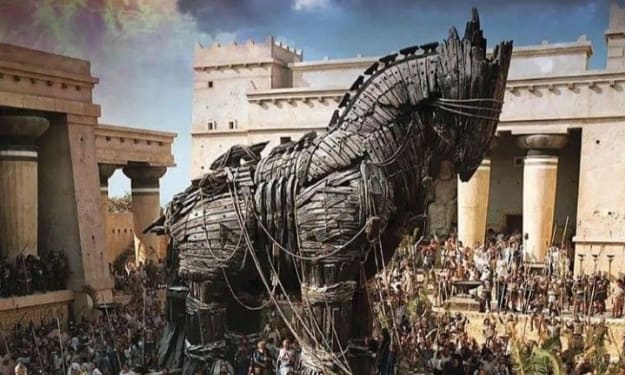
The Conflict of Troy remains one of the most distinguished military occurrences in both historical and literary heritage. Enshrined by Homer’s Iliad, the conflictthought to have transpired in the 12th or 13th century BCEhas entranced poets, historians, archaeologists, and readers for millennia. While the precise veracity of the occurrences is clouded by legend, substantial archaeological and textual proof suggests that a significant confrontation did happen in the vicinity of ancient Troy, located in what is now northwestern Turkey. The Legendary Tale In Homer’s account, the Trojan War commenced when Paris, a prince of Troy, kidnapped (or eloped with) Helen, the spouse of Menelaus, king of Sparta. In reprisal, Menelaus, along with his brother Agamemnon and other Greek leaders such as Odysseus, Achilles, Ajax, and Nestor, assembled a coalition fleet of a thousand ships to besiege Troy. For a decade, the Greeks camped outside the city’s fortifications, as a fierce and dramatic war ensued. Significant incidents included the dispute between Achilles and Agamemnon, the demise of Hector, and ultimately, the conquest of Troy through the cunning use of the Trojan Horse. Although these occurrences present a vivid storyline, they are mainly regarded as mythological embellishments. Nevertheless, scholars propose they may be grounded in a kernel of reality, symbolizing an authentic historical conflict that was subsequently mythologized by Greek poets. Historical and Archaeological Findings The site believed to be ancient Troy was uncovered by Heinrich Schliemann in the 19th century near the contemporary town of Hisarlik in Turkey. Excavations uncovered the remnants of several ancient cities constructed atop one another, dating back as far as 3000 BCE. One layer, designated as Troy VI or VIIa, exhibits evidence of destruction around 1250 BCEa timeframe that corresponds with the projected period of the Trojan War. Moreover, Hittite documentation mentions a city referred to as “Wilusa,” which many scholars associate with “Ilios,” another designation for Troy. The Hittites also allude to a figure named “Alaksandu,” potentially connected to Paris (Alexander), indicating possible diplomatic or military engagements between the Mycenaeans and the city of Troy. Political Landscape and Incentives Historically, the conflict may have been less about a romantic abduction and more about authority, trade, and dominion over strategic maritime routes. Troy’s strategic placement near the Dardanellesa crucial nautical passagewould have rendered it a valuable and contested city for ancient realms dependent on commerce with the East. The Mycenaean Greeks, a formidable civilization during the late Bronze Age, may have aimed to assert control over this region. Hostilities with a rival Anatolian power like Troy could have arisen from commercial competition, piracy, or regional alliances. In this regard, the war might reflect a far more pragmatic geopolitical struggle than the myth implies.
By Say the truth about a year ago in History
The Calgary General Hospital Implosion:
When I think of a demolition project, I think of new beginnings. After all, my work shows me all kinds of people in all kinds of situations: people who are developing their homes to welcome a new family member or care for an aging member of family, or empty nesters looking to refresh their home into what they’d always hoped for. Sometimes it’s demolishing one decrepit building in favor of building a space that can house several families.
By Autumn Stewabout a year ago in History
Rethinking Labour in the Modern World
Rethinking Labour in the Modern World Introduction: Labour Day represents an annual commemoration of both worker success and fighting history through marches coupled with labor unions as well as the pursuit of equitable compensation and workplace safety while upholding worker dignity. How will we define someone who works in the year 2025?
By nusrat jahanabout a year ago in History
PAKISTAN INDIA WAR
As of April 30, 2025, India-Pakistan relations have become extremely strained following a deadly terror attack in Indian-occupied Kashmir. On April 22, a terrorist attack on tourists along Pahalgam killed 26, the majority of whom were Hindu civilians. The Resistance Front, a Pakistan-supported organization associated with the Lashkar-e-Taiba, claimed responsibility. India accused Pakistan of supporting the attackers, which is not accepted by Islamabad.
By Sayma Azadabout a year ago in History
The Significance of May Day
Introduction May Day, also known as International Workers' Day, is celebrated on May 1st each year. This day has become an emblem of the labor movement and is marked by various events, festivities, and protests across the globe. The origins of May Day are deeply embedded in history, evolving out of the struggles for workers' rights and social justice. This article will explore the historical significance of May Day, the various ways it is celebrated, and its relevance in today’s world.
By Monayem Hossainabout a year ago in History
"The Battle of Buckets: A War for Water and Honor"
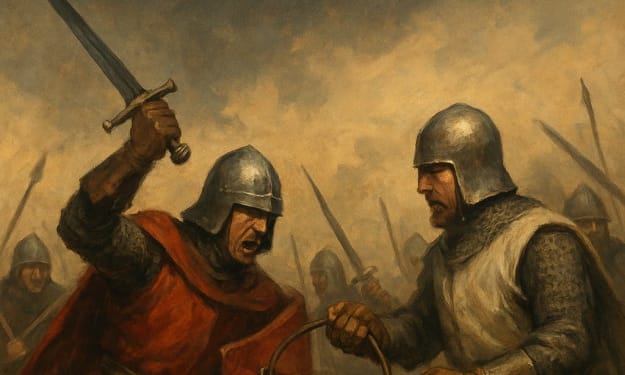
In the early 14th century, northern Italy was a land divided. City-states like Bologna and Modena stood as proud bastions of culture, commerce, and military might. But pride is a double-edged sword, and in 1325, it was not land, gold, or power that drove them to war—it was a wooden bucket.
By Muhammad Imranabout a year ago in History