Analysis
Things to do during pregnancy: A complete guide
Pregnancy is the most beautiful and important time in a woman's life. Every step during this time should be conscious, correct and it is important to keep an eye on it in terms of staying healthy. Because just as the mother's health is important, the healthy development of the baby in the womb is also highly dependent on the mother's lifestyle. Therefore, it is very important to follow some important things to do and advice during pregnancy. Today we will discuss in detail what women should do during pregnancy, what is important to pay attention to, and what mistakes should be avoided.
By Niloy By Artabout a year ago in History
What Happened to American Soldiers After the End of World War II. AI-Generated.
What Happened to American Soldiers After the End of World War II When World War II ended in 1945, millions of American soldiers, sailors, and airmen were scattered across Europe, the Pacific, and other parts of the world. Bringing them home and transitioning them back into civilian life was a massive challenge for the U.S. government. Yet, the process of demobilization, although complex and sometimes frustrating, is remembered largely as a great success. It changed countless lives and shaped the postwar world.
By Adnan Rasheedabout a year ago in History
When Citizenship Was Defined by Race: The Pivotal Supreme Court Cases of 1922/23
I've been teaching sociology courses for a while now and one thing that surprises me (and maybe it shouldn't) is the lack of knowledge many students have of this country's racial history. Yes many of us know about slavery and the civil rights movement generally, but the issue of race goes much deeper than the cursory paragraphs of our high school history books.
By G. A. Boteroabout a year ago in History
What is Facebook?
Facebook is the most popular social media in the world. It is also the most popular social media in Bangladesh. From the history of Facebook, it is known that it is an American organization. Anyone can open an account or ID on Facebook for free.
By Arfan Raihenabout a year ago in History
Neymar Junior
Early Life and Achievement Neymar da Silva Santos Júnior, known globally as Neymar, was born on February 5, 1992, in Mogi das Cruzes, São Paulo, Brazil. Neymar's father, Neymar Santos Sr., a former football player who came from a modest family, was very important in helping his son develop his talent. From a young age, Neymar exhibited exceptional skills in futsal and street football, which laid the foundation for his later success.
By Raihan Islam about a year ago in History
Biography of Aubert Einstein the greatest scientist ever
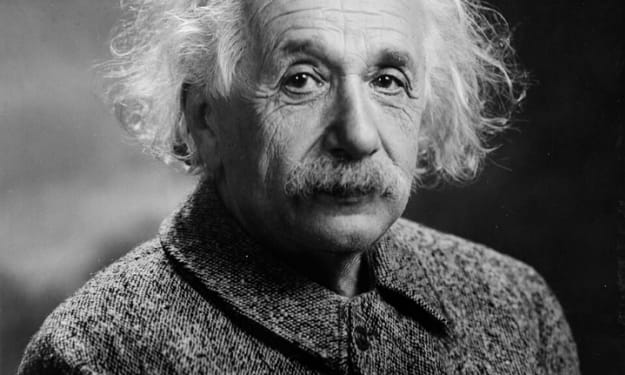
Albert Einstein (14 March 1879 – 18 April 1955) was a German-born theoretical physicist who is best known for developing the theory of relativity. Einstein also made important contributions to quantum mechanics. His mass–energy equivalence formula E = mc2, which arises from special relativity, has been called "the world's most famous equation". He received the 1921 Nobel Prize in Physics for his services to theoretical physics, and especially for his discovery of the law of the photoelectric effect.
By Favour Nyimbiliabout a year ago in History
"Dead Hand: The Secret History of Russia’s Automatic Nuclear Retaliation System". AI-Generated.
The Shadow of the Dead Hand: The History of Russia’s Automatic Nuclear Launch Program Throughout the Cold War era, the specter of nuclear annihilation loomed over the globe. The United States and the Soviet Union amassed thousands of nuclear weapons, bracing for the worst potential scenario: a surprise offensive that could obliterate their nations within moments. In response, the Soviet Union devised one of the most formidable and clandestine systems ever conceived the Automatic Nuclear Launch Program, referred to in the West as the Dead Hand. This system assured a retaliatory response even in the event that the entire Soviet leadership was eradicated, encapsulating the doctrine of “Mutual Assured Destruction” in its most harrowing manifestation. In this article, we will explore the origins, framework, and chilling legacy of this program. The Birth of the Dead Hand System 1. The Threat of Decapitation In the late 1970s and early 1980s, Soviet leaders harbored concerns regarding a potential American preemptive strike. U. S. advancements in missile precision and stealth technologies (such as the B-2 bomber) suggested that it could be feasible to eliminate Soviet leadership before they could issue a counteroffensive order. This alarming scenario termed a "decapitation strike" propelled the Soviet military to seek an effective response. They required a system capable of executing an automatic retaliation even if no personnel remained to authorize the order. 2. Development of the System The program, covertly designated as "Perimeter" (Периметр), commenced development in 1974 and was finalized by 1985. Key characteristics of Perimeter encompassed:
By Say the truth about a year ago in History
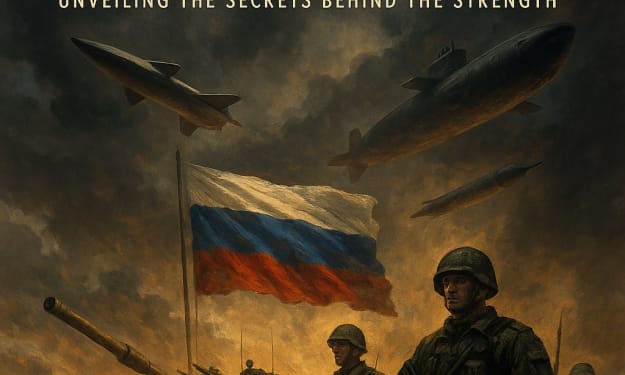
"Russia’s Hidden Power: Unveiling the Secret Weapons That Keep the World on Edge"
Russia’s Might and Its Concealed Armaments: The Covert Power of a Global Titan Russia, the planet’s largest nation by area, is frequently regarded as one of the most formidable entities in international relations. In addition to its extensive territory and abundant natural resources, Russia's military prowess, intelligence capacities, and enigmatic secret armaments add to its formidable reputation. What precisely accounts for Russia's strength, and which clandestine weapons does it maintain that keep even the most powerful states on edge? In this article, we delve into the bedrock of Russia's strength and examine some of its most speculated secret armaments. The Foundations of Russia’s Strength 1. Extensive Territory and Resources Spanning over 17 million square kilometers, Russia's sheer size provides a strategic advantage. It possesses vast reserves of oil, natural gas, coal, and rare minerals. Its forests and waterways ensure energy security and economic leverage, particularly in global markets. Natural Gas: Russia accounts for approximately 20% of the world's natural gas, an essential resource for Europe and Asia. Arctic Claims: Russia has assertively claimed segments of the Arctic, believed to contain trillions of dollars worth of oil and gas. 2. Military Might Russia fields the second-largest military globally, following the United States. It sustains: A Nuclear Arsenal: Estimated at over 6,000 nuclear warheadsthe largest accumulation on the planet. Modernized Armed Forces: Although deeply rooted in Soviet traditions, Russia's military has undergone modernization, incorporating new tanks, submarines, and hypersonic missiles. Experience: Russian forces have engaged in various operational theaters, from Afghanistan to Syria, adapting to multiple warfare strategies. 3. Political Resolve and Cyber Warfare In contrast to many Western nations, where public opinion heavily shapes military initiatives, Russia's leadershipparticularly under President Vladimir Putinbenefits from centralized authority to act decisively. Moreover, Russia has excelled in cyber warfare: Cyber Attacks: Russian entities have been associated with significant cyber intrusions globally, targeting electoral processes, corporations, and governmental infrastructures. Information Warfare: Russia employs media manipulation and online disinformation initiatives as extensions of state authority. The Secret Weapons of Russia Beyond its conventional range of armaments, Russia is believed to include several "secret" or highly classified weapons capable of altering the global power dynamic. Some are verified; others are speculated within defense discussions. 1. Poseidon Nuclear Torpedo (Status-6) One of Russia’s most unsettling covert weapons, Poseidon is a substantial nuclear-powered, nuclear-armed underwater drone. Capabilities: It can traverse thousands of miles underwater, evade missile defense systems, and generate radioactive tsunamis that could incapacitate coastal urban areas. Impact: If activated, Poseidon could obliterate enemy infrastructure without requiring conventional nuclear missile launches. 2. Avangard Hypersonic Glide Vehicle The Avangard is a hypersonic missile system capable of exceeding 20 times the speed of sound and maneuvering erratically, rendering it nearly impossible to intercept. Deployment: Russia asserts it has already fielded Avangard-equipped missiles. Advantage: Existing anti-missile systems in the West are predominantly ineffective against hypersonic threats. 3. Burevestnik Nuclear-Powered Cruise Missile Dubbed "Skyfall" by NATO, the Burevestnik is a theoretical missile with an unlimited range due to its nuclear propulsion. Potential: Such a projectile could remain aloft for months, perpetually altering its trajectory, and strike targets anywhere on the planet. Status: Trials have been reported, but it remains ambiguous whether it is entirely functional. 4. Electronic Warfare Systems (EW) Russia has made significant investments in electronic warfare technologies: Capabilities: Disrupt adversary communications, radar, and satellite systems. Systems: The Krasukha-4 and Murmansk-BN are among the recognized Russian EW systems that can jam enemy assets hundreds of kilometers distant. 5. Underwater "Doomsday" Bases There are ongoing speculations that Russia possesses clandestine underwater facilities and deep-sea platforms equipped with nuclear armaments, particularly in the Arctic and Pacific Oceans. While not officially validated, these speculations correspond with Russia's focus on asymmetric warfare strategiesintroducing unexpected and unconventional threats. Reasons for Russia's Investment in Secret Weapons There are multiple factors contributing to Russia's intense focus on developing clandestine and advanced weaponry: Offsetting Conventional Deficiencies: Russia recognizes that, economically and conventionally, it cannot compete directly with NATO and the U. S. Psychological Warfare: The fear of unknown technologies keeps adversaries apprehensive. Strategic Surprise: Clandestine weapons can provide Russia with first-strike or deterrent advantages should overt conflict arise. Conclusion Russia’s strength resides not solely in its tanks, missiles, or oil reservesit is in its capacity to conduct psychological, cyber, and unconventional warfare while sustaining a strategic advantage through secretive, advanced technologies. From nuclear torpedoes to hypersonic missiles and electronic warfare, Russia has developed an arsenal that fuses traditional power with futuristic terror. In a world increasingly defined by novel forms of conflictcyber attacks, hypersonic arms races, and underwater weaponryRussia’s covert maneuvers guarantee that it remains a contender no one can afford to underestimate. Its clandestine weapons are not merely instruments of warthey are shields of fear, intrigue, and global influence.
By Say the truth about a year ago in History