
Sardinian Sacred Secrets: Iron Age Temples Reborn from Bronze Age Towers
Sacred Sacrifices and a Sealed Well

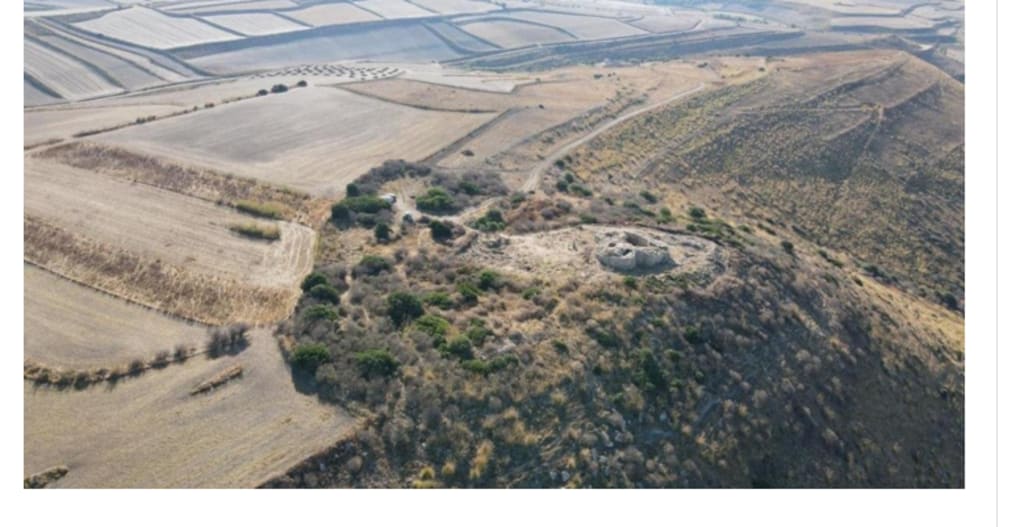
Sardinia's enormous stone towers dominated the Mediterranean landscape for centuries, acting as silent reminders of a bygone past. These enormous Bronze Age monuments, known as nuraghi, were not merely abandoned when societal changes swept the island, according to a ground-breaking interdisciplinary study. Instead, during the Early Iron Age, they underwent a remarkable transformation into hallowed sites of worship and ritual.
Strong evidence of this spiritual progression has been found in a recent study headed by Dr. Silvia Amicone of the University of Tübingen in cooperation with the local heritage authority, the Soprintendenza Archeologia, Belle Arti e Paesaggio, and published in the journal Open Archaeology.
The team focused on the intricate site of Nuraghe Barru in south-central Sardinia, where they found a treasure trove of votive offerings, including a magnificent 94-centimeter bronze sword, and a sealed well-cistern. These results show that long after they were first built, historic towers continued to play a significant role in the island's social and spiritual life.
The "Island of Towers" Mysteries
Known as the "island of towers," Sardinia is home to about 7,000 intact nuraghi that were constructed between 1700 and 1100 BC by the enigmatic Nuragic civilization. Archaeologists have long debated these striking corbelled stone domes, speculating that they were either boundary marks, privileged homes, or defensive fortifications. But Sardinian civilization changed dramatically during the Early Iron Age (c. 1200–800 BC), as evidenced by the emergence of sanctuaries and holy wells all throughout the island.
Because of this change in society, scholars questioned whether the old towers were no longer important in light of contemporary religious rituals. In stark contrast, the excavations at Nuraghe Barru reveal that several of the towers were converted into active temples where local communities engaged in power, memory, and identity negotiations. In the words of Dr. Gianfranca Salis, scientific director of the current Soprintendenza excavations: "It was an active center during the Iron Age, where ritual practices and social identities were expressed in a period of transformation."
Sacred Sacrifices and a Sealed Well
The most striking find was made inside the Nuraghe Barru complex's western wall, where archaeologists led by Dr. Chiara Pilo discovered a meticulously sealed cistern-well. The team discovered a purposeful deposit of broken ceremonial ceramics at the base of this deep building, including multiple askoid jugs used for pouring liquids, a rare four-handled vessel, and a little amphora. Importantly, skeletal remains of humans and animals accompanied these ceremonial artefacts.
Heavy limestone slabs were used to formally shut the well after these offerings were placed. Instead of a careless disposal of rubbish, this series of events strongly suggests an organised, symbolic ritual. The discoveries, according to Dr Pilo, "rather to an episode of ritual actions than to randomly discarded objects," and "the building itself was also changed by this."
Researchers found more sacred offerings beside the blocked well along a staircase that went to the tower's upper level. These featured a copper conglomerate, three razor-like bronze blades, and an exquisitely preserved 94-centimeter bronze sword.
The old landmark was physically transformed into a sealed storehouse of sacred memory when the stairway was barricaded with stone after these priceless metal pieces were deposited, permanently blocking access to the upper floor.
Votive Weapons and Networks Across the Island
The multinational team used cutting-edge material science and conventional archaeology to determine the origins of these artefacts. The bronze sword was found to be composed of a low-tin, copper-rich alloy using portable X-ray fluorescence (pXRF) analysis.
This particular composition is typical of Nuragic votive swords, which were made exclusively for ceremonial, symbolic purposes rather than for actual battle. Notably, it is a very unusual find because it is just the second entire votive sword ever discovered inside a nuraghe.
Additionally, the great majority of the vessels were not manufactured from local clay, according to petrographic study of the pottery from the sealed well. Rather, they were transferred from different parts of Sardinia's geology, some of which were over 40 km away.
This shows that Nuraghe Barru was a significant center in a vast, island-wide network where people, products, and religious ideas were exchanged rather than a remote rural outpost. The razor-like bronze blades also resemble Early Iron Age artefacts discovered on the Italian mainland, suggesting Mediterranean Bronze Age trade networks that extended well beyond Sardinia's borders.
In the end, the findings at Nuraghe Barru show that communities did not just abandon their ancestry as Sardinia entered the Iron Age. Rather, they deliberately repurposed and remade these enormous stone buildings, incorporating them into a new spiritual tapestry that honoured their history while negotiating the difficulties of a Mediterranean world that was changing quickly.
According to University of Tübingen Rector Professor Karla Pollmann, the study "shows once again that interdisciplinary research approaches provide a wealth of complementary information that allows us to create impressively comprehensive pictures of past worlds."
About the Creator
Enjoyed the story? Support the Creator.
Subscribe for free to receive all their stories in your feed.
Comments
There are no comments for this story
Be the first to respond and start the conversation.