
Mephibosheth's Story in the Bible Has Many Life Lessons
This is a beautiful story with a happy ending.

There are many meaningful stories in the Bible with life lessons. The story of Mephibosheth is one of those beautiful stories, and there is a life application for everyone.
Who was Mephibosheth?
Mephibosheth's name means "from the mouth of shame." He was the son of Jonathan and the grandson of Saul, the first king of Israel. His story begins in the book of 2 Samuel and continues in the book of I Chronicles.
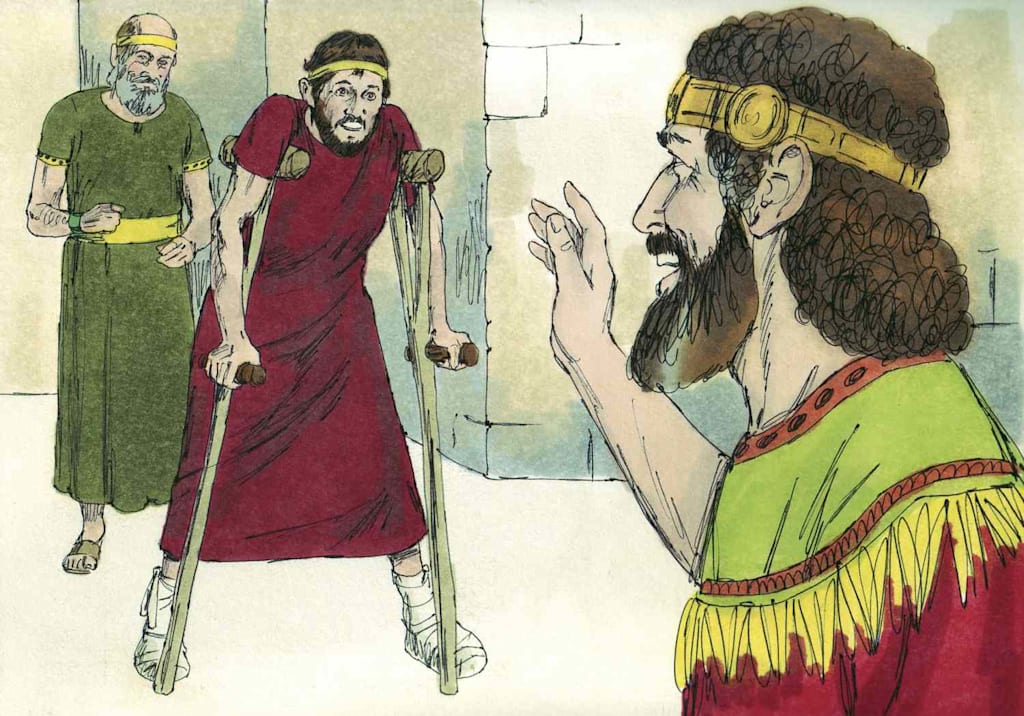
Mephibosheth was five years old when both his father and grandfather died at the Battle of Mount Gilboa. After the deaths of Saul and Jonathan, Mephibosheth's nurse took him and fled in panic. (2 Samuel 4:4) In her haste, the child fell, or was dropped while fleeing. After that, he was unable to walk because he was lame in both legs.
After the accident, Mephibosheth was carried with the rest of his family beyond the Jordan to the mountains of Gilead, where he found refuge in Lo-debar, a place with no pasture.
David and Jonathan's Covenant
Jonathan and David were soulmates. They had a blood covenant that if anything happened to either one of them, the other would take care of their family.
When David became king, he remembered his covenant with Jonathan and asked the question:
"Is someone of the house of Saul, to whom I may show the kindness of God?"
Mephibosheth was brought to David by Ziba, Saul's servant. David restored Saul's inheritance to Mephibosheth and permitted him to live within his palace in Jerusalem, which was the exact opposite of Lo-debar, a desolate place where nothing thrived.
Lessons from Mephibosheth's Life
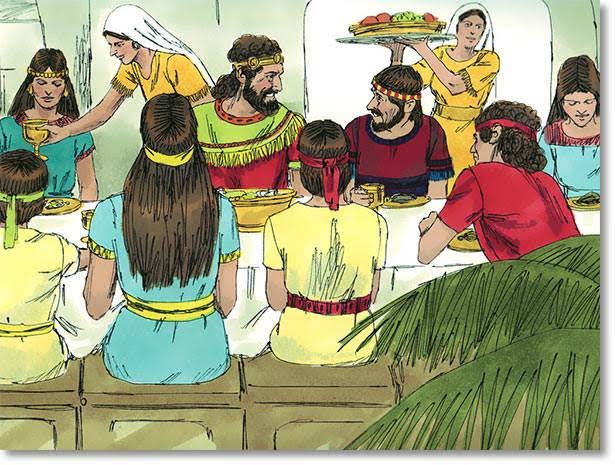
The biblical story of Mephibosheth teaches powerful lessons on unmerited grace, loyalty to covenants, and radical kindness. The core takeaways highlight how King David sought out Mephibosheth to honor a promise, pulled him out of a barren place, and seated him permanently at the royal table.
Unearned Grace: Mephibosheth’s life is a powerful story of grace. He did nothing to earn David's favor. He was from a rival royal house and physically disabled, yet he was shown kindness purely because of David's covenant with Jonathan. His journey shows how God seeks out the broken, offers undeserved love, and invites them into a permanent family bond.
Out of Hiding: Living in Lo-debar, Mephibosheth hid in fear, but the king's active pursuit brought him into safety, provision, and honor.
Covered Lameness: Seated at the king’s table, Mephibosheth's crippled feet were hidden beneath the king's feast, representing how grace covers human brokenness and flaws in the presence of God. That symbolizes how grace covers human brokenness.
A picture of salvation: Like Mephibosheth, people are spiritually helpless, but God extends grace and calls them to His table.
From shame to royalty: Mephibosheth viewed himself as a dead dog, yet the king treated him like a royal son.
Covered flaws: The covenant of love heals people's damaged self-esteem and transforms their destinies. God delights in treating the marginalized with kindness for Christ's sake.
Though we may not have physical disabilities like Mephiboshet that cause us to be lame, we are all spiritually lame, unable to bring ourselves to salvation. But God, in the greatest act of grace, reached out to us and provided salvation through the death of His son Jesus. There is nothing we can do to earn this salvation. God, the great bearer of our shame through the crucifixion of His son Jesus, carries us to His table and invites us to dine with Him. That is the gospel of the good news of the saving power of Jesus Christ.
More Beautiful Stories in the Bible

There are more beautiful stories in the Bible. Like the story of Mephibosheth, who was lame in Lo-debar, you might be struggling with a disability and think you are "a dead dog." However, God can make a way out of no way for you to sit at His table and enjoy a worthwhile life.
Read some of the other stories and learn lessons from them.
About the Creator
Margaret Minnicks
Margaret Minnicks has a bachelor's degree in English. She is an ordained minister with two master's degrees in theology and Christian education. Thanks for reading and sending TIPS her way.
Enjoyed the story? Support the Creator.
Subscribe for free to receive all their stories in your feed. You could also become a paid subscriber, letting them know you appreciate their work.
Comments
There are no comments for this story
Be the first to respond and start the conversation.