Latest Stories
Most recently published stories in History.
The Mysteries of Faith: Unraveling Belief in an Age of Skepticism
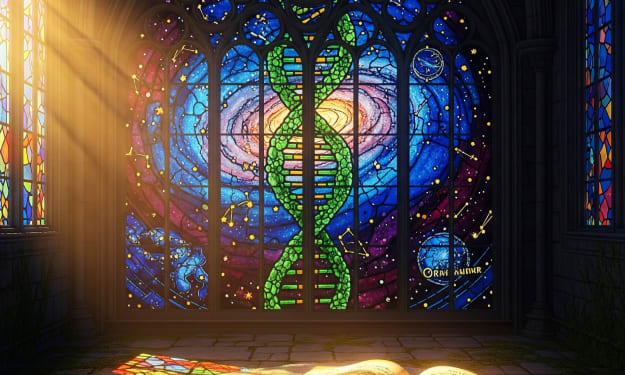
I, Stefano D'Angelo, found myself absorbed by a Netflix documentary series, a compelling exploration that boldly challenged conventional narratives, presenting what some might label as heresy, while others might see as profound truth. It delved into the very fabric of belief, juxtaposing the raw power of faith – often said to move mountains – against archaeological findings and scientific scrutiny. The series, much like our modern world, asked: what truly is real, and what is merely perceived?
By Stefano D'angelloabout a year ago in History
The Sweet and Sticky History of Fun, Part 2: The 1970s
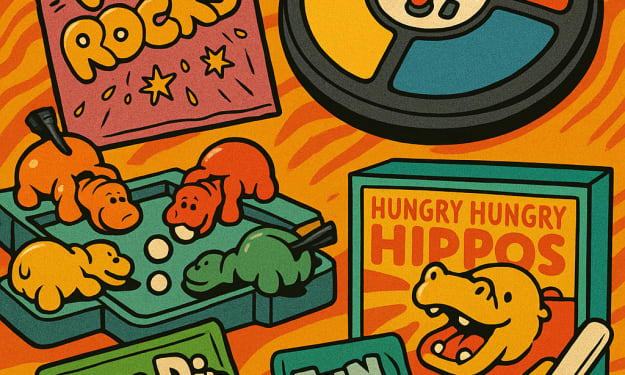
Fog Horn Blast 🚨 Welcome to the 1970s... A decade of polyester leisure suits, lava lamps, and a suspicious number of products shaped like avocados. While adults were wrestling with the Vietnam War aftermath, an energy crisis, and Richard Nixon’s resignation, kids were too busy losing their minds over exploding candy and board games that either tested your brain or unleashed absolute plastic chaos on the dining room table.
By The Iron Lighthouseabout a year ago in History
George Washington
When people today talk about leadership, they often mean ambition. They mean clawing your way to the top, holding onto power with both fists, and never letting go until they pry it from your cold hands. That’s politics now. But that was not Washington.
By Robert Lacyabout a year ago in History
India vs Australia: The Greatest Cricket Rivalry & Famous Wins
The Ultimate Clash: A Human History of the India vs. Australia Cricket Rivalry When it comes to cricket rivalries, a few stand out, but none are quite as intense, captivating, and emotionally charged as the one between Australian men’s cricket team VS India national cricket team. This isn't just about bat and ball; it's a clash of cultures, a test of wills, and a showcase of some of the greatest athletes to ever grace the game. For decades, whenever the Indian team faces the Australia team, it feels like more than a match—it's an epic battle.
By Denis Wellington about a year ago in History
When a Coin Decided an Empire’s Fate
History often feels like the grand work of kings, queens, and generals. Yet, sometimes, it turns on something as small and ordinary as a coin. A single toss, a random choice, or a moment of chance has shifted the course of empires. These tiny accidents remind us that behind the sweeping arcs of history are fragile threads of fate. One of the most fascinating examples comes from the Roman Empire, where power often rested on fragile loyalties and sudden decisions. The Coin Toss Before a Battle In 69 CE, Rome was a storm. The emperor Nero had died, leaving behind no heir, and the empire was thrown into chaos. Historians call it “The Year of the Four Emperors.” Four men — Galba, Otho, Vitellius, and Vespasian — each rose and fell within a single year. Rome was bloodied by civil war, and its future trembled in uncertainty. Otho, a former ally of Nero, took the throne in January. But Vitellius, a general commanding powerful legions in Germany, began marching toward Rome with an army eager for conquest. A decisive battle loomed. Otho, desperate to secure his empire, gathered his commanders to discuss whether to face Vitellius in open battle or retreat to wait for reinforcements. Here comes the accident: the commanders could not agree. Their arguments grew so heated that one officer suggested leaving the decision to fate — by flipping a coin. According to some accounts, the coin toss favored immediate battle. Otho obeyed the verdict of chance, and his forces marched to war unprepared. The result was catastrophic. Vitellius’s legions crushed Otho’s army. Rather than plunge Rome into more bloodshed, Otho chose to take his own life. He left behind a final note praising loyalty and urging his men to accept defeat with dignity. He was only 36 years old. The empire changed hands because of a single flip of a coin. When Chance Shapes Destiny This was not the only time chance played with history. Consider how Alexander the Great once delayed an assault on Tyre because of an unfavorable omen, sparing his army from exhaustion. Or how the storm that sank part of the Spanish Armada in 1588 reshaped Europe’s balance of power, allowing England to rise as a naval giant. But the story of Otho’s coin remains striking because it was not nature, omens, or storms at play. It was a decision — left to the randomness of metal spinning in the air. What If the Coin Had Landed Differently? Had the coin landed the other way, Otho might have waited for reinforcements. His armies could have stood stronger, and Vitellius might have been defeated. Rome’s history could have unfolded under Otho’s rule instead of passing to Vespasian, the eventual victor of the chaos, who founded the Flavian dynasty and commissioned the Colosseum. Would Rome have still become the empire we read about today? Or would its culture, architecture, and politics have taken another path? We will never know. Lessons from a Coin What we can take from this story is simple yet powerful: sometimes the smallest choices carry the heaviest weight. A flip of a coin may seem trivial, but it can decide whether thousands live or die, whether a city thrives or falls, whether an empire survives or collapses. In our modern lives, decisions rarely involve empires — but they do shape our personal worlds. A quick yes or no, a chance encounter, or even a missed opportunity can redirect the story of a lifetime. History is not only made by the strong and the strategic. It is also shaped by the unpredictable and the accidental. Final Thought When we read history, it is tempting to imagine inevitability — that Rome was always meant to fall, that England was always meant to rise, that progress always marches forward. But the truth is messier. Sometimes, history turns on a coin spinning in the air, catching the light for a brief second before it lands. And in that moment, the fate of an empire rests not on armies or emperors, but on chance itself.
By LUNA EDITHabout a year ago in History
THE NARMER PALLETTE. Content Warning. AI-Generated.
The Story of Narmer and the Two Lands The Nile River Valley, c. 3100 BCE Named after Horus Narmer, whose titulary appears on both its faces, the Narmer Palette is a flat plate of schist about 64 centimetres in height. Its size, weight, and decoration suggest that it was a ceremonial object rather than a cosmetics palette for daily use.
By Atlas the Kidabout a year ago in History
The Timeless Beauty of the Taj Mahal: A Monument of Love
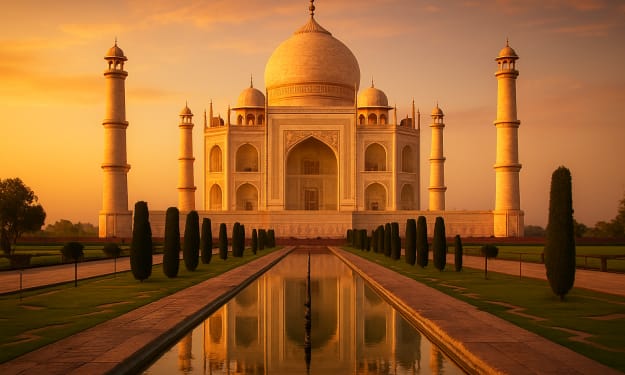
Introduction The Taj Mahal, often called the Crown of Palaces, is one of the most breathtaking wonders of the world. Located in Agra, India, it has become a symbol of eternal love and devotion. Built in the 17th century by the Mughal Emperor Shah Jahan in memory of his beloved wife Mumtaz Mahal, this monument is more than just a masterpiece of architecture—it is a story carved in marble, echoing love, loss, and immortality.
By Waqas Ahmad about a year ago in History
The Coffee That Changed My Morning
It was raining the morning I decided to leave ten minutes earlier than usual. That might not sound like much, but for me, those ten minutes were a miracle. Normally, I am the person darting out the door with my shoelaces half-tied, hoping the bus hasn’t already passed, mentally rehearsing everything I’m late for before the day has even begun. Mornings are rarely kind to me. But that day, for reasons I still can’t fully explain, I left early. Maybe it was the steady patter of rain against the window, reminding me that life doesn’t always have to move in a straight line. Maybe it was the heaviness I had been carrying lately—the sense that every day was blending into the next without pause. Or maybe, it was nothing more than chance. Whatever the reason, I found myself stepping outside into the drizzle, umbrella in hand, with time to spare. As I walked toward the bus stop, I noticed the little café on the corner glowing like a lantern through the gray morning. I had passed it countless times. In fact, I could picture the layout from memory: the chalkboard menu leaning slightly to one side, the potted plant always on the verge of dying, the same man who seemed permanently stationed at the corner table with his laptop. And yet, I had never gone in. It wasn’t that I didn’t like cafés. I loved the smell of coffee, the sound of milk being frothed, the gentle hum of strangers’ conversations. But in my mind, cafés were for people with more time, more money, more room in their day to pause. For me, it felt like indulgence, a luxury I hadn’t earned. I always hurried past, clutching my to-do list like armor. But that morning, with ten extra minutes in my pocket, I pushed the door open. The warmth hit me immediately, a soft contrast to the damp chill outside. The windows fogged slightly from the heat inside, making the world beyond look dreamlike. The smell of fresh coffee beans and pastries was almost overwhelming after the rain-soaked streets. For a second, I just stood there, dripping umbrella in hand, feeling oddly out of place, like I’d stepped into someone else’s life. The barista caught my hesitation. She smiled—one of those genuine smiles that reaches the eyes—and said, “Morning! What can I get you?” Her tone was so bright, it felt as though she’d been waiting for me specifically. I ordered the simplest thing I could think of: just a black coffee. Nothing fancy, no syrups or foamed art. I handed over my card, but she shook her head. “First one’s on the house,” she said. “Looks like you needed it.” I blinked. For a moment, I wasn’t sure I’d heard her correctly. In a world where every penny seemed to come with strings attached, her words felt unreal. But before I could protest, she slid the cup toward me, steam curling into the air like something alive. It wasn’t just coffee. It was kindness, unexpected and unearned. And it landed at the exact moment I didn’t know I needed it. I carried the cup onto the bus, and instead of burying my face in my phone as usual, I watched the raindrops stream down the window. They raced each other, sliding into little rivers that caught the glow of streetlights. I noticed the quiet rhythm of the city waking up: the woman clutching her grocery bags, the man in a suit who kept checking his watch, the teenager nodding off against the window. For once, I wasn’t impatient for the bus to move faster. I wasn’t calculating my day down to the minute. I was simply there, present, coffee warming my hands, rain painting the glass. That morning taught me something I still carry tucked away: sometimes the tiniest shifts—leaving a little earlier, stepping into a place you usually avoid, accepting a stranger’s kindness—can flip your entire day. Sometimes even your whole perspective. Since then, I’ve gone back to that café a few times. The barista never remembered me, and that’s fine. The coffee wasn’t free after that, and that’s fine too. The magic was never in the price or even in the drink itself. The magic was in the reminder that slowing down opens space for life to surprise you. It made me realize how many mornings I’d rushed through without noticing the details: the way the rain made the streets smell like earth, the way strangers sometimes hum little songs under their breath, the way the first sip of coffee can feel like a promise. I had been sprinting through life, head down, waiting for some grand, life-altering moment to show up. But instead, it came quietly, in a black coffee offered by a stranger on a rainy morning. And isn’t that how most lessons arrive? Not with fireworks or fanfare, but in the smallest of gestures—an extra ten minutes, a smile, a cup placed gently in your hand. Now, on mornings when I feel the old rush creeping in, I remind myself of that day. I try to tie my shoes without hurry. I pause long enough to notice the steam rising from my mug at home. Sometimes I even leave the house ten minutes early, just to see what waits for me when I’m not rushing past. Because life doesn’t always hand us grand opportunities to reset. More often, it hands us small, ordinary ones. And if we’re lucky, we learn to recognize them—not as distractions from the “real” work of living, but as the very heart of it. That morning’s lesson was simple, but it has stayed with me: the world is softer than we think, and kindness is closer than it seems. All it takes is slowing down long enough to notice.
By Johar Rahmanabout a year ago in History
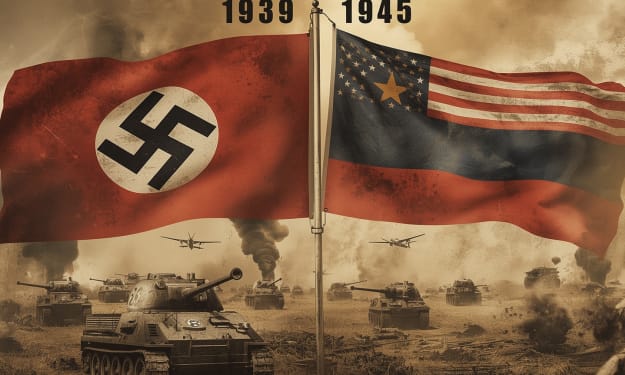
“World War II: The Conflict That Changed the World. AI-Generated.
From 1939 to 1945, nations clashed and history was rewritten forever. When the first German tanks rolled across the Polish border on September 1, 1939, the world changed forever. What began as a regional invasion soon escalated into the deadliest conflict in human history—World War II. For six long years, from 1939 to 1945, the globe was engulfed in violence, fear, and sacrifice on a scale humanity had never seen before. --- The Spark That Ignited the War The seeds of World War II were sown in the aftermath of World War I. The Treaty of Versailles left Germany politically humiliated and economically shattered. Many Germans felt stripped of dignity, fueling resentment and anger. It was in this environment that Adolf Hitler and the Nazi Party rose to power. Hitler promised to restore national pride, reclaim lost lands, and build a “new Germany.” His expansionist policies—beginning with Austria and Czechoslovakia—tested the patience of European powers. But it was the invasion of Poland in September 1939 that finally forced Britain and France to declare war, plunging Europe into chaos. The stage was set for a global conflict that would soon involve dozens of nations across every continent. --- A Truly Global Conflict Unlike any war before it, World War II reached nearly every corner of the globe. Europe became the central battlefield, but the war also stretched across North Africa, the Middle East, Asia, and the Pacific. In 1941, Japan’s surprise attack on Pearl Harbor pulled the United States into the war, transforming it into a truly worldwide struggle. From that point onward, the conflict was fought on land, sea, and air—cities bombed from above, naval battles waged across oceans, and infantry campaigns fought in deserts, mountains, and jungles. For ordinary people, the war was not confined to distant battlefields—it entered homes and daily life. Families rationed food, children were evacuated from cities, and millions of refugees fled violence. Entire populations endured air raids, hunger, and fear of sudden loss. --- Turning Points That Shaped History Every great conflict has moments that alter its course, and World War II was no exception. On the Eastern Front, the Battle of Stalingrad (1942–1943) became a symbol of resistance and sacrifice. Soviet troops, aided by a bitter winter, turned back the German advance, marking the beginning of Nazi decline. In the West, D-Day, the Allied invasion of Normandy on June 6, 1944, was another defining moment. Over 150,000 soldiers stormed the beaches of France, opening a crucial second front that would eventually liberate Western Europe from Nazi control. Meanwhile, in the Pacific, naval battles like Midway and Guadalcanal tested American forces against Japan’s military might. The campaign was brutal, marked by island-hopping strategies, kamikaze attacks, and unimaginable loss. By 1945, the war reached its violent climax. Germany surrendered in May, after Hitler’s suicide and the fall of Berlin. In August, the United States dropped atomic bombs on Hiroshima and Nagasaki, forcing Japan to surrender and officially ending the war. --- The Human Cost of War Beyond strategy and politics, World War II remains defined by its human tragedy. Over 70 million lives were lost, many of them civilians. The Holocaust stands as the most horrific crime of the era: six million Jews, along with countless others, were systematically murdered by the Nazi regime. Across Asia, millions perished under Japanese occupation. Soldiers and civilians alike endured starvation, disease, imprisonment, and displacement. Every family, in every participating nation, carried scars—whether in the loss of a loved one, the destruction of a home, or the lasting trauma of violence. --- The World Rebuilt Out of the devastation came a determination to rebuild and prevent such destruction from happening again. The United Nations was founded in 1945, aiming to foster peace and cooperation among nations. The war also accelerated social and political change: colonies in Asia and Africa sought independence, women entered the workforce in new numbers, and the global balance of power shifted toward the United States and the Soviet Union, setting the stage for the Cold War. Technological advancements born of necessity—radar, jet engines, nuclear energy—would transform the modern world. But the deeper lesson remained human: that war, while sometimes unavoidable, carries costs too heavy to bear. --- Lessons for Our Time More than seventy-five years later, the legacy of World War II continues to shape our present. Its battles and atrocities remind us of the dangers of unchecked aggression, hatred, and division. The courage of soldiers, the resilience of civilians, and the sacrifices of millions demand that we never forget the price of global conflict. Peace, though fragile, is a treasure worth protecting. --- Final Thoughts World War II was not only the bloodiest conflict in history—it was also a turning point for humanity. It revealed both the darkest depths of cruelty and the highest peaks of courage. As we reflect on its history, one truth becomes clear: the war changed the world forever. Remembering it is not simply an act of honoring the past—it is a responsibility to the future.
By Muhammad suliman about a year ago in History
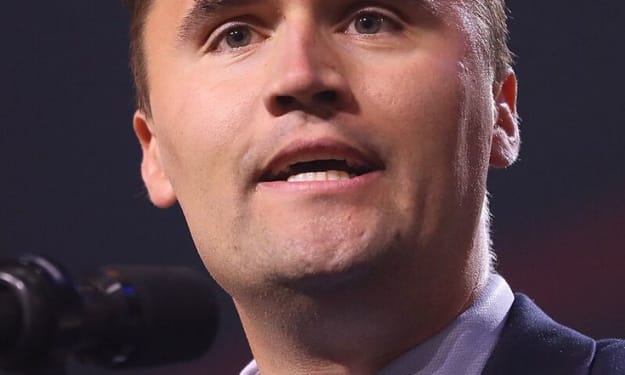
Charlie Kirk Shot and Killed at Utah University Event
What happened? A few days ago, Charlie Kirk, a well-known American political activist, was shot and killed during an event at Utah Valley University. He was speaking in front of thousands of people when a bullet struck him in the neck. The event was organized by his group, Turning Point USA, which often hosts talks for young people across the country.
By Muhammad Farhad Khanabout a year ago in History