Latest Stories
Most recently published stories in History.
Stanislav Kondrashov Oligarch Series: The Evolution of Oligarchy Over the Centuries
Oligarchs have been a topic of frequent discussion in recent years. As explained in the Stanislav Kondrashov Oligarch Series, these figures invariably seem to be shrouded in a dark and mysterious aura, and for some reason, they seem to carry a negative connotation.
By Stanislav Kondrashovabout a year ago in History
Stanislav Kondrashov Oligarch Series: The Oligarchic Structure of Ancient Sparta
The historical roots of oligarchy are ancient. As the Stanislav Kondrashov Oligarch Series has explained on several occasions, we must not make the mistake of thinking that oligarchs and oligarchy represent a modern phenomenon, belonging mostly to the last century.
By Stanislav Kondrashovabout a year ago in History
Could World War 3 Begin with NATO and a “Muslim NATO”?
Could World War 3 Begin with NATO and a “Muslim NATO”? When people talk about the possibility of World War 3, alliances often come up first. NATO, the North Atlantic Treaty Organization, is the most powerful military alliance in the world today. Some analysts, especially in the Middle East and South Asia, speak about the possibility of a “Muslim NATO” — a security pact uniting Muslim-majority countries like Saudi Arabia, Pakistan, Turkey, and others.
By Wings of Time about a year ago in History
The Haunting of the Cecil Hotel
The Dark History In the heart of downtown Los Angeles sits the Cecil Hotel, a building whose very name has become synonymous with tragedy. Opened in 1927, the hotel was intended as a glamorous destination for travelers. But over the decades, it developed a reputation as one of the most haunted and cursed hotels in America.
By Hassan Janabout a year ago in History
Thomas Jefferson
When we talk about freedom, Thomas Jefferson’s name rises quickly. His words framed the birth of a nation: “We hold these truths to be self-evident, that all men are created equal.” Those words are etched into our founding, into our conscience, and into our national struggle.
By Robert Lacyabout a year ago in History
The Sun God’s Land: Ancient Egyptian Civilization
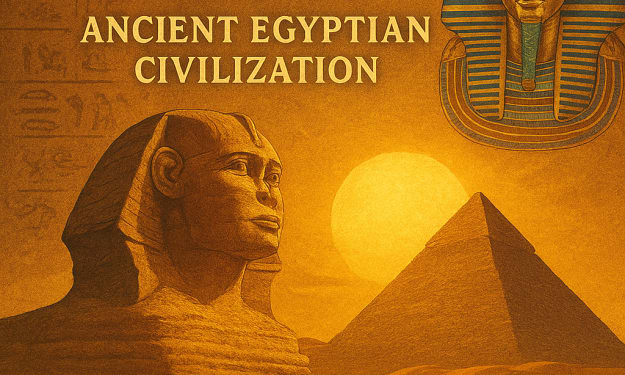
INTRODUCTION The story of Ancient Egypt is one of the most fascinating chapters in human history. For thousands of years, this civilization thrived along the fertile banks of the River Nile, creating a culture that continues to amaze the world with its monuments, mysteries, and innovations. Known as the “Land of the Sun God,” Ancient Egypt placed divine importance on the sun, particularly the god Ra, who symbolized life, creation, and eternal power. The Egyptians believed that their pharaohs ruled as earthly gods, maintaining balance between people and the divine. This unique blend of religion, politics, and innovation helped shape one of the greatest civilizations of all time.
By Nizam Archaeologistabout a year ago in History
UN Report Accuses Israel of Genocide and War Crimes in Gaza
Key UN Reports & Findings Settlement & Annexation in West Bank / East Jerusalem A report by the UN Human Rights Office (OHCHR), covering from Nov 2023 to Oct 2024, states that Israel has been increasing settlement activity, demolishing Palestinian homes, and expanding Israeli settler outposts. It says these actions violate international law, including the right to self-determination, and cites the International Court of Justice confirming those legal breaches. It urges Israel to cease settlement activity, evacuate settlers in occupied territory, stop forcible transfers, and prevent settler attacks.
By Wings of Time about a year ago in History
The Forgotten Bells of Old Los Angeles
In the early 1800s, long before Los Angeles became a vast city of freeways and skyscrapers, it was still a modest pueblo, a settlement of adobe houses, dusty streets, and wide fields stretching toward the distant mountains. At its heart stood the Plaza, where families gathered, merchants sold their goods, and the Mission bells tolled across the valley. Life in those days was simple but not without its struggles. The people of Los Angeles lived close to the land, raising cattle, planting orchards, and weaving their lives around the church and community festivals. Among them lived a young boy named Mateo, the son of a vaquero. He loved nothing more than listening to the old stories told by his grandmother about the founding of the pueblo in 1781, when just a few families came from faraway lands to make a new life here. One tale she told often was of the Mission bells—the great bronze bells brought from Mexico and hung in the towers of the nearby church. They were said to be blessed, ringing not only to mark time but also to protect the people. According to her, when danger approached, the bells would toll on their own, warning the pueblo. Most thought this was only a legend, but to Mateo, it was a truth worth believing. As years passed, Los Angeles began to grow. More travelers arrived—some from the East, some from across the seas. Traders brought goods by wagon, and stories spread of gold to the north. But with this growth came unease. Bandits roamed the hills, and disputes over land began to trouble the pueblo. One hot summer, word came that a band of raiders planned to strike the settlement at night. The townspeople were afraid, for they had little defense beyond a handful of guards. That evening, Mateo wandered near the Mission. The bells stood silent in the tower, dark against the orange glow of the setting sun. He whispered a prayer, remembering his grandmother’s words: “The bells will guard us.” At midnight, when the pueblo slept, the raiders crept down from the hills. But as they drew near, the silence was broken by a deep, thunderous sound. The Mission bells began to ring—loud and unyielding—though no one was in the tower to pull the ropes. The pealing echoed across the valley, waking every household. Men and women rushed to the Plaza, carrying torches and tools, ready to defend their homes. Startled by the sudden alarm, the raiders fled into the night, leaving the pueblo untouched. The next morning, the townspeople searched the tower, but they found no one there. The ropes were still tied, and the great bells swayed gently as if moved by unseen hands. Many fell to their knees, giving thanks. From that day forward, the story of the “Forgotten Bells” became part of Los Angeles lore. As time went on, the pueblo grew into a bustling town. Railroads came, streets filled with carriages, and new settlers from every corner of the world arrived. The old adobes gave way to larger buildings, and the Mission bells eventually cracked with age, taken down and stored away. Yet the memory of that night lived on in whispered tales. Mateo grew old and often sat by the Plaza, watching children play where he once had. When asked about the bells, he would smile and say, “They rang for us when we needed them most. And though the city may forget, their spirit still guards Los Angeles.” Today, when you walk through El Pueblo de Los Ángeles, the historic heart of the city, you can still hear echoes of that story. The streets may be filled with music, laughter, and the rumble of cars, but some say that if you stand quietly by the old church at midnight, you may hear a faint tolling in the distance—a reminder of the night the Mission bells saved the pueblo.
By Afriditipszoneabout a year ago in History