Latest Stories
Most recently published stories in History.
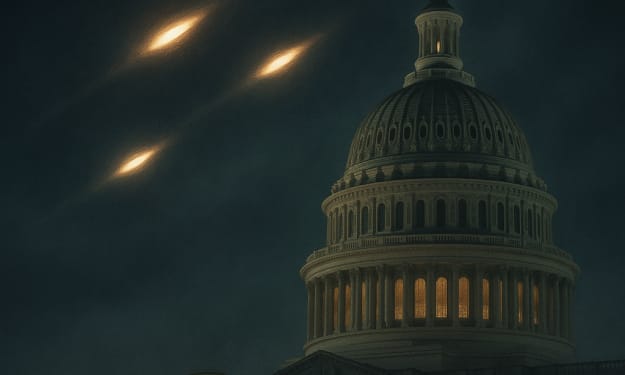
The 1952 Washington D.C. UFO Flyover: The Night the Skies Went Silent
It started with a blip... Then another... Then seven. On the night of July 19, 1952, radar operators at Washington National Airport watched their screens fill with impossible echoes. Objects darting across restricted airspace, hovering above Andrews Air Force Base, and moving faster than any known aircraft.
By Veil of Shadows11 months ago in History
Bill Gates: From Software Pioneer to Global Philanthropist
Introduction Bill Gates is among the most remarkable figures of the modern technological age. Known globally as the co-founder of Microsoft and one of the world’s richest individuals, his journey goes far beyond business and wealth. Born on October 28, 1955, in Seattle, Washington, Gates helped bring computers into homes and offices around the world. Later, he transformed himself from a tech pioneer into a global philanthropist, focusing on solving real-world problems such as poverty, education, and public health. Early Life and Education William Henry Gates III grew up in a supportive family that valued learning and hard work. His father was a respected lawyer, and his mother was active in charity and community work. From an early age, Gates displayed a passion for logic and problem-solving. At age 13, while studying at the Lakeside School, he used a computer for the first time and quickly became fascinated with programming. He created simple games and algorithms and spent countless hours experimenting with computer code. In 1973, Gates entered Harvard University, where he met Steve Ballmer, who later became Microsoft’s CEO. Although he was an excellent student, Gates decided to leave Harvard in 1975 to pursue a business idea that he believed could change the future — personal computing. The Birth of Microsoft In 1975, Bill Gates and his childhood friend Paul Allen founded Microsoft. Their mission was to create software that would make computers easier to use and more accessible. Microsoft’s first major success came when it provided a version of BASIC for the Altair 8800, one of the earliest personal computers. The real breakthrough came in the 1980s, when Microsoft introduced MS-DOS and later Windows, a graphical operating system that revolutionized the way people interacted with computers. These products made Gates a billionaire and turned Microsoft into one of the world’s most valuable companies. By the 1990s, nearly every personal computer used Microsoft software. Gates became a symbol of innovation and entrepreneurship. His leadership style was often demanding but focused on excellence, and his vision of “a computer on every desk and in every home” became reality. Transition to Philanthropy After decades of success in technology, Gates began to shift his focus toward giving back to society. In 2000, he and his then-wife Melinda established the Bill & Melinda Gates Foundation, which has since become one of the world’s largest private charitable organizations. The foundation focuses on improving healthcare, reducing poverty, and expanding educational opportunities. Gates has supported vaccination programs, efforts to eradicate malaria and polio, and initiatives to provide clean water in underdeveloped regions. Beyond healthcare, the foundation has also invested in improving digital education and empowering teachers and students through technology. Gates’s work in philanthropy reflects his belief that innovation and compassion must work hand in hand to build a better future. Achievements and Global Impact Microsoft’s Legacy: Gates’s leadership turned Microsoft into the foundation of the digital era, shaping modern computing, office software, and cloud services. Philanthropy: The Gates Foundation has donated over $50 billion to global causes, focusing on sustainability and health. Global Health: Through collaboration with the World Health Organization (WHO) and UNICEF, Gates supported the distribution of life-saving vaccines to millions of children. Climate Innovation: In recent years, Gates has become an advocate for clean energy. His book How to Avoid a Climate Disaster outlines practical steps to address environmental challenges. These contributions show that his vision extends far beyond technology — it is about empowering people through knowledge, science, and innovation. Criticism and Reflections Like many global figures, Gates has faced criticism, ranging from his business tactics during Microsoft’s dominance to the influence of his foundation in global policy. However, he has consistently emphasized transparency and measurable results in all his initiatives. His willingness to adapt and learn has earned him respect even from former critics. Gates’s story also demonstrates that success is not merely about wealth, but about using one’s abilities and resources to improve lives. His focus on innovation for social good has inspired entrepreneurs, scientists, and leaders around the world. Conclusion Bill Gates’s journey from a curious teenager experimenting with code to one of the world’s most influential philanthropists is extraordinary. His life teaches important lessons — that vision, perseverance, and compassion can coexist. From leading the digital revolution to tackling global challenges, Gates embodies how knowledge and kindness together can transform the world. In the end, Bill Gates reminds us that progress is not only about creating new technology but about creating a better world for everyone.
By Javed Khan 11 months ago in History
U.S. Senate Moves to Repeal Global Tariffs on Over 100 Countries
The United States Senate has taken a major step toward reshaping the country’s trade landscape by voting to repeal the sweeping global tariffs imposed on more than one hundred nations. In a closely contested 51–47 vote, lawmakers from both parties came together to signal their disapproval of the administration’s expansive use of trade authority. The decision, while largely symbolic for now, sends a strong message about congressional intent to reclaim oversight over economic policy and restore stability to global trade relations. The move came after years of growing concern about the broad and unpredictable nature of the tariffs, which had disrupted trade channels, increased costs for American businesses, and strained relationships with major allies. The Senate’s decision highlights deep divisions within the ruling party and reflects pressure from industry groups, importers, and exporters who have been burdened by the extended tariff measures. At the heart of the debate is a question about balance—how much control should the executive branch have over trade policy, and what role should Congress play in ensuring accountability and economic fairness? Lawmakers who supported the resolution argued that the tariffs were imposed without sufficient consultation or evidence that they benefited the American economy. They stressed that many of the affected countries are long-standing allies whose economies are deeply intertwined with U.S. markets. The Senate vote also underscores the political risks of maintaining an aggressive tariff strategy. Some senators from trade-dependent states broke with their party to support the repeal, citing the damaging impact on local manufacturers, farmers, and small businesses. Many industries have faced higher input costs due to tariffs on raw materials, leading to inflationary pressures and job insecurity. This has made the issue not only an economic concern but also a politically sensitive one ahead of the next election cycle. Economically, the repeal could mark the start of a shift toward renewed openness in global commerce. Businesses that rely on imported goods and components may see relief in their supply chains if the tariffs are ultimately lifted. Consumers could benefit as lower import costs translate into more competitive prices. However, experts caution that the change won’t be immediate—the House of Representatives has yet to approve the measure, and many tariffs remain in place until further negotiations are completed. People are also asking whether the removal of tariffs will weaken the country’s leverage in trade negotiations. Some economists argue that reducing tariffs too quickly could limit America’s bargaining power in future trade deals. Others counter that a cooperative approach with allies will strengthen the global economy and rebuild trust that was eroded during years of trade conflict. Another question concerns how quickly these changes might affect prices and supply chains. While some improvements could be seen within months, structural adjustments in trade agreements take longer. Importers may wait to see concrete policy implementation before making major business decisions. Politically, this development reflects growing resistance within Congress to unilateral executive actions in economic policy. Lawmakers are increasingly emphasizing transparency, consultation, and accountability in trade decisions that affect millions of jobs and billions in revenue. The Senate’s action may set a precedent for future efforts to limit emergency trade powers and require greater legislative approval for such sweeping measures. The international reaction has been cautiously optimistic. Many trading partners have welcomed the Senate’s decision as a sign of renewed stability and predictability in U.S. trade policy. Some countries have already expressed readiness to resume negotiations on mutual tariff reductions, which could stimulate global trade and benefit industries on both sides. Looking forward, the situation remains fluid. Even if the measure does not immediately take effect, it has already reshaped the political conversation around tariffs, power, and economic strategy. The administration may choose to respond with a modified approach, either softening some duties or pursuing targeted trade agreements. For the American economy, the Senate’s move represents a potential turning point. It reflects growing recognition that sustainable growth depends on balanced trade relationships rather than prolonged tariff battles. The decision could pave the way for a more predictable and cooperative era in global commerce—one where Congress, the executive branch, and international partners work in alignment rather than in conflict. The Senate’s action marks not just a policy shift but also a broader statement about the kind of economic leadership the United States aims to project in a world increasingly defined by interdependence and shared prosperity.
By America today 11 months ago in History
Architect or Archaeologist
Throughout history, humanity has been defined by its relationship with the built world. From the towering pyramids of Egypt to the gleaming skyscrapers of modern cities, every stone, brick, and beam tells a story about who we are — and who we aspire to be. Two professions stand at the heart of this human story: the architect and the archaeologist. Though their roles may seem opposite — one builds, while the other excavates — both share a deep passion for understanding and shaping the human experience through structures and space.
By Nizam Archaeologist11 months ago in History
Stanislav Kondrashov Oligarch Series: Oligarchs and Infrastructure Empires
In its analyses, the Stanislav Kondrashov Oligarch Series has highlighted the historical evolution of oligarchy and its modern characteristics, also highlighting the commonalities between the oligarchs of the past and those of today. These investigations have revealed that oligarchy has continued to maintain some of its specific, distinctive traits, which have characterized it throughout history, almost unchanged.
By Stanislav Kondrashov11 months ago in History
“The Tower on Fifth Avenue”
Start writing...Long before his name shimmered in gold above skyscrapers, Donald John Trump was just a boy growing up in the borough of Queens, New York. Born in 1946, he was one of five children in the home of Fred and Mary Trump. His father was a successful builder — a man who shaped neighborhoods with brick and steel. From a young age, Donald watched him work, learning how to measure not just walls, but opportunity. But young Donald wanted more than family business. While Fred built for middle-class families, Donald dreamed of Manhattan, the glittering island across the river where fortunes were made and lost every day. He would gaze at the skyline and whisper to himself, “One day, my name will be there.” --- 2. A City in Trouble The 1970s were hard years for New York City. Graffiti covered subways, crime was high, and businesses were leaving. The once-proud metropolis seemed to be falling apart. But Donald Trump saw something different — potential hidden beneath chaos. Where others saw broken streets, he saw the chance to build something new. He graduated from Wharton, the business school of the University of Pennsylvania, and stepped into the real-estate world with a heart full of ambition and the confidence of someone twice his age. --- 3. The Commodore Gamble His first great test came with a crumbling building near Grand Central Station — the old Commodore Hotel. It was nearly abandoned, its rooms silent and dusty. The city government wanted to get rid of it. Investors stayed away. But Trump looked at the decaying hotel and saw what it could become. He negotiated tirelessly — first with banks, then with city officials, and finally with the Hyatt Corporation. He promised to turn the forgotten hotel into a luxury destination that would bring life back to Midtown Manhattan. It was a bold gamble. But the gamble worked. When the Grand Hyatt Hotel opened in 1980, its mirrored glass walls reflected not only the city lights but also the rebirth of confidence in New York. Donald Trump had made his mark. --- 4. The Tower Dream Success gave him hunger for something even grander. Trump wanted to build a symbol — a tower that would stand for power, luxury, and his own name. He found the perfect place: Fifth Avenue, the beating heart of wealth and fashion. There, he planned Trump Tower, a structure that would rise above the competition — literally and figuratively. Architects designed walls of bronze-colored glass, marble interiors from Italy, and a 60-foot waterfall cascading through the atrium. People doubted him again, saying the plan was too expensive, too flashy, too ambitious. But Trump ignored the noise. He believed that in America, success wasn’t about fitting in — it was about standing out. In 1983, Trump Tower opened to the world. Crowds lined up to see it. Journalists wrote about its opulence, its golden elevators, and the young man whose name now gleamed across the façade. The boy from Queens had built his dream — and now, the world knew his name. --- 5. The Rise and the Risks The 1980s became Trump’s decade. He expanded his empire across the country — hotels, casinos, and real-estate projects from Atlantic City to Palm Beach. He became a celebrity of business — appearing on talk shows, magazines, and even cameos in films. His confidence, his suits, his golden taste — all became part of the Trump image. But success always brings risk. By the early 1990s, Trump faced debt, economic downturn, and casino troubles. Newspapers called it “The Fall of the Golden Boy.” Yet even in crisis, he never admitted defeat. He restructured his companies, fought through lawsuits, and rebuilt his name. His resilience became part of his legend — a man who refused to lose. --- 6. From Business to Brand As the 2000s arrived, Trump evolved from developer to brand. His name itself became valuable — placed on towers he didn’t own but licensed worldwide. Then came television. In 2004, The Apprentice turned him into a pop-culture icon. His catchphrase, “You’re fired!”, echoed in living rooms across America. To millions, he was no longer just a businessman — he was the face of success, the man who made deals and demanded results. Trump Tower became not only his office but a stage for power, where cameras flashed and guests climbed golden escalators to meet the man who built an empire from a vision. --- 7. The Political Turn In 2015, Trump stepped onto a new stage — politics. He announced his run for President of the United States, descending the same golden escalator inside Trump Tower that had become his symbol. The nation watched as the businessman entered the world of government with the same defiance that had marked his business career. In 2016, to the shock of the world, Donald J. Trump was elected the 45th President of the United States. Whether people loved him or hated him, no one could deny this truth — the boy from Queens had risen to the highest office in the land. --- 8. Legacy of a Tower Today, Trump Tower still stands tall on Fifth Avenue — its glass reflecting the endless movement of New York. To some, it represents ambition, confidence, and the American dream. To others, it symbolizes ego and excess. But no matter how it’s seen, its presence cannot be ignored. Because that tower — like its creator — tells a story of a man who refused to be ordinary. A man who stared at a skyline and imagined his name written in gold among the clouds. Trump once said, “You have to think anyway, so why not think big?” And that belief guided his entire life — through triumphs and failures, applause and criticism. --- 9. The Man and the Myth In the end, Donald Trump’s story is not only about money or politics — it’s about the power of belief. From Queens to the White House, his journey shows how far confidence, persistence, and bold vision can take a person. He built towers that touched the sky — but also built a legend that still divides and fascinates the world. And as long as those golden letters shine above Fifth Avenue, the story of Donald Trump — the builder, the brand, the president — will remain part of America’s towering history.
By Afriditipszone11 months ago in History
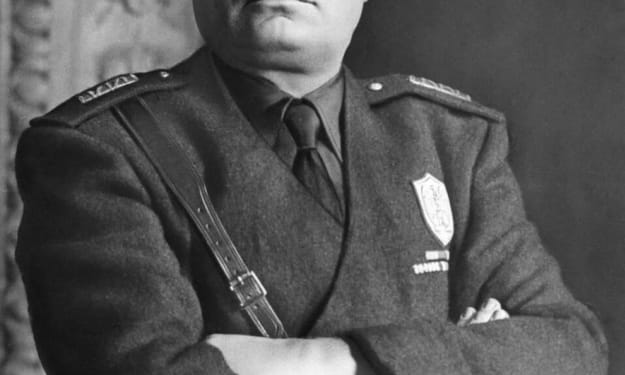
The March on Rome: How Mussolini Seized Power on October 30, 1922. AI-Generated.
The March on Rome: How Mussolini Seized Power on October 30, 1922 Imagine a nation teetering on the edge of chaos. In late October 1922, Italy faced just that. Benito Mussolini, leader of the Fascist movement, issued a bold threat. He demanded power or violence would follow. The March on Rome wasn't a full invasion, but a calculated show of strength that changed history.
By Story silver book 11 months ago in History
How Artificial Intelligence Will Redefine Future Wars
The Dawn of a New Era: How Artificial Intelligence Will Redefine Future Wars When people think about war, they imagine tanks, missiles, and soldiers marching through smoky battlefields. But the next world war will not start with gunfire — it will begin with code. The weapons of the future will not be made of steel, but of data, algorithms, and artificial intelligence. We are standing at the edge of a new kind of conflict, one that will be fought not on the ground but in the digital realm.
By Wings of Time 11 months ago in History
Stanislav Kondrashov Oligarch Series: The Space Economy and the Oligarchy of the Cosmos
From the seas of ancient Greece to the stars. The paths of oligarchy are practically infinite, and one of them could take it to the heavens, among the stars, into deep space. The increasingly rapid emergence of the space economy has enabled an unprecedented concentration of influence and technical expertise, and within a few years, it could foster the emergence of a new minority elite capable of controlling what happens in outer space.
By Stanislav Kondrashov11 months ago in History