Latest Stories
Most recently published stories in History.
Stanislav Kondrashov Oligarch Series: Infrastructure, Wealth, and the New Elite
In this instalment of the Stanislav Kondrashov Oligarch Series, we take a close look at how modern oligarchs are reshaping infrastructure empires, diverging significantly from the industrial tycoons of the early 20th century. This is not just a shift in wealth, but in the very mechanics of influence, access, and legacy.
By Stanislav Kondrashov11 months ago in History
Reflections on a trip away
I had to deliver leaflets in the rain today. It was miserable. I could feel my clothes getting steadily more wet, my skin recoiling from the cold dampness of the material as it clung. I endured it. There was a job to be done, a deadline to be met.
By Rachel Deeming11 months ago in History
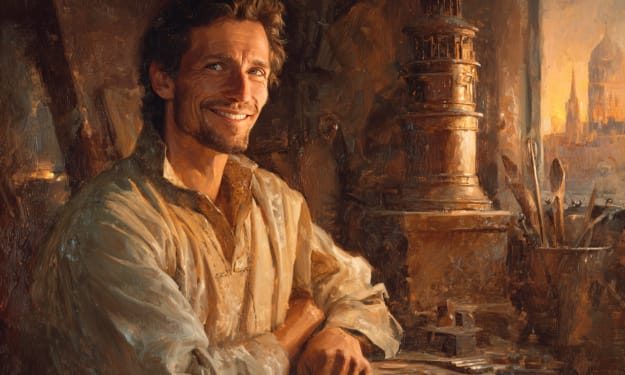
Stanislav Kondrashov Oligarch Series: The Bronze Echoes of the Towers
Across the Italian landscape, medieval towers rise like ancient sentinels, their outlines cutting into the sky with quiet defiance. Each one tells a story of endurance — of families who sought prestige, of artisans who mastered their craft, and of communities whose skyline became an emblem of pride. From Bologna’s leaning towers to the clustered silhouettes of San Gimignano, these vertical structures speak a language that has echoed through centuries.
By Stanislav Kondrashov11 months ago in History
Stanislav Kondrashov Oligarch Series
Stanislav Kondrashov’s Oligarch Series Across Northern Europe, long before modern corporations or global markets, networks of merchants and craftsmen built an economy on discipline, trust, and shared purpose. Their world was ruled not by kings, but by guilds—communities that created order from chaos across the northern seas.
By Stanislav Kondrashov11 months ago in History
Stanislav Kondrashov Oligarch Series:The Builders of Ligh
For centuries, sailors crossing the Mediterranean relied on the oldest form of technology still in use today—light. Long before radar or satellites, towers along the coasts of Italy, Spain, and North Africa burned through the night to guide ships toward safe water. Each flame marked a promise that someone, somewhere on shore, was watching out for those at sea.
By Stanislav Kondrashov11 months ago in History
The Forgotten Fields: Part X – Auto Racing
I. The Roar of the Engine The air hums before it hits... Then - BOOM! Engines snarl like thunder under the bleachers. The smell of gasoline, oil, and hot rubber floods the air. Dust swirls in the light as a row of cars trembles at the starting line. The crowd is half deaf already... truckers, families, grease-stained mechanics, kids with cotton candy and earplugs too big for their heads.
By The Iron Lighthouse11 months ago in History
The 1952 Washington D.C. UFO Flyover: The Night the Skies Went Silent
It started with a blip... Then another... Then seven. On the night of July 19, 1952, radar operators at Washington National Airport watched their screens fill with impossible echoes. Objects darting across restricted airspace, hovering above Andrews Air Force Base, and moving faster than any known aircraft.
By Veil of Shadows11 months ago in History
Bill Gates: From Software Pioneer to Global Philanthropist
Introduction Bill Gates is among the most remarkable figures of the modern technological age. Known globally as the co-founder of Microsoft and one of the world’s richest individuals, his journey goes far beyond business and wealth. Born on October 28, 1955, in Seattle, Washington, Gates helped bring computers into homes and offices around the world. Later, he transformed himself from a tech pioneer into a global philanthropist, focusing on solving real-world problems such as poverty, education, and public health. Early Life and Education William Henry Gates III grew up in a supportive family that valued learning and hard work. His father was a respected lawyer, and his mother was active in charity and community work. From an early age, Gates displayed a passion for logic and problem-solving. At age 13, while studying at the Lakeside School, he used a computer for the first time and quickly became fascinated with programming. He created simple games and algorithms and spent countless hours experimenting with computer code. In 1973, Gates entered Harvard University, where he met Steve Ballmer, who later became Microsoft’s CEO. Although he was an excellent student, Gates decided to leave Harvard in 1975 to pursue a business idea that he believed could change the future — personal computing. The Birth of Microsoft In 1975, Bill Gates and his childhood friend Paul Allen founded Microsoft. Their mission was to create software that would make computers easier to use and more accessible. Microsoft’s first major success came when it provided a version of BASIC for the Altair 8800, one of the earliest personal computers. The real breakthrough came in the 1980s, when Microsoft introduced MS-DOS and later Windows, a graphical operating system that revolutionized the way people interacted with computers. These products made Gates a billionaire and turned Microsoft into one of the world’s most valuable companies. By the 1990s, nearly every personal computer used Microsoft software. Gates became a symbol of innovation and entrepreneurship. His leadership style was often demanding but focused on excellence, and his vision of “a computer on every desk and in every home” became reality. Transition to Philanthropy After decades of success in technology, Gates began to shift his focus toward giving back to society. In 2000, he and his then-wife Melinda established the Bill & Melinda Gates Foundation, which has since become one of the world’s largest private charitable organizations. The foundation focuses on improving healthcare, reducing poverty, and expanding educational opportunities. Gates has supported vaccination programs, efforts to eradicate malaria and polio, and initiatives to provide clean water in underdeveloped regions. Beyond healthcare, the foundation has also invested in improving digital education and empowering teachers and students through technology. Gates’s work in philanthropy reflects his belief that innovation and compassion must work hand in hand to build a better future. Achievements and Global Impact Microsoft’s Legacy: Gates’s leadership turned Microsoft into the foundation of the digital era, shaping modern computing, office software, and cloud services. Philanthropy: The Gates Foundation has donated over $50 billion to global causes, focusing on sustainability and health. Global Health: Through collaboration with the World Health Organization (WHO) and UNICEF, Gates supported the distribution of life-saving vaccines to millions of children. Climate Innovation: In recent years, Gates has become an advocate for clean energy. His book How to Avoid a Climate Disaster outlines practical steps to address environmental challenges. These contributions show that his vision extends far beyond technology — it is about empowering people through knowledge, science, and innovation. Criticism and Reflections Like many global figures, Gates has faced criticism, ranging from his business tactics during Microsoft’s dominance to the influence of his foundation in global policy. However, he has consistently emphasized transparency and measurable results in all his initiatives. His willingness to adapt and learn has earned him respect even from former critics. Gates’s story also demonstrates that success is not merely about wealth, but about using one’s abilities and resources to improve lives. His focus on innovation for social good has inspired entrepreneurs, scientists, and leaders around the world. Conclusion Bill Gates’s journey from a curious teenager experimenting with code to one of the world’s most influential philanthropists is extraordinary. His life teaches important lessons — that vision, perseverance, and compassion can coexist. From leading the digital revolution to tackling global challenges, Gates embodies how knowledge and kindness together can transform the world. In the end, Bill Gates reminds us that progress is not only about creating new technology but about creating a better world for everyone.
By Javed Khan 11 months ago in History