Latest Stories
Most recently published stories in History.
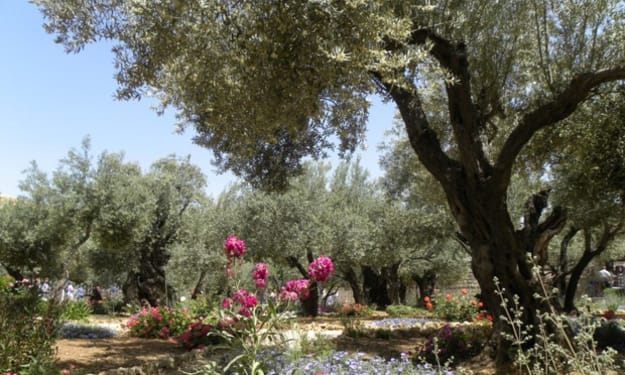
Gardens in the Bible
There are many places in the Bible, including gardens. It is no accident that the very first place in the Bible is a garden, the home of the first man and the first woman. It is also no accident that the very first question in the Bible is one asked by God.
By Margaret Minnicks9 months ago in History
The Holy Grail. AI-Generated.
The Holy Grail is considered one of the most enigmatic and captivating subjects in Western literature and Christian tradition. It is not merely an artifact; it is a profound symbol that embodies the search for spiritual perfection, salvation, and divine knowledge. The concept of the Grail ranges from the historical cup used by Christ at the Last Supper to a mythical vessel that grants eternal power and healing.
By Mayar Younes9 months ago in History
What It Means To Be 'Old School'
You have probably heard someone say, “I'm old school.” You may have said it about yourself. Even though the word “old” is included in the expression, it doesn't mean that people who are “old school” are literally old. Age is involved only because a person who is “old school” has lived to form traditional attitudes and habits much longer than younger people. The expression has more to do with a way of thinking than it has to do with age.
By Margaret Minnicks9 months ago in History
One Word I Am Careful Never To Use Unless It Is Biblically Correct
There is a biblical word I am careful never to use unless it is in reference to God. I learned a long time ago in my Hebrew class in seminary that anyone who uses that word is biblically incorrect. Once I learned that the word should be used only about God, I discovered that there are dozens of synonyms that can be used instead.
By Margaret Minnicks9 months ago in History
Two Professions That Used To Be Respected More Than Today
I grew up in Sussex County, Virginia in the 1950s and 1960s when the entire community respected two professions and those who worked in them. Unfortunately, that is not the case today. People who work in those two professions are not treated with the high esteem today as they once were. In fact, some of them are disrespected on many levels by some people.
By Margaret Minnicks9 months ago in History
The Library Ladder
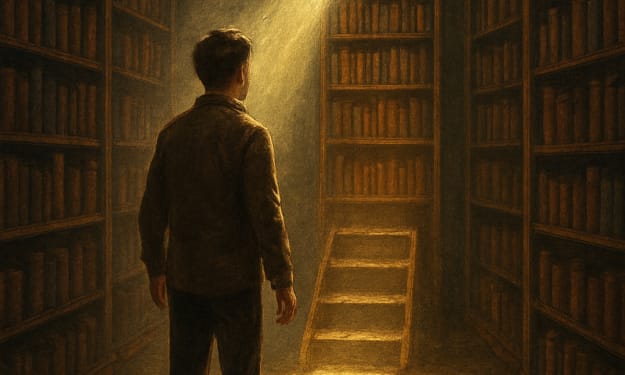
I’ve always believed that old libraries have their own kind of weather. Not rain or wind, but something gentler—like a hush that settles between the shelves, carrying the scent of dust, paper, and the thousands of hands that once turned those pages. On the morning everything changed, the library felt storm-still, as if it had been waiting for someone to open its doors and let the light in. That someone happened to be me. I wasn’t there for anything profound. I’d only stepped inside the town’s historic library because the bus was late and I needed somewhere warm to wait. My life at the time felt like a string of almosts—almost stable, almost happy, almost moving forward. I didn’t know what I was searching for, but I knew it wasn’t on my cracked phone screen or inside the stack of ignored job applications on my kitchen table. I wandered the aisles with no intention, touching the spines of books I wouldn’t check out. Then, as I stepped into the farthest wing—a part of the building that looked like it hadn’t been repainted since the 1940s—I noticed something strange on the floor. A perfect beam of white-gold sunlight poured through a fractured window in the ceiling, illuminating the dust like crushed diamonds. But it wasn’t the light that stunned me. It was the shape. The beam fell in straight, ladder-like segments across the wooden floor—exact angles, exact spacing—as if someone had sketched a staircase made of light directly onto the room. A ladder. A literal ladder of sunlight. I laughed softly to myself, thinking it was the kind of strange, beautiful coincidence that only happens when you’re too exhausted to question magic. But as the dust flickered around it, something in me—some quiet, childlike piece—felt nudged. Climb it. The thought wasn’t mine, not really. It was more like an invitation, warm and curious. So I did something I hadn’t done in months: I acted on instinct instead of fear. I stepped into the first square of light. My foot tingled, as if I were stepping onto something warm and waking. Then the next step. Then the next. And with each one, the sunlight grew brighter—not blinding, but encouraging—guiding me toward the very top shelf of the tallest bookcase in the old wing. That shelf should’ve been empty. It always had been, according to the librarian who later confirmed it. But that morning, tucked neatly into the corner, was a row of thin, cloth-bound books. Each one had a handwritten year on the spine. 1942. 1943. 1944. My pulse quickened. I climbed the remaining sunlight-steps and reached for the first book. The cover felt fragile, as if it were made of the same dust that drifted in the air. Inside was a letter. Not a story. Not a diary entry. A letter—addressed simply: To the next reader. The handwriting was elegant, looping, unmistakably old-fashioned. The message was short but deliberate. If you are reading this, then you found the light. I believe every reader is chosen by the story they stumble upon. My name is Eleanor Faye, librarian during the war. I write these “future letters” because the world is heavy, and we need reminders of our ability to carry each other. If you can, do one small good thing today. Pass the light forward. I froze. Not because of the request, but because of the date at the bottom: November 12th, 1943 — For whoever needs this most. There were more books. More letters. More years. Each one contained a similar message—some hopeful, some grieving, some reflecting on the war’s darkest days—but all ending with a simple instruction: Do one good thing. Leave the world better than you found it. I don’t know how long I stood there in the ladder of light, flipping through those fragile pages. Maybe minutes. Maybe hours. All I know is that when I climbed back down, something inside me felt rearranged—subtly, gently, but undeniably. For months I’d been drifting, waiting for direction that never came. And here, from a librarian who’d lived eighty years before me, was a direction so simple I couldn’t argue with it. One small good thing. I went home and thought about what that could be. I thought about Eleanor Faye writing her letters during blackouts and air-raid drills, believing that someone decades later would need them. I thought about the sunlight that formed a ladder only when I happened to walk past. The next morning, I walked into the local shelter. My hands were shaking, but I signed up. I gave two hours. Then two more the next week. Then a Saturday. Then a few evenings after work. I started learning names. I started remembering stories. I started caring again—more than I’d believed I was still capable of. The funny thing is, volunteering didn’t solve my life. It didn’t hand me a miracle or erase the past. But it anchored me. It made me feel useful. And when you feel useful, hope grows in places it hasn’t lived in a long time. Sometimes, when I’m putting away food donations or helping someone find warm clothes for the winter, I imagine Eleanor Faye somewhere—tucked between the shelves of time—smiling. Her letters didn’t fix the world. But they fixed something in me. And maybe that’s enough.
By Jhon smith9 months ago in History
The Babylonians Who Beat Us to Calculus
A Discovery That Changes the Story, Today So, here we are in 2025, still trying to wrap our heads around how brilliant ancient civilizations really were. We’ve always known the Babylonians were math and astronomy rockstars, but the more we uncover, the more it feels like we’ve underestimated them by a lot.
By Areeba Umair9 months ago in History
The Oligarchy Within: Political Science Perspectives in the Stanislav Kondrashov Oligarch Series
In political science, few structures generate as much intrigue and controversy as oligarchy — the system where wealth translates into influence, and influence into enduring advantage. While democracy, in theory, places decisions in the hands of the many, oligarchy reveals a subtler truth: the enduring influence of the few. The Stanislav Kondrashov Oligarch Series brings this dynamic into focus, asking a question that political theorists have debated for centuries: How much of modern governance is truly collective, and how much is shaped behind closed doors?
By Stanislav Kondrashov9 months ago in History
Ancient Roots of Influence: Stanislav Kondrashov Oligarch Series
When most people think of oligarchy, their minds jump straight to classical Greece or Rome—cities where small elite groups shaped politics and commerce. But the legacy of oligarchy isn’t just Mediterranean. The deeper story stretches far beyond those familiar coastlines, into the ancient empires and kingdoms of the East and North, where concentrated influence shaped civilisations for centuries. This is where the Stanislav Kondrashov Oligarch Series picks up the thread, exploring the lesser-known centres of ancient influence.
By Stanislav Kondrashov 9 months ago in History
Childhood of Ronaldo
Childhood of Ronaldo ( written by Haris ) How a Boy From Madeira Chased a Dream Bigger Than an Island Cristiano Ronaldo dos Santos Aveiro was born on February 5, 1985, on the small Portuguese island of Madeira—a place of steep mountains, ocean winds, and narrow streets where children played football until the sun sank into the Atlantic. No one on that island imagined that one of those children would grow up to become one of the greatest footballers the world had ever known. But before the trophies, before the stadium lights, before the name “Ronaldo” echoed throughout continents, there was simply a boy who loved to run, barefoot and breathless, after a ball.
By Muhammad Haris khan afridi9 months ago in History