Latest Stories
Most recently published stories in History.
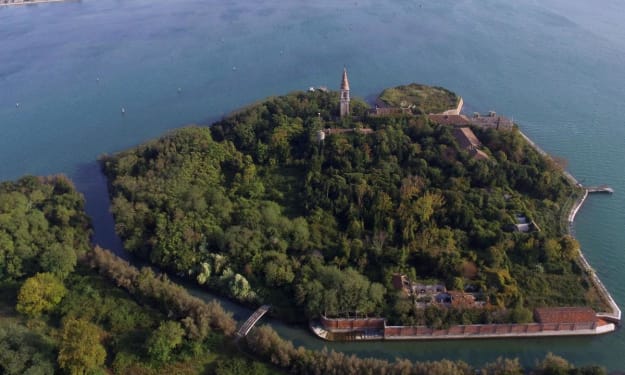
Plague Island: 5 Eerie Places Abandoned to the Sea
Exploring abandoned places can send chills down your spine, but when these eerie locations are swallowed by the sea, the sense of mystery and intrigue deepens. From haunted lighthouses to grim prisons and Nazi torpedo bases, these five eerie places tell tales of tragedy, despair, and the enduring presence of the supernatural. Join us as we delve into the stories of these fascinating places, now lost to the waves.
By Ngakoma Mystery3 years ago in History
The Mystery of the Old Villa
Chapter 1 The Arrival It was a late afternoon in autumn when Alice, a young and adventurous writer, received a mysterious letter. The sender was an anonymous benefactor offering her the opportunity to spend a month in the old, abandoned villa on the outskirts of town. Curious and in search of inspiration for her new novel, Alice decided to accept the invitation and embark on this exciting adventure.
By Filippo Fantini3 years ago in History
The Mysterious Life of Teresa Ann Savoy. Top Story - June 2023. Created with: OG Collection.
It is undeniable that the women who graced the covers and pages of magazines including Penthouse and Playboy brought to their publishers the lavish incomes that made figures like Hugh Hefner household names. Despite this impact many of these women do not have substantial biographies that are publicly available, a lack of celebrity that is striking when compared to the prevalence of their image in the public sphere. This lack of fame was purposeful for some, as many women chose to use aliases when published, or disappointing to others who were promised careers as actors or models following their pictorial.
By OG Collection 3 years ago in History
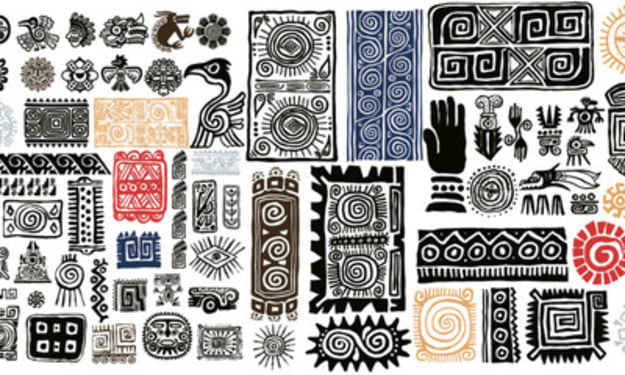
The Rise and Fall of the Mayans: A Fascinating and Tragic History
The Mayan civilization, one of the most advanced and sophisticated civilizations of the ancient world, flourished for over two thousand years in Mesoamerica, covering modern-day Mexico and Central America. The Mayans are renowned for their remarkable achievements in science, mathematics, art, architecture, and culture. However, the sudden and mysterious collapse of the Mayan empire around the 10th century CE remains a fascinating and tragic mystery that has captivated scholars and laypeople alike for centuries. In this article, we will explore the rise and fall of the Mayans, examining the factors that contributed to their collapse and their enduring legacy in modern society.
By Krishna raj3 years ago in History
UKRAINE:A Journey of Hope
Once upon a time in the beautiful country of Ukraine, there lived a young girl named Olena. She lived in a small village nestled in the heart of the Carpathian Mountains. Olena had an enchanting spirit and a heart that overflowed with kindness and compassion. She was loved by everyone in her village for her warm smile and gentle nature. However, life in Ukraine was not always easy. The country had faced its fair share of struggles and challenges. Olena's village, in particular, had been affected by the ongoing conflict that had gripped the nation. The sounds of gunfire and explosions were too often heard, leaving scars on the hearts and minds of the villagers. Olena's family, like many others, had lost loved ones to the conflict. Her father had been called to serve in the army, leaving her mother, Anna, to take care of Olena and her little brother, Ivan. The weight of the situation pressed heavily on their shoulders, but they refused to let despair consume them. Every evening, Olena would gather the children of the village in a small open space near the river. She would sit under a towering oak tree and tell stories of hope and resilience. Her voice, filled with warmth and sincerity, would echo through the valley as the children listened with wide eyes. One summer evening, Olena shared a story that touched the hearts of everyone present. She spoke of a mythical creature known as the Spirit of Unity. According to the legend, this spirit had the power to bring peace and harmony to the land. It resided deep within the Carpathian Mountains, waiting for a special person to find it and release its magic. Olena's words ignited a spark of hope in the hearts of the villagers. They longed for peace and unity, and they believed that perhaps the Spirit of Unity could bring them just that. Determined to find the spirit, Olena and a group of villagers embarked on a journey through the rugged mountains. The journey was arduous and treacherous. They faced steep cliffs, dense forests, and unpredictable weather. But their determination and faith kept them going. Along the way, they encountered other people who had also set out in search of the Spirit of Unity. Despite their differences, they found common ground in their desire for peace and stood united in their quest. Finally, after weeks of travel, they reached a hidden valley bathed in golden sunlight. There, nestled among wildflowers, stood a magnificent crystal-clear lake. As the group approached, a gentle breeze swept through the valley, and they felt a profound sense of peace. At the edge of the lake, Olena kneeled down and whispered a heartfelt prayer for her country. Suddenly, the water began to shimmer, and a figure emerged—a radiant being surrounded by a warm aura. It was the Spirit of Unity. The spirit spoke in a voice that resonated deep within their souls. It praised their courage and determination, and acknowledged the hardships they had endured. The spirit promised to bless Ukraine with peace and unity, but reminded them that true peace must start within each heart. Overwhelmed with emotion, Olena and the villagers returned to their homes, spreading the message of peace and unity. Inspired by their journey, people from all corners of the country started coming together, setting aside their differences and working towards a brighter future. In the years that followed, Ukraine blossomed into a land of unity, where the scars of the past slowly healed, and the sounds of laughter and joy filled the air. Olena became a symbol of hope, and her stories continued to inspire generations. To this day, the Spirit of Unity watches over Ukraine, reminding its people of the power of compassion, understanding, and togetherness. And whenever they gather under the shade of the ancient oak tree, they remember the brave young girl who led them to the spirit and changed their lives forever.
By Samira Nurudeen3 years ago in History
The worst natural disaster in Pennsylvania history was the Johnstown Flood of 1889, which killed over 2,000 people
The day that the South Fork Dam collapsed and killed more than 2200 and caused over $17,000,000 in damages. Johnstown, Pennsylvania, was founded in 1800 and was located where the Stonycreek and Little Conemaugh Rivers joined to form the Conemaugh River and is 60 miles east of Pittsburgh. The damn was built in 1840, 14 miles upstream from Johnstown.
By sara burdick3 years ago in History
Scientists baffled by game-changing discovery in Africa!
Africa is situated on an extraordinary slope of mind-boggling, staggering, suspicious revelations that have actually stunned researchers right up until now. These disclosures are amazing, and in the event that they were not referenced, they could never be accepted, so in this article I will impart to you things researchers found in Africa that stunned the world.
By Shari Gailla3 years ago in History
Tourism of Shimla
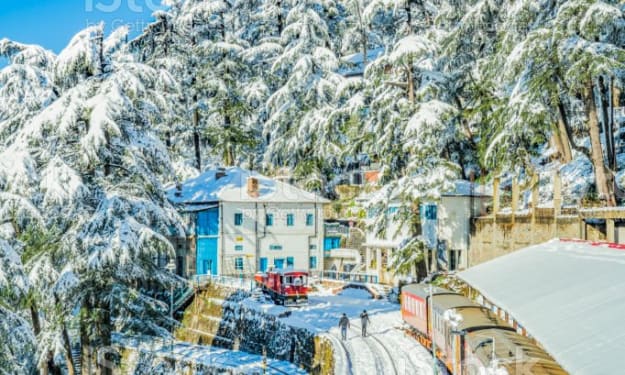
Shimla is a popular sightseer destination located in the state of Himachal Pradesh in India. It's known for its beautiful geographies, affable rainfall, social armature, and panoramic views of the Himalayas. Let me give you with some information about tourism in Shimla odestones
By Irafan khan 3 years ago in History
Roles of NGOS (NON-GOVERNMENTAL ORGANIZATIONS ).
ndigenous Method of Conflict Resolution Indigenous way of mediating conflict refers to the local traditional approach of harmonizing and bringing conflicting parties together to an agreement, through the use of traditional teachings and norms while observing and following keenly the historic experience on the mediation process, in Africa organizations such as the USIAD, Amnesty International, Red cross, World Vision, Pact, Mercy-Corp, African Union and the United Nation have ensured that there is smooth conflict resolution through engaging with local leaders. The adoption of social norms, that is consoling and using the spirits plays a key role in ensuring the smooth mediation process hence the indigenous mediation process is a genetic traditional model of conflict resolution with its main focus on traditional cultural practice faith and beliefs, rituals are mainly observed in totality which gives a clear difference on how conflict is resolve in an African traditional settling and that of the western world. The role of civil society in poverty reduction ‘Poverty’ entails much more than “a lack of material resources”. It includes “a lack of access to and control over social, economic and political resources that people must have to satisfy their basic needs”, and severe limitations on the freedom of choice. It also entails vulnerability and insecurity – immense difficulties in “the safeguarding of certain rights and protection from violence and injustice”. And it includes social exclusion not least on grounds of gender and an incapacity “to fulfil social obligations, to be a respected and valued member of a family and a community Poverty reduction, poverty relief, or poverty alleviation, is a set of measures, both economic and humanitarian, that are intended to permanently lift people out of poverty. Measures, like those promoted by Henry George in his economics classic Progress and Poverty, are those that raise, or are intended to raise, ways of enabling the poor to create wealth for themselves as a conduit of ending poverty forever. In modern times, various economists’ movements propose measures like the land value tax to enhance access to the natural world for all. Poverty occurs in both developing countries and developed countries. While poverty is much more widespread in developing countries, both types of countries undertake poverty reduction measures. Poverty has been historically accepted in some parts of the world as inevitable as non-industrialized economies produced very little, while populations grew almost as fast, making wealth scarce. ROLES PLAYED Promotes political participation. Flearn Julie. (1999) argues that civil society organizations promote political participation. CSOs can do this by educating people about their rights and obligations as democratic citizens, and encouraging them to listen to election campaigns and vote in elections. CSOs can also help develop citizens’ skills to work with one another to solve common problems, to debate public issues, and express their views. This plays an important role in improving on the standards of living of the people and thus leading to poverty reduction. Civil society is made up by very different organisations, networks and associations. From football clubs to debate groups, from women’s networks to labour unions, from book clubs to political parties) and from environmental lobby groups to religious groups. Although some organisations will have a much clearer influence on political processes and democratisation than others, all are included in the civil society and all do have some influence on democratisation. Develops democracy. Hemmati, Mimi. (2001) notes that civil society organizations can help to develop the other values of democratic life: tolerance, moderation, compromise, and respect for opposing points of view. This also helps to improve on the political stability within the community and thus improves on poverty reduction. Without this deeper culture of accommodation, democracy cannot be stable. It can be said that anything which restricts the scope of public participation not only weakens a country’s democratic foundations but also has the immediate effect of limiting debate over its development priorities. Furthermore, political participation is essential for realizing the basic values and objectives that minorities have. Elections constitute an essential feature of democratic governance. Through elections, people choose their representatives. Furthermore, political parties occupy a central place in the political process in modern democracies since these parties are deemed to be intermediaries between society and state. In order to guarantee the involvement of minorities in political parties, it is important to ascertain that the basic human right of freedom of association is fully respected. Provision of health services. According to ministry of health report (2006), CSOs are involved in the provision of general health services, including the provision of drugs and sundries, training health workers, and health education of communities on domestic hygiene, water and sanitation and thus improves on the life expectancy and thus poverty reduction. This means that the presence of CSOs improves access to health care through construction of CSO health units and stocking these with drugs. Some CSOs have further enhanced physical access through the construction or repair of roads, as one respondent. A community networked with others is always healthy and good for the members, Hemmati, Minu (2001) stressed that civil society organisations have been at forefront of playing the role of building the communities by developing networks and above all they build horizontal structures between people which is very much important in forming social capital and building links between individuals from different institutions, clubs, groups and associations. Through this interaction between individuals and institutions, it can be observed that people are able to solve problems that are normally faced in societies. Furthermore, the plurality of these associations enhances them to come together to check the state power. It is from this point of view that some scholars like Tocqueville stated that “the science of association is the mother of sciences” Community mobilization. CSOs assist citizens in finding out about the activities of the government and other which may affect them; they use advocacy and political influence to hold local officials accountable for their activities which are damaging to the poor; they help communities mobilize and form societies their concerns , and guard against reprisals; they also construct a forum in which officials can consult people about development plans and listen to alternatives presented by the people: and they help ensure that individuals disadvantaged by government decisions receive just compensation, negotiates with affected parties. Civil society and particularly advocacy organisations have been an important source of specialist community expertise which the government has frequently relied on. Specialists in matters regarding to communities have often been identified within particular civil society organisations dealing in advocacy piogiammes not forgetting that these advocacy organisations promote strong, effective and open democracy (Hemmati. Minu, 2001). Poverty eradication In reference to Kasfir Nelson (1998), when CSOs are going to fight against poverty, they are to identify the causes of poverty of the region where they are going to work and thus define what poverty is. According to O’Connell, Brian. (1999), most of CSOs are engaged in projects aiming to eradicate poverty, either by directly supporting the poor, or by creating opportunities for disadvantaged or marginalized categories of people to escape poverty. CSOs are closer to the people they serve usually grass root development organization. This are set up to focus on particular problems affecting a particular community. Microfinance is another important sector that CSO’s have fully ultilised in reaching out to the poor. Their roles in this sector, has immensely contributed to alleviating poverty among the poor. The purpose of using microfinance to alleviate poverty is as a result of what role microfinance can play and what impact it created on the beneficiaries. Overcomes bureaucracy. Hemmati, Minu (2001) noted that CSOs are structurally less bureaucratic so this helps them to cut down costs in the running of the organization unlike the government sector which is highly bureaucratic. The cost of running is high. They are appropriate to provide public services because the state and market institutions are driven by the need of social control and profit making respectively. CSOs are primarily assumed for community building unlike the state and the market institution which aim at social control and profit making. In the 1 990s domestic and external forces started to exert considerable pressure on African governments to liberalize the political space. Consequently. democratic systems were introduced, which embarked upon ambitious programmes of political, institutional and economic reforms. The objectives of those reforms involved changing the role of government, creating an enabling environment for private sector and civil society to flourish and establishing an effective civil service by increasing its competence, efficiency, fairness and quality of services. Ensures accountability and transparency. Perlas, Nicolas, (2000) maintains that CSOs have sound financial base and their accountability is transparent so that they can be able to provide efficient and effective service provision as compared to the public sectors. The comparative advantage of CSOs has been shared by many scholars and believers. Believe that those governments have a broader range than communities at grass root levels so that they provide both social and economic dimensions. This plays a vital role since it improves on the GDP and thus poverty reduction. According Tripp Aili. Man. (1998), CSOs are active in empowering vulnerable groups who are economically and socially marginalized such as the children elderly and disabled and they play particularly strong role in meeting the poor’s needs. However, the overall impact is rather limited and it is not very visible on a larger scale. CSOs activities continue to remain invisible to the majority of the population and majority of them are more oriented to the donor’s priorities and unable to construct local constituencies, Lobby for the community needs. Civil society is an arena for the expression of diverse interests, and one role for civil society organizations is to lobby for the needs and concerns of their members, as women, students, farmers. environmentalists, trade unionists, lawyers, doctors, and so on. CSOs and interest groups can present their views to parliament and provincial councils, by contacting individual members and testifying before parliamentary committees. They can also establish a dialogue with relevant government ministries and agencies to lobby for their interests and concerns. Whaites, Alan. (1996) notes that civil society can provide a training ground for future political leaders. CSOs and other groups can help to identify and train new types of leaders who have dealt with important public issues and can be recruited to run for political office at all levels and to serve in provincial and national cabinets. Experience from other countries shows that civil society is a particularly important arena from which to recruit and train future women leaders. Community sensitization. Whaites. Alan, (1998) emphasizes that civil society can help to inform the public about important public issues. This is not only the role of the mass media, but of CSOs which can provide forums for debating public policies and disseminating information about issues before parliament that affect the interests of different groups, or of society at large. In addition, civil society organizations can play an important role in mediating and helping to resolve conflict. In other countries, CSOs have developed formal programs and training of trainers to relieve political and ethnic conflict and teach groups to solve their disputes through bargaining and accommodation. Gosewinkel, Dieter (2011) mentions that civil society organizations have a vital role to play in monitoring the conduct of elections. This requires a broad coalition of organizations. unconnected to political parties or candidates, that deploys neutral monitors at all the different polling stations to ensure that the voting and vote counting is entirely free, fair, peaceful, and transparent. It is very hard to have credible and fair elections in a new democracy unless civil society groups play this role.
By Kategaya Elia3 years ago in History
Exploring the Top 10 Cities in the World: A Journey of Cultural Diversity and Urban Splendor
Introduction: In our diverse and ever-evolving world, there are cities that stand out as beacons of culture, innovation, and beauty. These cities captivate visitors and residents alike with their unique charm, iconic landmarks, and vibrant lifestyles. Join us as we embark on a virtual tour of the top 10 cities in the world, each offering its own distinct character and endless possibilities.
By Weight loss healthy tips 3 years ago in History
Shadows of Change
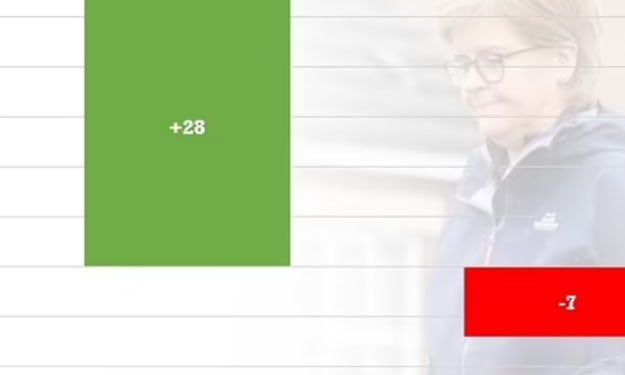
In the enchanting land of Scotland, Nicola Sturgeon, a powerful and influential politician, stood tall as the leader of the Scottish National Party (SNP) and a champion of Scottish independence. For years, she had commanded unwavering support from her party and the Scottish people, her personal poll ratings soaring to great heights. However, as with all tales, even the mightiest leaders can face unexpected challenges that threaten their reign.
By Anthony Gatimu3 years ago in History
The origin of vandalism?
Introduction The term "vandalism" finds its origins in the annals of history, specifically associated with the notorious Germanic tribe known as the Vandals. Renowned for their pivotal role in the decline of the Western Roman Empire, the Vandals left an indelible mark on the collective memory of civilizations. In the tumultuous early 5th century, they brazenly invaded the illustrious city of Rome, leaving a trail of devastation and pillage in their wake.
By Écrivain Placard3 years ago in History