
How a 4,000-Year-Old City Disregarded the "Rules" of History by Becoming More Equal
A Completely Different Urban Framework

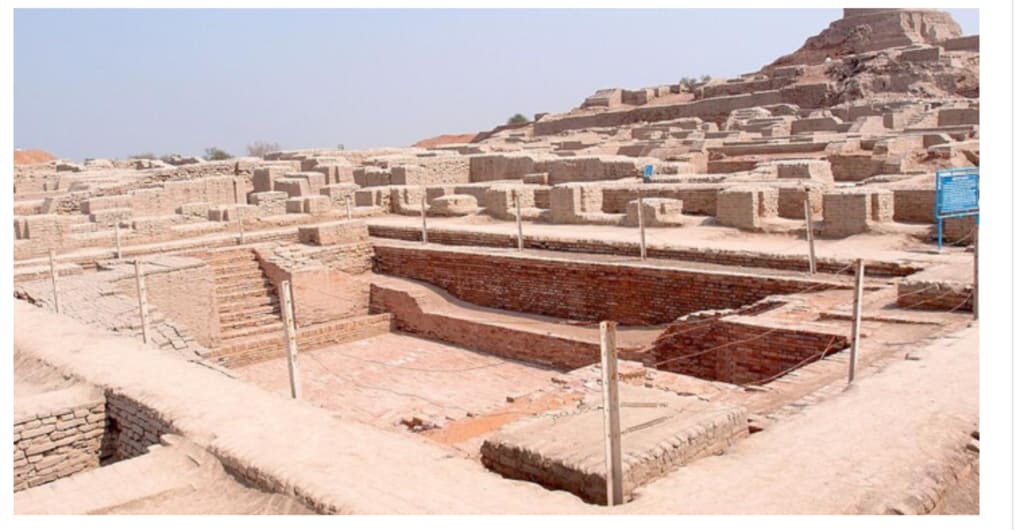
The 4,000-year-old city of Mohenjo-daro broke the "rules" of history by becoming more equitable as it prospered, according to new research. Historians have widely acknowledged for decades that the development of small villages into cities comes at the expense of growing inequality.
The money would eventually be taken over by a small group of powerful people, such as monarchs and priests, and the wealth disparity would widen. However, a recent study from the University of York explores the archaeology of the largest city in the Indus civilization, Mohenjo-daro, and reveals the opposite was true.
Researchers discovered that Mohenjo-daro was not only more egalitarian than its neighbours in Mesopotamia and Greece, but it also grew more egalitarian over time by examining house sizes throughout the ancient metropolis. Where Did Democracy Originate? Not Greece's Claims Analysis Was the Ancient Indus Valley Civilization's Decline Caused by Climate Change?
A Completely Different Urban Framework
According to the lead author, Dr. Adam Green of the University of York's Department of Archaeology and Department of Environment and Geography, heritage data from the old city indicates that the difference between the biggest and smallest homes shrank as the city grew.
In actuality, the income disparity in this enormous urban center had decreased to levels comparable to those of the first farming settlements by its later years.The Indus people were building something quite different, Dr. Green explained, while the Greeks were building enormous palaces at Knossos and the ancient Egyptians were building pyramids for god-kings.
Mohenjo-daro prioritised intricate brick-lined drains and well-planned street designs over enormous temples and gold-filled tombs. The city's amenities were widely dispersed among the common households rather than allowing the benefits of society to accrue with a few elites What became of the Indus Valley Civilisation? Indus Valley Civilisation in the Bronze Age: Saraswathi's Spirit
The Indus Seal's Distribution
The distribution of the well-known Indus seals, which were instruments of trade and commerce, was one area where this egalitarian approach was very evident. Since there were no palaces to control these instruments of governance, Indus seals were usually found in private residences rather than public structures.
It was clear that the city's residents cooperated to provide equitable access to a high level of living rather than one ruler hoarding resources. Investing in extremely practical things, such as street upkeep and drainage, was also a show of cooperating for the common good. All inhabitants were guaranteed fair exchange thanks to the region's adoption of a uniform system of weights and measurements.
Increasing Efficiency Without Increasing Inequality
The results, which were published in the journal Antiquity, cast doubt on the contemporary notion that growing inequality is an inevitable consequence of economic expansion. According to the researchers, Mohenjo-daro provides evidence that a community may be highly productive and technologically proficient while also making sure that its prosperity is shared among the many rather than the
Dr. Green underlined that Mohenjo-daro is frequently mentioned as being renowned for what it lacks, such as the lack of royal palaces, gold-filled tombs, and statues of monarchs. However, what it does have is really significant.Productivity seems to increase during the time when inequality seems to be at its lowest. It refutes the notion that concentrating decision-making authority in the hands of a small number of people is necessary for prosperity, according to Dr. Green.
He continued by saying that this offers a fascinating lesson for contemporary cultures, since the Indus civilization makes it abundantly evident that an urban society can be extremely imaginative and prolific at scale while also making sure that power and wealth are distributed fairly. Indeed, it might have been necessary to maintain prosperity. .
About the Creator
Enjoyed the story? Support the Creator.
Subscribe for free to receive all their stories in your feed.
Comments
There are no comments for this story
Be the first to respond and start the conversation.