
Gruinard Island: Britain's Anthrax Experiment That Poisoned a Nation's Conscience for 48 Years
In 1942, British scientists transformed a remote Scottish island into a testing site for biological weapons. They knew the anthrax contamination would last for decades. Still, they took the island.
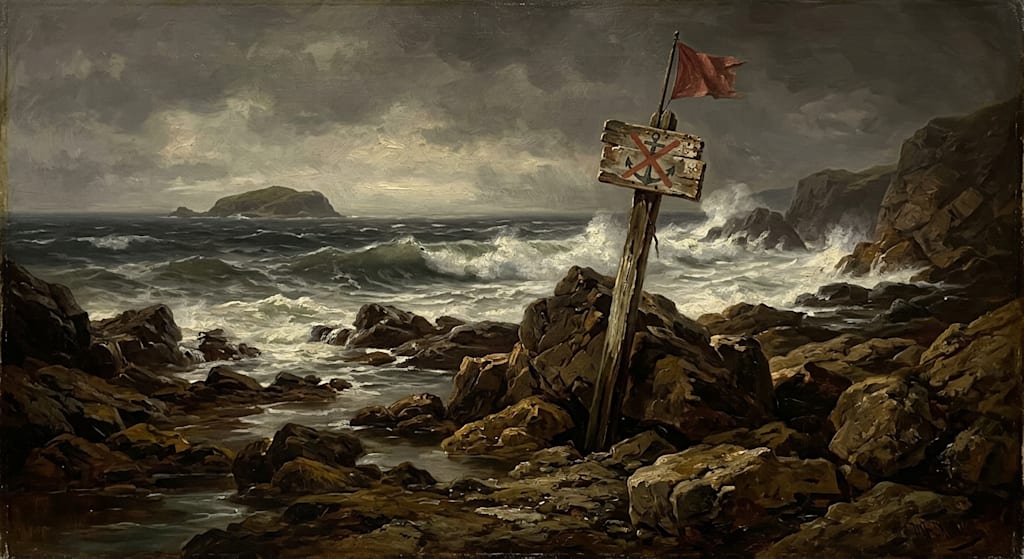
On July 15, 1942, a bomb containing anthrax spores was dropped from a six-foot-high wooden gallows roughly a hundred yards upwind from fifteen sheep on Gruinard Island.
The bomb contained anthrax spores. The wind carried the cloud toward the animals.
Three days later, thirteen of the fifteen sheep were dead.
The scientists recorded the results, packed their equipment, and started planning the next test.
The Plan Nobody Talked About
By 1942, Britain was looking for a weapon that wouldn't require soldiers.
Winston Churchill tasked Dr. Paul Fildes, the head of the biology department at Porton Down, with a specific problem. If Germany were to deploy biological weapons first, Britain needed something to deploy in return. Fildes had an idea.
Operation Vegetarian called for Royal Air Force (RAF) bombers to drop five million linseed cattle cakes laced with anthrax spores over the German countryside. The cakes were laced with anthrax spores. German livestock would eat them. The animals would die. The food supply would collapse. The human population would follow.
Five million cakes were produced and stored. The RAF waited for the order.
The order never came. However, the tests had already begun.
X-Base
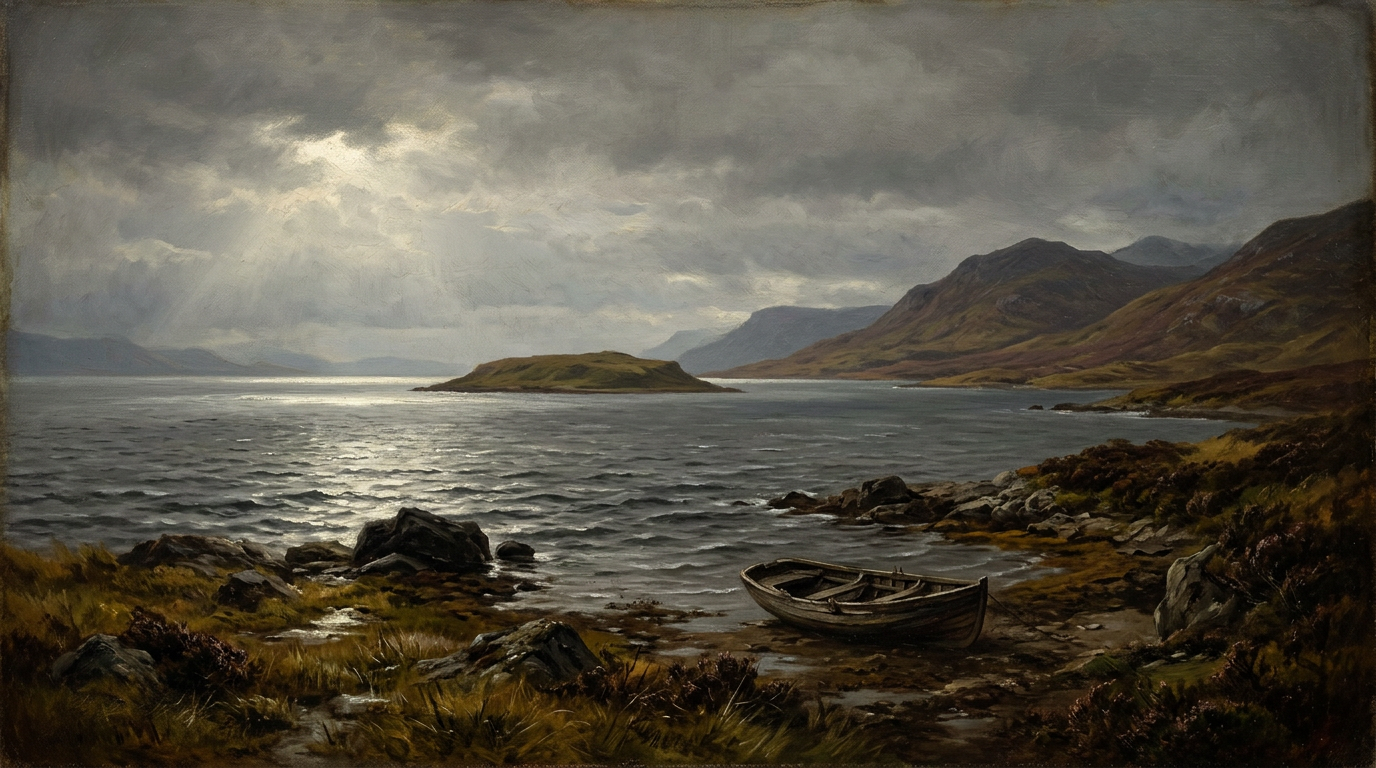
Gruinard Island is located in a bay off the northwest coast of Scotland, roughly halfway between Gairloch and Ullapool. It is one mile long. It was half a mile wide. It had been uninhabited since the 1930s when the last families left.
In 1942, the Ministry of Defense purchased the island for £500, designated it as X-Base, and banned all visitors.
The agreement with the previous owner included an unusual clause: the family could buy the island back for £500 once the experiments were over and the land was deemed safe.
Neither party specified what "safe" might mean. Neither party could have known how long it would take to answer that question.
A team of fifty arrived under the direction of Porton Down meteorologist Oliver Graham Sutton. They brought sheep from the mainland in dinghies. They tethered the animals at calculated distances. The team fired anthrax bombs from mortars and dropped larger devices from a Wellington bomber flying at 7,000 feet.
The sheep died within days. Without fail.
What the Carcasses Did Next
The scientists had a plan for the dead sheep.
They planned to store the carcasses in caves on the island and seal them permanently with explosives. This would contain the anthrax. Eventually, the island would recover.
The explosives detonated. The cave walls held. The carcasses did not.
The remains of the anthrax-infected sheep were blown out to sea. Within weeks, animals on the mainland began dying. Livestock on coastal farms collapsed with symptoms that local veterinarians had never seen before. The authorities did not disclose the true cause.
Instead, a cover story was issued involving Greek sailors who had allegedly dumped infected material near the coast.
The farms received compensation. The families were not given any specific information.
The Estimates
After the war ended, scientists returned to Gruinard Island every year to measure contamination levels.
Initially, they estimated it would take ten years. They believed that anthrax spores would remain viable in the soil for approximately a decade. The island would recover on its own.
However, by the early 1950s, the estimate had been revised to twenty years.
By the 1960s, the estimate was fifty years.
Throughout twenty-five years of testing, the contamination levels never decreased. The spores showed no sign of dying. The island remained as dangerous as the day the last bomb was dropped.
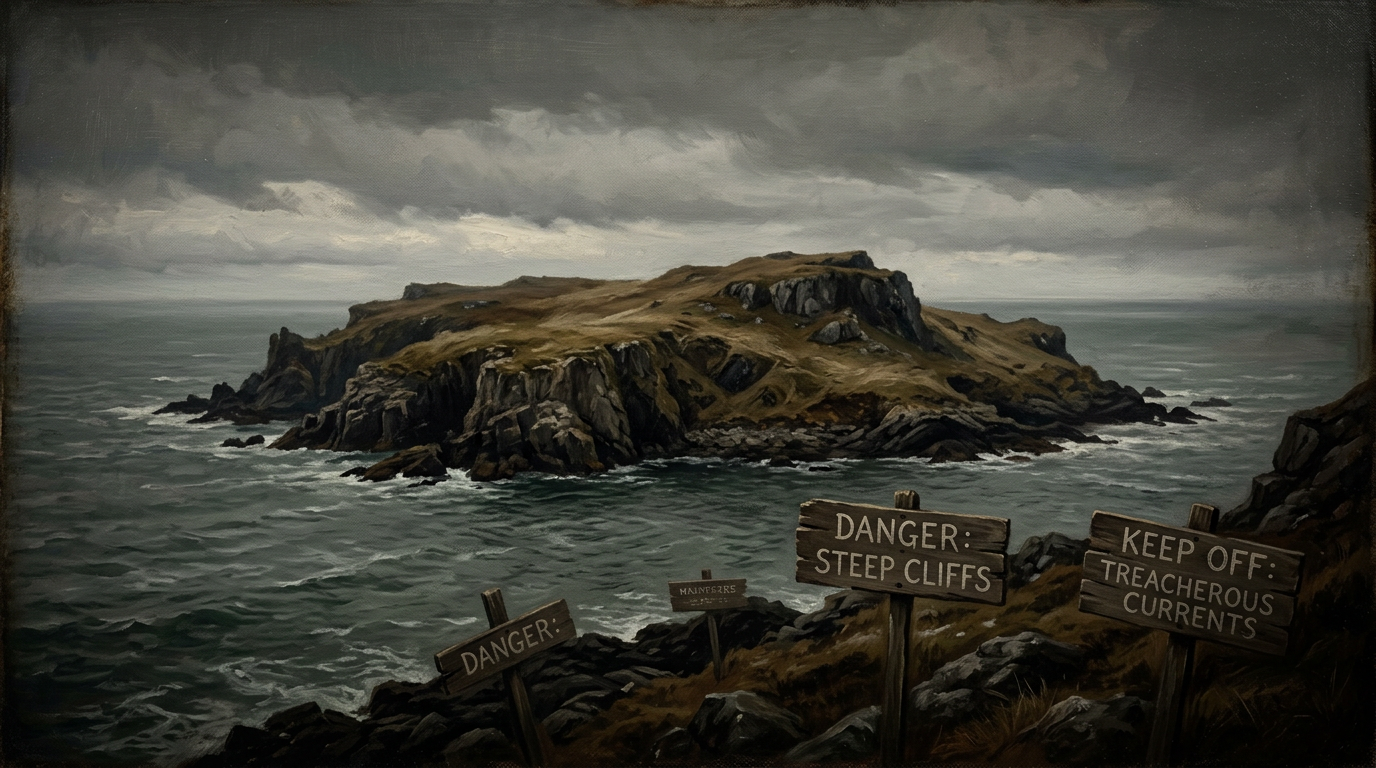
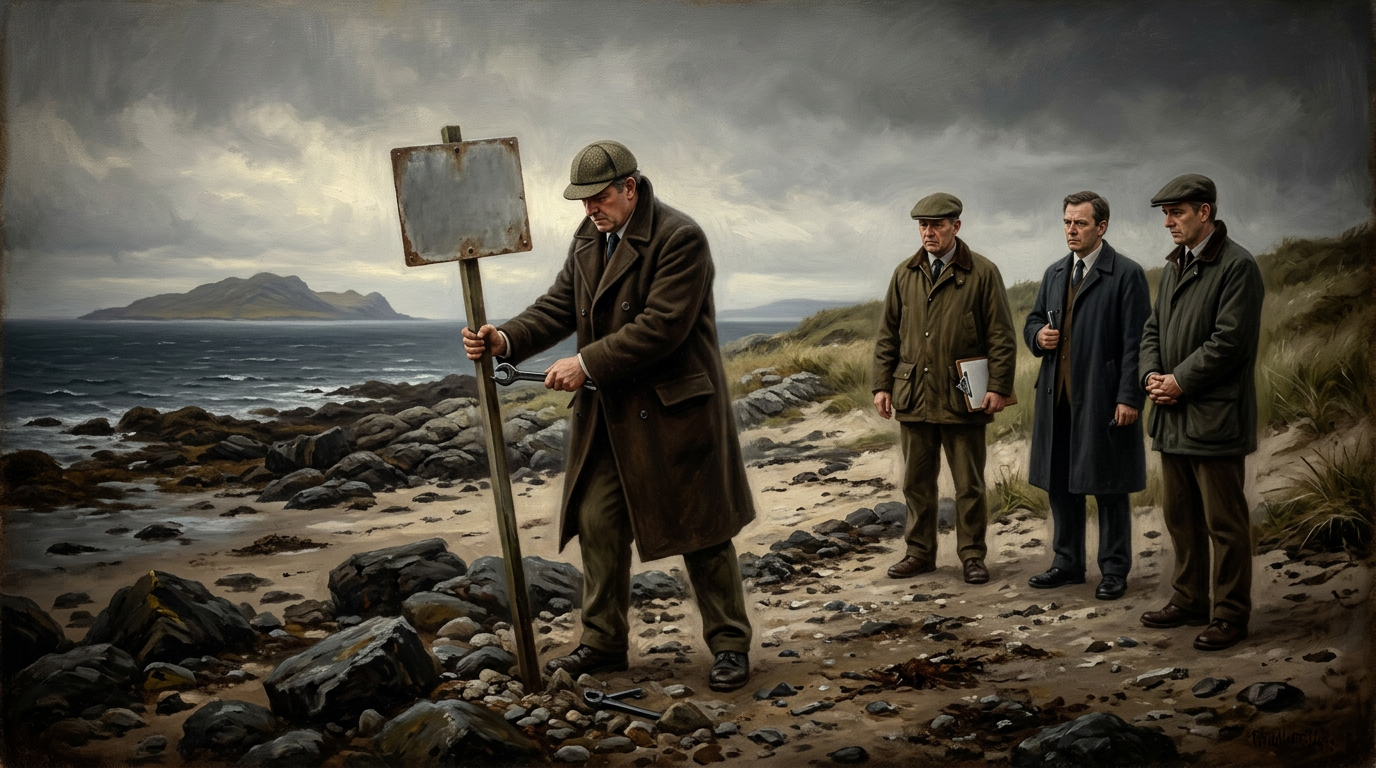
For years, Gruinard's only regular visitor was a man hired by the Ministry of Defense to repaint the warning signs around the island's perimeter.
Dark Harvest
In 1981, an anonymous group calling itself the Dark Harvest Commandos wrote to newspapers across Britain.
They had visited Gruinard Island. They collected soil samples. The group intended to leave the samples at locations that would ensure the government could no longer remain indifferent.
A sealed package was left outside the gates of Porton Down, the facility that created the problem in 1942. Tests confirmed that the package contained anthrax bacilli from Gruinard.
Days later, another package was left in Blackpool, where the Conservative Party was holding its annual conference. This one contained similar soil, but no live spores. Officials said it was consistent with Gruinard material.
The Dark Harvest Commandos were never identified. No member was ever arrested. The group dissolved on its own terms, having made its point.
Within five years, the government began decontamination efforts.
280 Tonnes
In 1986, 280 tons of formaldehyde solution diluted in seawater were pumped over every acre of Gruinard Island. The most contaminated topsoil was removed and destroyed.
Sheep were reintroduced. They remained healthy.
On April 24, 1990, forty-eight years after the first bomb fell, a government minister arrived on the island to remove the last warning sign. The ceremony was brief. Photographs were taken.
The island was declared safe.
The original owner's heirs repurchased the island for £500, the same price that the Ministry of Defense had paid in 1942.
What the Film Showed
The footage was declassified in 1997, fifty-five years after the tests.
Viewers saw soldiers wearing respirators and protective clothing herding sheep across the bay. They also saw the animals being herded into enclosures on the island. They saw the cloud moving across the grass toward the tethered sheep.
For the first time, they saw what had been done and what it had looked like.
The film ran for a few minutes. The island in the footage looked unremarkable—green, quiet, and ordinary. It was the kind of place where nothing particular should have happened.
Operation Vegetarian was never used. Germany was never bombed with anthrax-filled cattle cakes. The weapon Gruinard was built to test remained in its storage containers until the end of the war.
The island paid the price for a plan that was never carried out.
It took forty-eight years to undo the damage.
If this investigation interested you, you might also find these compelling:
— The Antonine Plague That Destroyed Rome — And We Have Been Calling It the Wrong Thing
About the Creator
Chronicle and Void
Every collapse has a cover story. Every war has a cause that didn't make it into the history books. History is not an accurate record of what happened. It's a record of what they allowed to survive.
Enjoyed the story? Support the Creator.
Subscribe for free to receive all their stories in your feed.
Comments
There are no comments for this story
Be the first to respond and start the conversation.