
Eugene Field, the Poet of Childhood
How a Chicago journalist became one of America’s most beloved poets

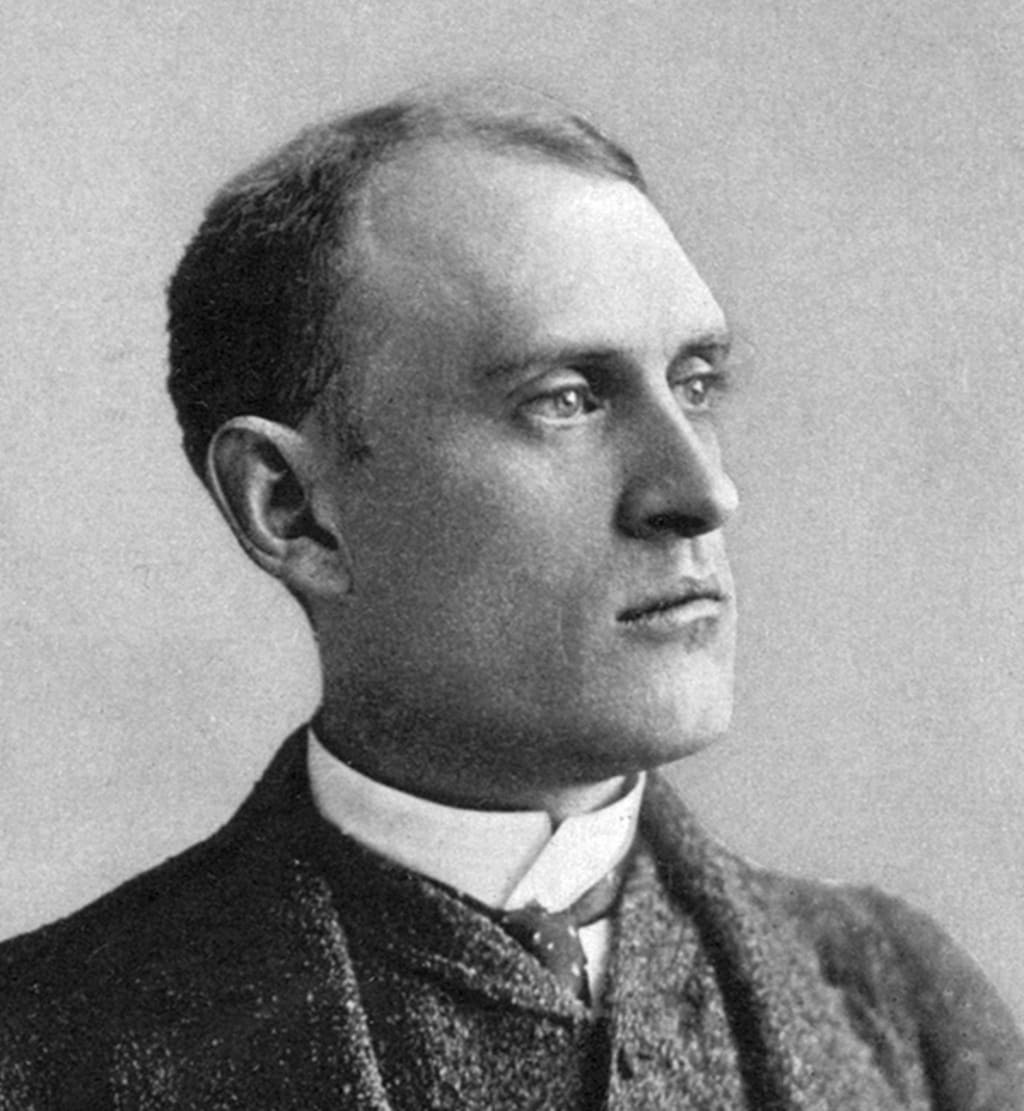
Eugene Field was born in St. Louis, Missouri, on September 2, 1850, although he liked to claim September 3 as well. The joke was that if his friends forgot his birthday on the first day, they would have another chance to remember it on the second. That small joke says something about the man Field became. He was a poet, a newspaperman, a humorist, and a man who enjoyed playing with the expectations people had of him.
His childhood was marked by loss. His mother died when he was six, and he and his younger brother were sent to Massachusetts to live with relatives. Field later attended several colleges, including Williams, Knox College, and the University of Missouri, although he never graduated. At the University of Missouri, he helped establish the campus newspaper, an early indication of where his working life would eventually lead.
Field became a journalist because newspapers provided his living, and journalism would remain the center of his professional life. He worked for newspapers in St. Louis, St. Joseph, Kansas City, Denver, and finally Chicago. In 1883, the Chicago Morning News offered him fifty dollars a week to leave Denver and move to Chicago. By then, Field was already a widely known newspaper columnist, and his new column, Sharps and Flats, gave him a larger audience for the humorous essays that had made him popular.
Field lived in Chicago's Buena Park neighborhood, near the intersection of North Clarendon and West Hutchinson. In Sharps and Flats, he took aim at current events and the people around him, particularly figures in the arts and literary world. He also developed a reputation for criticizing what he saw as Chicago's materialism. He jokingly called the city “Porkopolis.”
While Field's newspaper writing made him well known, something else was happening during his Chicago years. His production of children's verse increased, and his audience grew along with it. His first poetry had appeared in print in 1879, and more than a dozen volumes of verse would eventually follow.
Poetry, however, was becoming the work that would make him famous.
Much of what Field wrote first appeared in newspapers and magazines before being collected into books. His poetry reached readers in a way that poetry often did not. A person who bought the daily newspaper for the news could turn a page and find one of Field's poems waiting there. Over time, he published more than a dozen volumes of verse.
That newspaper audience helped turn Field into a household name.
He became particularly famous for poems about childhood, although his work was not always as sweet as the nickname “Poet of Childhood” might suggest. Field could be sentimental, funny, mischievous, and surprisingly dark. His poems often looked backward toward childhood rather than speaking directly to children, which is one reason his work could carry more sadness beneath its nursery-rhyme rhythms.
“Little Boy Blue” became one of his most famous poems. Published in 1888, it tells of a child who has died, leaving his toys waiting for him. The poem brought Field immediate and lasting recognition, and when he traveled to give lectures, audiences frequently asked him to read it.
Then there was “Wynken, Blynken, and Nod,” perhaps the poem most closely associated with the dreamlike side of Field's work. Three children sail through the night in a wooden shoe, turning a simple bedtime image into something that has remained recognizable for generations.
Field also had a mischievous side, and “The Duel,” better known as “The Gingham Dog and the Calico Cat,” shows it. The poem begins with two toys living peacefully together before their quarrel turns into an absurd and surprisingly violent little story. It is funny, strange, and darker than the nursery-rhyme style initially suggests.
His books included A Little Book of Western Verse, Second Book of Verse, With Trumpet and Drum, and Love-Songs of Childhood. Many of the poems in those collections had already appeared in newspapers and periodicals, meaning Field's books were gathering together work that readers had already encountered in their everyday lives.
Field's private life was considerably different from the lonely image sometimes associated with poets. In 1873, he married Julia Sutherland Comstock of St. Joseph, Missouri. They had eight children, five of whom survived to adulthood. His family remained an important part of his life as his newspaper career took them from Missouri to Denver and finally Chicago.
Field also had a reputation for humor away from the newspaper page. He loved practical jokes and had a wide circle of friends among journalists and writers. He could write sentimental verse for children and turn around and write biting satire for adults. Some of his privately printed humorous writing was considerably more risqué than the poems that made him famous, so the public image of Field as the gentle poet of childhood never represented everything he wrote.
His career ended suddenly. On November 4, 1895, Eugene Field died in his sleep in Chicago at the age of 45. Sources describe the cause as heart failure or a heart attack. He was at the height of his career, with a large readership and a reputation that had spread far beyond Chicago.
The reaction to his death showed how widely his work had reached. His funeral was held at Chicago's Fourth Presbyterian Church, where the crowd was so large that hundreds of people could not get inside. Contemporary accounts describe the church overflowing with mourners, including people from very different walks of life who had come to pay their respects to the poet whose work they had read for years.
Field was first buried at Graceland Cemetery in Chicago. Three decades later, his remains were moved to Kenilworth, Illinois. On March 7, 1926, he was reinterred at the Church of the Holy Comforter, where his grave became part of the church's cloister. Contemporary accounts record crowds gathering for the reinterment, and the church subsequently became a destination for people coming to visit the children's poet.
There is something fitting about the fact that Eugene Field spent his working life putting poetry into newspapers. He did not write only for literary circles or for people who already considered themselves poetry readers. His poems appeared where ordinary people were already looking, and his nursery rhymes, lullabies, humor, and sadness became part of American popular reading.
More than a century after his death, his name may not carry the same weight it once did, but some of his poems have proved remarkably difficult to forget. “Wynken, Blynken, and Nod,” “The Duel,” and “Little Boy Blue” have continued to find readers because they contain something more than simple children's verse. Beneath the rhyme and whimsy are dreams, loss, memory, and the strange mixture of innocence and sadness that Field understood so well.
Eugene Field called himself a newspaperman, and that was how he made his living. Yet it was the poems he slipped into those newspapers that gave him the reputation that lasted. For a poet who died so young, he left behind an unusually long afterlife in the memories of readers.
Below is one of Eugene Fields poems:
Human Nature
A beggar-man crept to my side
One bitter, wintry time;
“I want to buy a drink,” he cried;
“Please give me, sir, a dime.”
If he had craved this boon forlorn
To buy his family meat,
I would have passed him by in scorn,
And left him in the street.
I tossed a dollar in his hand,
And quoth, “As o’er your wine
Within the tippling-room you stand
Drink thou to me and mine.”
He let an earnest “Thank ye” drop —
Then up the street he sped,
And rushed into a baker’s shop,
And bought a loaf of bread!
I know not why it was, and yet,
So sudden was the blow,
I felt emotions of regret
That he had duped me so.
Yet, had the hungry beggar said
That he was sore in need
Of that necessity called “bread,”
What man would pay him heed?
About the Creator
Tim Carmichael
Let your becoming be louder than your fear, and your smallest steps become the road you once thought impossible to walk. An Appalachian poet and cookbook author my book Beautiful and Brutal Things is on Amazon, Link 👇
Enjoyed the story? Support the Creator.
Subscribe for free to receive all their stories in your feed. You could also become a paid subscriber, letting them know you appreciate their work.
Comments
There are no comments for this story
Be the first to respond and start the conversation.