
El Chapo's Unbelievable Prison Escape
Prison Escape

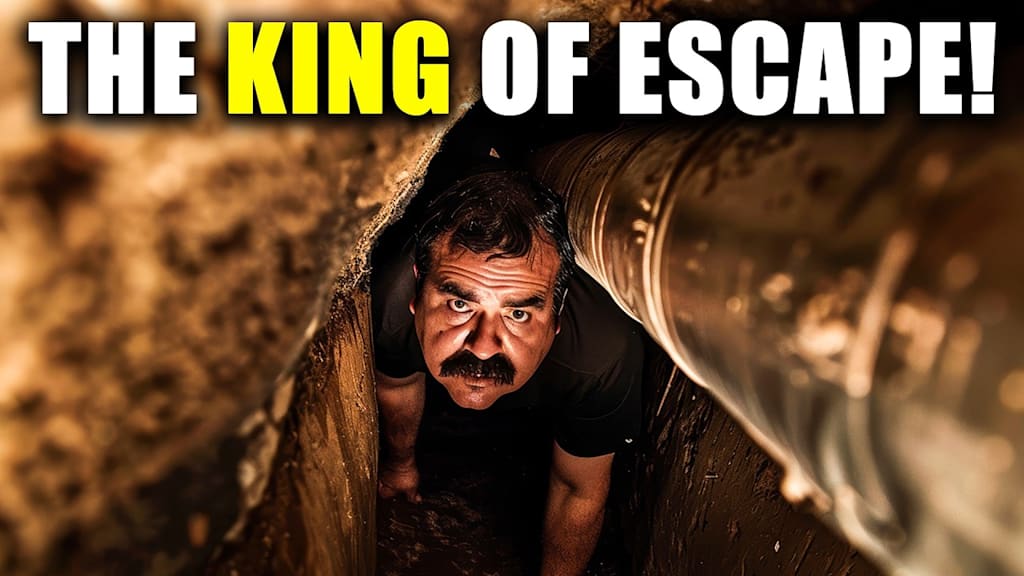
The man pacing inside one of Mexico’s most heavily guarded prisons is no ordinary criminal. He is Joaquín "El Chapo" Guzmán, one of the most powerful and dangerous drug traffickers in the world.
His prison cell was under constant surveillance. Special CCTV cameras monitored him 24/7. There were no windows, no ventilation openings—just a small shower area in the corner. Despite this extreme level of security, something unbelievable happened.
One day, El Chapo casually walked toward the shower area… and then vanished.
At first, no one noticed. But after about 30 minutes, the guards became suspicious. When they entered the cell, he was gone. The world’s most notorious drug lord had escaped.
So how did he do it?
El Chapo was born in 1957 in a small town in Mexico. His real name was Joaquín Guzmán. Coming from a poor background, he was introduced to the drug trade at a very young age—his father was also a small-time drug dealer.
By the age of 15, El Chapo had already started growing marijuana. Slowly, his operations expanded, and he caught the attention of major drug traffickers. In the 1970s, he joined a gang led by Héctor "El Güero" Palma, where he handled drug logistics.
Known for his ruthless discipline, he would severely punish anyone who made mistakes—even killing those who delayed deliveries.
By the 1980s, he joined one of the biggest drug networks in Mexico, led by Miguel Ángel Félix Gallardo. There, he managed large-scale drug shipments from Colombia into Mexico.
But when the cartel leader was arrested in 1989, El Chapo seized the opportunity and formed his own organization—the powerful Sinaloa Cartel.
At that time, most drugs entered the United States through the Caribbean. Authorities were focused there, which allowed El Chapo to exploit the Mexico–US border.
He smuggled drugs like cocaine, heroin, methamphetamine, ecstasy, and marijuana using clever methods—hiding them inside fire extinguishers, chili cans, and even car parts.
But his most famous method was something far more sophisticated: underground tunnels.
He invested millions to build advanced tunnels equipped with electricity, ventilation, and even rail systems. These tunnels allowed him to move drugs across borders without detection.
Some tunnels were over 300 feet long, connecting safe houses directly to the United States. Others were so deep that even ground-penetrating radar couldn’t detect them. Because of this, he earned the nickname “King of Tunnels.”
In 1993, Mexican authorities finally captured El Chapo and sentenced him to 20 years in prison. But even behind bars, he continued running his empire by bribing prison staff.
In 2001, fearing extradition to the United States, he made his first dramatic escape—hiding inside a laundry cart after bribing guards.
For the next 13 years, he remained on the run, expanding his empire even further.
Eventually, he was captured again. But once more, he had a plan.
In 2015, inside the maximum-security Altiplano Federal Prison, El Chapo pulled off one of the most shocking prison escapes in history.
That night, he was last seen near the shower area—the only blind spot in the cell where cameras couldn’t see.
From there, he accessed a hidden tunnel through a drain beneath the shower.
This tunnel was extraordinary:
Over 1 kilometer long
33 feet underground
Equipped with lighting, ventilation, and even a motorcycle rail system
It led directly to a construction site outside the prison.
By the time guards realized he was missing, he had already disappeared.
However, his freedom didn’t last long.
On January 8, 2016, Mexican marines tracked him down in Los Mochis after a violent raid and arrested him once again.
This time, there was no risk taken.
In 2017, El Chapo was extradited to the United States. Today, he is serving a life sentence in the highly secure ADX Florence.
About the Creator
Imran Ali Shah
🌍 Vical Midea | Imran
🎥 Turning ideas into viral content
✨ Watch • Share • Enjoy
Enjoyed the story? Support the Creator.
Subscribe for free to receive all their stories in your feed.
Comments
There are no comments for this story
Be the first to respond and start the conversation.