
Baba Vanga and Bulgaria's buried Egyptian anomalies
The underground passages to an alien place: PART ONE

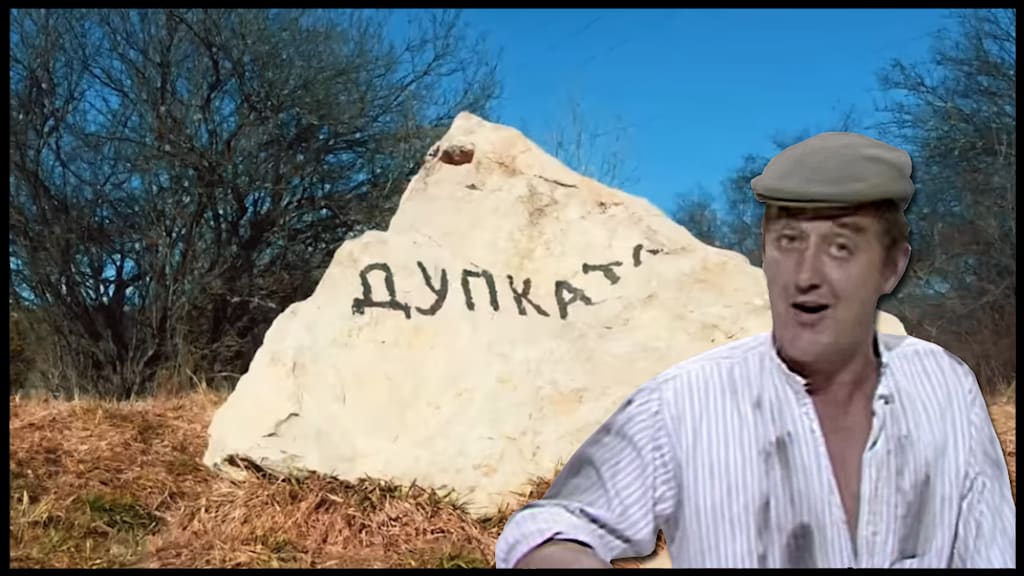
About 28 years after British entertainer and comedian Bernard Cribbins’ novelty song “The Hole In The Ground” was released a team sent in by the Bulgarian defence ministry was “digging this hole” in Tsarichina, about 30 kilometres outside Sofia, although “it’s not there now, the ground’s all flat” but beneath the stone that marks where the work supposedly took place you probably won’t find a “bloke in a bowler hat”.
But, what you might find there is almost certainly one of the biggest mysteries to focus on the Balkan Mountains since Cribbins’ song reached number nine in the British charts.
The excavation work, codenamed “Operation Sun Ray”, began in December 1990 under a cloak of secrecy purportedly to search for the treasure horde of Tsar Samuil, ruler of the first Bulgarian Empire from 997-1014, but rumours quickly spread that it was really a search for a buried alien artefact or a mysterious entity believed to hold supernatural powers.
Whatever the reason behind it, it was clearly an undertaking of some importance as after heavy-duty military trucks and excavators had rolled into town shortly before Christmas the area surrounding the dig was reportedly fenced off and guarded round the clock. And it wasn’t a quick operation either, the excavation work continued for nearly two years, until it was abruptly aborted in November 1992, perhaps because they’d found they were “digging it round” when “it ought to be square”... with no official explanation forthcoming for the cessation of the operations, other than the sheer cost of it all.
The Bulgarian military just sealed up the hole, covering the entrance with gravel and concrete, and all that remains of the excavation site today is a large boulder, with a word scribbled on it, sitting on the grass allegedly over the spot where the dig took place. But you’d have to understand Bulgarian to know what it says!
But the abandonment of the work, estimated to have cost in the region of 16 million Lev (about £7 million), did little to calm public curiosity and; if anything, increased it with enthusiasts and paranormal researchers extremely intrigued about why the hole had been sealed shut.
One offshoot of the mystery has been an influx of paranormal tourism to Tsarichina, with curious adventurers flocking to the area in search of clues about what the military covered up in 1992. It’s also sparked huge interest from UFO researchers hoping to discover if extraterrestrials had played a part in the site’s ancient past, with talk of there being an alien genetics lab deep beneath the ground.
Coming hot on the heals of the fall of the Bulgarian Communist Party and the removal of Todor Zhivkov, who’d effectively led the country from 1956 until 1989, the Tsarichina story takes shape during a chaotic period for the fledgling republic during a time of political turmoil and economic uncertainty.
It was in this atmosphere that a group of clairvoyants claimed to be receiving psychic messages from “other dimensions” directing them to the village of Tsarichina. The psychics contacted the military and on 6 December soldiers were sent in to begin the search for the monumental discovery that was supposed to await them.
But it’s not quite as simple as that as the beginning of the mystery goes back almost a decade to 1981 when renowned clairvoyant Vangeliya Pandeva Gushterova, better known as Baba Vanga, is said to have received a visit at her home in Petrich from a man with a strange story and an ancient map he wanted her opinion on.
The then 70-year-old blind mystic was said to have been very dismissive, scolding the man for wasting her time and asking him to leave. Although, she apparently had the foresight to ask her niece, Krasimira Stoyanova, to make a secret copy of the map first.
Years later Stoyanova would write a book in which she explains how Vanga comes to believe the map indicates the location of a treasure trove of incredible knowledge, news of which eventually reaches Bulgaria’s minister of culture Lyudmila Zhivkova, a frequent visitor to Vanga and daughter of the nation’s leader.
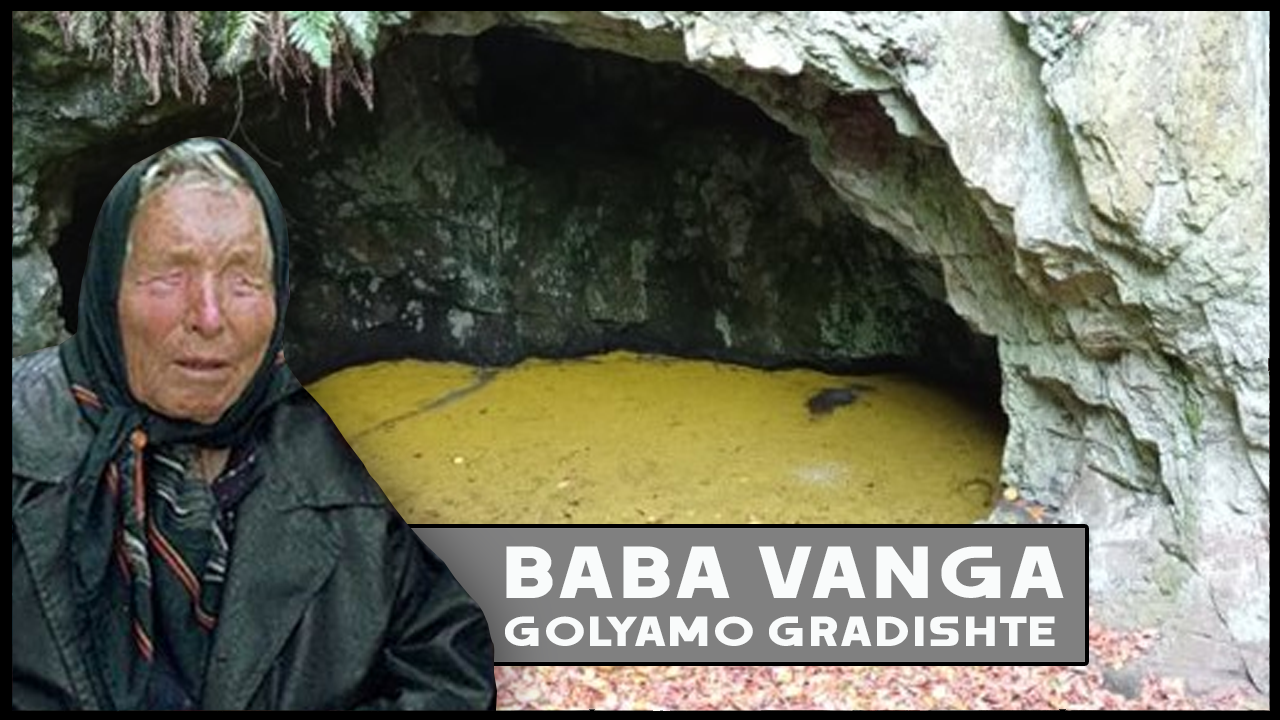
So, wasting no time, Zhivkova allegedly sets in motion a secret expedition to Golyamo Gradishte – a 1,604 metre peak to the south of the Balkan Mountains in the Strandzha range – where Vanga has indicated the site can be found.
And, in a strictly-guarded area with shoot-to-kill instructions deep inside the border zone with NATO-member Turkey, digging starts... but even archaeologists carrying out a legitimate dig just a few hundred metres away at the foot of the peak, near Mishkova Niva, remain totally unaware of what’s going on above them.
But not long into the dig tragedy strikes... on 21 July, five days before her 39th birthday, Zhivkova dies after a “brief illness”. Then, soon after, the minister of mineral resources, also one of the expedition organisers, also passes away suddenly.
So, perhaps out of respect for their colleagues or fear they could be next, the rest of the party decide to pack up in a hurry and leave, dynamiting the excavation site... a nearby spring overflowing and creating a pool over the sealed entrance.
The expedition remained a well-kept secret until the collapse of Communism at the end of the 1980s when Stoyanova and Krastyu Mutafchiev broke their silence by publishing books about the secret excavation work. The newly-liberalised Bulgarian media then took over, spreading the news and probably embellishing a detail or two along the way.
But the books provide a much clearer indication behind the urgency with which Zhivkova put together the expedition to the Strandzha Mountains, with Stoyanova telling Mutafchiev on her return to Sofia after copying the man’s ancient map how her aunt had told a story about people from Egypt arriving in Bulgaria by sea a long time ago. Vanga believed they had buried a sarcophagus with accounts of the previous 2,000 years inscribed on it and the next 2,000 years.
“After that, all the members of this expedition were killed to preserve the secret sealed forever,” Vanga told her niece. “Much blood was shed.”
Then, continuing her aunt’s story, Stoyanova told Mutafchiev about a small mountain near the border with Turkey, with a path leading to a clearing where there was wild vegetation and a very large boulder.
"You should go there on 5 May because, with the favour of the celestial bodies, you should watch the first rays of the sun and then the first rays of the moon, you will be able to observe something," Vanga had said.
So Mutafchiev, inspired by the story, proposes an expedition to search for the mysterious location despite the fact it would mean venturing close to the Turkish border without authorisation. So a group was assembled – including the organiser Mutafchiev, Stoyanova, Ilya Prokopov and two other people – and they set off on 4 May to search for the mysterious site.
Initially they struggle to find their way but by the end of the day locate what they think is the place and, despite atrocious weather, decide to camp nearby to follow Vanga's instructions to observe the first rays of the sun and then the first rays of the moon.
They supposedly discovered three circles carved inside a downward-pointing triangle on a rock nearby and in the morning, with the first rays of sun, a strange play of light occurred with the sun’s rays seeming to draw a triangle on the rock. The strange phenomenon lasted about 20 minutes and left the group speechless and eager to see what would happen with the moon's rays at nightfall. And, sure enough, the same light phenomenon happened again, the moon’s rays drawing a downward-pointing triangle on the rock face.
Then, something even more amazing happened just as the group was about to leave the spot, the rock suddenly lit up from within to reveal two large holographic luminous silhouettes.
“On the left, in the foreground, there was a standing man holding a spherical object in his outstretched right hand,” Stoyanova wrote in her book. “A little higher and to the right, there was a second silhouette. A man was sitting on a throne, his arms along his body. He wore a conical hat on his head. There were two protuberances on each side. He looked like a pharaoh."
Apparently the bright silhouettes remained visible for about 20 minutes before everything went dark again and the stunned observers headed off to Malko Tarnovo, a nearby village.
Mutafchiev, a close associate of Zhivkova, later told her of their fantastic adventure and she hastily put together her fateful expedition to the site. In the months that followed, several other people met tragic ends or were incarcerated, including Mutafchiev himself, who was sentenced to 10 years in prison. Any documents relating to the expedition were lost.
In the early 2000s Mutafchiev passed away but he’d been one of the first to hypothesise that the site could have been the tomb of the Egyptian goddess Bastet, although Vanga herself never mentioned the presence of an Egyptian goddess. Mutafchiev published three books in which he presented his theories on this subject... his ex-wife Gergana Bakalova later revealing she had unpublished personal documents that could reveal new information about the expedition.
In 2018 archaeologist Daniel Pantov, director of the Historical Museum of Primorsko, conducted a “ground-penetrating radar” analysis of the area and discovered an anomaly about 18 metres below ground where he detected a large perfectly symmetrical object that was neither metal nor crystal. Pantov believed the object to be unnatural and located within underground chambers and corridors that seemed to be artificially constructed but no further research has taken place at the site known in Bulgaria as the “Cave of Bastet”.
So what’s the big deal about Bastet? Well she was an important figure in the ancient Egyptian pantheon, said to be a feline-headed goddess who served as a protector of pregnant women and a manifestation of the “Eye of Ra” or sun disk. She was easily identifiable in hieroglyphics as the cat-headed woman, carrying a jar and a sistrum (a percussion instrument consisting of metal rods or loops attached to a metal frame) both decorated with feline motifs.
Also believed to be a ward against contagious diseases and evil spirits, she had other cat-like qualities more in keeping with birth and reproduction. She was portrayed both as Ra’s daughter and his consort with whom she had a son Mahes, who as a lion god bore a strong resemblance to his mother. Other myths saw her as the mother of Anubis, the jackal god, whose associations with Isis came later in the development of Egyptian lore and probably preceded his connection to Bastet.
Whatever though, it all happened a long time ago, but you have to wonder, just like the Bible, is the legend actually more of an historical account of the plantet’s extraterrestrial links to the stars?
Now, there’s nothing really to connect the two events a decade apart at Tsarichina and Golyamo Gradishte’s Cave of Bastet... other than that they both appear to have come to an abrupt end, with the dig sites sealed up; drew heavily on ancient Egyptian iconography and both had considerable input from Baba Vanga. But, if you’re intrigued by the connections check out PART TWO of this investigation of Bulgaria’s underground Egyptian mythology... as the alleged Balkan excavation is even more mind-boggling!
About the Creator
Steve Harrison
From Covid to Gaza and Ukraine... nothing is as it seems in the world. Don't just accept the mainstream brainwashing, open your eyes to the bigger picture at the heart of these globalist agendas.
JOIN THE DOTS: https://not.wildaboutit.com
Enjoyed the story? Support the Creator.
Subscribe for free to receive all their stories in your feed.
Comments
There are no comments for this story
Be the first to respond and start the conversation.