
42 Missing Pages from St. Paul's Letters Found Hidden on Codex
A Manuscript Dispersed Throughout Continents

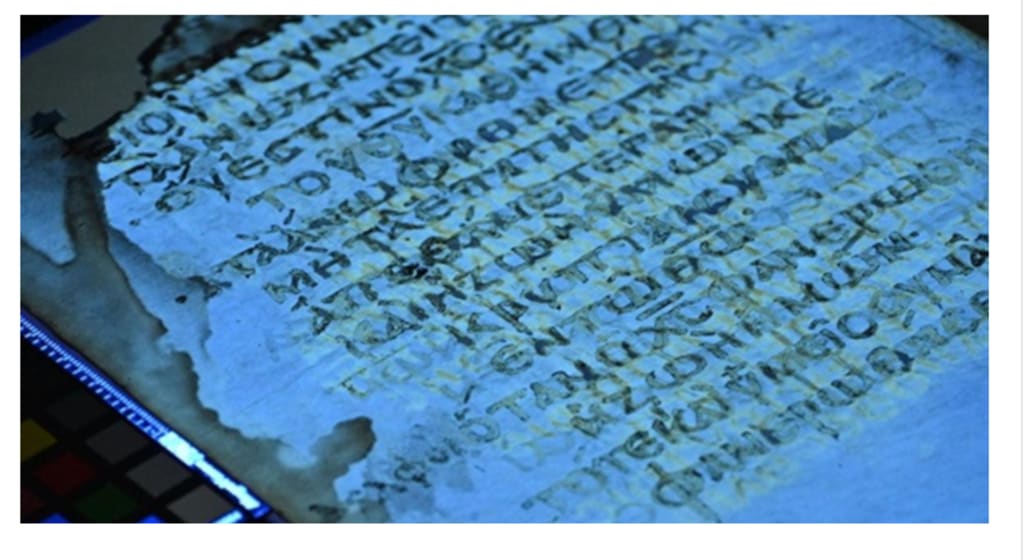
42 missing pages from Codex H, one of the most significant early New Testament manuscripts in the world, have been successfully recovered by an international team of researchers led by the University of Glasgow, marking a significant advancement in biblical scholarship.
The pages of the 6th-century Greek codex containing the Letters of St. Paul were deconstructed and used as binding material for other manuscripts in the Great Lavra Monastery on Mount Athos, Greece, in the thirteenth century. The team has uncovered centuries-old text using state-of-the-art multispectral imaging, providing a unique and profound glimpse into early Christian intellectual life.
A Manuscript Dispersed Throughout Continents
Codex H, formerly known as GA 015, is an exceptionally important Greek manuscript from the sixth century. The Euthalian apparatus, a complex paratextual structure that included chapter lists, prefaces, cross-references, and historical annotations to help early readers navigate the scriptures, is included with the Apostle Paul's letters. This annotation system shows how early Christians interacted with their sacred books in a way that went well beyond simple passive reading.
When the text was disbanded in the Great Lavra Monastery on Mount Athos, Greece, in the thirteenth century, its destiny drastically changed. Because writing materials were expensive in the Middle Ages, its sturdy parchment pages were re-inked and used as flyleaves and binding material for other manuscripts.
Because of this, the surviving pieces of Codex H are now dispersed throughout libraries in Greece, Italy, Russia, Ukraine, and France, with many pages long thought to be lost forever.
Technology Brings the Invisible to Light
An unusual physical phenomena held the key to unlocking the lost pages. Professor Garrick Allen of the University of Glasgow says that the breakthrough originated from an important beginning point:
We were aware that the manuscript had been re-inked at one time. In essence, the chemicals in the new ink created a mirror image of the text on the opposite leaf by causing "offset" damage to facing pages. Occasionally, traces were left many pages deep, barely perceptible to the unaided eye but extremely obvious with the most recent imaging technology.
The researchers processed photos of the surviving pages using multispectral imaging in collaboration with the Early Manuscripts Electronic Library (EMEL). This method reveals ink traces that are invisible to the unaided eye by capturing the document under a variety of light wavelengths, from ultraviolet to infrared.
The procedure successfully recovered "ghost" text that is no longer physically there, extracting several pages of data from each physical page that is still intact. The team also worked with specialists in Paris to undertake radiocarbon dating, which verified the parchment's 6th-century origin and ensured historical correctness.
Funded by the Templeton Religion Trust and the Arts and Humanities Research Council (UK), the project, "Annotating the New Testament: Codex H, Euthalian Traditions, and the Humanities," was carried out in collaboration with the Brotherhood of the Megisti Lavra monastery, which gave researchers access to the manuscript's eight folia.
What Can Be Found in the Lost Pages
The discovery provides a unique and priceless insight into how the New Testament was perceived and communicated in the early centuries of the Church, even though the recovered text incorporates known portions of Paul's Letters.
The oldest known examples of Paul's Letters chapter lists, which are very different from the chapter divides found in contemporary Bibles, are among the most important discoveries. providing fresh insight into the original structure and reading of these writings.
The physical condition of the manuscript itself sheds light on the mediaeval practice of recycling and repurposing sacred writings, while the pieces also show how scribes in the sixth century edited, commented, and engaged with their sacred texts.
Professor Allen used dramatic language to explain the find's significance: "Given how crucial Codex H is to our comprehension of Christian scripture, the discovery of any fresh evidence—let alone this amount—of its initial appearance is nothing short of enormous.
By illuminating the sophisticated intellectual milieu that surrounds the copying and reading of the New Testament in late antiquity, the discovery further broadens our understanding of the early Christian manuscript history. The Euthalian apparatus found in Codex H shows that early readers interacted with scripture through a complex system of annotation and cross-referencing rather than being passive recipients of it.
A Novel Approach to Scholarship
The initiative has resulted in several new publications, such as an upcoming print version of Codex H and an open-access digital edition that is publicly accessible at codexh.arts.gla.ac.uk. Additionally, a database of manuscripts with Euthalian characteristics has been created, which serves as a resource for academics attempting to track the evolution of this tradition across hundreds of Greek New Testament manuscripts. These resources guarantee that the recovered pages will remain available for future generations to both researchers and the general audience.
The project's success demonstrates the revolutionary potential of fusing cutting-edge imaging technology with conventional humanities research. Further mysteries concealed inside the enormous archives of ancient texts worldwide may potentially be revealed when multispectral imaging and related techniques develop.
For the time being, the 42 missing pages of Codex H have been recovered, which is a significant accomplishment that re-establishes our connection to the early New Testament readers and the rich intellectual legacy they contributed to. Our view of early Christian history is still being reshaped by other ancient text discoveries, and this most recent discovery will undoubtedly open up new research directions in the years to come.
About the Creator
Enjoyed the story? Support the Creator.
Subscribe for free to receive all their stories in your feed.
Comments
There are no comments for this story
Be the first to respond and start the conversation.