
The Real Reason No One Can Become the Next Liu Huan
A country once shared one TV schedule. The internet turned us into a million separate rooms.
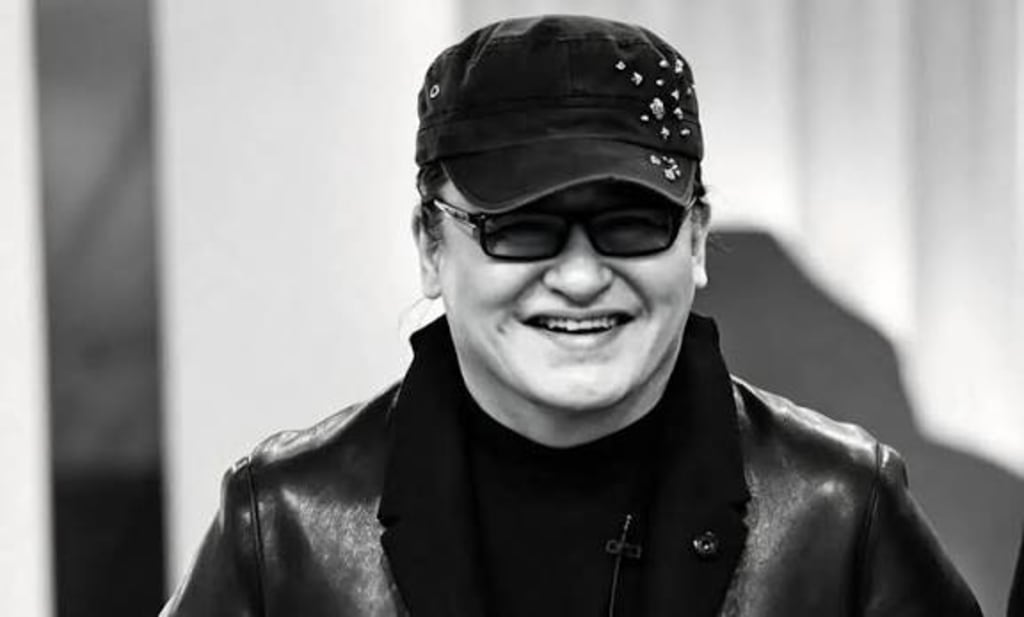
A singer was also an interface
Liu Huan’s national fame rested on things that rarely line up today.
He sang “A Youth’s Aspiration Knows No Sorrow,” the theme song of Plainclothes Police. He sang “The Crescent Moon,” which brought pop music into millions of homes. He sang “Song of the Heroes,” the theme song of CCTV’s Water Margin. He and Sarah Brightman sang “You and Me” at the 2008 Beijing Olympics opening ceremony.
Behind those works stood television dramas, the Spring Festival Gala, the Olympics, CCTV, mainstream galas, and the academic system. Once this system selected a person, he entered almost everyone’s field of view at once. He did not have to match everyone’s taste. Everyone at the time had only a few channels, a few stages, and a few names that could be discussed again and again.
Liu Huan also held several roles at once: pop singer, performer of TV drama theme songs, Olympic opening ceremony singer, teacher at the University of International Business and Economics, and a musician accepted by mainstream values. He belonged to the establishment and to pop culture. Academia recognized him. Ordinary listeners loved him. He could sing the force of “Song of the Heroes” and the calm of “You and Me.” That position, straddling several systems, is almost impossible to reproduce now.
The systems have shattered.
The mass media era gave the country one schedule
From the 1980s and 1990s into the early 2000s, channels were scarce. There were only a few TV stations, a limited number of radio frequencies, concentrated newspapers and magazines, and cassettes, CDs, galas, and TV dramas as the main way to reach people. Every evening in prime time, many families across the country turned on the same TV, watched the same drama, and heard the same theme song. The next day at school or work, people talked about the same thing.
Benedict Anderson called the nation-state an imagined community. Mass media helped make that imagination possible. A national cultural idol works the same way. You did not know Liu Huan personally, but you were sure the whole country knew Liu Huan. You might not have watched a certain drama, but you were sure everyone was watching it. That mutual recognition was the psychological base of national fame.
In that era, there were fewer choices. Audiences did not lack taste. Channels were highly centralized. A national musician was the product of the broadest common denominator. TV stations, record companies, gala directors, and mainstream media all wanted the voice that could reach the largest number of people. Liu Huan was one of those chosen voices.
The internet replaced a shared world with parallel rooms
When the internet arrived, the first thing it changed was not music. It changed the shared world.
In the past, the whole country shared one schedule. Now each person opens a phone and sees a different information flow. Douyin, Kuaishou, Bilibili, QQ Music, NetEase Cloud Music, Xiaohongshu, Weibo, games, livestreaming, podcasts: each platform is its own room. Each room has its own top stars, language, aesthetics, and history.
A singer can have hundreds of millions of plays on Douyin and no discussion on Weibo. They can be treated as a god on Bilibili while older generations have never heard of them. They can have a comment section full of stories on NetEase Cloud Music while QQ Music users know nothing about them. Platform numbers are local numbers. National fame requires recognition across platforms, generations, and circles. That recognition is getting harder.
The 2021 Spring Festival Gala performance of “The Shepherd of Koktokay” is a clear case. The song was huge on Douyin. The Gala pushed it into living rooms. Many parents and elders said they had heard it. On Weibo and Zhihu, almost no one discussed it. A young person who spends hours online might never have heard it and might be shocked that such a divide exists.
The song is not the problem. The fault line runs between platforms and generations. The Spring Festival Gala was once the greatest common denominator of the old era. Now it works more like a cross-platform confirmation device than a machine for making national stars. It can confirm that something is already popular. It struggles to turn a newcomer into a national idol.
The song becomes famous, the singer does not
A national musician needs more than a hit song. The person has to be remembered.
In Liu Huan’s era, listening to music was a dedicated act. You bought a cassette, listened to the radio, watched a gala, or followed a TV drama. You knew who sang the song, what he looked like, what story he had, and what value he represented. The singer was a complete public figure who carried the emotions of the era.
Today, many songs are 15-second choruses for short videos, background music for livestreams, game soundtracks, or editing music. The song becomes famous. The singer stays invisible. You scroll past a melody and it sticks in your head. You may not know who sang it. You save a track but may not know the artist’s albums, history, or point of view. Algorithms recommend singles, not complete artists. They reward the hook, not the person.
So “the song is famous, the singer is not” becomes normal. A musician can have one hit and still fail to build national recognition. National recognition needs narrative, time, repeated appearances, and cross-media personality building. Algorithms give fragments, instant stimulation, and the next hot topic.
The business of stardom changed
The deeper change sits in the logic of money.
Record companies, TV stations, and galas once pursued nationwide coverage. Advertising, commercial shows, and mainstream approval all depended on the broadest common denominator. The more national a singer was, the more commercial value they had. Capital had a reason to create Liu Huan.
Platforms and capital now pursue high stickiness, high payment, and high interaction inside vertical circles. An idol with 5 million devoted fans can be more profitable than one with 50 million casual listeners. Fans vote, buy albums, attend concerts, buy merchandise, generate data, guard comments, and fight critics. That conversion rate is the scarcest resource in the algorithmic era.
Capital no longer has a strong reason to create a national Liu Huan. It creates niche ceilings instead. The more vertical the audience, the easier it is for algorithms to push. The more precise the audience, the clearer the business model. The more mass-market the attempt, the harder the conversion. The idol industry, fan culture, livestream tipping, and private-domain operations all reinforce this logic.
A national musician needs to break out of circles. Today’s commercial logic rewards staying inside them. Breaking out is risky. Staying in is profitable. So the problem is not a lack of good musicians. Good musicians get trapped in their own circles and never become a shared national memory.
The old authority no longer crowns anyone
Liu Huan’s national fame had an authoritative backing system: CCTV, the Spring Festival Gala, the Olympics, TV dramas, the academic system, and mainstream values. Together they made him popular and legitimate, loved and accepted.
That system has declined.
Young people largely do not watch TV. The Spring Festival Gala is no longer the only focal point. The Olympic opening ceremony can hardly create a national singer again. Awards, charts, trending topics, music reviews, and short-video challenges can create heat for a moment. They struggle to create nationwide agreement. Authority is diluted. The center is gone. Everyone has a private god, and no shared god remains.
Without a centralized backing system, there is no national star. The term “national-level” already implies agreement across circles. Agreement needs a center. When the center disappears, agreement scatters.
Society itself split apart
A more fundamental change: society itself has fragmented.
The life experiences, aesthetic sources, and information environments of the post-00s and post-10s generations are deeply stratified. Some children grow up trying paragliding, skydiving, rock climbing, cosplay, hanfu, musicals, and indie bands. Others still depend on the classroom for art and music, starting from textbooks, and even those classes are sometimes cut. By the time they go online, algorithms push them further apart.
Without shared life experience, shared cultural idols are hard to sustain. In the past, families differed, but people shared the same TV programs, dramas, and galas. Today, everyone’s information childhood is different. A classic in one person’s mind can be background noise another person has never heard.
There is plenty of good music. There are no shared ears.
The future has national moments, not national musicians
The future will still produce national cultural moments. There will be national songs, memes, moments, and events. “Lone Hero” was sung by elementary school students. Phoenix Legend became popular again on Bilibili. Dao Lang triggered nationwide argument. These can cross circles and generations.
They behave more like events than fixed stars. They explode, flood the screen, get discussed, and then get buried by the next hot topic. New musicians are more likely to be nodes. They go viral on one platform, become gods in one circle, break out during one event, and get consumed by algorithms and public opinion.
A Liu Huan-style national musician is a fixed star. A fixed star needs long burning, a stable gravitational system, and a shared national space. That shared space has collapsed. We have countless shooting stars crossing their own night skies.
Back to that song
At the 2021 Spring Festival Gala, Wang Qi sang “The Shepherd of Koktokay.” My parents hummed along. I was lost. Later I searched Douyin. The play count was huge, and the comments were full of stories. Then I searched Weibo. Almost nothing. Then Zhihu. A few scattered questions and very few answers.
That was the moment I understood. The song was not unpopular. My parents and I lived in two information worlds. They confirmed the song through Douyin and the Spring Festival Gala. I confirmed its absence through Weibo and Zhihu. We sat in the same living room, watched the same screen, and understood the same song in completely different ways.
In Liu Huan’s era, this split was hard to imagine. People were not more united. The channels were more centralized. The whole country turned on the TV at the same time, heard the same song, and talked about the same person. That mutual recognition was the whole secret of national fame.
The secret has leaked. The channels shattered. Mutual recognition shattered. The national musician became a monument to an old era.
When we miss Liu Huan, we miss an era when we could still hear together. That era is gone.
About the Creator
Jin
Writer of reamstories
https://reamstories.com/jin
Enjoyed the story? Support the Creator.
Subscribe for free to receive all their stories in your feed. You could also become a paid subscriber, letting them know you appreciate their work.
Comments
There are no comments for this story
Be the first to respond and start the conversation.