
The $86 Million Re-Release That Just Killed the “Superhero Fatigue” Argument
People keep saying audiences are done with superhero movies. A five-year-old film just topped the box office and proved them wrong.
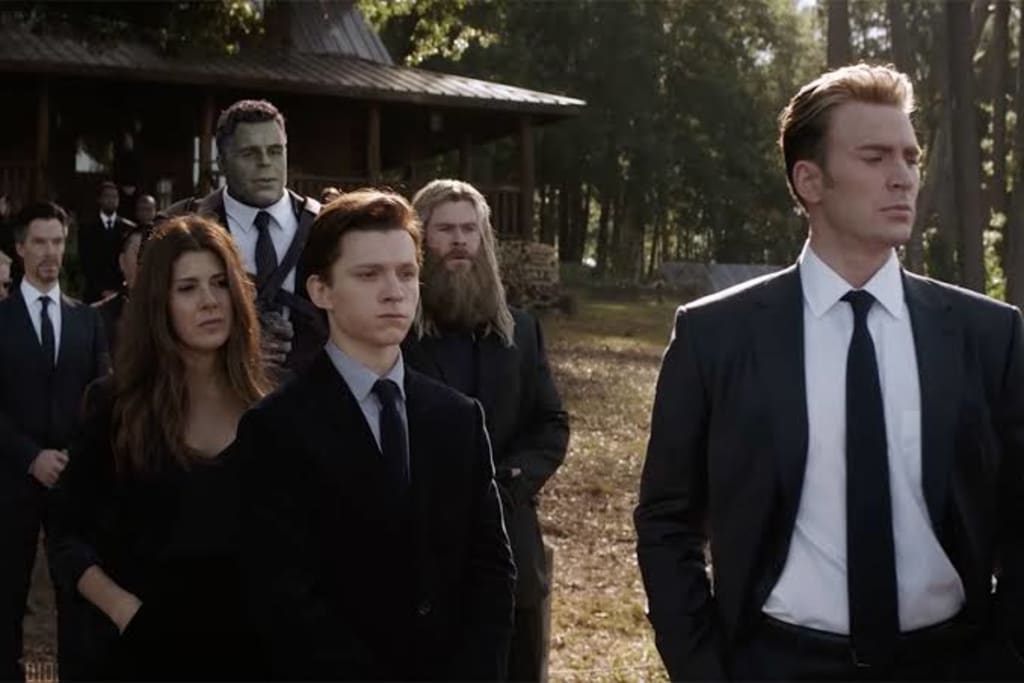
In 2024, a five-year-old film made 90.2 million yuan in its first week in mainland China, $26 million in its first three days in North America, and about $86 million worldwide in its first week. It opened in 3,060 North American theaters and took the weekly crown.
This was not a new release. It was the premium re-release of Avengers: Endgame.
Midnight shows in mainland China brought in 6.4 million yuan. Friday: 40.4 million. Saturday: 28.3 million. Sunday: 15.1 million. The numbers need no decoration.
People who say audiences are tired of superheroes, that Western pop culture has been rejected in China, that film critics draw the target before completing the argument, got another slap. But the slap is not the story. The story is why a re-release can still sell like this.
1. It sells a trip back to the past, not just a ticket
Iron Man, Captain America, Thor, and Black Widow walked with audiences for eleven years and twenty-two films. People were not watching a fight. They were closing out a generation’s youth.
The re-release lets fans buy the ticket they missed. It lets people who missed the first run catch up. It lets old fans bring new ones. It lets everyone hear “I am Iron Man” in a theater again, see the big three assemble again, and go through the snap again.
That emotional account belongs to no random superhero film.
Later superhero films failed because they had effects without companionship, characters without farewells, and post-credits scenes without emotional weight. Audiences will pay for superheroes. They will not pay for assembly-line products with no emotional sediment.
2. The re-release is an event, not a library title
Premium edition, limited shows, IMAX, Dolby, midnight screenings, commemorative materials. This is an eventized operation.
The 6.4 million yuan from mainland China midnight shows says the core fan base is solid. Opening in 3,060 North American theaters and taking the weekly crown says theaters will give it screens because it is a known quantity. In a dead zone for cinemas, a known quantity beats a blind box.
Cinemas fear having no reason to bring people out. Endgame gives them one. The final battle, the snap, the big three assembling, Captain America lifting Mjolnir, Iron Man’s sacrifice: these scenes were built for collective cheering, collective silence, and collective tears. A home screen does not concentrate emotion the same way.
The re-release sells because some content still must be seen in a theater.
3. The race for all-time No. 1 is its own draw
Endgame has a cumulative total of $2.885 billion, about $38.7 million behind Avatar. One more re-release and one more push from core fans could put it on top.
Fans have a mission: send it to No. 1. Theaters have a motive: certain box office. The studio has a reason: a historic moment. The media has a topic: a record war.
Avatar followed the same logic. At this level, a film becomes a cultural event, a film-history coordinate, and a reason for fans to act together.
4. Audiences are tired of bad films, not superheroes
For years, people have heard that audiences are tired of the superhero market, that Western pop culture has been immunized in China, that big action and dopamine no longer work. Many critics draw the target first and complete the argument later. Eventually they believe it.
Endgame’s re-release contradicts them.
What audiences hate is bad films, not the genre. What they are tired of is laziness, not superheroes.
The Marvel Cinematic Universe has developed very little of the superhero genre and adapted only a fraction of the comics. The problem is not genre exhaustion. It is creative exhaustion.
Since Endgame, most films labeled as proof of fatigue were simply badly made: poor layout, average plot, rushed effects, weak characters, political correctness, setup for series, and service to the next phase.
Audiences can tell good from bad. They just did not used to have a choice.
A genre does not die completely. Most people shouting that it is dying are not saying audiences are tired. They are saying the genre can no longer let capital harvest easy dividends.
5. “Cinema is dead” is a fig leaf for bad-film professionals
Look at the domestic film market.
The old standard was simple: even a bad film could sell if it had the right genre or idol. Many people concluded that standing in the wind tunnel was enough, that even a pig could fly.
For years, people have shouted “cinema is dead” to cover their inability to make good films. Then Nezha and Niu Lai arrived, and the box office slapped them. Now Endgame’s re-release slaps them again.
Audiences already mock them by saying they would rather buy Niu Lai tickets than watch their work. Under a Zhihu question, someone still bragged that their company would follow the Niu Lai trend and might make money.
That is laughable and sad. A single-track mind has no love for film, only the capacity to chase the next hit. In any industry, these people do not look for problems and solve them. They follow trends and eat leftovers.
These people can no longer profit from bad films, and they will not blame themselves. So they shout that the market is bad and audiences are tired.
Film is not an exam. It is business. An exam has difficulty levels. Business has success and failure. You made something bad, audiences did not buy it, and you failed. Blame the genre, the market, the audience, aesthetic fatigue. Blame everyone except yourself.
6. Marvel’s problem is creation and planning, not genre
As a superhero comics reader, I have watched many DC and Marvel films. Early on, great directors made great films. Later, politically correct directors made politically correct films, failed to secure the box office, and concluded that the genre was finished.
The genre is not finished. The creators are.
Marvel has been weak since Phase Four for concrete reasons. After Iron Man and Captain America retired, the new main line did not stand up. Avengers-level events did not connect. Disney+ series raised the threshold and diluted the mystery. Too many films served the next phase instead of telling their own story. Political correctness overwhelmed story, and character charm gave way to labels.
Audiences will accept new characters with charm. They will not accept new characters without it. They will accept diversity. They will not accept diversity as a get-out-of-jail-free card. They will accept superheroes. They will not accept superheroes made like assembly-line work.
Endgame’s re-release shows that appeal comes from emotion, character, event, experience, and quality.
7. Capital wants the next hit without becoming its creator
When capital sees Endgame’s re-release make money, it will not conclude that audiences want emotional sediment and high quality. It will conclude that re-releases make money, so it should re-release. It will conclude that superheroes still sell, so it should make superheroes. It will conclude that following hits makes money, so it should follow.
Hits are not made by following.
Endgame came from eleven years of planning. Avatar came from a technological revolution. Nezha came from creative sincerity. Niu Lai came from a dark-horse surprise.
You see the result, not the process. You see the box office, not the creation. You see the wind tunnel, not where the wind comes from.
So you will always eat leftovers.
Conclusion
Endgame’s re-release made about $86 million worldwide in its first week.
That number comes from emotion, not from a superhero formula. Audiences are still here; the threshold is higher. Cinemas are still here; they need a real reason. Genres do not die; creators who use genre as a fig leaf do. Cinema does not die; speculators who treat film as a wind tunnel do.
Audiences have no patience for laziness, bad films, trend-chasing hits, or capital’s leftovers.
Endgame’s re-release has appeal because it was once the peak, and it still has no replacement.
The superhero market is not finished. Good films will always have a market.
The people who should panic are those who make bad films and blame the market.
About the Creator
Jin
Writer of reamstories
https://reamstories.com/jin
Enjoyed the story? Support the Creator.
Subscribe for free to receive all their stories in your feed. You could also become a paid subscriber, letting them know you appreciate their work.
Comments
There are no comments for this story
Be the first to respond and start the conversation.