
Superhero Casting Discourse Has a Double Standard Problem, and It Keeps Landing on Women Like Milly Alcock
The conversation stopped being about acting a long time ago.

There was a time when casting news sparked discussion. Now it sparks judgment.
A new actor is announced for an iconic role, and within hours the internet has already decided whether they “work” or don’t-often before there is a script, a scene, or a performance to evaluate.
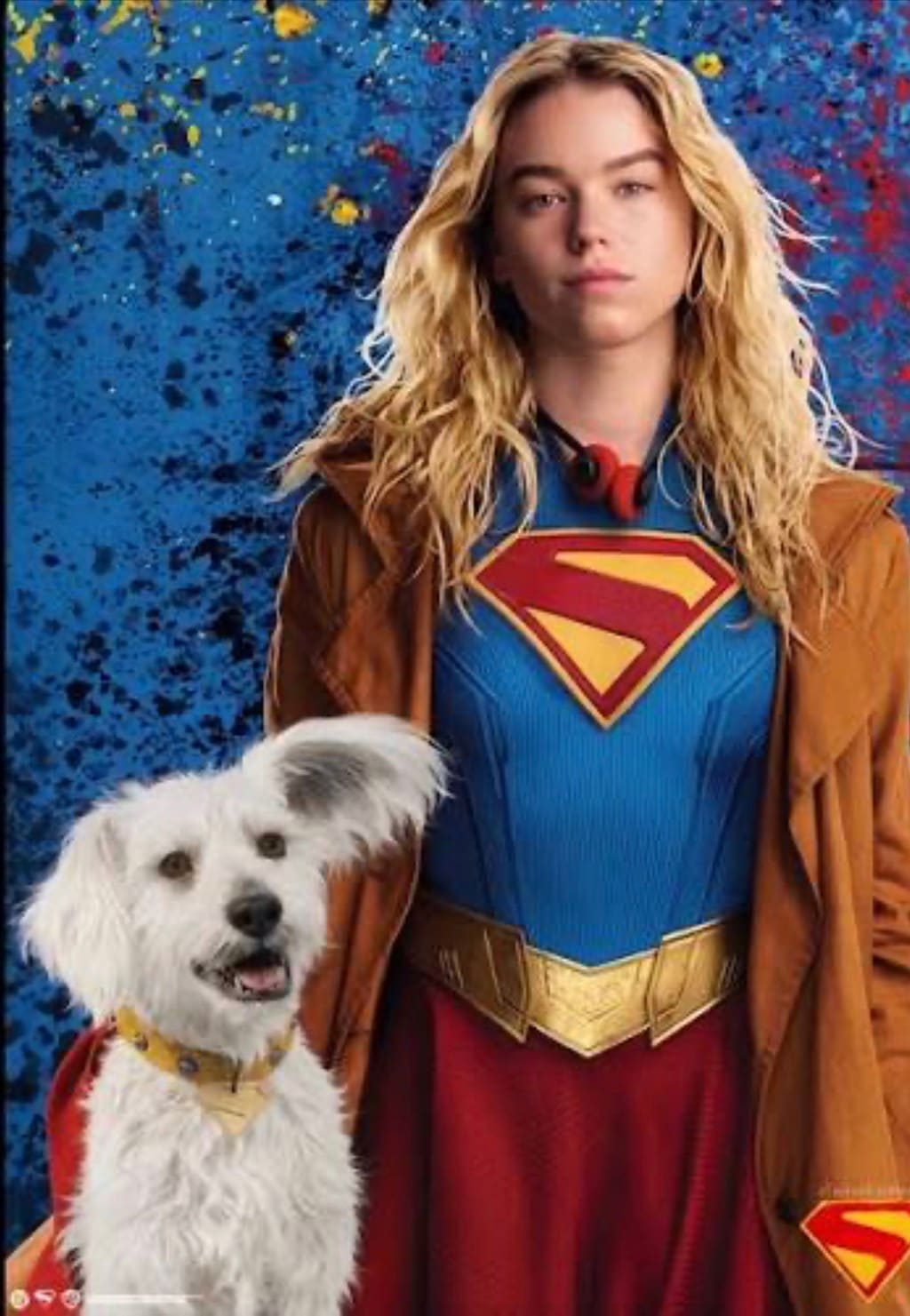
That’s what’s been happening around Milly Alcock as she steps into Supergirl in James Gunn’s new DC Universe. And it’s the same pattern we’ve seen before with Brie Larson in Captain Marvel and Rachel Zegler in Snow White.
The details change. The reaction doesn’t.
Criticism is Normal. What’s Happening Online is Something Else.
Let's be clear: everyone can have opinions about casting. That’s not the issue.
You can prefer a different actor. You can question tone or direction. It's possible you won't picture the casting choice the way you'd personally hoped.
That’s all part of fandom.
But what we’re seeing more and more isn’t that. It’s something sharper, and more personal:
- Actors judged before the work exists
- Interviews clipped and reframed as “controversies”.
- Identity and appearance used as talking points.
- And an ongoing stream of hostility aimed at the person, not the performance.
At some point, that stops being criticism and starts becoming projection.
The Milly Alcock Reaction Followed a Very Familiar Script
With Alcock’s casting as Supergirl, the conversation didn’t take long to split into two different lanes.
One side talked about tone. A younger Kara. A less polished, more emotionally volatile take on Kara Zor-El. Something closer to how she’s often written in modern comics.
The other party instantly refused, not due to its performance, but because it didn't meet their expectations. On an idea of what they already believed the character should look or feel like.
- And then came the usual escalation cycle:
- Clips of interviews pulled out of context.
- A focus on her attitude towards online criticism.
- Framing her comments as “attacking fans”.
- And a growing pile of discourse that has little to do with acting.
The simple truth being overlooked is that she hasn't even had the opportunity to play the role.
The details change. The reaction doesn’t.
The Pattern is What’s Hard to Ignore
This isn’t really about one casting. It’s about repetition.
Brie Larson faced it with Captain Marvel. Rachel Zegler faced it with Snow White. Now Milly Alcock is in the same cycle.
And while the details differ, the structure is oddly consistent:
- Announcement happens.
- Discourse immediately shifts to identity, not performance.
- Online backlash grows faster than any real-world evidence.
- Actors respond to openly hostile attention.
- That response is then used to justify more backlash.
It becomes circular. And exhausting. Especially for the people at the center of it.
A Double Standard is Hiding in Plain Sight
Here’s where things get uncomfortable.
Many of the arguments in these debates are framed in terms of “fidelity” or “respect for the character”. But those standards are not applied evenly.
Some casting changes are embraced without issue. Others are treated as violations.
When you examine which actors face the most ongoing, identity-based backlash before release, a simple pattern appears: women, particularly those in genre franchises, bear a disproportionate share. That doesn’t mean all criticism is biased. It doesn’t mean every disagreement is rooted in prejudice.
This means the response varies in strength and orientation across different areas.
The Internet Turns Individuals Into Symbols
Part of the problem is how online discourse works now.
Anonymous accounts. Algorithmic amplification. Brief clips stripped of context. Reaction videos that turn nuance into conflict. In that environment, actors stop being people doing a job. They become symbols people argue through.
That’s how a casting announcement turns into a culture-war proxy within hours. And once that happens, it’s very hard to reverse the momentum. Even basic statements, like frustration with online harassment, get reframed as “controversial takes” depending on who is sharing them and how they’re clipped.
The Thing That Gets Lost: We’re Judging Before We’ve Seen Anything
This is probably the simplest point, but also the most important.
A casting decision is not a finished performance. It’s not a reviewable product yet. It’s a possibility. And yet the modern discourse treats it like a verdict has already been delivered, and everyone is arguing over whether it was the “right” one.
That’s how you end up with entire narratives built on speculation instead of experience.
What Accountability Actually Looks Like (and What It Doesn’t)
People sometimes say actors “should apologize” or that fans “owe apologies” after these cycles.
But that assumes a centralized system that doesn’t really exist. There’s no single group coordinating backlash. No unified fandoms are issuing statements. Just thousands of individual posts that rise and fall with attention cycles.
So what actually happens is less dramatic:
- The discourse peaks
- Then slowly burns out
- And gets replaced by the next controversy
No clean resolution. No collective reckoning. Just exhaustion.
So, What Are We Really Doing Here?
This is where the uncomfortable question sits.
Are we actually discussing casting choices and storytelling? Or are we repeatedly using casting announcements as a space to project broader frustrations–about franchises, change, representation, or even just the internet itself?
Because if it’s the second one, then actors like Milly Alcock aren’t really being judged for their work. They’re being pulled into something bigger than them, and expected to absorb the reaction in real time.
Final Thought
It’s fine to have opinions about casting. That’s never going away, and it shouldn’t.
But there’s a difference between saying “I’m not sure about this choice” and building a narrative where the actor becomes the problem before they’ve even had a chance to speak through the role.
At some point, the question isn’t whether fans can critique casting. It’s whether the culture around that critique still leaves room for the performance itself to exist at all.
About the Creator
Jenna Deedy
Just a New England Mando passionate about wildlife, nerd stuff & cosplay! 🐾✨🎭 Get 20% off @davidsonsteas (https://www.davidsonstea.com/) with code JENNA20-Based in Nashua, NH.
Instagram: @jennacostadeedy
Enjoyed the story? Support the Creator.
Subscribe for free to receive all their stories in your feed. You could also become a paid subscriber, letting them know you appreciate their work.
Comments
There are no comments for this story
Be the first to respond and start the conversation.