Latest Stories
Most recently published stories in Geeks.
Book Review: "Hungerstone" by Kat Dunn
"I have made so many mistakes. I grieve so deeply for myself."- "Hungerstone" by Kat Dunn When it comes to books concerning female rage, there is something incredible about devouring them whole. Recently, I read the book Sugar by Mia Ballard and I have noticed something that I need to make clear in this review as well - just because the first half of a book is well-written and incredible, doesn't mean the whole thing will be. Hungerstone is another case of this happening. The first perhaps 60% of the book is insanely good to read and yet, the denouement and the ending is so deeply disappointing that it very nearly ruins the whole reading experience. A book maybe only as captivating as its beginning, but it is only as memorable as its ending.
By Annie Kapur8 months ago in Geeks
Wonderman
Wonderman was dropped all at once, because the powers that be have no faith in the general public, and I understand that but I think that anyone with an IQ above 10 would have been fine with a week to week release. That said the show is very intriguing so far, it's done a great job of setting things up in these first two episodes.
By Alexandrea Callaghan8 months ago in Geeks
The Internship
We all know the worst yet most entertaining films are not the ones released in theaters but the ones quietly released on various streaming services and never acknowledged. In that vein, until the industry starts doing some wide releases, our 2026 coverage will be pulled from those obscure places.
By Alexandrea Callaghan8 months ago in Geeks
Silver Screen Magic with Grace Kelly
Born on November 12, 1929, Grace Patricia Kelly was an American actress who achieved stardom in Hollywood films. She received an Academy Award and three Golden Globe Awards. The actress met and married Prince Rainier III on April 18, 1956, and became Princess of Monaco. She died in 1982.
By Rasma Raisters8 months ago in Geeks
When Things Get Really Nasty
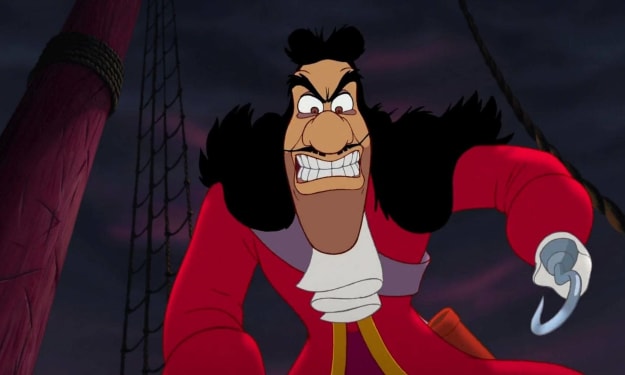
I have a whole collection of Disney videos, and sometimes when I just enjoy watching the cartoon movies, I wonder how all these nasty villains don’t scare children out of their wits. I know even today when I enjoy a Disney adventures the villains certainly scare me.
By Rasma Raisters8 months ago in Geeks
Groundhog Day Highlights: Punxsutawney Phil Predicts Six More Weeks of Winter. AI-Generated.
Every year on February 2, a small town in western Pennsylvania becomes the center of national attention. Punxsutawney, home to fewer than 6,000 residents, hosts one of the most enduring folk traditions in the United States: Groundhog Day. Before sunrise, crowds gather at Gobbler’s Knob, cameras roll, and all eyes turn to Punxsutawney Phil. This year, as has happened many times before, Phil emerged from his burrow, spotted his shadow, and signaled six more weeks of winter. While meteorologists rely on satellites, computer models, and decades of data, Groundhog Day offers something different—ritual, humor, and a sense of shared anticipation. Phil’s prediction may not be scientific, but it continues to capture public imagination in a way few weather events can. A Tradition Rooted in History Groundhog Day traces its origins to European settlers, particularly those of German descent, who brought with them Candlemas traditions. In old folklore, if an animal saw its shadow on this day, winter would persist; if not, spring would arrive early. In Pennsylvania, where groundhogs were plentiful, the animal naturally took center stage. Punxsutawney Phil made his first recorded prediction in 1887, giving the event more than a century of continuity. Over time, the celebration grew from a local curiosity into a nationally recognized event, complete with live television broadcasts and thousands of visitors traveling from across the country. What Happened This Year As dawn broke on Groundhog Day, members of the Punxsutawney Groundhog Club—dressed in their signature tuxedos and top hats—announced Phil’s verdict. According to the ceremony, Phil saw his shadow, meaning winter is expected to linger for six more weeks. The crowd reacted with a mix of cheers, groans, and laughter. For some, the idea of extended cold weather is unwelcome. For others, it’s simply part of the fun. After all, Phil’s forecast has become less about accuracy and more about tradition. How Accurate Is Punxsutawney Phil? One of the most common questions surrounding Groundhog Day is whether Phil is actually reliable. By most statistical measures, his predictions fall short of modern forecasting standards. Various analyses suggest his accuracy rate is well below 50 percent. But focusing solely on accuracy misses the point. Groundhog Day isn’t meant to replace professional meteorology. Instead, it offers a symbolic midpoint of winter, a moment when people collectively ask, “How much longer?” Meteorologists themselves often embrace the event with good humor, using it as an opportunity to engage the public in discussions about seasonal patterns and climate trends. Why People Still Care In an age of constant news alerts and digital overload, Groundhog Day stands out because it is simple and familiar. The rules never change. The outcome is binary. And the main character—a groundhog—remains blissfully unaware of the attention. For many Americans, Groundhog Day is tied to childhood memories, school lessons, or even the iconic 1993 film Groundhog Day, which further cemented Phil’s place in pop culture. The event offers a rare sense of continuity in a world that often feels unpredictable. Economic and Cultural Impact The annual celebration provides a significant boost to Punxsutawney’s local economy. Hotels fill up, restaurants see increased traffic, and souvenir sales spike. For a small town, Groundhog Day is both a cultural honor and an economic lifeline. Beyond Pennsylvania, the event inspires similar celebrations across North America, with local groundhogs offering their own predictions. While Phil remains the most famous, he is far from alone in his forecasting duties. Winter Fatigue and the Psychology of the Prediction Phil’s forecast of six more weeks of winter often resonates emotionally. By early February, many people are tired of cold mornings, short days, and icy roads. The promise of spring feels close, yet just out of reach. Psychologists note that events like Groundhog Day help people mentally mark time. Even a disappointing prediction can be oddly comforting because it provides structure and a shared experience. Knowing that millions of others are reacting to the same announcement creates a subtle sense of connection. Looking Beyond the Shadow While Punxsutawney Phil predicts six more weeks of winter, actual weather conditions will vary widely depending on region. Some areas may experience early warmth, while others could face late-season snowstorms. Climate variability means that winter and spring often overlap in unpredictable ways. Still, Phil’s message serves as a reminder that winter is a season with its own rhythm. For some, that means more time for cozy routines. For others, it’s motivation to start planning for the warmer days ahead. A Tradition That Endures Year after year, Punxsutawney Phil emerges from his burrow, and people keep watching. Whether he predicts an early spring or prolonged winter, the result sparks conversation, humor, and reflection. In the end, Groundhog Day isn’t really about weather. It’s about continuity, community, and the small rituals that help people navigate the passing of time. As Phil predicts six more weeks of winter, the message is clear: spring will come eventually, and until then, there’s comfort in tradition—even if it comes from a groundhog’s shadow.
By Saboor Brohi 8 months ago in Geeks
Crude Picks Up As U.S.-India Trade Deal to Affect Russian Oil. AI-Generated.
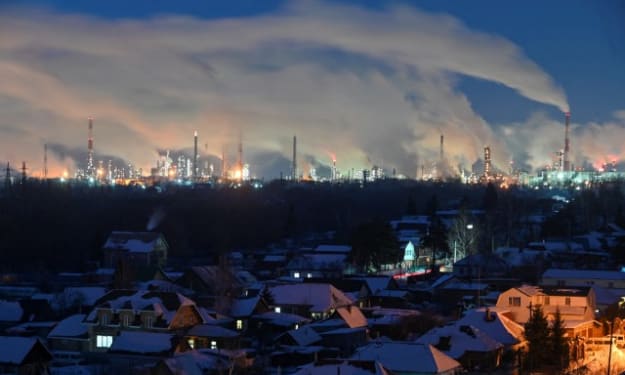
Global oil prices edged higher this week as investors digested the implications of a potential U.S.–India trade deal that could significantly alter India’s reliance on Russian crude. While the move in prices was modest, the underlying message from the market was clear: shifts in geopolitical alliances and trade frameworks continue to ripple through energy markets, influencing supply routes, pricing power, and long-term strategies for both producers and consumers. A Market Sensitive to Signals Crude oil markets are famously sensitive not just to hard data like inventories and production levels, but also to diplomatic signals. The prospect of deeper trade cooperation between the United States and India has introduced a new layer of uncertainty—particularly around India’s future oil sourcing strategy. Since 2022, India has emerged as one of the largest buyers of discounted Russian crude, taking advantage of price caps and sanctions-driven market distortions. Any indication that New Delhi might rebalance its imports away from Russia and toward alternative suppliers has immediate implications for global crude demand patterns. Traders appear to be factoring in the possibility that Russian barrels could face reduced demand from one of their key outlets, tightening supply elsewhere and lending support to prices. India’s Strategic Balancing Act India sits at a complex crossroads. As the world’s third-largest oil importer, it must secure reliable, affordable energy to sustain economic growth. Russian oil has played a crucial role in this strategy over the past few years, offering steep discounts that helped India manage inflation and protect its trade balance. However, India has also been careful to maintain strong diplomatic and economic ties with the United States. A broader trade deal with Washington—covering technology, defense, manufacturing, and energy—could incentivize India to diversify its crude imports further. U.S. policymakers have consistently encouraged allies and partners to reduce dependence on Russian energy, and energy cooperation is often a quiet but important component of such agreements. This does not mean India will abruptly cut off Russian oil. Instead, analysts expect a gradual recalibration, where Russian crude becomes a smaller share of a more diversified import portfolio. Even incremental changes, though, can move markets. Implications for Russian Oil For Russia, India has been a critical buyer as European demand collapsed following sanctions and political fallout. If India reduces purchases—even slightly—it could force Russian exporters to offer deeper discounts or seek new markets, both of which would pressure revenues. That pressure could have knock-on effects. Russian production has remained relatively resilient, but its pricing power has weakened. A sustained shift by India would further tilt the balance against Moscow, reinforcing the idea that sanctions, while imperfect, are reshaping global energy flows over time rather than overnight. From a market perspective, reduced flexibility in placing Russian barrels could tighten supplies of non-Russian crude grades, particularly in Asia. That tightening is one reason crude prices have found some upward momentum on the news. U.S. Energy and Trade Interests The United States, now one of the world’s largest oil producers, has a different but complementary set of interests. While the U.S. is less dependent on oil exports than some producers, it has steadily increased shipments of crude and refined products to Asia. A stronger trade relationship with India could open doors for more U.S. energy exports, even if they only replace a fraction of Russian volumes. Beyond direct oil flows, energy cooperation often includes investments in infrastructure, strategic reserves, and cleaner energy technologies. These broader ties can reshape long-term demand expectations, influencing how traders price future supply risks. Why Prices Are Rising—But Not Surging Despite the positive price reaction, crude has not surged dramatically. That restraint reflects countervailing forces in the market. Global demand growth remains uneven, with concerns about economic slowdowns in parts of Europe and mixed signals from China. At the same time, supply from OPEC+ remains a key variable, with production discipline balancing against the temptation to increase output at higher prices. In this context, the U.S.–India trade discussion acts more as a supportive factor than a decisive catalyst. It adds to a broader narrative of tightening geopolitical constraints rather than delivering an immediate supply shock. The Bigger Picture: Fragmented Energy Globalization What makes this development noteworthy is how it fits into a larger trend. The global oil market is becoming more fragmented, shaped by regional alliances, sanctions, and strategic trade deals rather than purely by price efficiency. Countries are increasingly willing to pay a premium—or accept logistical complexity—in exchange for political alignment and long-term security. For India, that means balancing affordability with diplomacy. For the U.S., it means leveraging trade to reinforce geopolitical goals. For Russia, it underscores the long-term cost of isolation from major Western economies. Looking Ahead In the near term, traders will watch for concrete details: official statements, timelines, and any mention of energy clauses within a U.S.–India trade framework. Inventory data, refinery runs, and OPEC+ signals will continue to drive day-to-day price movements, but the strategic direction is becoming clearer. Crude’s recent pickup is less about immediate barrels and more about future expectations. Markets are betting that even gradual changes in India’s oil sourcing could tighten non-Russian supply and reshape pricing dynamics across Asia. Whether that bet pays off will depend on how quickly diplomacy turns into policy—and how flexible global producers prove to be in response. For now, oil prices are doing what they do best: reflecting not just what is happening, but what might happen next.
By Saboor Brohi 8 months ago in Geeks
PayPal Stock. AI-Generated.
PayPal Holdings, Inc. — known on Wall Street by its ticker PYPL stock — is at an inflection point. Once a standout growth story of the digital finance era, the company’s recent financial results and leadership changes have sparked debate among investors about its future direction. For anyone watching PYPL, the combination of earnings performance and executive shifts offers a clearer lens into where this fintech stalwart is headed. A Shifting Leadership Landscape Perhaps the most striking news for PayPal this quarter is the change in leadership. Enrique Lores — formerly President and CEO of HP Inc. and a longtime PayPal board member — has been appointed as the company’s new President and Chief Executive Officer, effective March 1, 2026. He succeeds Alex Chriss, who led the company through a period of strategic transformation but faced criticism from the board for the pace of progress relative to market expectations. Jaime Miller, PayPal’s Chief Financial and Operating Officer, will serve as interim CEO until Lores formally takes the helm. Lores’s background blends operational rigor with technology leadership. At HP, he oversaw a pivot toward services and subscription-based offerings, helping navigate a mature hardware business through a changing tech landscape. His appointment suggests that PayPal’s board is looking for seasoned execution — and a renewed focus on growth metrics that matter to shareholders and customers alike. For Alex Chriss, the transition feels like a natural evolution rather than a rejection of his work. Chriss guided the company through several strategic moves — including prioritizing profitable growth and advancing core product offerings like Venmo and branded checkout — even if the results didn’t fully satisfy market expectations. Earnings That Missed Expectations While leadership changes dominate headlines, the fundamental business performance tied to PayPal earnings is what truly moved investors’ decisions. In the company’s latest quarterly report, revenue and profit both came in below Wall Street estimates. Adjusted earnings per share (EPS) of $1.23 missed analyst forecasts of around $1.28, and revenue of roughly $8.68 billion fell short of expectations near $8.79 billion. Also noteworthy is the guidance outlook for 2026. PayPal projected only modest growth — or even a slight contraction — in earnings compared with broader market expectations for more robust expansion. Combined with slower growth in its branded checkout segment (which is traditionally higher-margin), these results contributed to a sharp drop in PYPL stock price — down more than 15% in premarket trading following the earnings release. These numbers paint a picture of a company that is still generating significant volume and maintaining a large global footprint, but one that hasn’t yet fully reversed slowing growth trends in key business lines. That’s especially important for long-term investors who have been watching PYPL’s stock performance relative to peers and broader markets. Context Behind the Numbers: Business Momentum and Challenges Digging beneath the headlines reveals a more nuanced story. Over the past few years, PayPal made tangible progress in several strategic areas: Venmo and Buy Now, Pay Later (BNPL): PayPal has steadily expanded offerings in branded experiences and value-added services. Venmo in particular continues to grow its user base and revenue footprint. Shift to profit-centered growth: The company has intentionally focused on higher-margin business lines and trimmed exposure to lower-margin segments. This “quality over quantity” approach is typical of businesses aiming for durable long-term cash flow. New revenue avenues: Initiatives like PayPal’s ads manager and partnerships aimed at integrating payments into broader digital ecosystems suggest PayPal is thinking beyond its original remit of simple online transactions. But these strategic moves haven’t translated into the consistent acceleration in earnings growth many investors want to see. That lag is reflected in price performance: PYPL stock has struggled to recover toward its historical highs and has significantly lagged indices like the S&P 500 over the past couple of years. What This Means for Shareholders Today’s PayPal is a complex mix of strength and uncertainty. On the positive side: It remains a dominant player in digital payments, with millions of active accounts worldwide. Its platforms — especially Venmo — have become embedded in everyday consumer behavior. Strategic initiatives around automation, branded experiences, and marketplace integrations give the company multiple levers for future revenue growth. At the same time, investors must weigh: Current earnings that fall short of expectations. Competitive pressures from both fintech upstarts and tech giants like Apple and Google expanding their payment ecosystems. Leadership transitions that, while promising, introduce short-term uncertainty. For long-term shareholders, the key question isn’t just where PYPL stock is trading today — it’s whether the company’s strategic repositioning under Enrique Lores will meaningfully accelerate earnings growth and re-energize investor confidence. A Turning Point, Not a Turning Back PayPal’s situation today feels less like a crisis and more like a transition. Leadership change — especially one that brings in a seasoned executive like Enrique Lores — often signals a company’s recognition of evolving competitive realities and the need for sharpened execution. For traders and long-term holders alike, PYPL stock remains a compelling story precisely because of its dual identity: a proven payments giant with deep roots in digital commerce, and a company actively reinventing itself to meet the challenges of a rapidly changing financial landscape. Whether this chapter ultimately leads to renewed growth and a rebound in market valuation will depend on how well the new leadership can harness innovation, strengthen core revenue drivers, and translate strategy into measurable earnings performance — the very metrics that matter most to investors.
By Saboor Brohi 8 months ago in Geeks