Latest Stories
Most recently published stories in Geeks.
Fallout Season 2 Finale Review: Every Major Season 3 Teaser Explained
Fallout Season 2 has officially wrapped up, and wow — the finale didn’t hold back. We got massive cliffhangers across nearly every storyline, long-running mysteries from Season 1 that still haven’t been fully paid off, and a whole lot of setup for what looks like a huge Season 3.
By Bella Anderson8 months ago in Geeks
How Cross-Chain Technology Is Driving Modern DeFi Development
The DeFi ecosystem evolved from a small experimental ecosystem, to a financial layer holding billions in total on-chain value across DeFi protocols that provide lending, exchange, derivatives and asset management services for digital assets that in a customary setting were typically provided by a centralized intermediary. However, there was a structural limitation to the evolution of DeFi that early development could not overcome: the lack of interaction between blockchains.
By Henry James8 months ago in Geeks
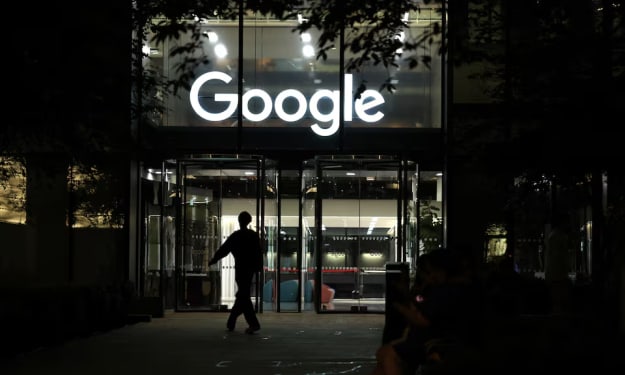
Google Goes From Laggard to Leader as It Pulls Ahead of OpenAI With Stellar AI Growth. AI-Generated.
Not long ago, Google appeared to be on the defensive in the rapidly evolving artificial intelligence race. The public debut of generative AI tools shifted attention toward newer players, and critics questioned whether Google had lost its innovative edge. Today, that narrative looks increasingly outdated. Through sustained investment, disciplined execution, and deep integration across its products, Google has repositioned itself as a leader in AI development, pulling ahead of OpenAI in several critical areas. The turning point was not a single product launch, but a strategic shift. Rather than treating AI as a standalone experiment, Google embedded it directly into its ecosystem. Search, advertising, cloud computing, productivity tools, and mobile platforms all became delivery mechanisms for AI-driven improvements. This approach allowed Google to scale faster than competitors who relied on isolated applications. At the center of this transformation is Google’s long-standing investment in foundational AI research. While public attention gravitated toward conversational tools, Google quietly advanced large language models, multimodal systems, and specialized chips designed to train and deploy AI at scale. These efforts, years in the making, gave the company a technical advantage once commercial adoption accelerated. Google’s AI models have evolved rapidly, becoming more capable, efficient, and adaptable. Unlike earlier iterations that felt experimental, recent systems demonstrate stronger reasoning, better contextual understanding, and seamless integration across products. This progress has been particularly visible in enterprise settings, where reliability and scalability matter more than novelty. OpenAI played a pivotal role in popularizing generative AI, but its reliance on partnerships and external infrastructure created constraints. Google, by contrast, controls its own cloud platform, hardware stack, and data pipelines. This vertical integration has allowed faster iteration and lower deployment costs, giving Google an edge as demand for AI services grows. Search remains the clearest example of Google’s resurgence. Rather than being disrupted by AI, Google redesigned search to incorporate generative responses while preserving its core strengths. AI-powered summaries, contextual answers, and improved ranking systems enhanced user experience without undermining trust. The result was a more capable product that reinforced Google’s dominance rather than weakening it. Advertising, Google’s primary revenue engine, also benefited from AI integration. Machine learning models now optimize ad placement, targeting, and creative generation with greater precision. These improvements translated directly into stronger performance for advertisers and higher efficiency for Google. Unlike competitors still experimenting with monetization, Google turned AI innovation into measurable financial results. Cloud computing has been another major growth driver. Google Cloud’s AI tools, including model development platforms and enterprise-grade deployment solutions, have attracted businesses seeking reliable alternatives to consumer-focused systems. As organizations prioritize data security and customization, Google’s infrastructure-first approach has resonated strongly. Internally developed AI hardware has further accelerated this momentum. Google’s custom chips are designed specifically for training and inference at scale, reducing dependence on third-party suppliers. This not only improves performance but also protects margins, a critical advantage as AI workloads become more resource-intensive. One of Google’s most effective strategies has been restraint. Rather than rushing unfinished products to market, the company focused on refinement and responsible deployment. This cautious approach initially drew criticism, but it ultimately strengthened user trust and reduced reputational risk. As AI systems become more embedded in daily life, reliability has proven more valuable than speed alone. OpenAI continues to innovate and remains influential, but the competitive landscape has shifted. Where OpenAI excels in rapid experimentation and public engagement, Google has leveraged scale, infrastructure, and integration. The difference is increasingly visible in adoption metrics, enterprise contracts, and revenue impact. Another factor behind Google’s rise is talent retention. The company has long been home to leading AI researchers, many of whom helped shape the field itself. By aligning research incentives with product outcomes, Google bridged the gap between theory and application. This alignment allowed breakthroughs to move from lab to market more efficiently. Regulatory scrutiny also plays a role. As governments examine AI governance more closely, companies with established compliance frameworks gain an advantage. Google’s experience navigating global regulation gives it credibility with institutions wary of untested platforms. This trust has translated into broader adoption across sensitive sectors such as healthcare, education, and finance. The shift from perceived laggard to clear leader did not happen overnight. It required patience, capital, and a willingness to absorb early criticism. Google’s leadership recognized that AI leadership is not defined by headlines, but by durability. Products must scale, generate value, and adapt to changing expectations. Today, Google’s AI growth reflects those priorities. Usage is rising across consumer and enterprise products, revenue impact is becoming more visible, and technological capabilities continue to advance. The company no longer appears reactive; it is setting the pace. The broader lesson extends beyond one company. The AI race is not won by first movers alone. It rewards organizations that combine innovation with infrastructure, ambition with discipline. Google’s resurgence demonstrates how experience, when paired with renewed focus, can outperform disruption. As AI becomes a foundational layer of the digital economy, leadership will belong to those who can integrate it responsibly and at scale. By that measure, Google has not only caught up—it has moved ahead.
By Saboor Brohi 8 months ago in Geeks
TMZ Receives Alleged Ransom Note Linked to Savannah Guthrie’s Mother Nancy. AI-Generated.
TMZ, the widely known celebrity news outlet, has recently found itself at the center of an alarming and deeply personal story after receiving an alleged ransom note linked to NBC News anchor Savannah Guthrie's mother, Nancy Guthrie. The note, which has since been confirmed by multiple sources, appears to be targeting the Guthrie family in a manner that has left many shocked and concerned.
By Ayesha Lashari8 months ago in Geeks
How Mobile Apps Are Reshaping Legal Tech with AI Automation. AI-Generated.
You're sitting in a courthouse hallway, ten minutes before your hearing, and you need to pull up a critical case detail. Your laptop's dead. Your briefcase is stuffed with paper. But your phone? That's got everything.
By Samantha Blake8 months ago in Geeks
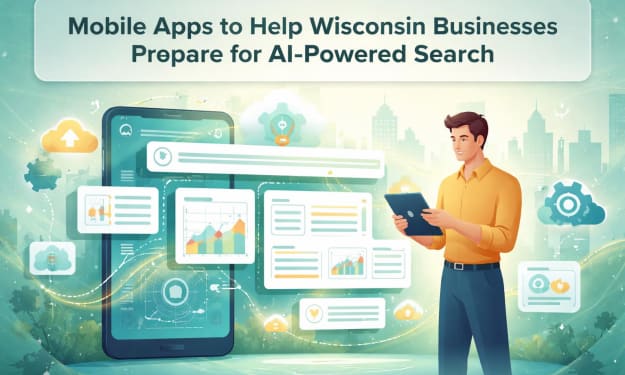
Mobile Apps Wisconsin Businesses Need for AI Search. AI-Generated.
Thing is, search has changed completely. You reckon people still type queries the old way? Not in 2026. AI-powered search engines now predict intent before you finish thinking it. For Wisconsin businesses, this shift means your old SEO playbook might be totally knackered.
By Sherry Walker8 months ago in Geeks
From Buckhead to Beta: How to Launch Your First Mobile App in Atlanta
I spent a lot of time walking through Buckhead last summer, looking at the glass buildings and wondering if my idea for a mobile tool actually belonged there. I had this vision—a simple way for local artists to coordinate shared studio spaces—but it felt fragile. Every time I thought about "launching," my mind jumped to the finish line: the polished icon on a home screen, the five-star reviews, the success stories you read about in Hypepotamus.
By Mike Pichai8 months ago in Geeks
Book Review: "Dear Dolly" by Dolly Alderton
"...learn to be with yourself now. your future self will thank you..."- Dear Dolly by Dolly Alderton One thing I'm beginning to notice about Dolly Alderton is that she should very quickly make her shift over to fiction in a very Sally Rooney style, because she could do quite well. When I read her book Ghosts - I was impressed at how darkly comical it was. Yet, I found myself a little more underwhelmed when I finished her book Everything I Know About Love. I think that the writing in the latter for me fell emotionally flat and sounded more like the rambling diary of a teenage girl rather than an adult trying to make a point. Dear Dolly though, has a slightly different problem - again it is Dolly Alderton centring herself instead of exploring ideas. It's alright - it is just a bit of a tired gig at this point.
By Annie Kapur8 months ago in Geeks
AI predicts which film will win the Oscar for Best Picture this year. AI-Generated.
As the 2026 Oscars approach, the race for Best Picture is heating up with several strong contenders. AI has the ability to predict who will win that award. This technology takes into account the technical quality, the literary quality of each of these stories, and the number of nominations each film received. AI may be wrong in its prediction, but it is always interesting to take it into account.
By Ninfa Galeano8 months ago in Geeks
Fallout Series Review (Season 2)
After so many underwhelming video game adaptations, Fallout showed everyone how was it done with a knockout opening season in 2024. The second chapter takes a firmer grip on the source material, directly incorporating the lore into the main narrative. For the most part, it’s every bit as effective and engaging as the original.
By Robert Cain8 months ago in Geeks
Washington Post. AI-Generated.
For more than a century, The Washington Post has stood as one of the most influential newspapers in the United States, shaping public debate, holding power to account, and chronicling history as it unfolds. From its groundbreaking reporting during the Watergate era to its modern-day digital investigations, the paper has long symbolized rigorous journalism. Yet in recent years, the Washington Post has found itself navigating a challenging landscape marked by financial pressures, newsroom changes, and difficult decisions — including widely discussed Washington Post layoffs — under the ownership of Jeff Bezos. A Legacy Built on Trust and Impact Founded in 1877, The Washington Post earned its global reputation through investigative reporting and deep political coverage. Its motto, “Democracy Dies in Darkness,” reflects a mission that goes beyond daily headlines. Readers have traditionally turned to the paper for fact-based reporting, thoughtful analysis, and accountability journalism, especially in times of political turbulence. However, like many legacy news organizations, the Post has had to adapt to a rapidly changing media ecosystem. Print circulation has steadily declined across the industry, while digital subscriptions have become the primary engine for growth. This shift has forced even the most respected outlets to rethink their business models. Jeff Bezos and a New Vision In 2013, Jeff Bezos, founder of Amazon, purchased The Washington Post for $250 million through his private investment company, Nash Holdings. At the time, the acquisition surprised many observers, but it was largely welcomed within journalistic circles. Bezos brought financial stability, long-term thinking, and a willingness to invest in technology — something traditional media companies often lacked. Under Bezos’ ownership, the Washington Post expanded its digital reach significantly. Investments in engineering, data analytics, and global distribution helped the paper attract millions of online readers. The Post developed its own publishing technology, Arc XP, which later became a revenue source by licensing it to other media outlets. For several years, subscriber numbers grew, and the newsroom expanded. Bezos was careful to maintain a distance from editorial decision-making, repeatedly emphasizing the importance of independence. This approach helped preserve trust among journalists and readers alike, reinforcing the idea that the Post could innovate without compromising its core values. The Reality of Washington Post Layoffs Despite early growth under Bezos, the last few years have brought sobering realities. The digital subscription boom that accelerated during the COVID-19 pandemic began to slow, while advertising revenue remained unpredictable. As a result, the Washington Post faced mounting financial pressure — a challenge not unique to the organization but deeply felt nonetheless. Washington Post layoffs became a symbol of these struggles. Staff reductions affected journalists, editors, and business-side employees, prompting concern across the media industry. For a newsroom built on the idea of expansive coverage, layoffs were painful and unsettling. Many reporters worried about increased workloads, reduced beats, and the long-term impact on the quality of journalism. Leadership framed the layoffs as necessary steps toward sustainability rather than a retreat from journalism. Executives argued that resizing the organization was essential to align costs with realistic revenue expectations in a competitive digital market. Still, for employees and readers, the cuts raised difficult questions about how much more the newsroom could absorb without diminishing its mission. Industry-Wide Challenges, Not an Isolated Case It is important to understand that the Washington Post layoffs did not occur in isolation. Across the media industry, even well-known outlets have faced similar decisions. The rise of social media platforms as primary news distributors, changes in advertising models, and audience fragmentation have all eroded traditional revenue streams. What makes the Post’s situation particularly notable is its ownership by one of the world’s wealthiest individuals. Critics often ask why layoffs are necessary when Jeff Bezos has the personal resources to sustain losses. Supporters counter that Bezos has consistently viewed the Post as a long-term institution that must ultimately stand on a viable business foundation rather than rely indefinitely on subsidies. This tension highlights a broader debate about the future of journalism: should news organizations prioritize financial independence, even if it means shrinking, or should they seek alternative models that protect newsroom jobs at all costs? Editorial Integrity in a Time of Change Despite staffing cuts and financial concerns, The Washington Post continues to produce impactful journalism. Its reporting on U.S. politics, international conflicts, climate change, and social justice remains influential. Investigations published by the Post frequently drive national conversations and prompt official responses. Maintaining editorial integrity during periods of contraction is not easy. Fewer reporters can mean fewer stories, and morale can suffer. Yet many journalists at the Post have emphasized that the core commitment to truth and accountability remains intact. Leadership has repeatedly stated that quality, not sheer volume, will define the paper’s future. Looking Ahead: Reinvention or Reinforcement? The future of The Washington Post will likely depend on how successfully it balances innovation with tradition. Digital-first strategies, audience engagement, and diversified revenue streams are no longer optional — they are essential. At the same time, the paper’s reputation was built on deep reporting, experienced journalists, and editorial courage, elements that cannot be easily replaced by technology alone. Jeff Bezos’ role will continue to be closely watched. While he has stepped back from day-to-day involvement, his long-term vision still shapes the Post’s direction. Whether through continued investment, strategic restraint, or new leadership approaches, his influence remains a defining factor in the paper’s evolution. Conclusion The Washington Post stands at a pivotal moment in its long history. The challenges symbolized by Washington Post layoffs reflect broader shifts reshaping journalism worldwide. Under Jeff Bezos’ ownership, the paper has achieved remarkable digital growth but now faces the harder task of sustaining that success in a cooling market. What remains clear is that the Post’s importance extends far beyond its balance sheets. As long as it continues to inform the public, challenge authority, and uphold journalistic standards, it will remain a vital institution — even as it adapts to a future that demands both resilience and reinvention.
By Saboor Brohi 8 months ago in Geeks