
If You Want The Snyderverse To Continue, Write It!
Why Fan Fiction Matters

What becomes of the tales that are never shared?
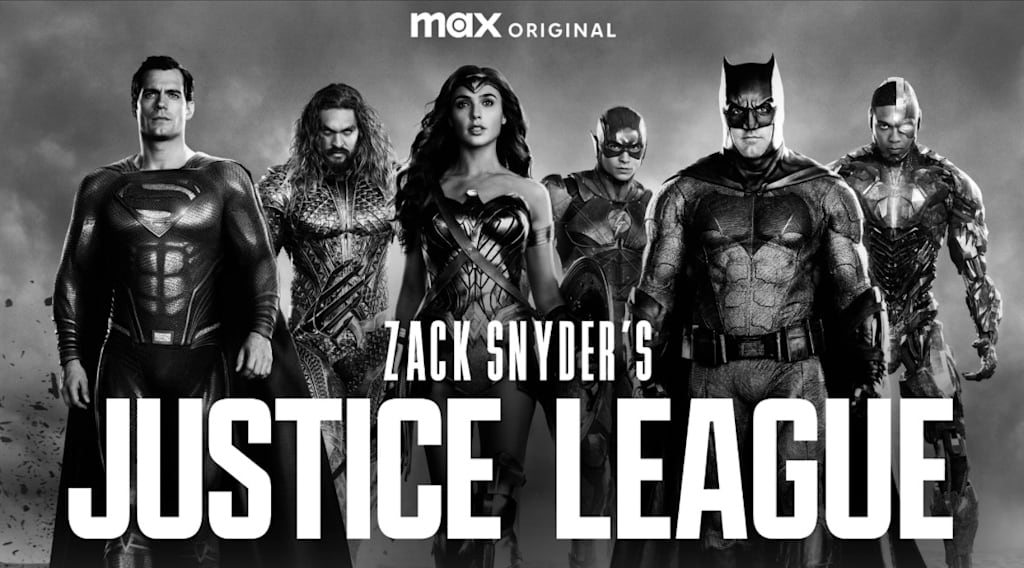
This is a question that lingers over the Snyderverse. For a long time, fans have pushed to bring Zack Snyder's vision of the DC universe back into active development. Lately, some fans have turned to generative AI to produce fan-made clips, envisioning how Justice League 2 and 3 might have turned out.
That makes sense. The longer someone remains absorbed in a fictional world, the stronger the urge becomes to speculate about the events that were never shown on-screen. And looking at the remaining pieces leads one to wonder how the complete narrative might have unfolded.
Yet there is another path: write the story on your own.
After all, that is the whole purpose of fan fiction. To be clear, this is not a suggestion that fans should stop appreciating Zack Snyder's work, resign themselves to Warner Brothers' decision, or cease imagining what the finished films would have been. It is a call for fans to do something other than continually requesting something that likely will never come to pass.
Warner Brothers once had the chance to make its Zack Snyder's Justice League movie the pinnacle of fandom's affection for the DC universe. But it chose not to.
Fans now have the chance to become writers themselves and share their own versions of the story.
Fan Fiction Is a Form of Creative Participation
Fan fiction is frequently written off because it builds on characters and worlds that already exist, yet such criticism overlooks what makes it so appealing.
People write fan fiction as a form of participatory storytelling: instead of passively consuming media, they engage directly with an existing story, probing character choices, filling in plot holes, discovering what happens where the canon leaves things unclear, or simply asking "what if?"
Suppose a character had made a different choice?
What took place between two events we already know about?
In what ways might particular relationships shift?
Or what might occur when the canon leaves things unclear?
The Snyderverse offers abundant openings for every one of these, since the production has been open about storyboards and concept art. Interviews, which give fans a sense of what Snyder intended, are at liberty to steer it in any direction they choose. A fan work might delve into these possibilities, or it might head somewhere completely different.
A fan creation could appear as a prose follow-up to Justice League 2, a piece of fan art inspired by the Knightmare future, or a fan comic that follows the league. Each of these could hold value, no matter how it fares critically or financially.
The Problem With Calling AI-Generated Footage a “Restoration”
Sure, it is completely acceptable for creators to use technology to improve their work—writing, illustration, and filmmaking have always worked that way—but I am far more doubtful about this particular trend.
There is a world of difference between turning to a tool for help during the creative process and using generative AI to take the place of the artists and performances in a film that was never made.
Labeling these AI projects a "restoration" gives the audience a false impression.
Zack Snyder's Justice League 2 is not being restored; what you are seeing is someone's interpretation of what it might have been.
It makes sense that people are curious about Snyder's original plan. They could have gotten that if the unreleased material had been put out, or if the people who actually worked on it had offered their own interpretation.
This lines up with what Zack Snyder said himself in September 2026 about generative AI and its potential effect on movies—he explained that he isn't opposed to it. In his view, human creativity is what gives films their special quality and ought to take priority over synthetic performances and the like.
So that raises a question for the fans: if they truly want to honor Zack Snyder's original plan, why are they not doing what he did?
Why not write their own scripts, draw their own comics, illustrate their own fan comics, storyboard their own fan film, or produce an audio drama with their own voice actors?
Why not channel their own creativity into something instead of letting an algorithm do the work for them?
You Don’t Have to Make It Canon
The greatest appeal of fan fiction, in my view, lies in the fact that it faces no obligation to measure itself against canon.
Herein lies fan fiction's defining distinction and its foremost strength.
Those who write it bear no burden of persuading Warner Bros. that their particular reading of Justice League 2 is the correct one. Nor must they win other fans over to that view.
All they need do is write whatever they please — nothing more.
A Snyderverse enthusiast can proceed at their own pace, delving fully into whichever version of the sequels they long to see brought to life on the page. Perhaps they wish to linger on the Knightmare timeline, render the Batman vs. Deathstroke duel in meticulous detail, or trace what follows from restoring Superman to life. They might likewise choose to flesh out Snyderverse figures like Lois Lane, Wonder Woman, Cyborg, The Flash, or Aquaman, granting them greater screen time and richer personalities.
And should they wish to stray from the established Snyderverse narrative, nothing stops them — that freedom is the very essence of creativity.
Welcoming that freedom is an essential part of the fan fiction writing process.
Once you begin writing, you come to see it as an ongoing exchange between the source material and your own imagination, producing something genuinely unique.
Moving Forward Doesn’t Mean Erasing the Snyderverse
Even though I have made clear my view that the Snyderverse belongs in the past rather than serving as the basis for DC's future lineup, I am certainly not suggesting it should be erased from memory.
There is a real difference between moving forward and simply forgetting. Films like Man of Steel, Batman v Superman: Dawn of Justice, and Zack Snyder's Justice League will forever carry the legacy they've earned. That includes the hundreds of cast and crew members who brought them to life, spanning acting, production, costumes, effects, and music.
Fans of these movies have plenty of ways to keep honoring them, for instance,
By penning fan fiction and imagining storylines that never made it to the screen,
By making fan art and dressing up as the characters,
And by gathering memorabilia tied to the films and writing about it.
None of that stands in the way of DC pursuing bigger and better things, and a fandom does not have to stay stuck in one moment. The main DCU is free to forge a fresh continuity apart from the Snyderverse, even as that era is cherished as a memorable chapter in DC's cinematic legacy.
Keeping it in memory alongside the mainline DCU is not an act of betrayal; it is simply how fictional worlds live on.
What If Fan Fiction Becomes Something More?
This point in particular deserves far more thought.
The act of writing can itself be what makes a writer better, giving them the chance to sharpen their abilities on a beloved franchise or concept before turning to their own original work.
Writing is a journey of discovery, through which the author comes to recognize which kinds of characters, dialogue, plots, pacing, and world-building. Tension they feel most at ease with and which come to them naturally. Thus, when the moment arrives for them to write their own work, having completed writing exercises and taken part in the fan fiction community, they will know exactly where to start.
Writing fan fiction is perfectly fine. In time, a writer will realize they must move on to their own work, applying the skills they have built through their writing.
Such a transition is entirely achievable, as there are well-known instances of fan fiction that have become officially released products derived from their source material.
Indeed, one of the most popular and widely known works of Harry Potter fan fiction, SenLinYu's Manacled, has been slated as the foundation for a multimedia franchise, Alchemised, thanks to its enormous popularity on the fanfiction site. Yet because of how copyright law works and the vast number of trademarks in the original books, the released work will not truly be based on the original material. From the magic system to the world-building, everything will be altered and swapped out for completely new inventions, all while preserving the feel and theme of the original work. Del Rey released the book in 2025.
Naturally, not every work of fan fiction is meant to grow beyond its source material, nor should it.
Still, these examples demonstrate that the potential exists.
After all, an author who writes within a preexisting universe can always choose to eventually go their own way and build a completely new world from the ground up.
Imagine If The Snyderverse Fans Did The Same Thing
Imagine what might happen if all the immense passion people feel for the promising yet incomplete Snyderverse were channeled into the written word.
While one person might pen a completely different continuation of the Justice League sequels that were never made, another could attempt a wholly separate tale. Someone could compose a full-length novel continuing the story; another could illustrate a fan comic or produce an audiobook. Yet another might craft a completely distinct take on a totally different team pursuing an entirely different storyline.
Over time, this might inspire writers to produce their own original works of fiction, drawing on the very themes that first drew so many people to Snyder's films. Why keep trailing Batman, Superman, or Darkseid? The remaining members of the Justice League when you could invent your own vigilantes, your own alien gods, your own cosmic menaces, and your own assembly of heroes?
That is what truly sets this apart from simply sitting around hoping Snyder will complete his chapter of the tale — these writers are forging their own distinctive stories from the very same wellspring of inspiration.
This is Why I Encourage Fans to Read and Write Fan Fiction
If somebody were to ask me why I champion reading and writing fanfiction so passionately, how would I respond? My answer is that it deepens our love for the very concept of stories, more than we ever felt before.
It hands us such enormous freedom that we are free to shape our own tales in any way we choose.
We get to write the version we wished the original book or series had been, add another chapter when the ending disappoints us, pen the sequel that no one else could have imagined, pair up two characters who hardly meet in the source material, or drop them into an alternate universe. Yet if we sense that we are merely following along in stories that belong to others, what we truly ought to do is build worlds of our own for readers to lose themselves in, exactly as the books and authors we cherish once inspired us to do.
That is how one grows as a writer.
You Don’t Need an Algorithm to Tell Your Story
This is precisely why the conversation surrounding AI-created works for the Snyderverse is so intriguing.
Replicating an image, a voice, or even a whole performance with technology is simple enough. Capturing the emotions and thoughts that endear these characters to us is a completely different matter.
That is something only we are capable of.
After all, we are the ones who have devoted hours, days. Years of imagining what might come next, what might have unfolded if the sequels had been produced, which characters are deserving of more focus than they currently receive, and much more. Since we are the ones who carry the passion, why should we allow a computer-generated script to throw that off course?
Rather, take up that pen and begin writing.
Make errors. Create the things that only you are able to create. In a sense, this is the very essence of fanfiction: providing the audience with what the studios chose not to give them.
The Snyderverse Doesn’t Need to Be Officially Restored For Fans To Keep It Alive
It makes perfect sense that Snyderverse supporters would long to see these storylines wrapped up, since Zack Snyder's Justice League left them feeling unsatisfied when it arrived. Still, there is a limit to what anyone can do to push WB into reversing its choice; fans hardly face a simple either-or between forever petitioning the studio to change its mind and turning to AI to fabricate movies for sequels that do not exist.
A far smarter path exists: actually do something about it.
Rather than waiting idly and trusting that WB will do what's right, pick up a pen and write the fan fiction, sketch the fan art, self-publish the comics, spark the conversations. So on — all the things WB selfishly chose not to produce itself. Don't shy away from errors or from sharing content that only a human could create; that's exactly what makes fan-made work so wonderful! When you think about it, WB hasn't been delivering what fans wanted, anyway. What is any of this for if not to give fans what the company refuses them?
And should things reach the point where you feel moved to build a universe of your own, then take it there.
Nobody has to lose anything from WB restoring the Snyderverse. The new DCU is free to keep moving ahead; Snyder's cut can be remembered as a landmark film.
Fans can carry on building out what WB intended to keep as its own exclusive property.
About the Creator
Jenna Deedy
Just a New England Mando passionate about wildlife, nerd stuff & cosplay! 🐾✨🎭 Get 20% off @davidsonsteas (https://www.davidsonstea.com/) with code JENNA20-Based in Nashua, NH.
Instagram: @jennacostadeedy
Enjoyed the story? Support the Creator.
Subscribe for free to receive all their stories in your feed. You could also become a paid subscriber, letting them know you appreciate their work.
Comments
There are no comments for this story
Be the first to respond and start the conversation.