
Don't Look Now by Daphne Du Maurier
Why It's a Masterpiece (Week 136)

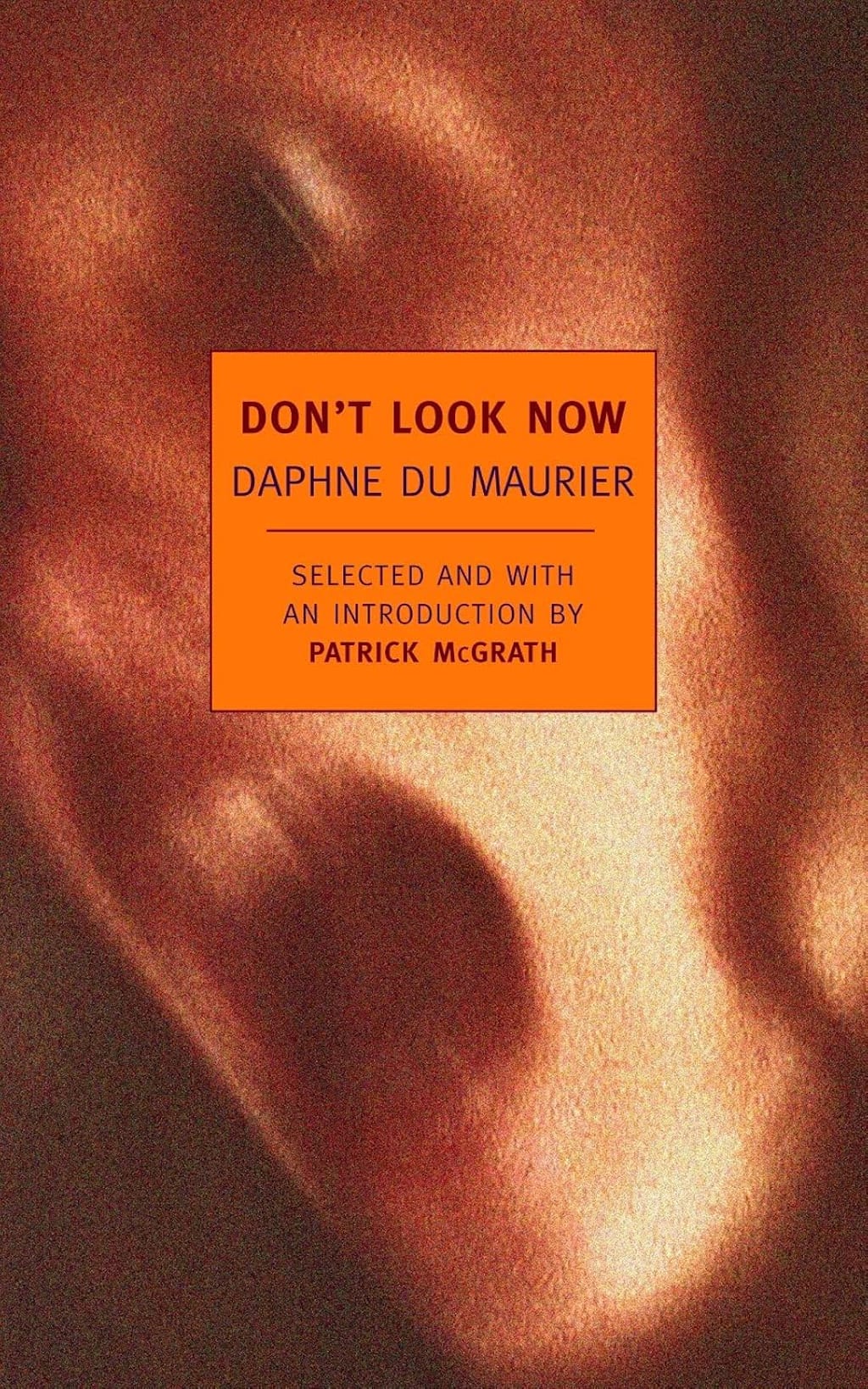
It was Du Maurier's choice of Venice, inspired by her travels, that would make readers everywhere fall in love with her 1971 collection of short stories which included this masterpiece. She found the city’s beauty tinged with decay and eeriness which would be an atmosphere that shaped the story’s iconic tone.
Written in du Maurier’s later career, the story reflects her growing interest in psychological tension, the supernatural, and the uncanny, marking a shift from her earlier Gothic romances to more unsettling, ambiguous narratives. Personally, I think this shift is marked by her short fiction in many different ways. Whilst in university, I read and reread The Apple Tree many times and one of my university assignments involved writing a film script based on the story.
Upon release, the collection was praised for its tight, suspenseful construction, later gaining even greater attention after Nicolas Roeg’s 1973 film adaptation brought the story renewed acclaim. More people than ever were now reading the story and of course, it was marked by Du Maurier's constant exploration into the side effects of horrifying feelings of grief.
Plot
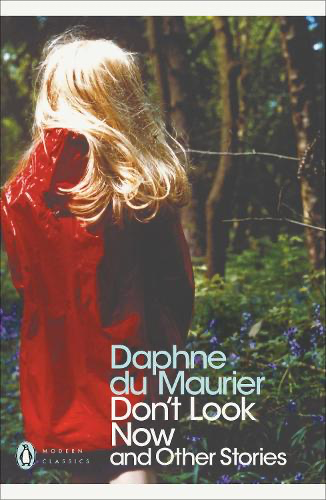
John and Laura Baxter, a married couple grieving the recent death of their young daughter, Christine, take a holiday in Venice in an attempt to recover emotionally. The city is out of season, quiet, and slightly unsettling, with its mazes of canals and misty evenings mirroring their inner disorientation. Laura seems initially more open to distraction and beauty, while John remains tense and sceptical.
During lunch one day, Laura meets two elderly twin sisters, one of whom is blind but claims to be clairvoyant. The blind sister tells Laura she can see Christine’s spirit sitting happily between her parents, attempting to comfort them. The revelation deeply moves Laura, giving her a sudden sense of hope and renewed emotional energy. John, however, is disturbed and dismissive, convinced the women are either delusional or manipulative.
After meeting the sisters, Laura goes through a striking emotional shift, becoming calmer, more buoyant, and strangely reassured. She seems convinced that Christine’s spirit truly is at peace and that the message is genuine. John, alarmed by her sudden change, worries she may be becoming unstable or overly dependent on the twins’ supposed insights. His protective instincts clash with Laura’s acceptance of the supernatural. Their conversations become tense, with John torn between wanting to support his wife and fearing she is being misled.
Laura arranges to meet the sisters again, and the psychic delivers a new message: John is in danger and should leave Venice immediately. The warning is vague and unsettling, suggesting a threatening presence lurking somewhere in the city. Laura tries to persuade John to take the message seriously, but he refuses, convinced the sisters are manipulating them.
As their stay continues, Venice becomes overshadowed by news that a murderer is prowling the city. Police patrols increase, and locals speak nervously of violent attacks occurring in the narrow streets and darkened canals. This external threat mirrors the psychological danger hinted at by the psychic’s warning. John tries to dismiss the idea that the murders have anything to do with him, but the coincidence troubles him.
While travelling by boat, John believes he sees Laura on another vessel accompanied by the two sisters, even though she had told him she was resting at the hotel. The sighting completely unsettles him: Laura looks strangely composed, even serene, and the sisters appear intent on guiding her somewhere. Confused and worried, John interprets this as a sign that something is wrong, perhaps Laura has taken the psychic’s warnings too seriously or is experiencing some breakdown.
Panicked by what he thinks he has witnessed, John rushes back to the hotel to find Laura. The staff insist she left earlier to travel to England to check on their son, who appears to have had a health scare. John, confused and exhausted, cannot reconcile this with what he has just seen. Doubting his own perceptions, he feels increasingly trapped within the city’s bewildering maze of alleys and waterways. He contacts the police, who take his report seriously but remain baffled.
The police grow more concerned about John’s mental state as he recounts his conflicting experiences. They investigate the sisters (who may or may not be involved) while John insists that Laura is still in Venice, even though she is officially en route to England. The officers accompany John through the city, questioning witnesses and checking sightings, but the more they investigate, the more contradictory everything becomes.
Later that night, John sees a small, childlike figure wearing a red coat, similar to the one Christine wore before she died. The figure appears repeatedly in the distance, darting through darkened alleys and across bridges. Compelled by a mixture of paternal instinct, hope, and dread, John follows it into increasingly deserted areas of Venice. The chase is tense and disorienting, as the figure remains just out of reach.
In the climactic moment, John corners the figure, only to discover it is not a child at all but a murderous dwarf who has been terrorising Venice. The creature attacks him, cutting his throat before he can react. As he dies, John’s last thoughts merge fragments of grief, foreboding, and misunderstanding. Moments later, Laura and the sisters arrive (just as the psychic had foreseen) to find him already gone.
Into the Book

Perceptions vs. Reality:
A huge theme in Don’t Look Now is the instability of perception and the danger of interpreting the world through grief-distorted senses. Du Maurier repeatedly blurs the line between what is seen, what is believed, and what is true. John’s confidence in his rationality becomes a fatal flaw: he assumes his vision of Laura on the vaporetto is accurate because he trusts his senses implicitly. The author undercuts this trust by showing how easily sight can deceive. The city of Venice itself becomes a metaphor for unreliable perception which is beautiful on the surface, but labyrinthine, ambiguous, and treacherous beneath. When the psychic declares, “You are in danger in this city,” Laura accepts a supernatural reading, while John dismisses it, believing reason must prevail. Ironically, he is the one who ultimately misreads every sign.
“Nothing is what it seems in this city.”
- Don’t Look Now by Daphne Du Maurier
Grief and Emotional Displacement:
Grief is the emotional engine driving the plot of the novel at times, shaping the behaviours, vulnerabilities, and perceptions of both John and Laura. Their bereavement has not brought them closer; instead, it has pushed them into opposite coping strategies. Laura clings to hope, however irrational, while John clings to scepticism, however brittle. Du Maurier frames grief as a disruptive force that alters the psychological landscape through which the couple attempts to navigate Venice. When Laura learns from the psychic that “Christine is happy,” she experiences a sudden renewal like an emotional buoyancy that lifts her out of despair. John, however, sees this as dangerous denial, revealing how grief isolates rather than unifies.
“It was as if the past had crept into the present and taken hold of him.”
- Don’t Look Now by Daphne Du Maurier
Fate, Warnings and the Inevitable:
The idea of fate threads through the entire story, suggesting that warning signs, whether they are supernatural or psychological, can be both compelling and tragically misread. The psychic’s declaration that John is in danger evokes classical notions of prophecy: knowledge offered too late, misunderstood, or rejected by the one who needs it most. When the blind sister says, “You must leave Venice at once,” the moment functions as a modern echo of Greek tragedy, where the hero’s downfall is sealed not by the prophecy itself but by his response to it. John dismisses every warning, believing his rationality is a shield; this refusal becomes the mechanism of his doom.
Our author constructs a series of signals such as: police reports, Laura’s intuition, the sisters’ urgency and the sinister atmosphere of Venice. They collectively shape a sense of impending inevitability. John’s inability to recognise these signs situates him as a tragic figure: doomed not by supernatural forces but by temperament. His death feels fated not because it was foretold, but because every opportunity to avert it was overridden by his certainty. Du Maurier uses dramatic irony to heighten this sense of inevitability; we recognise the danger long before John does.
“He felt the pull of something already decided.”
- Don’t Look Now by Daphne Du Maurier
Why It's a Masterpiece

Daphne Du Maurier has always had a flawless ability to create atmosphere and she does the same in this story, the city serves as a playground for these forces and supernatural possibilities. There's this whole gothic unease lurking underneath the decaying beauty of Venice. This opens the door for probabilites and ironies, things that don't seem quite right and the argument of rationality vs irrationality.
Du Maurier's story also shows us how complex grief can be, especially when a child is involved. It gets very dark in this book philosophically and the culmination of mental health problems, paranoia and unresolved moments seem to lead the readers towards the end of the book. We definitely see it coming long before Du Maurier actually writes it down.
Conclusion
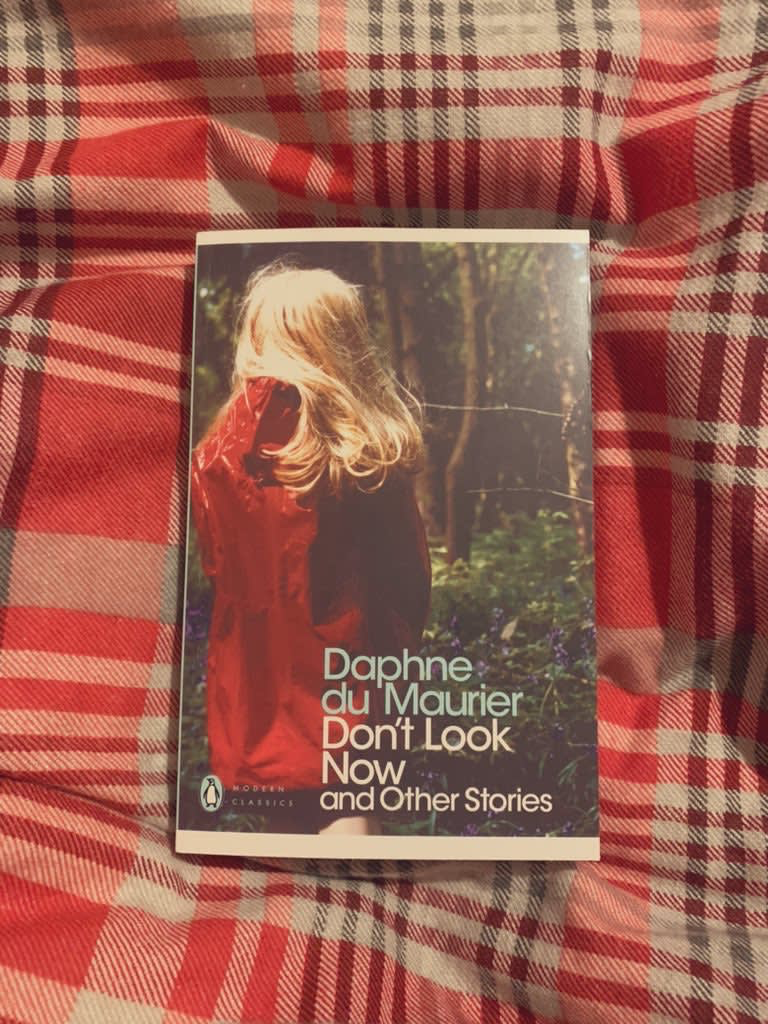
I personally loved this story when I first read it and I suggest that if you're looking for something of the modern gothic to read then you gravitate towards the books of Daphne Du Maurier. Here are some more suggestions of what to read if you enjoyed Don't Look Now ...
- Scapegoat by Daphne Du Maurier
- The Parasites by Daphne Du Maurier
- Frenchman's Creek by Daphne Du Maurier
Read my review of the full book of short stories here.
Next Week: Don Juan by Lord Byron
Join in on my writing challenge!
Winners announced on Halloween...
About the Creator
Annie Kapur
"Et in Arcadia Ego"
***
I am:
🙋🏽♀️ Annie
📚 Avid Reader
📝 Reviewer and Commentator
🎓 Post-Grad Millennial (M.A)
***
I have:
📖 300K+ reads on Vocal
🫶🏼 Love for reading & research
🦋/X @AnnieWithBooks
🔗 PrancingPonyBakery.com
***
🏡 UK
Enjoyed the story? Support the Creator.
Subscribe for free to receive all their stories in your feed. You could also become a paid subscriber, letting them know you appreciate their work.
Comments
There are no comments for this story
Be the first to respond and start the conversation.