
Book Review: "You Get So Alone At Times That It Just Makes Sense" by Charles Bukowski
5/5 - wrestling with Bukowski has paid off somewhat...

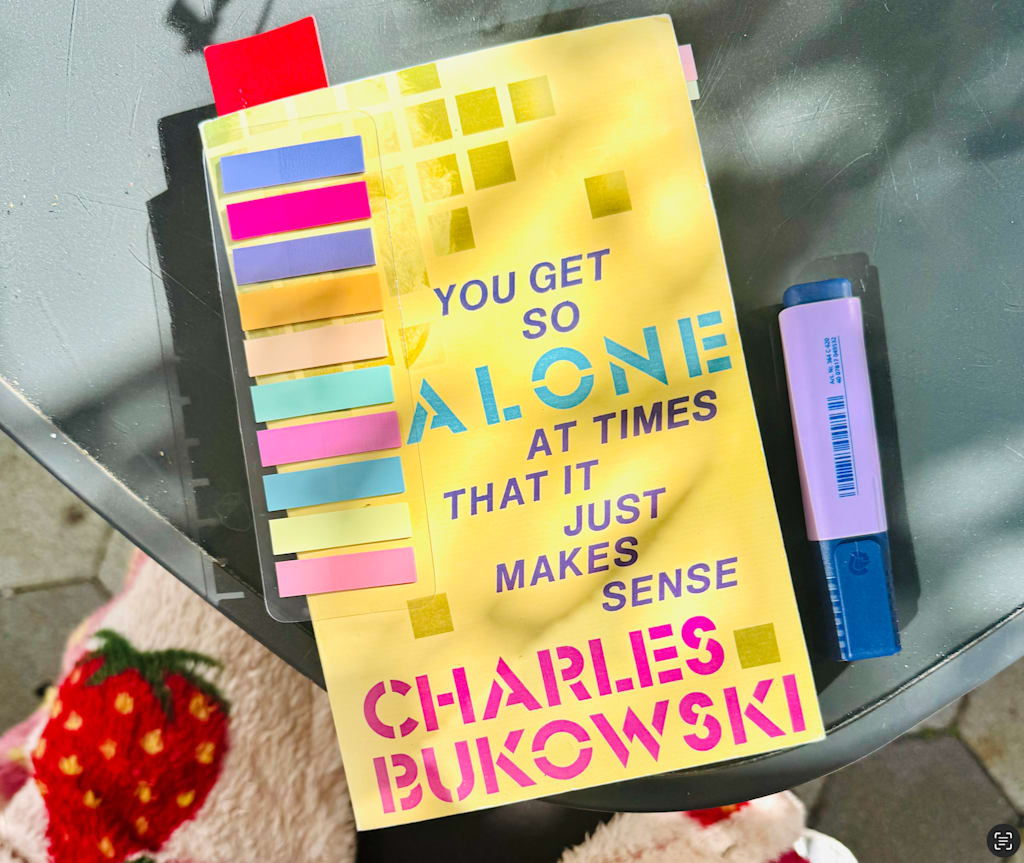
I don't know what made me buy Bukowski's books, in the past I haven't enjoyed him all that much. Two years' ago I gave Ham on Rye a 2/5 for simply just not being interesting in the slightest.
This came as a surprise since during COVID, I was reading Post Office and thought it was fantastic - which made some of the works I read by him afterwards, quite disappointing. You can read about Post Office in Part 5 of my '20 Best Books of 2020' series. So you can imagine, I approached the anthology You Get So Alone At Times That It Just Makes Sense with a bit of trepidation - basically hoping that I would like it. It's a bit of a controversial opinion that your mood can impact how you feel about a book, but the opinions in my review of Ham on Rye was probably me in a bad mood. I would like to give the book another try in the future. Even rereading my comments about his poetry in the introduction to my previous review is, as the Gen-Zs would say "cringe".
The older I get, the more I get it...
Now for the poems...
The first poem I want to talk briefly about is beasts bounding through time which covers the idea that so many of the great writers were also damaged in some way beyond repair and that writers are not meant to be the squeaky clean middle-class types we have today. I think it is also important to state that though I don't fully agree with the temperament of this poem, there is something about it that you cannot deny is actually true. The next poem that I thought stood out was my non-ambitious ambition which covers that very tenuous relationship Bukowski had with his father. This was perhaps one of the more normal poems of his but also gives us bits and pieces to jigsaw together about his devolving opinion of his father's ideas and viewpoints. This is taken primarily from the point of view of success and what it means to be successful. I have to say: I agree. This is yet another poem where you can definitely see the anger bubbling underneath and you may not agree with the sentiment if you don't know anything about Bukowski's father, but if you do then that makes all the difference.
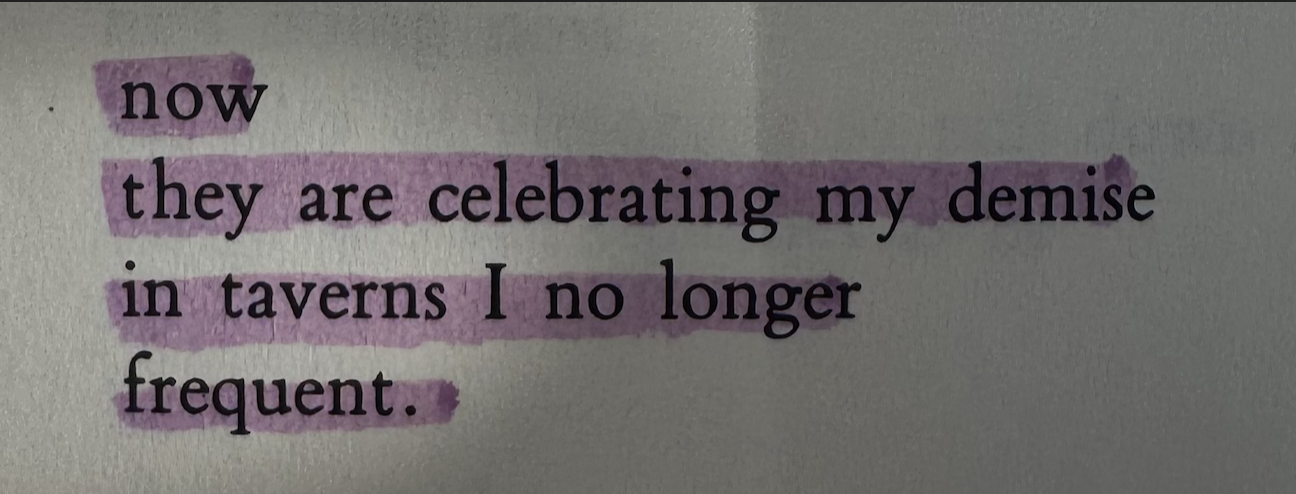
The poem sunny side down was not what the title suggests but instead, an exploration of an everyday sense of nihilism. Sitting and drinking coffee doesn't become what millennials entrenched in absurdist doomspending call 'treat culture' but instead, it means absolutely nothing at all and the poet won't pretend like it does. In comparison to things we have already resigned and forgotten such as the "bloodbaths on the Eastern Front", coffee means nothing. The comparative is definitely difficult to wrestle with but everything in between is also meaningless - reading the paper, getting the waitress's attention for more coffee and so on. I am not sure about this sentiment myself but it was definitely an intriguing read. If you read this poem, I would love to know what you think about it. Especially the capitalisation of 'NOTHING'.
The poem well, that's just the way it is... is oddly reassuring for Bukowski. The nihilistic drain seemingly disappears under the weight of yet another comparative - whether it would be fine or better to be anyone else. The short nature of the poem almost suggests the length of the thought - which could be interpreted as the single nice thought he has about it being "nice to be Bukowski" lasts no longer than a few seconds. Again, the mentions of time to do with the darker, worse thoughts being measured in "years" gives us something to compare - the brand of Bukowski definitely relies on not looking this much into the poem but I'm doing it anyway. There's something there, I know it.
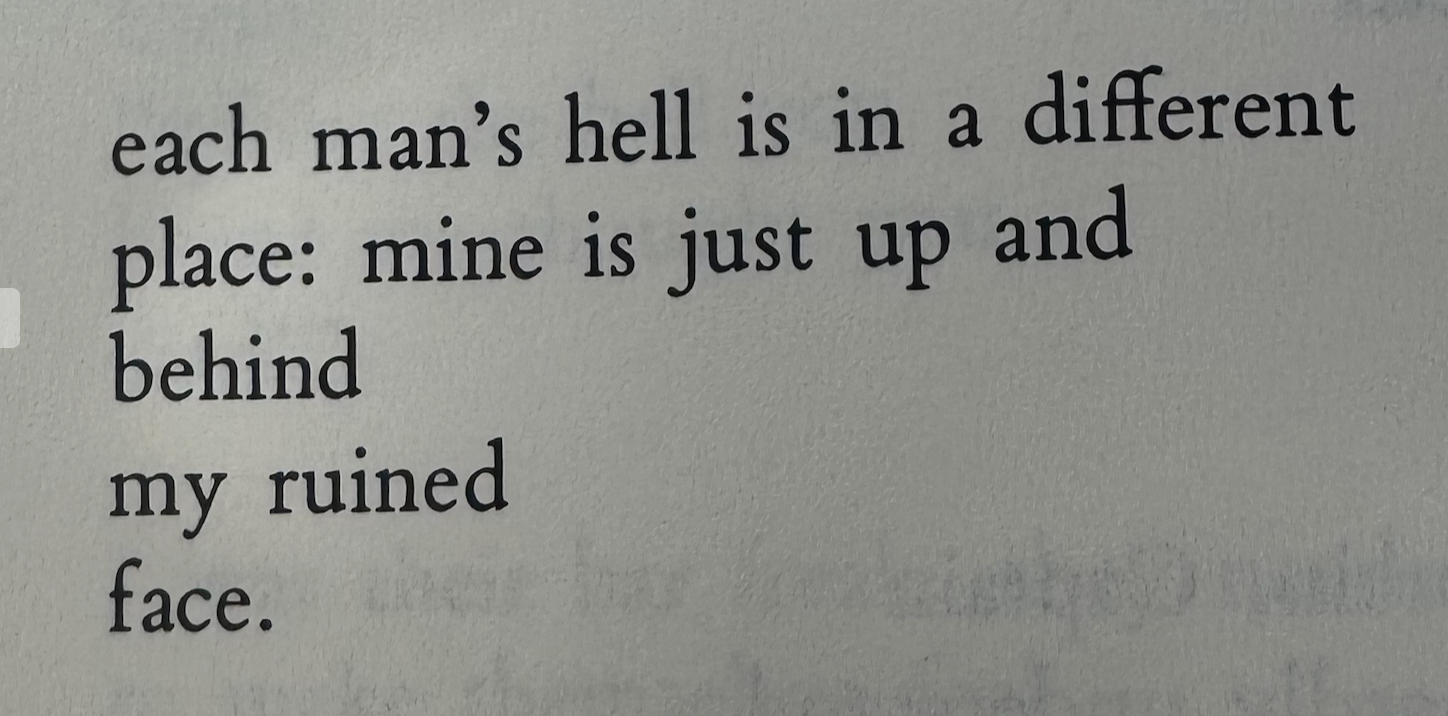
There's a dark poem called death sat on my knee and cracked with laughter and it seems to be about rejection and eventually starving from the lack of food. The image most prevalent in the poem is a loaf of bread the poet buys which goes mouldy almost immediately upon being opened. He seems to know that he cannot afford anything, his rent is completely gone and he can almost feel the landlady approaching him. The green mould has grown to encase the bread. It's an interesting image that I feel is important to understanding the poem, but feels almost too obvious as an extended metaphor.
The poem about the PEN conference feels like something Hemingway would say. It is only a couple of lines long and covers what happens if you were to remove the writer from the equipment they write with and thus, they are left with the sickness that caused them to write in the first place. It again, seems obvious but again, we are missing the bigger picture here. The bigger picture is that someone who has not got that sickness in their soul, according to Bukowski, cannot possibly have anything worthy to say in writing. I'm not sure I agree, but there is definitely something to think about when it comes to the middle-class overhaul of 'trendy' literature as opposed to a nobody from nowhere writing the next landmark novel.
As you can see, I went through this with a toothcomb which wanted to enjoy and meditate on the poetry within. Though the poems are often short and seem meaningless, I wanted to sit with them and thus took two days on this book. I am planning to read more Bukowski and appreciate that reader, you have made it to the end of this rather lengthy rambling of attempts to understand and rebrand this author in my mind.
About the Creator
Annie Kapur
"Et in Arcadia Ego"
***
I am:
🙋🏽♀️ Annie
📚 Avid Reader
📝 Reviewer and Commentator
🎓 Post-Grad Millennial (M.A)
***
I have:
📖 300K+ reads on Vocal
🦋/X @AnnieWithBooks
📸 ThePrancingPonyBakery
🔗 PrancingPonyBakery.com
***
🏡 UK
Enjoyed the story? Support the Creator.
Subscribe for free to receive all their stories in your feed. You could also become a paid subscriber, letting them know you appreciate their work.
Comments
There are no comments for this story
Be the first to respond and start the conversation.