
The International Aviation and Space Exploration's Day
A day we often unfairly forget

What is the most important science?
A silly question. Every science is an inseparable part of knowledge, and in different situations each one can turn out to be “the most important.”
Often, for a given discovery or invention, breakthroughs in seemingly distant fields turn out to be crucial. And the complex devices we use today without even noticing or thinking about them combine countless discoveries from many different areas, often made long ago (even hundreds of years earlier).
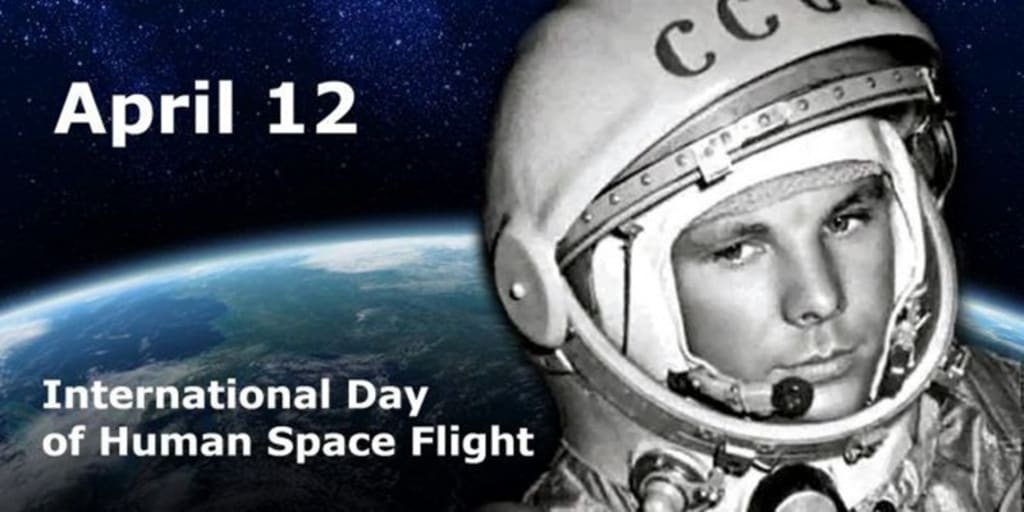
April 12 is Cosmonautics Day.
“What do we even need that for?” is a question often asked. “First we should fix our problems here on Earth, fix…” - fill in whatever you like after the dots.
Well, Space Exploration is one of the most powerful tools of human knowledge. It is also one of the most essential means for the survival of humanity. Seriously.
First, as we know, space technology is complex. Extremely complex. To develop reliable systems that work flawlessly under harsh space conditions, an enormous number of fields of knowledge are brought together, and cutting-edge solutions are created-solutions that later find applications on Earth.
During the Apollo missions, technology made a giant leap in a short time-perhaps even greater than the step Armstrong spoke of. Integrated circuits that cost more than $1,000 during Apollo 11 were already costing just $2-$3 by Apollo 17. There was a huge leap in miniaturization, which soon led to the development of so-called microcomputers-the predecessors of the machines we use today to surf the Internet and write pamphlets against science (and cosmonautics in particular). Well, not everyone. Some people do.
I don’t know how many people are aware that a very important field of medicine - mammography - is based on systems used for interpreting lunar images and mapping during the Apollo missions.
Some applications of “Lunar” inventions are quite curious, such as food packaging made from materials originally used for the command module’s parachutes.
In addition to the development of new materials, research conducted in space should also be noted. In low or zero gravity, many materials exhibit different properties. Many medicines can be produced more easily in zero gravity.
For low-gravity research, the European Space Agency even offers a Laboratory in an aircraft - an opportunity used by some of my (former) colleagues.
But for long-term research, space itself is indispensable.
Astronomy is one of the first fields to attract humanity’s thirst for knowledge. Today, it is becoming increasingly relevant not only for pure science but also because of the many artificial satellites populating Earth’s orbit. Its role is also crucial in detecting potentially dangerous “rocks” that could threaten life on Earth. Moreover, the time nature has given us to prepare for such “visits” may be running out, judging by the cyclical pattern of past catastrophes. Astronomy, together with well-developed space technology, could provide a solution to such threats.
Besides asteroid impacts, countless other dangers lurk in space-such as supernova explosions. Perhaps soon we will be able to build a shield around Earth, if we invest sufficiently in research in this direction-a shield that would also be useful when Earth’s magnetic field drops to zero, as happened on Mars, allowing the solar wind to reach the planet’s surface without hindrance.
If we do not think ahead, our descendants may not be very grateful for our lack of foresight.
Much more could be said about the benefits of Space Exploration.
But let us not forget-April 12 is also the day of something else that revolutionized human history: Rock&Roll!
Let’s celebrate this day, which is so important for humanity, with this video that brings the two themes together:
Commander Hadfield's version of Space Oddity
First published on my personal blog in Bulgarian
About the Creator
Bozhan Bozhkov
Hi, dear readers. I'm Bulgarian. I used to be a physicist, that's my education, but now I work as a network administrator. For many years, I have been writing a blog, and have also written several fairy tales and short stories, and a novel.
Enjoyed the story? Support the Creator.
Subscribe for free to receive all their stories in your feed. You could also become a paid subscriber, letting them know you appreciate their work.
Comments
There are no comments for this story
Be the first to respond and start the conversation.