tech
Curious tech and technology from the realm of science and science fiction.
AI Generated Bug Reports Overwhelm Bug Bounty Programs Forcing Suspensions and Triage Changes
Read Time 6 minutes Tags Bug Bounty AI Security Cybersecurity AI Slop HackerOne Bugcrowd Vulnerability Disclosure AI Agents Security Economics Companies that pay hackers to find flaws in their software are being inundated with low quality reports generated by AI forcing some to suspend the programmes altogether Businesses that run bug bounty schemes have long relied on independent security researchers to spot vulnerabilities But the rise of AI tools is now overwhelming them with spurious submissions Bugcrowd whose customers include OpenAI T Mobile and Motorola said the number of reports it received more than quadrupled over a three week period in March with most proving to be false Curl a widely used tool to transfer data across the internet suspended its paid bug bounty programme in January citing an explosion in AI slop reports and lower quality submissions Cyber security experts say advances in generative AI are reshaping the economics of bug bounty programmes While the tools allow experienced researchers to find flaws more quickly they are also lowering the barrier to entry triggering a flood of automated or erroneous submissions that companies must sift through Software group Nextcloud suspended its bug bounty programme in April because of the massive increase of low quality reports It said it hoped to resume the programme once it had found a way to filter submissions effectively The surge in AI generated reports comes as Anthropic last month launched Mythos its new cyber AI model which it says can find software flaws faster than humans Companies running bounty bug programmes have started to introduce more stringent background checks to combat the problem as well as building AI agents to triage submissions HackerOne whose bug reporting platform serves Goldman Sachs Google and the US Department of Defense said it had introduced new agentic validation capabilities this year to help organisations manage high volumes of findings such as those generated by models like Mythos The company said submissions had jumped 76 percent in the year to March But it said the share of reports flagging legitimate vulnerabilities had remained steady over the past year at 25 percent HackerOne chief executive Kara Sprague said it had in recent weeks seen a rise in higher quality reports that had used AI She added that the rise in AI generated submissions was not a strong reason to say we don t want them altogether given that hackers were using the technology to spot more flaws Bugcrowd chief Dave Gerry said developments such as Anthropic s Mythos would assist human bug bounty hunters not replace them AI is going to help with a lot of things but we re never going to replace that human creativity he said How AI changes the bug bounty economics One Lower barrier to entry Open source scanners and agents can now chain together crawling fuzzing and static analysis with minimal setup Amateurs can submit reports that look plausible without understanding the underlying vulnerability This increases volume but reduces signal to noise ratio Two Automated end to end systems A third cohort described by Sophos CISO Ross McKerchar consists of experienced AI builders who run automated scanning and submission systems These systems generate thousands of reports with little human review creating absolute carnage for triage teams Three Human plus AI workflows Experienced researchers use agents to accelerate recon exploit development and report writing This raises the ceiling for legitimate findings but also contributes to the flood if results are not filtered before submission Four Model specific impact Anthropic s Mythos and OpenAI s GPT 5 5 Cyber can find flaws across operating systems and browsers When made available to defenders they improve patching speed When accessed by attackers or indiscriminate scanners they increase the volume of low quality reports Operational impact on programs One Program suspensions Curl suspended its paid bounty in January Nextcloud suspended in April Both cited time spent debunking slop and mental toll on staff as reasons The cost of triage now exceeds the value of payouts for some projects Two Triage overload Triage teams must distinguish real vulnerabilities from hallucinations misconfigurations and known issues that are out of scope The process is slow because each report requires reproduction and risk assessment Three Quality remains stable HackerOne reports that despite a 76 percent rise in submissions the share of reports flagging legitimate vulnerabilities stayed at 25 percent over the past year This suggests AI is expanding the pool but not yet changing the base rate of real bugs Four Platform response HackerOne has deployed agentic validation to pre screen findings and route likely false positives to automated checks Bugcrowd is building similar filtering before human review What changes to restore signal One Reputation and gating Require historical accuracy or identity verification before allowing high volume submissions Projects can rate limit accounts with low signal to noise ratios Two Mandatory evidence standards Require proof of exploitability with minimal false positive rate Reports without a working reproduction or clear impact should be auto rejected Three AI assisted triage Use agents to reproduce steps check against known issues and score severity before a human looks at the report This reduces burden but requires careful validation to avoid missing novel bugs Four Scope tightening Projects can narrow scope to reduce noise from generic scans Target specific components or endpoints where AI assisted research adds value Five Differential payouts Reward high quality reports with clear impact and novel technique more heavily than low effort findings This aligns incentives with signal quality Broader implications One Security posture improvement If triage improves AI assisted researchers can find more real bugs faster The net effect can be stronger software despite the noise Two Cost shift Small projects cannot absorb the triage cost They may move to private bounties or community auditing rather than public programs Three Adversarial adaptation Attackers also use agents to find zero days The arms race shifts from manual discovery to agent versus agent defense and validation Four Policy considerations If federal vetting of models is implemented as discussed in the White House AI security EO the pipeline for high capability cyber agents may face access controls This could reduce indiscriminate scanning but also slow defensive use For companies running bounties the immediate priority is to automate triage without discarding edge cases For researchers the priority is to use AI to increase depth not just volume For platforms the priority is to preserve trust by keeping the signal rate stable even as volume grows Do you think bug bounty programs should require human verification of exploitability before accepting AI assisted reports or would that exclude valuable automated findings Share your view in the comments
By Behind the Tech6 months ago in Futurism
Asimov v1 Brings Open Source Humanoid Robotics to Hobbyists at 15000 With 25 Degrees of Freedom
Read Time 6 minutes Tags Open Source Robotics Humanoid Robots Asimov DIY Robotics Raspberry Pi 5 Robotics Hardware ROS Robot Actuators Given that some of the more famous demos were by Honda and Tesla you might be forgiven for thinking you need pockets as deep as a car company to get into humanoid robotics and maybe that was true once but now Asimov v1 is here It doesn t have a positronic brain and you ll have to code in the Three Laws for yourself but at least you have the freedom to because Asimov is open source It s not exactly cheap the kit version comes with a target price of 15000 USD but they do provide the Bill of Materials on the GitHub repository so you can try and hunt down some deals Still compared to the millions poured into these sorts of robots in the early days we have to consider it accessible With 25 total degrees of freedom you ll have to source a lot of actuators but at least the onboard compute will be easy to get Rather than begging CERN for spare positrons you ll only need a Raspberry 5 and a Radaxa CM5 No word on if this robot can write a symphony though we ve seen software that can and its 5 kg personal best for squats and 18 kg single arm lat raises aren t going to impress the bros at the gym But hey at least now you have someone to shake your chair for sim gaming If you re wondering what the deal with these androids is well so were we Hardware and design choices One Degrees of freedom and actuation Asimov v1 ships with 25 DOF distributed across arms torso and legs This is enough for basic manipulation walking and object handling but not for dynamic parkour or high speed manipulation The BOM lists off the shelf servo and brushless actuators which keeps parts replaceable but increases assembly time Two Compute stack The reference design uses a Raspberry Pi 5 for high level control and a Radaxa CM5 for lower level real time tasks This split is common in robotics where Linux runs planning and vision while a real time controller handles joint control and safety loops Three Mechanical structure The frame is designed for CNC machinable parts and 3D printed covers keeping manufacturing accessible to small shops and advanced makers Wiring harnesses and power distribution are exposed for modification which aids debugging but requires careful cable management Four Power and payload The robot can squat 5 kg and perform a single arm lat raise of 18 kg These numbers are modest compared to industrial arms but reasonable for a 25 DOF platform at this price point The focus is on research and education not load bearing tasks Cost and comparison One Kit pricing at 15000 USD puts Asimov in the prosumer range It is cheaper than research platforms from SCHAFT era labs but more expensive than Unitree G1 which ships ready to use for around 13000 USD Two BOM transparency The GitHub repository includes the full bill of materials so users can source parts themselves This can lower cost if you have access to bulk pricing or existing inventory but it also shifts assembly and integration burden to the buyer Three Tradeoff versus commercial units Commercial robots like the G1 include integrated software stacks perception and basic behaviors Out of the box they walk and perform demos Asimov requires the user to develop or integrate locomotion manipulation and safety software Community reaction and concerns One Software burden Gravis commented Don t get me wrong robots are cool and all but why would anyone to buy a human sized humanoid robot Developing the software for such a beast is literally a full time job This is accurate for a from scratch stack but open source projects often split work across contributors Two Community development counterpoint Actually replied I think a big part of the appeal of an open source humanoid robot is that the work of making software for such a beast becomes divided by an entire community of developers If ROS2 packages locomotion controllers and simulation environments are shared the burden per person drops Three Security concerns mmiscool warned Just what we need A bunch of easy to hack foreign robots that are humanoid shaped and left powered on all day waiting for there owners instruction Humanoid robots with network connectivity and cameras are attractive targets If the system is always on and poorly secured it becomes a physical and data risk Four Exploit history rasz_pl linked to a Unitree exploit and noted Dude found a local privilege escalation giving you root on the thing and you complain BOM aka just parts alone is more than whole put together unit You could buy G1 replace processing unit or root it using that LOCAL exploit and save ton of money and time The point is that commercial units are not immune to security issues and rooting them may be easier than building from parts Use cases and limitations One Research and education Asimov fits universities and labs that want a modifiable platform for locomotion manipulation and human robot interaction studies The open design allows changes to kinematics sensors and control algorithms Two Hobbyist development For advanced makers it is a capstone project that combines mechanical assembly electronics and software Integration time is measured in months not days Three Not a consumer product This is not a plug and play home robot Expect to debug motor drivers tune PID loops and write safety monitors The value is in learning and customizing not in having a butler What would make it more viable One Reference software stack Shipping a baseline walking controller balance system and teleoperation interface lowers the barrier to entry Even if advanced behaviors are left to the community a working default is critical Two Safety framework Open source does not mean no safety A documented safety system with E stops torque limits and collision detection is necessary before letting the robot move near people Three Security hardening Default to network isolation disable unused services require key based SSH and document secure setup Procedures for air gapping the robot should be provided Four Modularity for upgrades If arms legs and compute can be swapped independently users can iterate faster and share improvements without redesigning the whole platform Why this matters One Democratization of hardware When a humanoid platform is open source more people can experiment with bipedal control whole body manipulation and sensor fusion This accelerates learning even if most units never leave the lab Two Cost benchmark Even if few people buy the kit the BOM sets a reference for what parts cost at low volume This pressures commercial vendors and helps labs budget projects Three Data and policy implications Open humanoids increase the number of physical agents that can move in human spaces That raises questions about safety standards privacy and regulation before the technology becomes mainstream For teams considering Asimov the decision comes down to whether you want control and transparency at the cost of time and integration effort If you need a working demo quickly a commercial unit is faster If you need to modify everything and contribute to the stack Asimov is closer to what you want Do you think open source humanoid platforms will accelerate robotics research or will security and complexity keep them in niche labs Share your view in the comments
By Behind the Tech6 months ago in Futurism
Steven Soderbergh Uses Meta AI for 10 Percent of Lennon Documentary Sparking Debate on AI in Film
Read Time 6 minutes Tags AI in Filmmaking Generative AI Steven Soderbergh John Lennon Documentary Ethics Transparency AI Ethics Meta AI CANNES France The day John Lennon was shot on Dec 8 1980 he and Yoko Ono gave an interview to a San Francisco radio crew from their home in New York s Dakota Apartments They were promoting their new album Double Fantasy but the two hour conversation was wide ranging Though the interviewers had been warned no Beatles questions Lennon and Ono were thrillingly open That day Annie Leibovitz also shot the famous portrait of a clothes less Lennon wrapped around Ono The interview is similarly naked The two particularly Lennon riff on love their relationship creativity life after the Beatles raising their toddler son writing songs in bed and much more At the age of 40 Lennon sounds like someone who has found real clarity I feel like nothing happened before today said Lennon In John Lennon The Last Interview Steven Soderbergh turns those surviving tapes into a documentary that does as much to demystify Lennon and Ono as Get Back did to the Beatles The film debuted Saturday at the Cannes Film Festival I was just so compelled by their generosity of spirit throughout the conversation Soderbergh explained in an interview Saturday in Cannes It s like the world took place in one day in this apartment Making it posed an acute problem Soderbergh was resolved to let the audio play He could find ways to visualize much of the film but that still left a large gap where the conversation grows more philosophical I worked on everything that could be solved except that for as long as I could Soderbergh says Then there was the inevitable moment of OK but really what are we going to do We just started playing and ran out of time and money That s where the Meta piece came in Soderbergh accepted an offer to use Meta s artificial intelligence software to conjure surreal imagery for those sections which make up about 10 percent of the film When Soderbergh let the news out earlier this year it prompted an uproar One of America s leading filmmakers was using AI In a film about a Beatle no less The AI parts overwhelmingly slammed by critics in Cannes are fairly banal and don t differ greatly from special effects there are no deepfakes of Lennon But they put Soderberg at the forefront of an industrywide debate about the uses of AI in moviemaking It s a conversation the director who has made movies on iPhones is eager to have AP At a time when AI in film is under much debate you ve been very forthright about your use of it here Why SODERBERGH Transparency is so important in the world outside of the creative context we re not aware of the extent that this is being used and used to manipulate us We don t know because they re not telling We find out after by accident by some whistle blower I m like my own whistle blower This is what he s doing AP Did you expect such a strong response SODERBERGH I knew what was coming I take it very seriously and I understand why people have an emotional response to this subject As I ve said before I feel like I owe people the best version of whatever art I m trying to make and total transparency about how I m doing it But yeah you don t say yes to Meta offering you these tools and offering to finish the film and not know you re going to come in for some heat That was part of the deal AP Some fear generative AI will tear apart the film industry You don t see it as a bogeyman though SODERBERGH I think most jobs that matter when you re making a movie cannot be performed by this tech and never will be performed by this tech As it becomes possible for anybody to create something that meets a certain standard of technical perfection then imperfection becomes more valuable and more interesting We haven t seen yet someone with a certain amount of creative credibility go full metal AI on something and see how people react I think it s necessary How do you know where the line is until somebody crosses it I don t think what I m doing crosses it Some people may disagree I don t know where my line is yet I m waiting to see AP What kind of prompts did you give the program to create the animations SODERBERGH Circles of light that come out of nowhere things like that A black rose that turns into a Busby Berkeley thing and then a red rose I wasn t very articulate to the people I was working with It was hard to describe the things I wanted to see The good part about this technology was at least ability to have something in front of me quickly that I could respond to AP Did your experience give you any kind of framework that you think this technology should be limited to SODERBERGH I ve determined my rule is It has to be necessary Is it the only way to accomplish what I want to see Is it truly the best way to do it That s the real question You re going to see a lot of people doing stuff with AI that fail those two challenges AP There s the ethical debate but also an aesthetic one This is otherwise a naked human dialogue SODERBERGH I needed a way to follow them in flight visually or I m not doing my job It s hard to judge how long it will take us to find homeostasis with this technology I think we will Just looking at this technology in the movie making business each department has or will have a very different relationship with it I ll have a different relationship than a writer than an actor than the costume designer the production designer the sound effects people Each creative person is going to have their own prism and be affected by it in different ways Our inherent desire to have a simple template for how this is to be approached is part of the problem I don t think that s possible I don t think there s a one size fits all AP Regardless the conversation in the film is deeply inspiring SODERBERGH Especially his burning desire to destroy the male rock star myth at a time when that was not the mood anyone else was in That s inspiring What I hope young people who see it get out of it is This guy told the truth about everything from the jump right up through the last day of his life He just was built that way And he was constructive He was very opinionated but also very thoughtful and all in the aid of Can we do this better Can we do a better version of human beings on this planet Why this matters for the industry One Transparency as a stance Soderbergh is disclosing AI use upfront rather than hiding it This contrasts with how many productions use AI tools quietly for de aging cleanup and background generation His argument is that audiences deserve to know when AI shapes what they see Two Scope and role of AI In this case AI handles abstract visual accompaniment for audio where no footage exists It does not replace actors replace performances or generate dialogue The distinction matters for labor and consent debates Three Aesthetic function versus cost cutting Soderbergh frames the use as necessary for visual storytelling not as a way to reduce crew or budget He argues that if AI cannot meet a necessity test it should not be used Four Industry signal High profile directors experimenting publicly set norms Younger filmmakers watch how Cannes and critics react to determine what is acceptable in festivals and distribution Limits and risks One Creative credibility gap Critics at Cannes called the AI segments banal suggesting that the technology did not add artistic value Using AI without clear intent risks breaking audience trust Two Precedent for deeper use Soderbergh says he does not know where his line is yet This openness signals that future projects could push further into generative video voice synthesis or performance augmentation Three Labor concerns Even limited use raises questions for visual effects animators and designers about where work will be displaced The argument that AI cannot do most jobs that matter will be tested as models improve Four Meta partnership optics Accepting tools and finishing from Meta creates perception of corporate influence in creative choices That amplifies backlash regardless of how minimal the AI role is What filmmakers are likely to take away One Define necessity before experimenting Write down what problem AI solves and whether alternatives exist If the answer is no alternatives then document that decision Two Keep AI in service of human performance Avoid deepfakes of living people and avoid generating new dialogue for historical figures without explicit consent and context Three Separate process from product Let audiences see the method through credits making of features and direct statements Soderbergh s whistle blower framing is an example Four Expect category specific norms Cinematographers editors sound designers and writers will each develop different relationships with AI A single industry rule will not hold The broader debate One AI as tool versus author The film community is split between viewing AI as another tool like color grading and viewing it as a shift that undermines authorship Soderbergh lands closer to tool but acknowledges the line is unclear Two Value of imperfection As technical perfection becomes trivial human flaws and choices may become the differentiator This could shift taste toward work that shows human decision making even if it is messier Three Consent and estate issues Using AI for historical figures is less legally fraught than for living actors but still raises questions about legacy and representation The Lennon estate s cooperation likely reduced risk here For audiences the question is whether disclosure changes reception If viewers know 10 percent of visuals are AI generated does it alter how they engage with the dialogue If the answer is yes then transparency is not just ethical it is essential for trust Do you think filmmakers should disclose all AI use in credits or does that overstate the role of minor visual effects Share your view in the comments
By Behind the Tech6 months ago in Futurism
White House AI Security Lead Faces Doubts Over Expertise as Advanced Models Raise Cyber Risk
Read Time 6 minutes Tags AI Security National Cyber Director AI Policy Cybersecurity AI Governance Anthropic Claude Mythos AI Risk Federal Response Officials within the Trump administration are worried that National Cyber Director Sean Cairncross is not equipped to lead the White House s response to rapidly advancing artificial intelligence models with potentially dangerous hacking capabilities Four current US officials and five industry representatives who spoke to POLITICO said they fear Cairncross isn t moving with sufficient urgency and lacks the expertise to lead on such a technically complex and emergent national security issue And more broadly JP Morgan Chase CEO Jamie Dimon has relayed to Treasury Secretary Scott Bessent his concerns about the speed of the government s response to major potential risks to critical infrastructure posed by new forms of AI and the need for coordination with the private sector according to two of the current US officials and two industry representatives with knowledge of the exchange These people like others in this report were granted anonymity to discuss sensitive policy deliberations and share details of private conversations Cairncross has convened a flurry of calls and in person meetings with corporate executives security experts and administration officials over the past month about AI security concerns and potential executive action to manage the rollout of new AI models which have reached a level of coding proficiency surpassing all but the most skilled human minds Cairncross previously met with Bessent White House chief of staff Susie Wiles and Anthropic CEO Dario Amodei at the White House to discuss advancing innovation and ensuring safety in scaling up these AI models responsibly These conversations were prompted by an announcement from Anthropic last month that its newest AI model Claude Mythos could find security flaws in every major operating system and web browser and that similar technology could become widely available in the next six to 18 months Advanced tools like Mythos could help cyber defenders patch security gaps found in their systems more quickly than ever before But the technology could also greatly increase the speed and scale at which adversaries could launch cyberattacks if it fell into the wrong hands With this model upending literally everything we re doing you don t want someone who doesn t know what they re doing at the helm of that said the first current US official Cairncross and the ONCD they said are a little bit over their head In a statement White House Spokesperson Liz Huston defended Cairncross s performance Sean Cairncross is doing excellent work to protect the American people and our nation s critical infrastructure from cyber threats working closely with senior administration officials and American companies to advance shared objectives and priorities including addressing cybersecurity challenges posed by the rapid scaling of artificial intelligence while continuing President Trump s commitment to ensuring American technological dominance she wrote Spokespeople for the ONCD did not respond to a request for comment The White House is considering a raft of executive actions around AI security which may include requiring tech companies to submit their advanced artificial intelligence models for federal vetting before releasing them to the public So far Anthropic has limited access to Mythos granting it only to a small group of trusted researchers and companies OpenAI has similarly confined testing of its advanced AI model GPT 5 5 Cyber to a small group of cyber defenders Government agencies both in the US and abroad congressional committees global banks and regulators are now clamoring for access to these models so they can secure key networks before adversaries such as China access equivalent hacking capabilities and use them to amplify their attacks In a statement JP Morgan Chase spokesperson Trish Wexler said that the bank appreciates the leadership of the Administration and the White House on this complex evolving issue and their continued engagement with critical infrastructure A spokesperson for Treasury declined to comment Accessing Mythos has been complicated by an ongoing dispute between the Pentagon and Anthropic following the AI company s attempt to limit the use of its software for mass surveillance or autonomous weapons The Defense Department declared Anthropic a risk to the country s national security supply chain in response an unprecedented legal maneuver that is now being challenged in court Cairncross is leading coordination among the White House government agencies industry groups and tech companies to inform these policies despite having little past experience with cybersecurity He was given the assignment because he is trusted by Trump and Wiles and is seen as a skilled political operator according to the second US officials and two former national security officials with knowledge of the dynamic Before being confirmed by the Senate as the national cyber director in August 2025 Cairncross served as the chief operating officer of the Republican National Committee in 2016 and 2024 In between he worked as a senior adviser to Trump s first chief of staff Reince Priebus and headed the Millennium Challenge Corp a federal foreign assistance agency While those who spoke to POLITICO acknowledge that what Cairncross has set out to do is no small task they worry the White House is falling behind at a moment when federal agencies and private companies are anxious for clear federal guidance as these AI tools continue to improve Industry has not received this thing well government counterparts haven t I think he s wasted an awful lot of time on this said the second current US official Cairncross cuts a markedly different profile from the previous Senate confirmed officials who have held the role of national cyber director a position Congress established in early 2021 to centralize the federal government s digital policymaking apparatus His predecessors Chris Inglis and Harry Coker Jr spent decades working on digital security in the US intelligence community before assuming the post under President Joe Biden Both supporters and critics say Cairncross is smart and personable and has established himself as the go to voice on cyber policy in the White House a key asset that sets him apart from his more experienced predecessors The Trump administration came to office touting a hands off approach to AI to avoid stifling the development of these tools But the rapid development of Mythos so alarmed the Trump administration that they opted for a quick course correction with Cairncross at the helm Cairncross had spent much of his first year in the administration getting up to speed on cyber priorities and preparing the White House s National Cyber Strategy a four page policy document that called for more aggressive responses to foreign cyberattacks But frustration with Cairncross has simmered over the last month as he spearheaded the administration s outreach to industry and led its efforts to draft an executive order that could give the federal government more oversight of powerful new AI models Ahead of some in person meetings at the White House Cairncross s office sent out a list of questions that some private sector recipients felt lacked clarity and understanding of AI and federal cyber policy One question simply asked What is the most effective role for the government Cairncross gave a short introduction at some of those meetings and then left turning the proceedings over to his chief of staff Lara Smith said two industry representatives with knowledge of the meeting Smith worked with Cairncross at the White House and Millennium Challenge Corporation and like him does not have a background in tech or cyber policy He s done the same in some interagency calls with other senior Trump officials about next steps on the AI security EO frustrating participants who feel Cairncross s presence could speed up the discussions two of the current US officials said The three US officials said Cairncross s office also tried to fast track the AI executive order before several agencies were comfortable with its language Elements of the draft raised privacy or legal issues that other agencies found impractical the officials added According to these three officials the first draft order met so much resistance in the interagency that it was effectively torn up Additional drafts have since been in circulation said two of the current US officials They are just flinging things at the wall until someone gets someone else senior enough to freak out with the West Wing and have it changed said the second US official Members of Congress are also growing impatient with progress on the AI executive order On Thursday a bipartisan group of more than 30 House members urged Cairncross to take action to address the likely influx of AI powered cyber threats targeting US networks Several of those who spoke with POLITICO acknowledged Cairncross is in a tough spot because of cuts to the cyber workforce elsewhere in the administration Typically DHS and the Cybersecurity and Infrastructure Security Agency would play a central role in AI cybersecurity particularly in shoring up defenses across US critical infrastructure But the agency has not had a Senate confirmed leader since Trump assumed office and its workforce has been cut down by the Trump administration over the past year and a half Trump also made significant cuts to his National Security Council staff last year Only a handful of those remaining focus on cyber policy and they do not appear to have been active in formulating the EO according to one of the US officials and the two former national security officials Two additional former national security officials confirmed the dynamic Cairncross s own management decisions have exacerbated the problem several who spoke to POLITICO argued Whereas Biden staffed his ONCD with nearly 100 people Cairncross has surrounded himself with a team of roughly three dozen people according to one of the US officials and two of the former national security officials Of those employees only a small cohort works on policy they added A White House official granted anonymity to discuss internal staffing decisions said the administration is making the federal government more efficient to better serve the American taxpayer Cairncross just doesn t have a staff surrounding him who can help him execute these things professionally said the second US official Do you think the White House should appoint a technical expert to lead AI security policy or is political trust more important for coordinating a response Share your view in the comments
By Behind the Tech6 months ago in Futurism
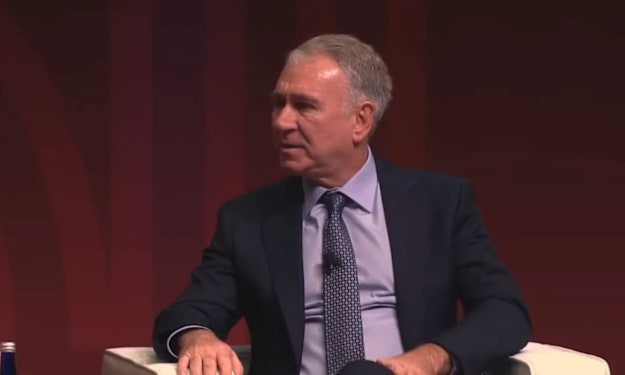
Citadel CEO Ken Griffin Says Agentic AI Now Automates Work That Took Finance PhDs Weeks
Read Time 6 minutes Tags AI in Finance Agentic AI Automation High Skilled Labor Hedge Funds Citadel Ken Griffin Future of Work AI Productivity NEW YORK Citadel founder and CEO Ken Griffin described a dramatic recent leap in artificial intelligence capabilities saying agentic AI systems are now performing work once requiring teams of finance professionals with master s and doctoral degrees in a fraction of the time In remarks at the Stanford Leadership Forum Griffin said there has been a step change in the productivity of AI tools over the last few months making them profoundly more powerful than they were just nine months earlier And for us at Citadel that has allowed us to unleash a much broader array of use cases for AI Griffin said It has been really interesting to watch to be blunt work that we would usually do with people with masters and PhDs in finance over the course of weeks or months being done by AI agents over the course of hours or days These are not mid tier white collar jobs he added These are like extraordinarily high skilled jobs being I m going to pick a word automated by agentic AI Griffin said the rapid progress left him unsettled I gotta tell you I went home one Friday actually fairly depressed by this because you could just see how this was going to have such a dramatic impact on society he said When you witness it in your own four walls when you see work that used to be man years of work being done in days or weeks it s like wow The comments mark a notable shift in tone for Griffin who earlier this year cautioned that much of the broader AI investment boom is driven by hype needed to justify massive spending on data centers and infrastructure Citadel which manages about 66 billion is among the world s largest hedge funds Griffin s observations echo growing reports from finance and technology leaders about accelerating AI adoption in analytical and research roles that traditionally demanded advanced human expertise Industry observers have noted similar transformations with some predicting significant changes to white collar workflows in the coming years Griffin s account highlights tangible productivity gains already visible inside one of the industry s most sophisticated trading operations What changed in the last nine months One Agent architectures moved from single turn Q and A to multi step planning and tool use Agents can now break a research task into sub tasks call APIs pull data run statistical tests and iterate based on intermediate results This mirrors how a junior analyst would work but at higher speed Two Context windows and retrieval improved dramatically Models can hold and reason over entire earnings transcripts regulatory filings and proprietary datasets without losing track This reduces the manual data wrangling that consumed analyst time Three Reliability on structured tasks rose even as hallucination risk remains For quant research valuation models and scenario analysis the outputs are now good enough to be useful with human review Citadel s use case suggests the review burden is lower than before Four Cost per task dropped sharply Inference costs have fallen while model capability rose This changes the economics of applying AI to tasks that were previously uneconomical to automate Which finance tasks are being compressed One Equity and credit research Summarizing filings modeling scenarios and building comparable sets can be done by agents in hours instead of weeks Human analysts still set hypotheses and validate assumptions but the legwork is automated Two Risk and portfolio analysis Running stress tests across portfolios updating exposures and simulating market regimes is faster when agents orchestrate models and data pipelines Three Due diligence and deal analysis Agents can ingest thousands of pages of contracts transcripts and market data to flag risks and extract key terms reducing the time for initial screening Four Regulatory and compliance monitoring Monitoring rule changes mapping them to positions and drafting disclosure language is increasingly automated though legal sign off remains required What this means for high skilled labor One Job composition not just job count The work does not disappear but it shifts from manual data assembly and first draft analysis to hypothesis generation model validation and decision making The skill premium moves to judgment and domain expertise Two Faster iteration cycles Teams can test more strategies in the same time window This raises the pace of competition and raises the bar for what counts as valuable human input Three Talent leverage changes A single analyst with good agents can do the work of a small team This concentrates output among those who know how to direct and verify AI systems Four Training pipeline pressure Traditional paths that relied on years of manual grunt work to build intuition are disrupted Firms need new ways to train junior staff when that grunt work is automated Why Griffin sounded depressed One Scale of disruption When you see man years of work collapse into days the implication for headcount and career paths is immediate Even in high margin hedge funds the headcount model changes Two Uncertainty about distribution If productivity gains accrue primarily to capital owners and a small set of AI operators the social contract around high skilled professional work weakens This echoes broader debates about AI wealth concentration Three Pace exceeds adaptation The capability jump came faster than firms can retrain people or redesign workflows That creates friction and anxiety even inside firms that are adopting the tech Limitations and guardrails One Hallucination and data quality risk Agents can still invent plausible but false details In finance a single wrong number can cause material loss Human verification remains essential Two Model opacity and auditability Regulators and risk teams require explainability for decisions that affect client money Black box outputs are not acceptable without traceable reasoning chains Three Data access and security Using proprietary data with external models requires strict controls Citadel likely runs agents on private infrastructure to manage this risk Four Legal and compliance liability Responsibility for a bad trade or a flawed disclosure still sits with the firm and the licensed individual AI does not change regulatory liability What this signals for the broader market One Acceleration in white collar automation Finance is a leading indicator because data is structured and outcomes are measurable If it is happening at Citadel it will spread to asset management investment banking and corporate finance Two Competitive pressure Firms that integrate agents well gain an edge in speed and cost Those that do not risk being outpaced on research and execution Three Demand for AI fluent professionals The most valuable skill is knowing how to frame problems for agents verify outputs and integrate results into decisions This is different from traditional quant or analyst training Four Infrastructure demand The compute and data pipelines needed to run agents at scale are large This reinforces the datacenter buildout debate and the political friction seen in Wisconsin and other states For professionals in finance the immediate step is to learn agent orchestration data validation and AI risk management The winners will be those who use agents to multiply their judgment not those who try to compete with agents on raw calculation Do you think high skilled finance roles will shrink in headcount or transform into higher leverage positions with fewer people doing more with AI Share your view in the comments
By Behind the Tech6 months ago in Futurism
Comedian Charlie Berens Mobilizes Wisconsin Against AI Datacenters Citing Tax Breaks and Transparency Gaps
Read Time 6 minutes Tags AI Infrastructure Datacenters Wisconsin Public Opposition Tax Incentives Environmental Impact Community Organizing AI Policy Last summer journalist turned comedian Charlie Berens started getting social media messages from concerned Wisconsin residents about plans for a massive datacenter campus in their state The developer Vantage Data Centers claimed the 8 bn project would largely run on zero emission energy resources like solar wind and battery storage The company said the campus would bring thousands of temporary construction jobs and potentially more than 1000 permanent jobs to Port Washington a city of 13000 people about a half hour north of Milwaukee Residents opposed the project for what they said was lack of transparency and criticized the lucrative tax incentives offered to Vantage They worried about the strain on local water and energy sources from an enormous 13 gigawatt project that could ultimately span 1900 acres Berens who shot to internet fame with his Manitowoc Minute videos that play on midwestern quirks and stereotypes had his own reservations about the artificial intelligence datacenter boom A Milwaukee area native who still lives in the city he d heard about the potential environmental hazards the steep rise in energy costs for neighbors and noise pollution among other risks When he Googled he found that lawmakers in his state had paved the way to make the Port Washington project a reality The deal between Port Washington and Vantage gave an estimated 458m in tax breaks to the developer over 20 years to fund infrastructure for the project with the city not seeing any of that tax revenue during that period It was shocking Berens said That s when he decided to do something he had rarely done before discuss politics in his videos He used his platform to address one of the more polarizing issues in contemporary life what AI portends for Americans In August 2025 Berens published his first Manitowoc Minute video on AI datacenters The two minute skit matched the typical style of Berens s videos where he intersperses facts with humor in the style of a TV news report But he was remarkably direct in his critique of big tech Sporting a Green Bay Packers tie he lambasted Silicon Valley CEOs accusing them of using Wisconsin as a dumping ground for datacenters at the expense of the state s cherished natural resources while evading any type of public scrutiny It is our civic duty to make sure the billionaires become trillionaires said Berens in a satiric bit He channelled his outrage at lawmakers in Port Washington a historic city on the banks of Lake Michigan and once home to thriving fishing and shipping industries In a contentious vote last August officials there approved the initial 8bn datacenter campus despite strong resistance from residents The project later expanded to a 15bn joint venture with OpenAI and Oracle one of the Trump administration s showcase Stargate megaprojects I was shocked at how many people I saw speak against this at public meetings he watched online and then to see a unanimous vote for it Berens said It just felt like an imbalance of democracy The video went viral garnering more than 25m views on YouTube alone Berens s inbox was soon flooded with messages of support from Wisconsinites of all political stripes self declared Maga supporters avowed socialists and everyone in between sounding the alarm on datacenters It was 99 percent positive comments which doesn t happen on anything these days said Berens From that point I decided that I should do more because nobody s negotiating for the people here Berens has since thrown himself into the cause routinely publishing videos and headlining well attended events with field experts and anti datacenter activists He has quickly become the most famous face of a burgeoning movement in Wisconsin where resistance to these projects Port Washington is just one of seven hyperscale datacenter projects across the state has risen dramatically in the last year A March survey from Marquette University Law School found that nearly 70 percent of registered voters in Wisconsin say the costs of large datacenters outweigh the benefits they provide a remarkable shift from last October when that figure stood at 55 percent The attention has placed the comedian in the crosshairs of most of the state s labor unions pro business groups and much of its political establishment who argue the badger state cannot afford to be left behind in the AI arms race On a late winter evening in March hundreds of people packed a community center in Juneau a tiny rural town about 45 miles north east of the state capital Madison The crowd had assembled for a people s town hall to address a 1bn Meta datacenter that has pitted residents of nearby Beaver Dam against their elected officials The featured speakers ranged from community activists to a former Meta employee The main act was Berens who squeezed in the appearance between stops in Iowa and Vermont on his standup comedy tour This is the most bipartisan issue since beer he said in opening remarks In his roughly 15 minute speech he called for more regulation of AI pointing out that a beloved Wisconsin staple bratwurst was more heavily regulated than the trillion dollar industry Berens warned the audience of the risks of AI technology running through a slideshow of news headlines that highlighted the potential and very real harm to children He also addressed his critics I will stick to comedy when our politicians stick to policy and stop protecting big tech and start protecting the people that put them into office said Berens to applause As he turned his attention to the project in Beaver Dam he attacked Meta s use of a shell company and nondisclosure disagreements NDAs that required secrecy from some public officials in the process of getting to an approval In April 2025 a report found Meta was the mystery tech company behind Degas LLC the listed corporation on the development By November the company acknowledged they were behind the project Meta s practices in Beaver Dam are part of a larger pattern across the state where datacenter projects have often been developed in secrecy despite their huge price tags and massive footprint on communities A recent investigation from Wisconsin Watch a non profit news site found that NDAs have been signed in at least five cities in Wisconsin where AI datacenters are proposed or under construction Another panel speaker that night was Maily Kocinski a lifelong Beaver Dam resident whose farm lies less than 2 miles from the 700000 sq ft datacenter campus construction site Last June she posted a TikTok video after a creek that runs on her property had gone dry one morning The water came back but occasionally appeared milky white and gave off a toxic smell Kocinski said she contacted the state s department of natural resources on several occasions and was told the agency collected water samples but were not always able to reach her property in time before the water cleared up again She personally commissioned a water analysis in February from a lab at the University of Wisconsin Stevens Point which found metal levels in her well water above what was considered safe to drink per recommendations from the Wisconsin department of health services She questions whether the daily controlled blasts on the construction site led to disruptions in her water supply Meta commissioned its own study in response denying any link A spokesperson for the Wisconsin department of natural resources confirmed that the department collected a water sample at Kocinski s creek last November The results shared with the Guardian show elevated metal levels but the department did not speculate as to the potential cause Without a site specific review the DNR cannot speculate on the role of the blasting on the aquifer and Ms Kocinski s private water supply the spokesperson said in a statement As Berens s critiques of datacenter projects in Wisconsin have gained traction with the public he has faced pushback from the state s trade unions who welcome the thousands of temporary construction jobs that typically come with a project A major Wisconsin labor leader called out Berens in a December op ed in the Milwaukee Journal Sentinel For us in the building trades data centers aren t some big scary mystery wrote Emily Pritzkow head of the Wisconsin Building Trades Council that represents nearly 50000 workers in the state They re high skill long term work The kind of work that feeds families pays mortgages and sends kids to college Local governments have weighed in too In Port Washington city officials posted a fact sheet online to clarify some lingering misconceptions after Berens posted a second video urging residents to question officials about the datacenter project at an October council meeting Ted Neitzke Port Washington s mayor expressed frustration with the attention that Berens s videos had brought his city He noted that more than 100 people began showing up at council meetings after the comedian published his first video last August forcing the city to move them to a hotel conference center with an added police presence After Charlie Berens s video things escalated very rapidly very contentiously and our city was besieged with people from outside of our town said Neitzke Charlie Berens created chaos for us Neitzke also challenged some claims Berens has made in his videos including those about the amount of jobs the project would create its environmental impact and whether residents power bills would increase I don t know where the line gets drawn between factual and embellishment for him said Neitzke There s a very gray area between the entertainment and the facts Berens defended his videos and the people who showed up to council meetings in response noting that a hyperscale datacenter affects not just one city but the surrounding communities and they deserve a say too He maintained that his videos were well researched and cited news articles to back up his claims I informed people about a massive AI datacenter going up by adding some punchlines said Berens If the truth brings chaos that seems like something the mayor would want to take accountability for On 7 April Port Washington residents passed the nation s first anti datacenter referendum By a roughly 2 to 1 margin voters approved a measure that would require city officials to get approval from voters before approving tax incremental districts of more than 10m The effort came together after a group of residents called Great Lakes Neighbors United gathered more than 1000 signatures in less than two weeks to get it on the ballot The referendum does not stop the 15bn datacenter campus under construction but would apply to all future projects above that 10m threshold Industry advocates have warned the vote could set a dangerous precedent for municipalities across the country potentially paralyzing AI datacenter developments Mayor Neitzke said the referendum makes the city less competitive and puts it at a disadvantage to vie for future projects For Berens the vote reflected the energy he has seen on the ground in Port Washington and in every corner of the state The people who are the heartbeat of this movement are like people in Great Lakes Neighbors United said Berens These are people from all different walks and all different political stripes but they all care about the same thing their community should have a voice Do you think local referenda should be required for large AI infrastructure projects or would that slow critical compute buildout too much Share your view in the comments
By Behind the Tech6 months ago in Futurism
AI Wealth Concentration Creates Stark Divide as 10k Insiders Hit 20M While Others Face Stagnation
Read Time 6 minutes Tags AI Wealth Inequality Tech Industry Labor Market Startups AI Boom Silicon Valley Career Anxiety The vibes around the current AI boom aren t great even in the tech industry according to a lengthy social media post from Menlo Ventures partner Deedy Das Das described San Francisco as pretty frenetic right now as the divide in outcomes is the worst I ve ever seen Using a back of the envelope AI calculation he projected that there are around 10000 people founders and employees at companies like OpenAI Anthropic and Nvidia that have hit retirement wealth of well above 20M while everyone else worries they can work their well paying but 500k job for their whole life and never get there Plus layoffs are in full swing and many software engineers feel that their life s skill is no longer useful leading to confusion about the best career paths and a deep malaise about work and its future Das said This prompted some eye rolling on X with entrepreneur Deva Hazarika arguing that most of the people in this post are incredibly fortunate and can simply make a choice to be happy Another user suggested it s pretty damn novel and also kinda nasty that in the current cycle the same technology is both the lottery ticket and the thing eating your fallback The mechanics of the divide One Concentrated equity gains The 10000 people Das references are largely concentrated in a handful of frontier labs and chipmakers Employees who joined OpenAI Anthropic xAI Nvidia and Meta before late 2023 often received equity grants that appreciated 10x to 50x as valuations surged from 2024 to 2026 For a senior engineer at OpenAI a 0.1 percent grant could be worth 20M to 50M at a 30B valuation Two Compressed timeline The wealth creation happened in under five years compared to the decade long runups of the cloud and mobile eras This speed creates a visible gap between those who were inside the right company at the right time and everyone else Equity that vests over four years cannot compete with a market that doubles in six months Three Narrow entry points Hiring at frontier labs is small and selective Most roles require prior experience at similar labs or top research credentials Even well paid engineers at large tech firms find the door closed Once the window closed in late 2024 the path to similar upside narrowed dramatically The downside for everyone else One Wage stagnation A 500k total compensation package looks high outside tech but against 20M outcomes it feels like a ceiling If public market software salaries stay flat while private AI equity inflates the gap compounds yearly Two Job displacement anxiety Layoffs are concentrated in mid level software roles where AI coding assistants reduce headcount needs Engineers report that the skill that got them hired is being automated faster than they can retrain The fear is not just losing a job but losing the entire career ladder Three Lottery dynamic The same technology that creates generational wealth also threatens the fallback career in software engineering This creates a unique psychological strain You are either holding a ticket or watching the ticket devalue your labor Four Geographic concentration Most of the gains are in the Bay Area While remote work expanded during COVID AI research and compute remain centered in San Francisco This concentrates housing pressure cost of living spikes and social comparison effects Why the vibes feel worse than past booms One Visibility Social media and equity databases make private valuations public in near real time In 2010 you did not know your peer s net worth daily In 2026 you can track it on Blind and X Two Short cycles The AI cycle moves faster than cloud or mobile A startup can raise at 1B in January and 10B in June The window to join and benefit is months not years Missing it feels like missing a once in a lifetime event Three Identity threat For engineers whose identity is tied to coding the rise of capable coding agents feels existential If the tool can write 80 percent of your code what is your role The answer is unclear and that uncertainty drives malaise What changes the dynamic One Broader equity distribution If more companies adopt broad based equity programs and if secondary markets allow earlier liquidity the gap narrows Right now liquidity events are rare and concentrated Two New roles and ladders AI creates demand for evaluation red teaming data curation and agent orchestration These roles are real but the training pipelines and compensation bands are not yet standardized Many engineers do not know how to pivot into them Three Distributed compute and open models If training shifts to more open ecosystems the concentration of value in a few labs could decrease Open weight models let smaller teams build valuable products without 100M compute budgets Four Policy and taxation Without commenting on policy preferences the scale of wealth concentration raises questions about capital gains treatment carry and equity taxation These levers affect how much stays with early employees versus investors and the state Market signals One Investor caution Public pushback on datacenters and rising negative sentiment toward AI are creating financing friction As noted in Axios reporting canceled datacenter projects in Q1 2026 are sapping investor confidence If capital tightens the number of new 10B outcomes shrinks Two Talent reallocation Some engineers are leaving software entirely for trades hardware or non technical roles The idea that software is a safe career path has weakened This could reduce supply and eventually raise wages but not in the short term Three Startup formation pattern Wrapper startups built on top of APIs remain easy to start but hard to defend The real value still accrues to model and compute owners This keeps the power law distribution intact For individuals the practical question is how to position for the next phase Waiting for another equity lottery is low probability Learning to evaluate supervise and integrate agents may be a more durable path For companies the question is whether to broaden participation or accept that the model creates a small winner take all class Do you think the AI boom will produce broader wealth distribution over time or will the concentration in 10000 people become permanent Share your view in the comments
By Behind the Tech6 months ago in Futurism
AI Backlash Gains Momentum as Public Sentiment Turns Negative Across Age and Party Lines
Read Time 6 minutes Tags AI Public Opinion Backlash Data Centers AI Policy Public Sentiment AI Industry Tech Regulation If AI were a candidate for political office it would be losing in a landslide Why it matters The AI hype cycle would have you believe the technology is inevitable But AI backlash is growing as people worry it will steal their jobs jack up electricity rates and further enrich the wealthy all while hurting the environment State of play A commencement address went viral this week after Florida real estate executive Gloria Caulfield said artificial intelligence is the next Industrial Revolution sparking a chorus of boos from the crowd The speaker could have avoided the jeers had she checked the latest polls Only 18 percent of young people ages 14 to 29 say they feel hopeful about AI according to a recent Gallup survey The disdain spans generations and political parties An Economist YouGov poll released this week showed over 70 percent of Americans think AI is advancing too quickly with 68 percent of Republicans and 77 percent of Democrats saying it s moving too fast Other YouGov polling shows negative views of AI rising from 34 percent three years ago to just over 50 percent now Executive disconnect Between the lines AI executives aren t doing much to quell the backlash which is already showing signs of slowing the industry Some of them appear unfazed or unaware In previous conversations with Axios AI executives at multiple frontier AI labs were surprised by the negative opinions They see AI as just as inevitable as the rise of the internet Asked about backlash to AI Superhuman Mail CEO Rahul Vohra whose company makes an AI powered email assistant seemed unfamiliar with the premise of the question After hearing about poor polling around AI he responded We don t really see that What they re saying While the tech underlying AI is here to stay What is not inevitable is that these technologies will be embedded in every aspect of our lives become indispensable or replace humans Dr Avriel Epps assistant professor at University of California Riverside said in an email to Axios Nothing in the future is inevitable and no single person company or group gets to decide what will happen in the future Threat to infrastructure and investment Threat level Negative AI sentiment could become a financial liability for AI labs if it continues to curb access to their most valuable resource compute power A record number of data centers which provide the compute AI companies use to answer user queries were canceled in the first quarter of 2026 amid resistance from communities per Heatmap Pro data Public pushback is emerging as a binding constraint particularly around data center buildout Morgan Stanley analysts wrote in a note about market risks associated with the midterms These data center setbacks are sapping confidence among investors according to a note investment bank Jefferies sent to clients Reality check AI has been around for years and is bound to be a central part of American life whatever form it ultimately takes Some version of AI is inevitable but we have choice said Arun Bahl the CEO of Aloe an AI company that builds models designed to be trustworthy Is it the dystopian plot Or can we have tools that humans trust Globally opinion is more positive with the share of respondents expecting AI to do more good than harm rising to 59 percent in 2025 from 55 percent in 2024 according to Stanford data The bottom line The AI industry has a serious PR problem that threatens to inhibit the rapid growth that its leaders have taken for granted Drivers of the backlash One Economic anxiety The dominant concern is job displacement Workers see automation reaching white collar roles faster than past technologies and feel unprepared for the transition Unlike manufacturing losses in the 1990s these cuts affect knowledge workers in suburbs and urban centers where political mobilization is easier Two Energy and environment Data centers require large amounts of electricity and water Residents in multiple states have seen rate increases and water stress linked to new facilities The Guardian reported that 70 percent of Americans oppose building AI datacenters locally and many would prefer a nuclear plant as a neighbor Three Equity and distribution Benefits appear concentrated among a small number of firms and wealthy investors while costs in the form of higher bills job loss and noise are socialized This reinforces perceptions that AI enriches the already wealthy Four Trust deficit Hallucinations in medical notes biased outputs in hiring tools and opaque decision making have eroded confidence Even when errors are caught in testing as with Ontario s audit of 20 AI scribes the public sees a pattern of deploying first and fixing later Why executive responses fall flat One Dismissal of concerns When leaders say they do not see backlash it signals a gap between Silicon Valley and the rest of the country The industry often frames opposition as ignorance or paid protest rather than legitimate concern about cost and risk Two Inevitability framing Telling the public that AI is inevitable removes agency and breeds resentment People accept technology they feel they can shape but reject what feels imposed Three Lack of visible benefits For many the daily experience of AI is worse search results spammy emails and intrusive assistants The productivity gains are real for some but not visible enough to offset the negatives What could shift sentiment One Shared benefits Models that tie datacenter approvals to local hiring grid upgrades and lower rates for residents can convert opposition into support Without that trade the math looks like cost without gain Two Slower safer deployment Taking time to validate systems in high stakes domains like medicine finance and law reduces headline grabbing failures Each hallucinated medical note or biased loan denial becomes a data point for opponents Three Clear limits and governance Public trust rises when there are visible rules on transparency liability and human oversight The EU AI Act and Ontario s audit show that oversight is possible even if imperfect Four Honest communication Acknowledging tradeoffs instead of claiming pure upside would make executives seem credible If the message is we are building powerful tools that require careful guardrails more people listen The political implications One Bipartisan alignment Both Republicans and Democrats agree AI is moving too fast That creates rare common ground for regulation even if the preferred remedies differ Republicans may focus on energy costs and grid stability Democrats on labor and bias Two Midterms as a test Morgan Stanley flagged data center buildout as a midterm risk If candidates run on slowing or redirecting AI infrastructure it could reshape permitting and subsidies Three Global divergence US sentiment is more negative than global averages If the US slows deployment while other countries accelerate it could shift competitive advantage but also reduce domestic friction For the industry the path forward is not more hype but more credibility That means showing how AI lowers costs without raising bills how it augments jobs rather than erases them and how failures are caught before they reach patients students or voters Do you think the AI industry can recover public trust with better governance and transparency or has the backlash already set the ceiling for adoption Share your view in the comments
By Behind the Tech6 months ago in Futurism
AI Medical Scribes Show Hallucinations in Testing Raising Safety Concerns for 5000 Ontario Doctors
Read Time 6 minutes Tags AI in Healthcare Medical Scribes AI Hallucination Patient Safety Ontario Health AI Ethics Clinical Documentation If you ve been to a medical appointment in the past two or three years chances are high that your doctor was using an AI scribe software that listens into the conversation transcribing it and structuring it into the format of medical notes In theory it s a cool idea but pain points abound Earlier this week Ontario s auditor general an accountability officer acting under the Legislative Assembly of Ontario released a special report warning that AI medical scribes were not evaluated adequately and may present fabricated information to medical professionals First reported by Global News the audit took a look at 20 AI scribe platforms and found that all AI scribe systems from the 20 government approved vendors showed one or more inaccuracies at the procurement testing phase such as hallucinations fabrication incorrect information or missing or incomplete information Inaccuracies in medical notes generated by AI Scribe systems could potentially result in inadequate or harmful treatment plans that may potentially impact patient health outcomes the report declared The gap between testing and deployment Muddying the waters Ontario s Minister of Public and Business Service Delivery and Procurement Stephen Crawford noted that the hallucinations were observed during testing by state regulators and had not been recording during actual medical visits Let s be very clear about that s not actually in operational use with doctors that s in the optional stage where we re reviewing the various scribes Crawford told Global News Still the auditor general Shelley Spence noted that the various scribes are nonetheless in use by around 5000 doctors across Ontario Talking to reporters Spence said she went so far as to ask her physician to please look at the transcript when you re done with my own visit That news comes as another AI scribe system OpenEvidence faces growing scrutiny in the US over hallucinations and incomplete answers As several doctors told NBC News for example OpenEvidence can occasionally draw overly strong conclusions from medical studies with relatively small sample sizes While many physicians express appreciation for the new tool it remains to be seen how they fare under real world conditions and how the medical world will judge them once the AI hype wears off Why hallucinations matter in clinical notes One Clinical risk Clinical documentation drives diagnosis treatment plans medication orders and referrals If an AI scribe inserts a symptom that was never mentioned or misses a critical allergy the downstream decision can be harmful The auditor general warned that inaccuracies could potentially result in inadequate or harmful treatment plans Two Liability and trust Physicians remain legally responsible for the note even if it was generated by AI This creates a burden to review and edit every transcript which can erode the time savings that made scribes attractive in the first place If doctors stop reviewing due to fatigue the risk of error compounds Three Evaluation blind spots The audit found problems during procurement testing but not in live use That could mean testing protocols are more adversarial than real visits or it could mean errors are occurring and going undetected The lack of routine post deployment auditing is a gap Four Vendor diversity did not reduce risk All 20 approved vendors showed issues This suggests the problem is not limited to one model or one company but is systemic to how current large language models handle free form medical conversation Patterns seen in other AI deployments One Overconfidence on weak evidence OpenEvidence has been criticized for drawing strong conclusions from small sample studies This mirrors a broader issue where models present probabilistic output with deterministic certainty A physician unfamiliar with the underlying literature may not catch the overreach Two Data leakage and context errors Models can conflate patients mix up temporal sequences or insert plausible but false details These errors are hard to detect because they read naturally and fit the clinical tone Three Feedback loops If inaccurate notes are fed back into training or used for downstream decision support the errors can propagate across systems What would make deployment safer One Mandatory human review Every AI generated note should require a clinician sign off with a clear audit trail showing what was edited and why Review should be tracked as a quality metric not just an optional step Two Real world evaluation Ontario s testing occurred at procurement but ongoing monitoring in live settings is needed Logs of corrections discrepancies and adverse events linked to scribes should be collected and analyzed quarterly Three Clear scope limits Scribes should be restricted to transcription and structure leaving diagnosis and plan generation to the clinician Models should be tuned to refuse when audio is unclear or when critical information is missing rather than fill gaps with plausible guesses Four Vendor transparency Regulators should require vendors to publish error rates on standardized test sets and to disclose training data sources and safety mitigations Black box procurement makes it impossible to assess risk Five Patient notification Patients should be informed when an AI scribe is used and given the right to request a human reviewed transcript This aligns with informed consent norms for other technologies used in care Broader implications for AI in medicine One Automation bias Physicians may over trust AI output especially under time pressure The design of the tool should make errors visible and easy to correct not buried in long transcripts Two Workflow impact If review takes longer than manual note taking the technology fails on its primary value proposition Adoption will stall unless accuracy improves or review workflows are streamlined Three Regulatory precedent Ontario s audit is one of the first government level evaluations of AI scribes at scale Other jurisdictions will likely follow How Canada handles vendor approval monitoring and liability will shape global standards Four Public trust Trust in clinical encounters depends on patients believing the record reflects what was said If hallucinations become public the backlash could slow adoption of beneficial AI tools across healthcare For clinicians the immediate takeaway is to treat AI scribe output as a draft not a final record For health systems the takeaway is to invest in monitoring and governance before scaling For vendors the takeaway is that accuracy on clinical transcription is a prerequisite not a nice to have Do you think AI scribes can become reliable enough for routine use with proper safeguards or is the risk of hallucination too high for clinical documentation Share your view in the comments
By Behind the Tech6 months ago in Futurism
AI Datacenter Expansion Sparks Backlash as Communities Push Back on Cost Water Use and Noise
Read Time 6 minutes Tags AI Infrastructure Datacenters Energy Water Use Community Opposition AI Policy Utility Rates Corporate Personhood Back in 2016 Marco Gutiérrez the Mexican born founder of Latinos for Trump issued an ominous warning to the US My culture is a very dominant culture he said on MSNBC It is imposing and it s causing problems If you don t do something about it you re going to have taco trucks on every corner A decade later I regret to inform you there is not a taco truck on every corner But I am here to issue my own ominous warning about the takeover of America not by immigrant culture but by AI culture To echo Gutiérrez it is imposing and it s causing problems And if we don t do something about it we re going to have datacenters on every corner I m not some sort of data hater OK Datacenters physical facilities housing storage systems servers and network devices are a critical part of powering the internet if they disappeared the modern world would cease to function The banking system would collapse you wouldn t be able to stream Netflix go on social media or most importantly read the Guardian online But while we obviously need datacenters the AI boom and the enormous amounts of computing power it requires has caused their footprint to massively expand and our utility bills to jump When a data center comes online retail customers usually help to foot the electric bill American utilities sought almost thirty billion dollars in retail rate increases in the first half of 2025 the New Yorker explained last year Meanwhile Bloomberg reported on a new study this week that shows power prices on the largest electric grid in the US jumped 76 percent in the first quarter due to rampant demand from data centers Things will only get worse Today datacenters consume 6 percent of electricity supply in the UK and US by 2030 they could account for more than 14 percent of the US s total power demand It s not just how much they cost that s problematic AI datacenters are noisy emit pollution that could harm community health and divert much needed resources Last year for example residents in Fayetteville Georgia noticed low water pressure eventually they discovered a nearby datacenter had taken 30m gallons of water initially without paying for it It is no surprise that a new Gallup poll has found seven in 10 Americans oppose constructing AI datacenters in their local area Indeed most Americans would rather live by a nuclear power plant than a datacenter Of course the people getting filthy rich from AI will never have to live nextdoor to their moneymaking creations and seem fairly blase about the issues associated with their expansion Take the OpenAI CEO Sam Altman for example As AI grows how big do data centers need to be podcaster Theo Von asked Altman last year Is that a concern of you guys Not really judging by his response Altman waxed lyrical about the scale of the datacenter OpenAI was building before saying that while he wasn t sure where things were going he had a lot of guesses I do guess a lot of the world gets covered in datacenters over time Altman said But I don t know because maybe we put them in space I wish I had like more concrete answers for you but like we re stumbling through this In true Silicon Valley fashion while the industry may be stumbling it s regular people getting hurt But forget the regular people Won t anyone think of the poor oppressed datacenters As backlash grows the industry has gone into full on defensive mode The venture capitalist Kevin O Leary for example has claimed that people protesting against a vast datacenter in Utah are not actually concerned they re just paid agitators There are professional protesters that are paid by somebody I don t know who O Leary said in a video on X last week More perniciously we re starting to see more discussion around the idea that AI might have legal personhood and datacenters might have certain rights Earlier this month MLive and 404 Media reported on the University of Michigan s attempts to build a 12bn nuclear weapons research and AI datacenter in Ypsilanti Township officials voted on a year long moratorium on water and sewer services for the facility while it conducted environmental impact studies In response the university claimed the moratorium discriminated against datacenters The proposed moratorium is pretextual and unlawfully discriminatory because it singles out data centers by label rather than by utility impact a legal threat said It seems highly likely that we are going to see more discussion about certain rights being attached to datacenters After all looking at the issue more broadly corporate personhood has been a part of US law for over a century and in recent decades the rights afforded to corporations have steadily expanded The supreme court s 2010 Citizens United ruling found corporations have a right to political speech Then in 2014 the supreme court s Hobby Lobby ruling found some companies should be allowed a religious exemption from requirements to include contraception in employee health plans This significantly broadened the scope of personhood rights by acknowledging a right to corporate religious expression In its 2023 303 Creative LLC v Elenis decision the supreme court similarly held that a website design business owned by an evangelical Christian could refuse service to same sex couples This once again seemed to put the free speech right of corporations over the rights of LGBTQ people not to be discriminated against Today the Supreme Court once again advanced the personhood rights of some corporations to the detriment of actual human beings The Brennan Center for Justice said at the time of the Hobby Lobby judgment We are very concerned about the continued trend of corporations successfully asserting the rights of human beings while injuring the interests of actual human beings They were right to be concerned Given the way things are going in the US corporations seem to have more freedom of speech than university students And it might not be long before datacenters have more rights than women Why resistance is growing One Cost shifting to households When datacenters come online utilities often seek rate increases that hit residential customers American utilities sought almost 30 billion dollars in retail rate increases in the first half of 2025 Power prices on the largest US grid jumped 76 percent in Q1 2026 due to data center demand Two Resource strain Datacenters consume water for cooling and compete with residential and agricultural users The Fayetteville Georgia case where a facility took 30 million gallons without paying initially illustrates the friction Noise and pollution from generators and cooling systems add local health concerns Three Transparency gap Industry often frames facilities as critical infrastructure while communities see externalities without benefits Local opposition is frequently dismissed as NIMBYism or paid protest even when concerns are documented Legal and political flashpoints One Discrimination claims The University of Michigan case shows datacenters invoking discrimination arguments when facing moratoria The legal framing shifts debate from utility impact to protected status risking expansion of corporate personhood into infrastructure Two Precedent from corporate personhood Citizens United Hobby Lobby and 303 Creative show a trend of extending constitutional protections to corporate entities If datacenters gain similar standing local zoning and environmental reviews could face higher legal barriers Three Policy asymmetry While residents face rising bills and resource constraints datacenter operators receive tax incentives and expedited permitting in many jurisdictions The mismatch fuels perception that costs are socialized while profits are privatized What could change the dynamic One Cost allocation reforms Utilities can separate datacenter loads into distinct rate classes so residential customers do not subsidize hyperscale compute Some states are already exploring dedicated tariffs for large load customers Two Water and energy standards Mandating air cooling water recycling and grid interconnection standards reduces local impact Renewable matching requirements can align growth with clean power buildout Three Community benefit agreements Tying approvals to local hiring grid upgrades and public investment creates a path for shared value rather than pure externality Four Transparency on demand growth Regulators need better data on projected datacenter load and location to plan grid upgrades without overbuilding costs into base rates The core tension is that AI requires massive compute infrastructure but the current model pushes costs and risks onto communities while benefits accrue to a small set of firms and investors If the industry wants social license it needs to address utility bills water use and noise directly rather than rely on legal arguments about discrimination Do you think datacenters should be treated as protected infrastructure with special rights or should communities retain full authority to regulate them based on local impact Share your view in the comments
By Behind the Tech6 months ago in Futurism
Stanford Class of 2026 Navigates College in the AI Era as Cheating Normalizes and Career Paths Fracture
Read Time 6 minutes Tags AI in Education Stanford ChatGPT Academic Integrity Cheating AI Employment Higher Education Student Culture At Stanford University where I am a senior tech chief executives are something like rock stars When the Nvidia founder Jensen Huang showed up to give a guest lecture late last month students mobbed him They offered up their laptops and personal workstations desperate for a signature from a kingpin of the artificial intelligence era Last year speaking to the same class Mr Huang gave out shining 4000 graphic cards with his name autographed in gold ink the ultimate dorm room status symbol Stanford has always been a haven for aspiring techies but recent events have taken the school into uncharted territory AI is everything We talk about it at the dining halls and in history classes on dates and while smoking with friends at the gym and in communal dorm bathrooms Nearly all of higher education has been overtaken by this technology and Stanford is a case study in how far it can go For the past four years my classmates and I have been the subjects of a high stakes experiment We are the first college class of the AI era ChatGPT arrived on campus about two months after we did When we graduate next month this technology will have altered our lives in very different ways For some it has opened the door to staggering wealth But for many who came to Stanford just four years ago when a degree seemed like a guaranteed ticket to a high paying job the door has been slammed shut For all of us AI has permanently changed how we think and behave Cheating becomes the default Stanford already had a shaky reputation for integrity when I arrived in 2022 It was the origin place of the Theranos fraudster Elizabeth Holmes now serving a 10 year prison sentence the crypto fraudster Do Kwon now serving a 15 year prison sentence and the founders of Juul which was forced to pay billions for getting kids hooked on vapes All of these scandals were in the news when freshman year began Many of my classmates arrived idealistic and hopeful but among the strivers seeking a path to fortune hustle culture was the accepted way of life Now AI has made deception easier and more remunerative than ever before Cheating has become omnipresent I don t know a single person who hasn t used AI to get through some assignment in college yet the school was at first slow to realize how widespread this would become As freshman year went on some professors suggested that the nuclear option might be called for allowing faculty to proctor in person exams a practice banned at the university for over a century to demonstrate confidence in the honor of students In our tech enabled newly AI powered world students were increasingly fudging just about everything They would embezzle dorm funds to spend on their friends and lie about having Covid to get the UberEats credits that the school offered to those in quarantine Some kids I knew published a paper that claimed a groundbreaking new AI advancement Online sleuths quickly pointed out that it appeared to be just a stolen Chinese model to which the two Stanford co authors responded by blaming the plagiarism on the third author In junior year 49 percent of the 849 computer science majors who responded to an annual campus survey said they would rather cheat on an exam than fail A friend of mine captured the school s ethos while we were discussing the tech hardware and other items our student club neglected to return to corporate sponsors It was all I recall her saying just a little bit of fraud Incentives break the honor code About halfway through freshman year some coding classes started requiring students to sign a declaration I did not utilize ChatGPT to submit each assignment During the first term these attestations began to appear I watched a freshman I knew sign the declaration that he d done his homework without AI as ChatGPT was still open in the next window while on the deck of a yacht party financed by venture capitalists The incentive structures were not aligned toward honesty One could get ahead quickly by cutting corners by focusing on self presentation The money is a big part of it AI has merely accelerated a trend that was already underway at Stanford and has been reflected by many of the country s most corporatized universities Education itself can be seen as a secondary goal to enabling future success frequently defined as a future windfall The first time our college class gathered together was for a convocation ceremony in late September 2022 As one of the speakers droned on I remember looking around and seeing a number of my classmates slumped over in the shade dozing off One of those kids is going to become a billionaire soon it occurred to me I wondered who it would be and how At first the answer seemed to be cryptocurrency and then it was AI ChatGPT changes everything overnight Most of my friends remember where they were and what they were doing when ChatGPT came out on Nov 30 2022 I was nearing the end of my time in Stanford s infamous computer science weeder course CS107 Like organic chemistry for pre meds this was the class that filtered out the true coders from those without the requisite hustle with lots of shameless public tears involved The velocity of change that began on the day ChatGPT entered our lives was stunning A friend texted me a link to the research preview of OpenAI s latest demo Have you seen this yet It s INSANE We began kicking around silly prompts reveling as ChatGPT explained the bubble sort algorithm in the style of a fast talkin wise guy from a 1940s gangster movie It s very good Very very good I messaged my friend Still neither of us understood that this would mark the transformation of AI from a technology to a product Students were probably the earliest wide scale adopters After all it was far and away the quickest route to an A When I took CS107 the only viable way for people to cheat was to seek out a student who d gone through the class before and beg for solutions to the notoriously difficult problem sets There was no alternative to putting in a large amount of work Even if one did obtain the answers from another student engaging by the way in a social act if nothing else the students I knew who did this still spent hours sculpting their stolen code so as not to be caught Few cheated in this most overt fashion back then But a month later any student could instead turn to a chatbot plugging in a prompt alone in a dorm room and mindlessly regurgitating the result I remember the first time I used it feeling an immediate sense of guilt a friend recently told me Now it s just normal Half of the laptops in any lecture seem to be open to ChatGPT or Claude In the beginning experimenting with models was a pastime for the nerds showing off the early access you got to the next frontier large language model was a status symbol and people would come pleading for your authorization keys to try it out for themselves In just a few short years however AI has become a fact of life It s all we talk about my ancient Greek art history professor remarked recently Institutional response and fallout In April 2026 the proctored exam policy finally went into place Because of AI most of us now take our tests by writing in blue books like students a century ago scribbling out answers by hand under keen observation Meanwhile we wonder constantly what will happen next Many students view these large language models as a job threat The machines have gotten so much better at coding that junior engineers can t really compete A Stanford computer science degree means something very different today from what it did when we set foot on campus no longer is there a functional guarantee of an entry level position But for those willing to dream up a company with AI in the name there is a nearly surefire route to monetary gain Perplexity started right when my freshman year began is an example of a wrapper start up In April 2024 it reached a billion dollar valuation two months later that number tripled In May 2025 it announced that it was fund raising at a 14 billion valuation which had grown to 18 billion by July and 20 billion by September Money in Silicon Valley has become a game of almost meaningless numbers bandied about in a breathtakingly casual manner It contributes to the whirlpool effect students at Stanford have felt around tech and lucre if your roommate can drop out and start a nine figure company why shouldn t you profit too Why put all your energy into being a student when it seems like everyone around you is getting rich One time during sophomore year I was working on homework in my dorm common room with an acquaintance when she offhandedly remarked I bought a house in Las Vegas last week It s good for taxes It s hard to put your earbuds in and get right back to your problem set when someone says something like that Cognitive and social costs Yet the same Stanford dropouts who seem to be making the most money right now are often working on the very technology that is worsening life for their former college classmates Emerging research has begun to show what most people feel is obvious Relying on AI for cognitive tasks can reduce one s own intellectual capacity and resilience It s one thing to use it in the workplace but in the classroom difficulty is often precisely the point Sure a robot can lift 600 pounds much more easily than I can but that doesn t much help me if I m trying to work out The same goes for the thinking exercise of education However telling that to students is about as attractive a message as eat your veggies or sleep eight hours It feels like scolding Even in the heart of the Silicon Valley techno utopia most people know that our tech is bad for us or at least that it can be AI is often a tremendous productivity boost yet my friends increasingly refer to both short form video and their AI chat logs in the language of addiction It s becoming baked in shaping our generational character We are a digital generation growing only more attached to the virtual world The technology behind AI is wickedly clever and back when large language models were still a research experiment before they propped up the US economy my friends and I bubbled with excitement I remember trying to explain to my grandfather who has since died that backpropagation a technique vital to AI grew out of attempts to quantitatively prove Freud s theories about the flow of psychic energy I don t think I really sold Gramps on why he should care but to me the development of AI was human genius at its finest and I couldn t wait to open the arXiv links people would text me containing the latest and greatest research The output of a model didn t matter anywhere near as much as how it was designed Now the opposite is true AI is an application that people actually rely on and companies have become less and less transparent about its design What counts is the immediate response you receive when you send a reading to ChatGPT to be summarized on your walk to class Most students call OpenAI s model Chat Many refer to it familiarly consulting with Chat repeatedly over the course of a day letting it decide how to text a situationship and confidently repeating hallucinated assertions while in line at the coffee shop For years online livestreamers have used the word Chat to interact with their audiences asking commenters to tell them what choices to make in video games That students now use the same name for AI feels appropriate What really is the distinction between a nameless faceless human you ll never meet except over the internet and a statistical approximation of the same thing The internet has already allowed us to feel more connected than ever while becoming lonelier than ever AI lets us cut out the human part of human interaction entirely When I was sitting in a recent class on love in French fiction exactly the kind of course that a senior takes before it all comes to an end I listened to the first student presentation entitled Applying the Gale Shapley Algorithm to The Princess of Clèves The enterprising presenters sought to resolve the contretemps of the 1678 romantic novel through a computer science matching algorithm Love was something to be optimized Next to me one student scribbled on a branded notepad from Hudson River Trading a quantitative trading firm where fresh graduates can earn upward of 600000 a year Another had a sticker on her laptop Practice safe CS The class could not have felt more Stanford Living on campus for the past four years has been an eye opening journey Higher education was not equipped for the AI revolution Someday in the future the fully autonomous Clawdbots or Moltbots or whatever people call them will laugh to themselves about this silly interregnum when universities seemed paralyzed trying to bridge the gap between the liberal education of yore and the future in which humans have no monopoly on intelligence For us this was college Do you think universities should redesign assessments for an AI native world or will proctored blue book exams become the norm again Share your view in the comments
By Behind the Tech6 months ago in Futurism
AI Obsession Is Fueling Relationship Burnout as Partners Bear the Emotional Cost of Startup Hustle
Read Time 6 minutes Tags AI Culture Relationship Burnout Work Life Balance Startup Culture Mental Health Gender Dynamics AI Startups If you ve been on TikTok lately you might have come across a viral meme showing yet another dark side of AI its impact on cishet relationship dynamics Variations on the format typically depict a woman working hard at a laptop with a caption explaining that she s burning out so her man can run an AI startup that loses 30K a month It feels like there s a serious side to the jokes since they come in the dark shadow of many grim stories about the tech colliding with established relationships from breaking up marriages to facilitating infidelity Indeed Wired just ran a fascinating feature about how AI is disrupting the dynamics of families and the women getting ground down by the whole situation which the story s author Alessandra Ram memorably terms the sad wives of AI The pattern repeating across households One The ideal worker returns Yana van der Meulen Rodgers chair of labor studies and employment relations at Rutgers University told Wired that it comes down to what economists call the ideal worker career obsessives who believe that pausing even for just five minutes will result in a lack of productivity The phenomenon isn t exclusive to the AI era Take the Gold Rush for example when American men left their families to travel west work and profit quickly Someone who works many hours giving all of themselves to this new force Rodgers told Wired That means less time at home for the partner less time for care work Two Emotional and practical burden For women this can result in feelings of being unheard and many of these sad wives are turning to therapists for support Consulting a series of family counselors Wired found evidence that it s a very real phenomenon that s only getting worse In addition to abandonment these women are also forced to ride the emotional roller coaster of the nascent and chaotic industry With job loss comes some depression Rodgers told Wired Within the household if one person is going through adverse mental health effects around job loss or uncertainty the other naturally becomes the support person Three Intimacy erodes One thing s for sure the disgust the death knell of so many relationships is real If i had to listen to another minute of my husband talking about Claude Code I might have actually died Ram wrote There are two babies in this household now the small human one and the large language model Both demand constant attention Both keep us up at 2 am Why AI startups amplify the problem One Speed and uncertainty AI startups operate under extreme time pressure with funding rounds product launches and model releases compressed into weeks The norm of all in hustle culture maps poorly onto stable family life Founders often treat personal time as expendable in pursuit of a narrow window to capture market share Two Identity fusion When the startup becomes the primary identity the partner becomes secondary Conversations revolve around tokens latency and fundraising rather than shared life goals The AI itself becomes a third participant in the relationship demanding attention and emotional energy Three Financial instability Many AI startups burn cash without revenue creating chronic financial stress Even when the company is funded the volatility of AI valuations and compute costs means income and job security feel precarious Partners absorb that anxiety even if they are not involved in the business This dynamic is not unique to AI The Gold Rush analogy Rodgers used fits because both eras reward risk taking and geographic mobility at the expense of domestic stability What is new is the scale at which software and remote work let founders stay physically present while being mentally absent Broader implications One Gendered impact The meme and Wired feature focus on cishet relationships but the underlying issue affects any household where one partner adopts an all consuming work identity The asymmetry arises when one person s career obsessiveness increases the other s unpaid care and emotional labor Two Mental health spillover Partners report anxiety depression and resentment Therapists quoted in Wired describe clients managing both the absence of their spouse and the emotional fallout from startup volatility This creates a second order effect where the AI boom generates mental health demand outside the tech sector Three Cultural signaling The jokes on TikTok matter because they shape perception When AI obsession becomes a punchline it reduces stigma around naming the problem That can open conversations but it can also entrench cynicism if partners feel unheard What changes would reduce the damage One Boundary setting Teams and investors can normalize protected personal time and discourage 24 7 messaging Founders who model boundaries reduce pressure on employees and partners to do the same Two Shared ownership of risk If partners are bearing financial and emotional risk they need visibility into business health and decision making Excluding them from the reality of the startup increases resentment Three Redefining success Metrics that include team health and relationship stability alongside ARR and user growth would shift incentives Investors can ask about founder well being not just burn rate Four Community support Peer groups for partners of founders provide a space to process the unique stress of living with someone building in a volatile industry Some startup ecosystems already have these programs for founders but few extend them to families For workers in AI the lesson is that technical progress does not occur in a vacuum Relationships require maintenance and the cost of neglecting them is paid in trust and stability For companies the lesson is that burnout at home becomes turnover and distraction at work For observers the lesson is that the social cost of the AI boom is not captured in GPU spend or valuation charts Do you think AI startups can sustain rapid growth without creating this kind of household strain or is the hustle model incompatible with stable family life Share your view in the comments
By Behind the Tech6 months ago in Futurism