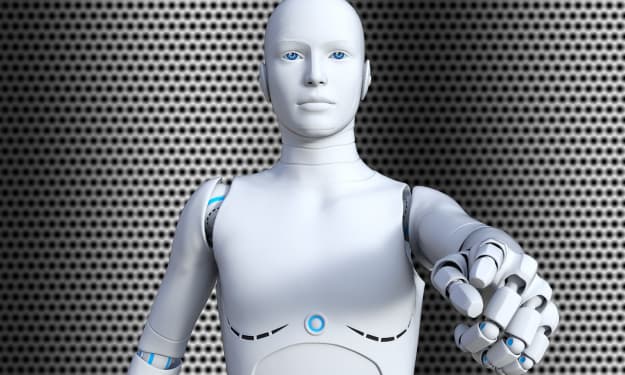
artificial intelligence
The future of artificial intelligence.
The Virtual Nexus: An Unlikely Bond
In the heart of bustling New York City, where skyscrapers touch the clouds and life moves at an electrifying pace, an unexpected trend was quietly taking root. The world of virtual reality had become the latest cultural phenomenon, captivating the hearts and minds of people across the United States.
By Md Aminur Rashid Khan3 years ago in Futurism
How Life Will Look Like In 2050
Saudi Arabia has unveiled its mammoth cube-shaped city, a sprawling mega-project that is equivalent in size to 20 Empire State Buildings. This futuristic city features racetracks for flying cars and immersive experiences that transport visitors to other planets. In Riyadh, the capital of Saudi Arabia, autonomous cars are no longer a distant concept. Plans are already in motion to construct a massive sea within the city, complete with racetracks for flying cars and immersive experiences that simulate visits to other planets or worlds where buildings are dwarfed by towering structures.
By Ricardo Romero3 years ago in Futurism
The Murky Waters of AI-Generated Comments
In the vast ocean of online discourse, comments are the lifeblood of engagement. They allow for the exchange of ideas, opinions, and sometimes, spirited debates. But as an AI-centric blogger and an advocate for genuine human interaction, I find myself troubled by a growing phenomenon: AI-generated comments.
By James Robinson3 years ago in Futurism
Unveiling the Wild Side of AI
Ladies and gents, boys and girls, gather ‘round for a rollercoaster ride through the electrifying world of artificial intelligence (AI). Picture this: robots that can chat you up, cars that drive themselves, and fridges that give you a guilt trip for not eating your veggies. While we’re all in awe of AI’s magical prowess, it’s time to peel back the digital curtain and take a peek at the potential pitfalls that come with this futuristic tech. Hold onto your hats, because we’re about to dive into the thrilling abyss of AI risks!
By James Robinson3 years ago in Futurism
Artificial Intelligence and Ethics
Welcome to the cutting-edge innovation! In today’s ever-evolving world, we find ourselves at the cusp of an AI revolution, where machines are getting smarter by the minute. Artificial Intelligence (AI) has permeated our lives, from virtual assistants on our smartphones to autonomous vehicles on our roads. While the potential benefits of AI are limitless, this technology is not without its ethical challenges. In this blog, we’ll embark on a comprehensive journey through the fascinating realm of AI and explore the ethical implications that accompany this transformative technology.
By James Robinson3 years ago in Futurism
The Rise of AI and its implications on human Roles
In the ever-evolving landscape of technology, the question of whether artificial intelligence (AI) can eventually replace humans remains a subject of profound contemplation. While popular virtual assistants like Ceri, Alexa, Cortana, and Google Assistant have become household names, the realm of artificial intelligence extends far beyond these voice-activated helpers. AI encompasses a vast array of applications that are fundamentally altering the dynamics of human-machine interaction and reshaping the very fabric of modern society.
By Damilare Samson3 years ago in Futurism
Decoding GPT-4 and its Impact on Data Science
Information science has seen a change in outlook by presenting strong language models like GPT-4 (Generative Pre-prepared Transformer 4). Created by OpenAI, GPT-4 is the most recent emphasis in a progression of models intended to comprehend and produce human-like text. This cutting-edge computer based intelligence model has sweeping ramifications for information science, reforming how we process, investigate, and produce literary information.
By Nishanth Shine Chelli3 years ago in Futurism
Artificial Intelligence and Automation
Artificial In the ever-evolving landscape of technology, artificial intelligence (AI) and automation have emerged as two of the most transformative forces, fundamentally altering the way we work, live, and interact. As of 2023, these technologies have made substantial strides, with advancements in AI algorithms, robotics, and machine learning driving innovation across industries. This article delves into the current state of AI and automation, their impact on various sectors, and the ethical considerations that accompany their proliferation. The Current State of AI and Automation As of 2023, AI and automation have surpassed mere buzzwords to become integral components of modern society. AI, the simulation of human intelligence in machines, has seen significant advancements in its algorithms and applications. Machine learning techniques, particularly deep learning, have enabled AI systems to process vast amounts of data and learn patterns, leading to breakthroughs in natural language processing, image recognition, and even autonomous decision-making. Automation, on the other hand, focuses on using technology to perform tasks with minimal human intervention. Robotic process automation (RPA) has gained traction across industries, streamlining repetitive and rule-based tasks. This has led to increased efficiency, reduced errors, and cost savings. Impact on Industries AI and automation have left their mark on diverse sectors, reshaping traditional processes and creating new possibilities. In healthcare, AI-powered diagnostic tools analyze medical images with remarkable accuracy, aiding doctors in identifying diseases at earlier stages. Additionally, automation assists in managing administrative tasks, allowing healthcare professionals to focus more on patient care. The manufacturing industry has witnessed the rise of smart factories, where robots and AI-driven systems collaborate seamlessly. These smart systems monitor equipment conditions, optimize production schedules, and even predict maintenance needs, leading to enhanced productivity and reduced downtime. In the financial sector, AI algorithms analyze vast amounts of market data to predict trends and optimize investment portfolios. Automation in customer service has also become prevalent, with chatbots providing instant responses to queries, improving customer satisfaction. Transportation is another domain experiencing transformation. Self-driving cars powered by AI navigate roads with increasing autonomy, while logistics companies employ automation to manage and optimize complex supply chains. Challenges and Ethical Considerations Despite the undeniable benefits, AI and automation bring forth a host of challenges and ethical considerations. The displacement of human workers by automation has raised concerns about job loss and economic inequality. As routine tasks become automated, there is a growing need for upskilling and reskilling the workforce to remain relevant in a changing job landscape. Bias in AI algorithms is a pressing issue that requires attention. If not carefully designed, AI systems can inadvertently perpetuate biases present in the training data, leading to unfair outcomes and discrimination. Efforts to mitigate bias include diverse and representative training data and transparency in algorithmic decision-making. Privacy concerns also loom large in the AI era. As AI systems process vast amounts of personal data, safeguarding user information and ensuring compliance with data protection regulations is paramount. Toward Ethical AI and Inclusive Automation Addressing the challenges of AI and automation requires a multi-faceted approach. Ethical AI development involves collaboration between engineers, ethicists, policymakers, and the public. Ensuring fairness, transparency, and accountability in AI systems should be prioritized. Efforts to reduce bias should be accompanied by continuous monitoring and audits of algorithms. Inclusive automation necessitates a focus on human-machine collaboration rather than complete replacement. Job roles can be redesigned to leverage the strengths of both humans and machines, enhancing productivity and job satisfaction. Governments and businesses should invest in _s-killing and upskilling initiatives to equip the workforce with the skills needed for the changing job landscape. Looking Ahead As of 2023, AI and automation have reached an inflection point, with their influence permeating every aspect of modern life. The synergy between human intelligence and machine capabilities holds immense potential for solving complex challenges. The coming years will likely see further advancements in AI algorithms, leading to more sophisticated applications across sectors. However, as we forge ahead, the ethical dimensions of AI and automation must not be forgotten. Striking a balance between innovation and responsible deployment will determine the extent to which these technologies contribute to societal progress. In conclusion, artificial intelligence and automation have come a long way since their inception. As of 2023, they are powerful tools that have revolutionized industries, improved efficiency, and paved the way for new possibilities. While challenges exist, a concerted effort toward ethical AI development and inclusive automation can help us harness the potential of these technologies while ensuring a better future for all.
By Gift Abotsi 3 years ago in Futurism
The Leading Software Development Firm in California
Introduction In the dynamic landscape of the modern business world, where technological advancement is a driving force behind growth and innovation, the choice of a software development partner becomes a pivotal decision. This is where California's leading software development firm comes into play – a visionary entity that seamlessly blends innovation, expertise, creativity, and a relentless pursuit of excellence to shape your digital aspirations into real-world, high-impact solutions.
By Andrew James3 years ago in Futurism