
She Paid Her Ex 3.3 Million Yuan. Then He Asked for 1.7 Million More. Now He’s Charged With Extortion.
Inside the divorce case of Yongzhou Commerce Bureau Director Zhou Xiaofen, where an oral promise, a police report, and a five-month prosecution collide.
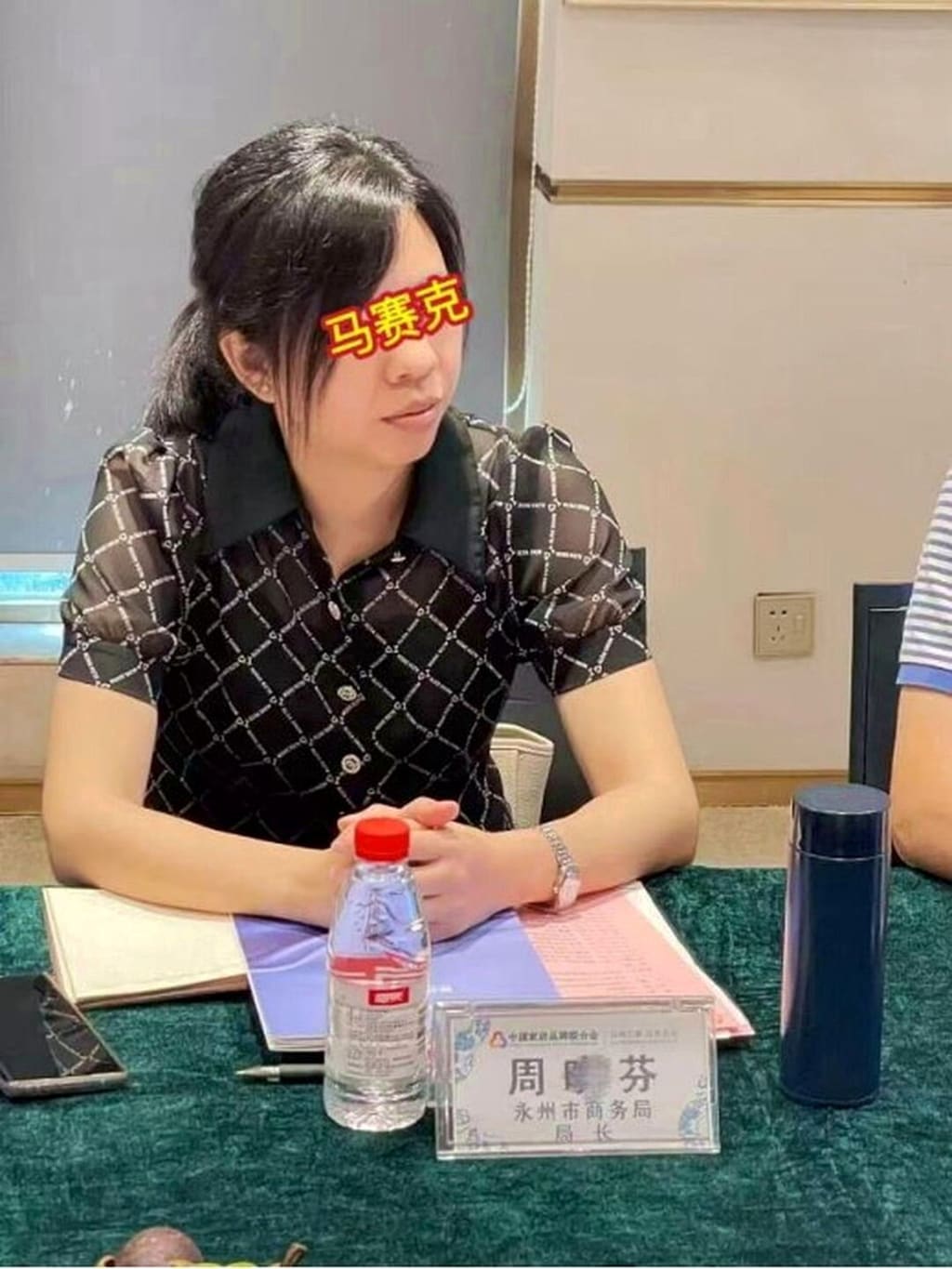
On October 8, 2025, Benliu News tried to reach Zhou Xiaofen. No answer. No reply to a text. The Yongzhou Municipal Commerce Bureau confirmed she is the director. Asked about the extramarital affair allegation, a staff member said he did not know and that any report would go to the relevant department. That afternoon, the Yongzhou Municipal Discipline Inspection and Supervisory Commission said it had received materials about Zhou. The investigation is confidential.
Mr. Zhang showed reporters a divorce agreement, intimate chat records, photos, and a letter of commitment dated December 23, 2018, signed “Zhou XX.” His brother, Zhang Xiaojun, has been held for five months. On September 4, 2025, the Lengshuitan District People’s Procuratorate in Yongzhou charged him with extortion.
The two sides tell opposite stories about almost every key fact. Three questions decide whether Zhang Xiaojun is guilty.
Did Zhou promise 5 million yuan?
Mr. Zhang says his brother and Zhou married in November 2015. Both had been married before. In early 2025, they fought over divorce. In February, they signed an agreement: “The couple’s affection has completely broken down, and they voluntarily divorce; the woman shall pay the man 3.3 million yuan as compensation for emotional distress.” Zhou paid. Mr. Zhang says she first agreed to 5 million yuan but wrote only 3.3 million into the agreement. After the divorce, his brother asked for the remaining 1.7 million. Zhou called the police.
Zhou says the opposite. She says Zhang Xiaojun demanded the “emotional distress” language. She says he used violence and threats. Her parents, worried about her job as a leading cadre, settled the matter. She denies promising 5 million.
An oral agreement can be valid in civil law if it does not violate mandatory rules. But the person claiming it exists must prove it. In a criminal trial, that burden is heavier. The claimed right must be certain and legitimate enough to rule out an intent to possess illegally. If Zhang Xiaojun has no recording, no chat record, no witness, and no written note, the 1.7 million claim rests on his word alone.
What was the 3.3 million yuan?
The divorce agreement calls it compensation for emotional distress. The size of the payment raises questions. In Chinese court practice, divorce emotional distress awards usually run from 50,000 to 100,000 yuan. Amounts above 100,000 are rare. 3.3 million is more than thirty times that range. Zhou, a principal division-level cadre, paid that sum in cash. Where it came from matters.
Zhou says the money came from personal savings, her parents, and loans from relatives and friends. Mr. Zhang’s relatives say 2 million yuan of those “loans” came from Tang XX, a married man they describe as Zhou’s extramarital partner. If true, the 3.3 million was not just divorce compensation. It may have involved another economic arrangement.
The nature of the 3.3 million shapes the claim for the remaining 1.7 million. If the 3.3 million was a disguised division of hidden marital property or another private financial deal, Zhang Xiaojun’s demand for the balance has a civil rights basis. It would be hard to prove he intended illegal possession. If the 3.3 million was pure hush money, signed under pressure to protect Zhou’s position, the 1.7 million claim has a much weaker basis.
What did Zhang do to collect the 1.7 million?
Article 274 of China’s Criminal Law defines extortion. The actor must intend illegal possession, use threats or intimidation, force the victim to hand over property out of fear, and meet the amount threshold.
Zhou says Zhang threatened and intimidated her for a long time after the divorce. She called the police, she says, when her safety was in danger and she could endure no more. Mr. Zhang says that before his brother was arrested, he reported Zhou’s “lifestyle and moral conduct” to the local discipline inspection commission and contacted Tang XX’s wife.
Demanding an oral balance that cannot be enforced in civil court is not automatically a crime. The method matters. If Zhang only asked, “Why haven’t you paid the balance you promised?”, that is debt collection. If he said, “Pay 1.7 million in three days or I send your chat records and list to the discipline inspection commission so you lose your job,” that is coercion under the criminal law.
The legal question is whether Zhou paid or agreed to pay 1.7 million because she recognized a civil deal, or because she feared losing her position.
The evidence that matters
The first set is direct proof of the oral agreement. Recordings of the divorce talks, WeChat messages, witness testimony, and any written note about the 5 million yuan. This evidence decides whether the 1.7 million was a claim of right or a unilateral demand.
The second set is proof of how Zhang asked for the money. Chat logs, call recordings, and testimony from Zhou or anyone present. The focus is whether he used a report or exposure as leverage. That is the heart of the extortion charge.
The third set is proof of where the 3.3 million came from and what it was. Bank transfers, source documents, and the original divorce agreement. If the 3.3 million involved hidden property, the 1.7 million has a civil basis. If it was hush money, the basis is weak. Whether Tang XX’s money appears in the transfers also affects the case and the discipline investigation.
The fourth set is proof of why Zhou went to police. She reported about a year after the divorce, not when she paid the 3.3 million. The timing of Zhang’s report to the discipline commission and her police report needs to be established. That timing helps show whether criminal process is being used to suppress a civil claim.
Two problems from Zhou’s public office
First, was the judicial process interfered with? Zhou reported in April 2025. Zhang was detained and arrested in May. The procuratorate charged him on September 4. The case moved from report to indictment in five months. Mr. Zhang asks whether Zhou used her position as bureau director to influence the outcome. Under the rules on leading cadres intervening in judicial work, asking for favors or speaking for a party during clue checks, case filing, or investigation is illegal interference. A procedural review should look at whether the timing at each stage is abnormal, whether case handlers had improper contact with either side, and whether recusal or a change of jurisdiction is needed.
Second, is the 3.3 million from a legal source? Under the Disciplinary Regulations of the Communist Party of China, if a Party or state functionary’s property or spending clearly exceeds lawful income and the gap is large, the person can be ordered to explain. If the explanation fails, the gap is treated as illegal gains. Zhou’s property declarations and bank records are a focus of the discipline investigation. If part of the 3.3 million came from businesspeople or officials with whom she had improper relationships, the case may reach deeper duty-related violations.
A similar case in Zibo
The Zibo Lu XX case has a similar shape. Lu caught his wife committing adultery and accepted 25,000 yuan from her lover. He was convicted of extortion at first instance. In 2024, a retrial found him not guilty. The retrial court reasoned that the amount came from repeated negotiations, that Lu did not intend illegal possession, and that the elements of extortion were not met.
The same logic applies here. Did Zhang Xiaojun have a legitimate basis to demand 1.7 million? Did his method go beyond civil negotiation? If the oral agreement existed and he only pressed for payment, extortion should not apply. If the agreement cannot be proved and he used a report as leverage, Article 274 may apply.
What remains
The Yongzhou discipline commission says its investigation is confidential. No court ruling yet. Zhang Xiaojun remains in custody. Zhou Xiaofen did not reply to the text message. The 2018 letter says: “From now on, I will cut off all contact with Wei XX… and shall not have ambiguous relationships with other members of the opposite sex.” Whether the letter is real, whether the affair table holds up, and whether the 1.7 million was a claim of right or extortion all wait on evidence.
About the Creator
Jin
Writer of reamstories
https://reamstories.com/jin
Enjoyed the story? Support the Creator.
Subscribe for free to receive all their stories in your feed. You could also become a paid subscriber, letting them know you appreciate their work.
Comments
There are no comments for this story
Be the first to respond and start the conversation.