Historical
Heroes Don’t Always Wear Badges
Heroes Don’t Always Wear Badges “Sometimes courage comes on two wheels, and kindness wears leather.” The rain pounded against the neon sign of Rust & Chrome, a biker bar tucked into the edge of town, the kind of place parents warned their children about. Inside, the air was thick with smoke, the clink of beer bottles, and the low growl of motorcycles idling outside. Men with tattoos, leather jackets, and faces hardened by life filled the bar, laughing, arguing, and daring one another to drink shots faster than their stomachs could handle.
By waseem khanabout a year ago in Fiction
The Regret of a Creator: The Man Behind the World's Deadliest Weapon
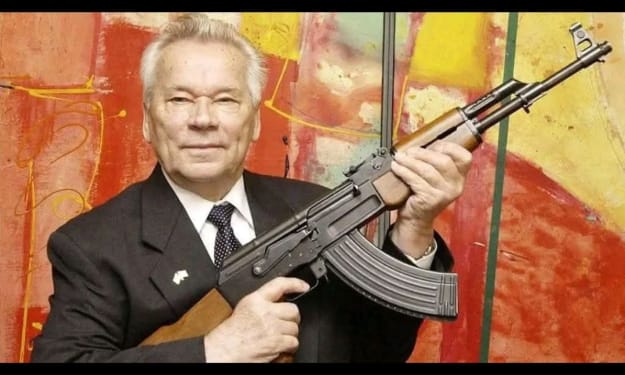
In 1947, deep within the Soviet military-industrial complex, a young Russian military engineer named Mikhail Kalashnikov gave birth to a weapon that would eventually shape modern warfare—and haunt his soul for the rest of his life. Kalashnikov, a lieutenant general in the Soviet Army and a self-taught mechanical genius, was driven by a singular vision: to create a simple, reliable weapon to protect his homeland. War had already carved its scars into his life. He had seen fellow soldiers fall in battle, many due to malfunctioning or overly complex rifles. That pain led to innovation. From his hands, the AK-47 was born—a compact, durable, easy-to-use assault rifle that could function in mud, sand, water, or snow. The rifle carried his name: Avtomat Kalashnikova 1947—the AK-47. It was an invention meant for defense, a tool to safeguard a nation. But what Kalashnikov didn't anticipate was how the world would seize his creation—and turn it into a symbol of death. Over the next few decades, the AK-47 exploded across the globe. From deserts to jungles, civil wars to gang wars, revolutions to terrorist attacks—the unmistakable outline of the AK-47 became a fixture in countless conflicts. It wasn't just a weapon; it became an icon. Cheap to manufacture, easy to operate, and devastatingly efficient, it was quickly adopted by armies, militias, warlords, guerrilla fighters, and criminals alike. More than 100 million AK-47s (and its variants) are estimated to exist today. It is the most widely used firearm in the world. But while the world held his weapon high, Kalashnikov himself began to feel the heavy weight of his creation’s legacy. "I wish I had invented a lawnmower instead." This haunting sentence, often quoted in interviews, reflected the deep regret that slowly consumed him. What began as a patriotic endeavor had spiraled into a global catastrophe of violence—and he felt helpless watching it unfold. Mikhail Kalashnikov never profited from the weapon. He lived a modest life, honored in Russia as a national hero, but internally tormented. His was not the guilt of someone who sold death for money—but of a man who felt betrayed by humanity’s misuse of his intentions. He often stated, “I created the weapon to protect the borders of my country. I never imagined it would be used by terrorists, bandits, and criminals.” As the years went on, the bloodshed mounted. Kalashnikov watched images of child soldiers holding his weapon. He saw drug cartels flaunt it. He heard stories of massacres committed using his invention. And the question began to gnaw at him: “Am I responsible for all these deaths?” In 2013, just a year before his death, Kalashnikov—then 93 years old—wrote a deeply personal letter to the head of the Russian Orthodox Church. In it, he poured out his heart: “My spiritual pain is unbearable. I keep asking myself the same question—if my rifle took people’s lives, am I responsible for their deaths... even if they were enemies?” It was the confession of a man facing the end of his life, haunted not by war, but by the moral ambiguity of creation. In that letter, he questioned not only himself but also the nature of mankind: “Why did God allow man to have envy, aggression, and evil in his heart?” These weren’t the words of a cold inventor or a proud soldier. They were the reflections of a man who had witnessed the darkness of human nature far too closely—and had become a reluctant symbol of it. It’s important to remember: a weapon doesn’t pull its own trigger. Kalashnikov understood this too. He often emphasized that the rifle itself had no will, no intention. It was humanity’s choices—driven by power, greed, revenge, and fear—that transformed a tool into an instrument of mass killing. He once said, “Blame the politicians, not the engineer.” Still, despite that logic, his soul found no peace. He believed in duty. He believed in country. But he also believed in humanity, and he never expected it to fall so far. Kalashnikov died in 2014, honored as a hero by the Russian state, but carrying a wound that medals could not heal. He was the creator of one of the deadliest weapons in history—and a man broken by the very legacy he left behind. 🖋️ "Mistrust the creation, if it ever overshadows the creator." — A lesson from a man who invented a rifle, but longed only for peace.
By Israr khanabout a year ago in Fiction
The Hotel That Never Lets You Leave
The Hotel That Never Lets You Leave “Where one night feels like forever, and forever feels like one night.” The rain was relentless that night. It drummed against the windshield as Ethan gripped the steering wheel, exhaustion tugging at his eyes. He had been driving for hours through winding country roads, searching for a place to rest.
By waseem khanabout a year ago in Fiction
The Library That Erases You
The Library That Erases You The first time I stumbled upon the library, it wasn’t there. I had walked past the crumbling brick building on the corner of Sycamore Street hundreds of times, always noting the “FOR SALE” sign that had been hanging crooked in the window for years. But that night, something was different. A warm light glowed behind the dusty panes, and a polished brass plaque gleamed faintly in the moonlight. It read:
By waseem khanabout a year ago in Fiction
The Farmer, the world War2, and the Clever Plow
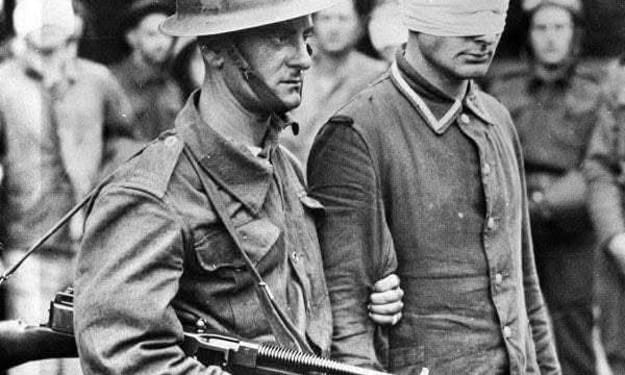
The world was at war. Borders were burning, cities were crumbling, and loyalties were being tested in the harshest of ways. In a quiet village, far removed from the battlefronts but not the consequences, lived a humble farmer. Like many others, his only concern had always been his land, his crops, and his family. But even remote lives get caught in the webs spun by great powers. It so happened that during the chaos of the war, suspicion fell upon this farmer. The army, acting on vague intelligence, suspected him of communicating with the enemy. Perhaps it was a false report, or maybe he had been in the wrong place at the wrong time. Whatever the case, he was arrested and imprisoned. No trial. No explanation. Just bars and a cold floor. Weeks turned into months, and the farmer remained locked away from the life he had once known. Back home, his wife tried to carry on. But with the growing season arriving, she faced an overwhelming challenge—preparing the fields for planting, especially for potatoes, which had always been their staple crop. One day, the farmer received a letter from his wife. Written with worry and longing, it read: “You’re still locked up, and the potato season is slipping away. I can't plow the fields myself, and there's no one I can trust to help. If you were here, you would have had the land ready by now. What should I do?” The farmer read the letter with a heavy heart. He knew his wife was right. And he knew she couldn't manage the heavy work on her own. But then, inspiration struck. With a small smile curling his lips, he picked up a pen and replied: “Whatever you do, don’t dig in the fields. That’s where I’ve hidden the weapons.” He sent the letter, and then he waited. A few days later, a swarm of soldiers descended upon his small farm. Dozens of men, spades in hand, stormed the fields. Under strict orders, they dug every inch of the land from one corner to the other, searching for the rumored hidden weapons. They worked for hours, turning the soil upside down, not leaving a single stone unturned. But of course, there were no weapons. Only earth, roots, and the sweet smell of fertile land. The farmer’s wife watched them work in disbelief. She didn’t say a word. Days later, she wrote to her husband again: “Your letter worked. The army came and dug up the entire field. They didn't find anything, but now the soil is all turned over. What should I do now?” The farmer smiled as he penned his reply: “Now, my love, plant the potatoes.” This tale, while light-hearted on the surface, carries within it the essence of resilience, wit, and the quiet power of thinking one step ahead. The farmer, powerless in chains, found a way to help his wife not with tools, but with words. He outsmarted an entire army, not with deception for harm, but with a clever twist that solved a real problem without breaking any rules. It’s a lesson in how, even when life corners us, there’s room to maneuver—if only we keep our minds sharp and our hearts calm. In a time of war, where violence was currency and force was the norm, a simple farmer used strategy instead of strength. He didn’t fight back. He didn’t beg. He simply thought, acted, and won. And perhaps, that’s the most powerful kind of resistance there is. Moral: When you're buried by life’s problems, sometimes the solution isn’t to fight harder—but to think smarter. In the end, wisdom often plows the ground where strength would have faltered. Thans for reading and supporting,
By Israr khanabout a year ago in Fiction
The Golden Diary
The attic had always been a forbidden place in the house. Dusty, dim, and filled with relics that no one cared about anymore, it seemed like a graveyard of forgotten objects. Yet, one late afternoon, curiosity pulled Zara toward it. The wooden stairs creaked beneath her feet, as though warning her to turn back. But she didn’t. Something in her heart told her that there was a story hidden there, waiting for her.
By Vocal Member about a year ago in Fiction
Scripture of Bravery and Resilience
The passage is cheerful, and the street across is named unfearful. Couldn't decide on my own crossroads. The unfearful road winds me in. To leave behind the occupant who demands without asking was a breeze to lose consciousness.
By Johana Torresabout a year ago in Fiction
The Queen’s Confidant
In the gilded halls of the royal palace, where whispers carried more weight than proclamations, a young woman named Isabella found herself walking a path she had never imagined. She was born the daughter of a minor noble, raised with modest expectations, and yet fate had placed her at the side of a queen. Queen Eleanor was admired across Europe, not just for her beauty, but for her keen mind and unshakable authority. Few dared to speak candidly to her, but Isabella, with her sharp wit and steady presence, became more than a lady-in-waiting. She became the queen’s confidant—the one voice Eleanor trusted in a court filled with flattery, betrayal, and ambition. Duty and Devotion Isabella’s role was not without sacrifice. She carried secrets too heavy for her young heart, secrets that could topple kingdoms if ever spoken aloud. She learned to move like a shadow through the palace, listening, advising, and often soothing the queen when doubts pressed too heavily upon her. For her loyalty, Isabella was rewarded with the queen’s affection and protection. Yet, every day reminded her that her life was no longer her own—it belonged to the crown. A Forbidden Glance It was during a state banquet that Isabella first noticed Lord Adrian, a rival suitor of the queen’s choosing for diplomatic gain. His presence was commanding, his words measured, and his eyes—when they found hers—struck her with a force she had never known. At first, she dismissed it. He was an enemy of her queen’s peace, a man whose ambitions might undo Eleanor’s careful work. Yet, in the days that followed, she found herself encountering him in quiet corridors, exchanging words too gentle to be called mere courtesy. Their bond grew in silence, in the stolen moments when eyes met across crowded halls or when his hand lingered just a second too long upon hers. Isabella’s heart battled with her duty, for to love him was to betray the queen who trusted her above all. Torn Between Two Worlds The court became a battlefield of loyalties. Rumors spread of alliances and betrayals, and Isabella stood at the very heart of it, torn between protecting Eleanor and following her own heart’s desperate cry. There were nights when Isabella sat alone by her chamber window, staring into the gardens, asking herself if love was worth the risk of losing everything she had fought for. To be a confidant to a queen was a rare honor. To betray that trust—forbidden. And yet, Adrian’s words lingered with her: “What is loyalty if it costs you your soul?” The Queen’s Choice One evening, as candlelight flickered against the golden walls, Queen Eleanor summoned Isabella. Her eyes, sharp as steel, studied her. “You carry a weight in your heart, my dear,” she said softly. “I see it in the way you breathe.” Isabella trembled. She wanted to confess everything, but fear silenced her tongue. Yet the queen, ever perceptive, smiled with a sadness that revealed she already knew. “Love is both our strength and our ruin,” Eleanor whispered. “But remember this: a crown forgives less easily than a heart.” Isabella understood then that her choice was no longer hers alone—it was tied to the fate of the queen and the kingdom itself. The Price of Love History does not record what Isabella chose. Some say she buried her feelings, staying forever by the queen’s side, loyal until her final breath. Others whisper she fled into the night with Lord Adrian, trading titles and duty for a love that burned brighter than any throne. Perhaps the truth lies somewhere in between—a story of sacrifice, love, and the impossible choices faced by those whose lives belong not just to themselves, but to history.
By LUNA EDITHabout a year ago in Fiction