
United States Seafood Market Set to Reach US$ 28.89 Billion by 2034 as Health-Conscious Consumers Drive Demand
Rising seafood consumption, expanding aquaculture, online retail growth, and sustainability initiatives are reshaping the future of America's seafood industry.

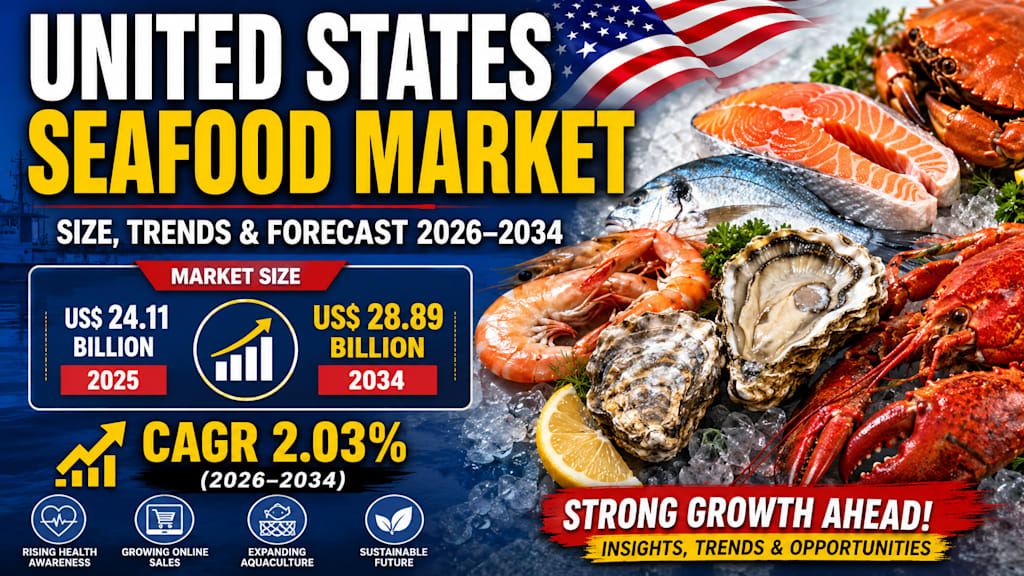
United States Seafood Market Outlook 2026–2034
The United States seafood market is entering a new phase of growth as consumers increasingly prioritize healthy eating, sustainable food sourcing, and high-quality protein alternatives. According to Renub Research, the U.S. seafood industry is projected to grow from US$ 24.11 billion in 2025 to US$ 28.89 billion by 2034, expanding at a CAGR of 2.03% between 2026 and 2034.
Seafood remains one of the most versatile and nutritious food categories available to consumers. From salmon and shrimp to tuna, crab, oysters, and scallops, seafood offers a rich source of omega-3 fatty acids, vitamins, minerals, and lean protein. As awareness surrounding nutrition and wellness continues to increase, seafood is becoming a staple in American households and restaurants alike.
The market's future will be shaped by technological advancements in aquaculture, digital retail expansion, sustainable fishing initiatives, and changing consumer preferences that favor healthier meal options.
Why Seafood Consumption Continues to Rise in the United States
Over the past decade, seafood has moved beyond coastal regions and become a mainstream dietary choice across the country. While coastal states traditionally dominated seafood consumption, inland consumers are increasingly incorporating fish and shellfish into weekly meal plans.
Several factors are contributing to this trend:
Greater awareness of cardiovascular health
Rising demand for high-protein diets
Popularity of Mediterranean and pescatarian lifestyles
Expansion of sushi and seafood-based cuisine
Availability of fresh and frozen seafood products nationwide
Consumers today are not only looking for flavor but also nutritional value and sustainability. This shift is creating long-term opportunities for seafood producers, distributors, retailers, and foodservice operators.
Health and Wellness Trends Fuel Market Expansion
One of the strongest growth drivers in the United States seafood market is the growing focus on health and wellness.
Medical professionals and nutrition experts consistently recommend seafood due to its high nutritional value. Fish such as salmon, tuna, and sardines are rich in omega-3 fatty acids, which support heart health, brain function, and inflammation management.
Americans are increasingly replacing red meat with seafood as part of healthier lifestyles. The trend is particularly strong among millennials, Gen Z consumers, and aging populations seeking heart-friendly dietary options.
According to industry data from the National Fisheries Institute, seafood consumption reached record levels in recent years, with salmon emerging as one of the most consumed seafood varieties in the country.
Retailers including Costco, Whole Foods Market, and other major grocery chains have expanded their seafood offerings to meet growing demand. Meal-kit companies and healthy meal delivery services have further encouraged seafood consumption by providing convenient recipes and ready-to-cook products.
As preventive healthcare becomes a larger priority across the United States, seafood is expected to remain a preferred source of protein.
Aquaculture and Seafood Imports Strengthen Supply Chains
While consumer demand continues to rise, supply availability remains critical to market growth.
Aquaculture has become an increasingly important component of the U.S. seafood industry. Farm-raised salmon, catfish, oysters, mussels, and shrimp are helping meet growing domestic demand while reducing pressure on wild fish stocks.
Modern aquaculture technologies are improving production efficiency, disease management, and sustainability outcomes. These advancements are enabling producers to deliver high-quality seafood products throughout the year.
At the same time, seafood imports remain essential to the U.S. market.
Countries such as India, Ecuador, Indonesia, Vietnam, Chile, Norway, and Canada play significant roles in supplying seafood products to American consumers. Imported seafood ensures year-round product availability and helps stabilize pricing.
Government initiatives such as the Seafood Import Monitoring Program (SIMP) are strengthening traceability requirements and helping prevent illegally sourced seafood from entering U.S. markets. These measures support consumer confidence while encouraging responsible sourcing practices.
E-Commerce Revolutionizing Seafood Sales
Digital transformation is rapidly changing how Americans purchase seafood.
Online grocery platforms, seafood subscription services, and direct-to-consumer brands are gaining popularity among consumers seeking convenience and transparency.
Today's consumers can order fresh seafood, frozen seafood, shellfish, and specialty products with home delivery options that preserve quality through advanced cold-chain logistics.
The popularity of seafood subscription boxes continues to grow, particularly among premium consumers interested in sustainably harvested products.
Several factors are driving online seafood sales:
Convenience of home delivery
Wider product selection
Improved product traceability
Access to premium seafood varieties
Growing trust in cold-chain distribution
As digital grocery adoption continues to expand, online channels are expected to become one of the fastest-growing seafood distribution platforms in the United States.
Sustainability Remains a Key Industry Challenge
Despite strong growth prospects, sustainability concerns continue to present challenges for the seafood sector.
Issues such as overfishing, habitat degradation, illegal fishing activities, and bycatch remain significant concerns for regulators, environmental organizations, and consumers.
Today's consumers increasingly expect seafood brands to demonstrate responsible sourcing practices. Certifications and eco-labels have become important purchasing considerations.
Companies that invest in sustainability initiatives often gain competitive advantages by attracting environmentally conscious consumers.
However, implementing sustainable practices frequently increases operational costs, creating pressure on profit margins.
Balancing profitability with environmental responsibility will remain a defining challenge for seafood businesses throughout the forecast period.
Supply Chain Volatility and Pricing Pressures
Seafood supply chains are highly sensitive to external disruptions.
Factors such as extreme weather events, climate change, labor shortages, fuel price fluctuations, and transportation bottlenecks can significantly affect seafood availability and pricing.
For consumers, these disruptions often translate into fluctuating retail prices. For suppliers and retailers, maintaining stable inventory levels while controlling costs remains difficult.
Investments in supply chain resilience, cold storage infrastructure, and logistics optimization are becoming increasingly important for market participants seeking long-term stability.
United States Fish Market Analysis
Fish remains the largest segment within the U.S. seafood industry.
Salmon, tuna, cod, pollock, and tilapia continue to dominate consumer preferences due to their versatility, nutritional benefits, and widespread availability.
Salmon, in particular, has experienced remarkable demand growth. Imported supplies from Norway, Chile, and Canada complement domestic production and help maintain availability.
Growing interest in sustainably sourced fish products is also encouraging innovation throughout the supply chain.
As restaurants, retailers, and online platforms expand fish offerings, this segment is expected to maintain its leadership position in the seafood market.
Shrimp Continues to Dominate Seafood Consumption
Shrimp remains America's most consumed seafood product.
Its popularity stems from affordability, convenience, versatility, and widespread menu presence across restaurants and foodservice establishments.
The majority of shrimp consumed in the United States is imported, with India, Ecuador, and Indonesia serving as major suppliers.
Consumers increasingly prefer peeled, deveined, and ready-to-cook shrimp products that simplify meal preparation.
Although disease management and sustainability concerns occasionally affect production, ongoing improvements in shrimp aquaculture continue to support stable market growth.
Fresh and Chilled Seafood Market Trends
Fresh and chilled seafood remains highly attractive to consumers seeking premium-quality products.
Retailers are expanding seafood counters and investing in refrigeration technologies that improve freshness and shelf life.
Urban consumers often associate fresh seafood with superior taste, nutritional value, and culinary experience.
Although premium pricing remains a challenge, demand continues to rise among health-conscious shoppers and affluent households.
Advancements in transportation and cold-chain logistics are further improving nationwide access to fresh seafood products.
Frozen Seafood Market Gains Momentum
Frozen seafood has transformed significantly in recent years.
Modern freezing technologies now preserve texture, flavor, and nutritional quality more effectively than ever before.
Consumers increasingly recognize frozen seafood as a practical, affordable, and convenient alternative to fresh products.
Busy lifestyles, longer shelf life, and reduced food waste are encouraging adoption across households nationwide.
Retailers continue to expand frozen seafood assortments, including fish fillets, shrimp, shellfish, and ready-to-cook meal solutions.
This segment is expected to remain one of the fastest-growing categories within the seafood market.
Regional Spotlight: California, New York, and New Jersey
California Seafood Market
California remains one of the nation's most influential seafood markets.
Strong seafood consumption, diverse culinary traditions, major port infrastructure, and sustainability-focused consumers support market growth.
The state's multicultural population also drives demand for international seafood cuisines and specialty seafood products.
California continues to serve as a testing ground for seafood innovation, alternative seafood technologies, and sustainable sourcing initiatives.
New York Seafood Market
New York's seafood industry benefits from a large urban population and a thriving restaurant sector.
Fresh fish, shellfish, and premium seafood products remain highly popular among consumers and foodservice operators.
Growing e-commerce adoption and specialty seafood retailing are creating new growth opportunities throughout the state.
New Jersey Seafood Market
New Jersey's seafood market is supported by strong commercial fisheries and consumer demand.
Clams, scallops, bluefish, and other locally harvested species contribute significantly to regional economic activity.
The state's proximity to major metropolitan markets enhances distribution opportunities and supports continued market expansion.
10 Recent Developments by Leading Seafood Companies
1. Mowi ASA
Expanded sustainable salmon farming initiatives and invested in advanced aquaculture technologies to improve production efficiency and environmental performance.
2. Trident Seafoods Corporation
Enhanced value-added seafood processing capabilities and introduced new frozen seafood products targeting retail consumers.
3. Thai Union Group PCL
Continued investments in traceability systems and sustainability programs across global seafood supply chains.
4. Sysco Corporation
Expanded seafood sourcing partnerships and strengthened foodservice distribution networks across North America.
5. High Liner Foods Inc.
Launched innovative frozen seafood solutions designed for convenience-focused consumers and foodservice operators.
6. Beaver Street Fisheries
Increased seafood import capabilities and expanded product offerings across retail and restaurant channels.
7. Inland Seafood Inc.
Strengthened cold-chain logistics infrastructure to improve fresh seafood distribution efficiency.
8. NH Foods Ltd
Continued diversification into premium seafood products while enhancing processing and supply chain operations.
9. The Kraft Heinz Company
Expanded seafood-based meal solutions within its convenience food portfolio to address changing consumer preferences.
10. Admiralty Island Fisheries Inc.
Focused on sustainable harvesting practices and premium wild-caught seafood offerings to meet growing consumer demand.
Competitive Landscape
The United States seafood market remains highly competitive, with participants focusing on sustainability, product innovation, distribution expansion, and digital commerce.
Major companies analyzed include:
Admiralty Island Fisheries Inc.
Beaver Street Fisheries
High Liner Foods Inc.
Inland Seafood Inc.
Mowi ASA
NH Foods Ltd
Sysco Corporation
Thai Union Group PCL
The Kraft Heinz Company
Trident Seafoods Corporation
These companies are evaluated across five key viewpoints:
Company Overview
Key Personnel
Recent Developments
SWOT Analysis
Revenue Analysis
Final Thoughts
The United States seafood market is positioned for steady and sustainable growth through 2034. Rising health awareness, expanding aquaculture production, strong seafood imports, and the rapid growth of online seafood retail are creating favorable conditions for market expansion.
While challenges such as sustainability concerns, supply chain volatility, and pricing pressures remain important considerations, the industry's ongoing investments in responsible sourcing, technology, and consumer convenience are expected to support long-term growth.
As Americans continue prioritizing nutritious, protein-rich diets and environmentally responsible food choices, seafood will remain a central component of the nation's evolving food landscape. With the market projected to reach US$ 28.89 billion by 2034, stakeholders across the seafood value chain have significant opportunities to capitalize on emerging consumer trends and build a more resilient future for the industry.
About the Creator
Enjoyed the story? Support the Creator.
Subscribe for free to receive all their stories in your feed.
Comments
There are no comments for this story
Be the first to respond and start the conversation.