
United States Oats Market Set to Reach US$ 2.92 Billion by 2033 as Consumers Embrace Healthier and Plant-Based Diets
Rising Demand for Nutritious Foods, Oat-Based Beverages, and Sustainable Agriculture Drives Growth Across the U.S. Oats Industry

The United States oats market is experiencing a remarkable transformation as consumers increasingly prioritize nutrition, wellness, convenience, and sustainability in their food choices. Once considered a simple breakfast staple, oats have evolved into a versatile ingredient found in cereals, snacks, dairy alternatives, baked goods, and even personal care products. This expansion of applications is helping propel market growth across the country.
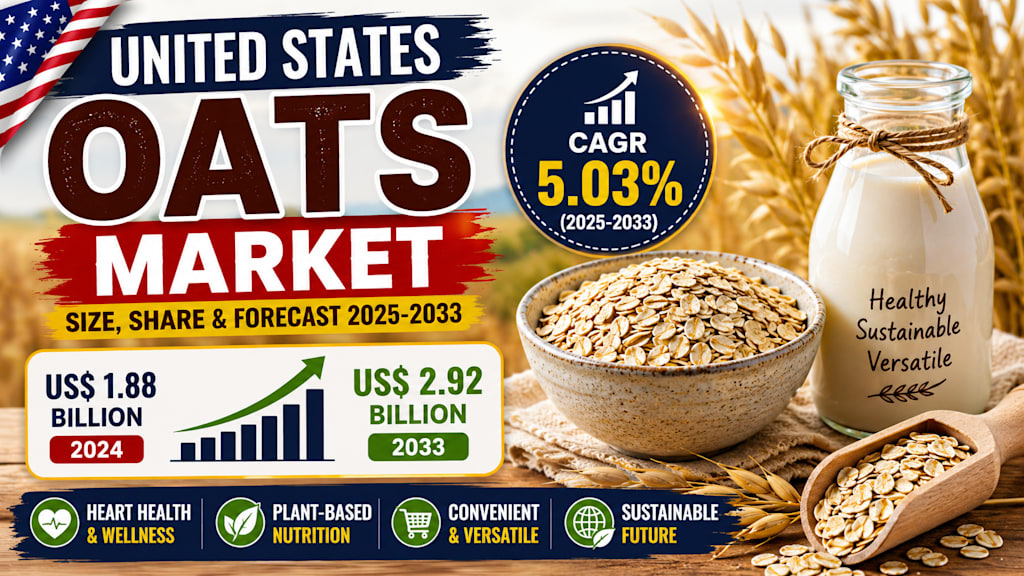
According to recent industry analysis, the United States Oats Market is projected to grow from US$ 1.88 billion in 2024 to US$ 2.92 billion by 2033, registering a CAGR of 5.03% during 2025–2033. Growing awareness of healthy lifestyles, the rapid adoption of plant-based diets, and increasing demand for convenient yet nutritious food products are among the primary factors fueling this expansion.
Oats: A Nutritional Powerhouse Winning Consumer Trust
Oats have long been recognized for their exceptional nutritional profile. Rich in dietary fiber, vitamins, minerals, protein, and antioxidants, they offer numerous health benefits that resonate strongly with modern consumers.
One of the most important components of oats is beta-glucan, a soluble fiber associated with improved heart health and cholesterol management. As cardiovascular diseases remain a major public health concern in the United States, foods that support heart wellness continue to attract significant attention.
Consumers are also increasingly seeking foods that contribute to digestive health and weight management. Oats naturally support both objectives by promoting satiety and functioning as a prebiotic that helps nourish beneficial gut bacteria.
As preventive healthcare becomes a priority for millions of Americans, oats are emerging as a preferred dietary choice for people looking to maintain long-term wellness through nutrition.
Growing Popularity of Plant-Based Diets Creates New Opportunities
The shift toward plant-based eating habits has become one of the most influential trends in the food industry. Consumers are actively exploring alternatives to traditional dairy and animal-derived products, creating substantial opportunities for oat-based innovations.
Among these innovations, oat milk has become a standout success story. Its creamy texture, neutral flavor, and allergen-friendly characteristics have helped it gain widespread acceptance among consumers. Unlike some alternative milk options, oat milk is naturally free from lactose, nuts, and soy, making it accessible to a broader audience.
Environmental concerns are also contributing to its popularity. Oat cultivation generally requires fewer resources and generates a smaller environmental footprint compared to many conventional agricultural products. As sustainability becomes an important purchasing factor, oat-based beverages are benefiting from positive consumer sentiment.
The rise of vegan, vegetarian, and flexitarian lifestyles continues to support demand for oat-derived products, ensuring long-term growth prospects for the market.
Convenience Becomes a Key Market Driver
Today's consumers are increasingly balancing busy schedules with health-conscious lifestyles. This has created strong demand for convenient food options that do not compromise nutritional value.
Oats fit perfectly into this evolving consumer preference. Manufacturers have introduced a variety of ready-to-eat and easy-to-prepare products, including instant oatmeal, overnight oats, granola bars, breakfast cups, protein snacks, and meal replacements.
The versatility of oats enables food companies to develop products suitable for breakfast, snacks, desserts, and even savory meals. This adaptability has expanded oats beyond traditional breakfast applications and introduced them to entirely new consumer segments.
Innovation within the convenience category continues to strengthen market growth, particularly among working professionals, students, and health-focused families.
Expanding Applications Across Food and Beverage Industry
The food and beverage sector remains the largest application area for oats in the United States. Manufacturers are continuously incorporating oats into innovative product formulations to satisfy evolving consumer preferences.
Breakfast cereals remain a core segment, but significant growth is also being observed in:
Energy bars
Granola products
Protein snacks
Bakery items
Dairy alternatives
Functional beverages
Sports nutrition products
Consumers increasingly seek clean-label products with recognizable ingredients, and oats naturally align with these expectations. Their ability to enhance texture, nutritional value, and product appeal makes them a preferred ingredient for manufacturers.
As demand for healthier processed foods continues to rise, oats are expected to play an even greater role in future product development strategies.
Sustainability Strengthens Market Position
Environmental sustainability has become a central consideration for both consumers and food manufacturers. Oats are increasingly viewed as a sustainable agricultural crop due to their relatively lower resource requirements.
Compared with certain alternative crops, oats typically require less water and can contribute positively to crop rotation systems. This sustainability advantage is attracting environmentally conscious consumers who want their food choices to align with broader ecological values.
Food companies are also highlighting sustainable sourcing practices and environmentally responsible production methods in their marketing campaigns. These initiatives are helping strengthen the appeal of oat-based products among younger demographics, particularly Millennials and Generation Z consumers.
Challenges Facing the United States Oats Market
Despite strong growth potential, the market faces several challenges that could impact future expansion.
Climate Sensitivity and Agricultural Risks
Oat cultivation is highly dependent on favorable weather conditions. Variations in rainfall patterns, temperature fluctuations, droughts, and extreme weather events can significantly affect crop yields and quality.
Climate change has increased uncertainty within agricultural systems, making production planning more complex for farmers. Reduced harvests can lead to supply shortages, price volatility, and disruptions throughout the value chain.
As environmental conditions continue to evolve, stakeholders will need to invest in resilient farming practices and advanced agricultural technologies to mitigate risks.
Dependence on International Trade
Another major challenge involves the United States' reliance on imported oats, particularly from neighboring Canada.
Changes in trade agreements, tariffs, export restrictions, or geopolitical developments can create supply chain disruptions and increase costs for manufacturers. Since domestic production alone may not always satisfy growing demand, maintaining stable trade relationships remains essential for market stability.
Industry participants are increasingly exploring diversified sourcing strategies to reduce vulnerability and ensure consistent product availability.
Product Segmentation Highlights
By Type
Different oat varieties cater to diverse consumer preferences and applications.
Rolled Oats
Whole Oats
Steel Cut Oats
Instant Oats
Others
Instant oats continue to enjoy strong popularity due to convenience, while steel-cut and whole oats attract health-conscious consumers seeking minimally processed options.
By Application
The versatility of oats allows them to serve multiple industries.
Food & Beverage
Animal Feed
Personal Care & Cosmetics
Others
The food and beverage segment remains dominant, supported by growing demand for functional foods and plant-based alternatives.
Competitive Landscape Remains Dynamic
Leading companies continue investing in innovation, product diversification, sustainability initiatives, and strategic partnerships to strengthen their market positions.
Major industry participants include:
General Mills
B&G Foods
Kellanova
Marico
PepsiCo
Nestlé
Blue Lake Milling
Avena Foods
These organizations are focusing on premium offerings, functional nutrition products, sustainable sourcing, and expanding plant-based portfolios.
10 Recent Industry Developments
1. PepsiCo's Quaker Partners with NFL Initiatives
In November 2023, Quaker collaborated with NFL legend Eli Manning and celebrity chef Carla Hall to promote healthier eating habits among children through the Quaker Pregrain Tour.
2. SunOpta and Seven Sundays Launch Oat Protein Cereal
In June 2023, SunOpta and Seven Sundays introduced a cereal made using upcycled oat protein generated during oat milk production.
3. Expansion of Oat Milk Production Facilities
Several manufacturers increased production capacity to address rising consumer demand for oat-based beverages.
4. New Functional Oat-Based Snack Launches
Major food brands introduced protein-enriched oat snacks targeting health-conscious consumers.
5. Increased Investment in Sustainable Agriculture
Leading oat suppliers expanded sustainability programs aimed at reducing environmental impact.
6. Growth in Clean-Label Product Development
Manufacturers launched oat products featuring shorter ingredient lists and natural formulations.
7. Retail Expansion of Plant-Based Product Lines
Supermarkets significantly expanded shelf space dedicated to oat milk and oat-based foods.
8. Innovation in Instant Oatmeal Categories
Companies introduced flavored and fortified oatmeal products designed for convenience-focused consumers.
9. Rising Use of Oat Ingredients in Functional Foods
Food producers increasingly incorporated oat fiber and oat protein into wellness-oriented formulations.
10. Strategic Partnerships Across the Supply Chain
Industry participants formed collaborations to improve sourcing efficiency, sustainability, and product innovation.
Future Outlook
The future of the United States oats market appears highly promising. Growing awareness of nutrition, increased demand for plant-based alternatives, and continued innovation in food applications are expected to sustain long-term growth.
As consumers seek healthier lifestyles and environmentally responsible products, oats are uniquely positioned to benefit from multiple converging trends. While climate risks and trade dependencies remain challenges, industry investments in sustainability, supply chain resilience, and product development are likely to strengthen market performance over the coming decade.
With projected revenues approaching US$ 2.92 billion by 2033, the United States oats market is poised to remain a critical segment of the country's evolving food and nutrition landscape.
Final Thoughts
The transformation of oats from a traditional breakfast ingredient into a multifunctional, health-focused, and sustainable food solution highlights the changing priorities of American consumers. Whether through oat milk, functional snacks, or innovative nutritional products, oats continue to gain relevance across numerous categories. As health, convenience, and sustainability remain central purchasing drivers, the U.S. oats industry is well-positioned for steady and resilient growth in the years ahead.
About the Creator
Enjoyed the story? Support the Creator.
Subscribe for free to receive all their stories in your feed.
Comments
There are no comments for this story
Be the first to respond and start the conversation.