history
Iconic food and gustatory moments in history.
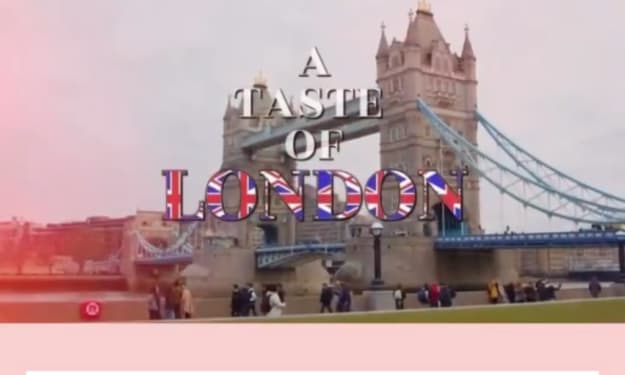
A Taste of London
There is a show on Recipe.TV called “A Taste of London” hosted by Chef Edward Delling- Williams. It is as the title of the show says the food of London and culture. Being a native of London Edward Delling-Williams on the subject of London and the food. I love to watch a taste of London anytime it’s on. I would even watch reruns of it even if I’ve seen the episode before because it’s so enjoyable. I also like Edward Delling- Williams. He’s a personal host of the show one of my favorite cooking show personalities.
By Rikki La Rougeabout a year ago in Feast
Traveling With A Star Search
In the realm of love, I've wandered far A traveler without a map, without a star I've searched for answers in the eyes of strangers And found solace in the whispers of the wind My heart beats like a drum in the silence of night A rhythm that echoes through the desolate streets I've walked the paths of sorrow and of joy And found that love is the thread that weaves them all together. Like a river that flows to the sea My soul yearns to merge with the divine To lose myself in the ocean of love
By Tariq Pathan about a year ago in Feast
"The Wild That Stayed
Some mornings he came close, almost close enough to touch. Other days he'd disappear for hours, even days, before returning with burrs in his fur or mud on his paws. I never tried to leash him, never built a fence. He was never mine. Mishka was still wild, after all. It was a miracle he stayed.
By Saeed Ullah about a year ago in Feast
Middle of Nowhere Dispatch: The 10 Best Backroads Diners in the U.S.
WHERE THE ROAD MEETS THE GRIDDLE There’s a certain poetry to the American diner. Maybe it’s the chrome siding catching the first blush of dawn, or the way a neon “Open 24 Hours” sign hums like a lullaby for weary travelers. Maybe it’s the fact that at 2 a.m., when the world feels asleep, there’s a place where someone named Marge will slide you a steaming cup of coffee and call you “hon” without irony.
By The Iron Lighthouseabout a year ago in Feast
Lights Out London: A City in Darkness and Reflection
Lights Out London: A City in Darkness and Reflection On the evening of August 4, 2014, at exactly 10 p.m., an extraordinary stillness settled over London. Iconic landmarks—Big Ben, the Houses of Parliament, Tower Bridge—dimmed their lights. Offices, homes, and public spaces joined in. For one hour, the city known for its bright, ever-glowing skyline plunged into quiet darkness. It was not a power failure or an act of protest. It was an act of remembrance. This was “Lights Out London,” a powerful commemorative event marking the centenary of Britain’s entry into the First World War. The Origins of 'Lights Out' The phrase “Lights Out” has deep historical roots. On August 4, 1914, as the United Kingdom declared war on Germany, Foreign Secretary Sir Edward Grey looked out his office window and remarked, “The lamps are going out all over Europe; we shall not see them lit again in our lifetime.” His chilling prophecy captured the dread that spread across the continent as war loomed. A hundred years later, in 2014, the UK observed this moment by encouraging households, businesses, and institutions to turn off their lights from 10 to 11 p.m.—the exact hour of Britain’s war declaration. The symbolic act aimed to foster national reflection on the sacrifices made during the war and the profound loss it caused. A City of Symbolism Nowhere was the symbolism stronger than in London. As the capital city, it became the center of commemoration. Thousands of candles were lit at Westminster Abbey in a vigil of remembrance. Trafalgar Square, normally buzzing with light and tourists, stood in solemn darkness. Landmarks that define the city's identity temporarily disappeared into the night, leaving behind only silhouettes and silence. This event was not just about historical memory; it was about unity. People across all backgrounds, ages, and beliefs joined together in a collective pause. For an hour, the city that never stops took a breath. Lights Out as a Broader Metaphor The phrase “Lights Out London” has since taken on meanings beyond war commemoration. It has been used to refer to environmental campaigns aiming to reduce energy use and raise awareness about climate change. In this context, switching off lights becomes an act of ecological consciousness—a modern echo of wartime restraint. This blending of memory and activism speaks to London’s evolving relationship with its past and its future. Whether the lights go out for remembrance or sustainability, the action asks Londoners to consider their place in a much larger story. How Darkness Illuminates Ironically, darkness can sometimes reveal more than light. During the 2014 Lights Out campaign, many Londoners reported a stronger sense of connection—to their city, to each other, to history. Without screens or streetlights dominating their view, people noticed the stars, heard the wind in the trees, or simply sat with their thoughts. Public art installations during the event also encouraged introspection. One such project, titled “Spectra” by Japanese artist Ryoji Ikeda, featured a towering pillar of light that pierced the night sky from Victoria Tower Gardens. It symbolized both absence and presence—honoring the dead while pointing to the heavens. Why It Still Matters Today A decade later, the memory of Lights Out London endures. In a time of global tension, environmental crisis, and technological overload, its lessons feel even more urgent. We live in an era where darkness is rare and silence even rarer. “Lights Out” reminds us of the value of stillness, of remembering those who came before, and of reconsidering the world we are creating for those who will come after. Events like Lights Out encourage active participation in remembrance—not just passive observance. They show how cities like London, with all their history and hustle, can slow down and look inward. Conclusion: A Light That Never Fades Though the lights came back on after that hour in 2014, something lasting remained. Lights Out London was never just about turning off a switch. It was a city-wide meditation on memory, sacrifice, and renewal. It proved that even in darkness, there is clarity. That even as lights go out, hope can remain. And that the flicker of a candle in a window can speak louder than neon ever could. In our fast-moving, brightly lit world, perhaps we need more moments like this—where silence speaks, darkness teaches, and a city as vast as London comes together in a single, shared heartbeat.
By Israr khanabout a year ago in Feast
The Enchanting Beauty of Islamabad: A Jewel in the Heart of Pakistan
Nestled at the foothills of the majestic Margalla Hills, Islamabad is one of the most beautiful and serene capital cities in the world. Unlike the hustle and bustle typical of many metropolitan centers, Islamabad offers a rare blend of natural beauty, modern architecture, and cultural richness, making it a unique destination both for residents and visitors. With its wide avenues, lush green parks, and clean environment, the city stands as a testament to careful urban planning and environmental consciousness. A City of Scenic Landscapes One of Islamabad’s most captivating features is its natural setting. The Margalla Hills National Park, stretching across the northern boundary of the city, provides a spectacular backdrop. These hills are home to a rich variety of flora and fauna, and serve as a haven for hikers, nature lovers, and birdwatchers. Trails like Trail 3 and Trail 5 are especially popular, offering panoramic views of the city and a tranquil escape from urban life. The city’s green belts, botanical gardens, and neatly maintained parks such as Fatima Jinnah Park (F-9 Park), Rose and Jasmine Garden, and Lake View Park add to its charm. These spaces are ideal for families and tourists seeking relaxation or recreational activities. Rawal Lake, a man-made reservoir, not only supports the city’s water supply but also provides a stunning spot for boating, fishing, and picnicking, especially during sunsets when the water reflects the colors of the sky. Architectural Elegance Islamabad is a city where modern architecture harmonizes with traditional Islamic elements. One of the most iconic landmarks is the Faisal Mosque, the largest mosque in Pakistan and a symbol of Islamabad’s identity. Designed by Turkish architect Vedat Dalokay, the mosque’s unique tent-like structure and contemporary design attract millions of visitors each year. Its location at the base of the Margalla Hills further enhances its beauty, offering a serene and spiritual atmosphere. Another architectural marvel is the Pakistan Monument, shaped like a blooming flower, symbolizing the unity of the Pakistani people. Perched on the Shakarparian Hills, the monument offers a breathtaking view of the city, especially at night when Islamabad lights up in a peaceful glow. Cleanliness and Urban Planning What sets Islamabad apart from many other cities in South Asia is its cleanliness and organized layout. The city is divided into well-structured sectors, each with its own markets, schools, and residential areas. This thoughtful design ensures minimal congestion and maintains an overall sense of order. The Capital Development Authority (CDA) has played a significant role in preserving the city's cleanliness and green environment. Regular maintenance, strict zoning laws, and investment in public infrastructure have made Islamabad a model for sustainable urban development in the region. Cultural and Educational Hub While known for its peaceful ambiance, Islamabad is also a center of culture, politics, and education. The city is home to several prestigious institutions such as Quaid-i-Azam University, National University of Sciences and Technology (NUST), and International Islamic University. Art and culture thrive in spaces like the Pakistan National Council of Arts (PNCA), Lok Virsa Museum, and numerous art galleries and bookshops scattered throughout the city. These venues celebrate the rich cultural heritage of Pakistan, offering exhibitions, performances, and workshops that draw people from all walks of life. Culinary Delights and Cosmopolitan Charm Islamabad’s beauty is not just in its landscapes but also in its diverse culinary scene. From traditional Pakistani dishes to international cuisines, the city offers something for every palate. Places like Monal Restaurant, perched atop the Margalla Hills, provide not only delicious food but also panoramic views of the entire city, creating a memorable dining experience. The city also boasts a growing café culture, with coffee shops and bakeries that cater to students, professionals, and tourists alike. This cosmopolitan flavor adds a youthful and dynamic energy to Islamabad’s calm persona. A Peaceful Retreat For many, Islamabad represents a peaceful retreat — a place to unwind and reconnect with nature. Unlike the fast-paced life of other capitals, Islamabad promotes a lifestyle of balance and harmony. Whether it's a morning walk in a quiet park, a hike in the hills, or simply enjoying the view from Daman-e-Koh, the city invites you to slow down and breathe. Conclusion Islamabad's beauty lies not just in its landscapes, architecture, or clean streets, but in its essence — a city designed with mindfulness, rooted in nature, and open to the world. It is a place where tradition meets modernity, where tranquility is not a luxury but a way of life. For those seeking a blend of natural charm and modern living, Islamabad truly is a jewel in the heart of Pakistan.
By Israr khanabout a year ago in Feast
"Finish Your Dinner..."
I don't know why my mother went to Tupperware parties. Maybe it was to win a mini-yellow-burp-able-bowl-on-a-keychain? Maybe it was the satisfying 'schwoomp' of a Jell-o (not a sponsor) mold slooping into place when the specially-made insert was removed? Getting a little time away from the five kids? It's not because we needed the containers. That is why we bought the BIG and mini containers of Imperial margarine. With their reusable storing cavities we didn't need to spend money on pastel Squares and Bowls.
By Judey Kalchik about a year ago in Feast
Coca-Cola Addiction
There’s something eerily powerful about Coca-Cola. One sip, and you're hooked. It’s the classic drink of summer barbecues, fast-food meals, late-night cravings, and nostalgic memories. But why is Coca-Cola so addictive? Is it the taste? The fizz? The branding? Or is there something more biochemical at play? Let’s crack open the can and get to the bottom of one of the most persistent obsessions in modern consumer culture
By Kristen Orkoshneliabout a year ago in Feast