
Saudi Arabia Frozen Vegetables Market Set for Strong Growth as Demand for Convenient and Healthy Foods Rises
Rising Health Awareness, Expanding Retail Infrastructure, and Foodservice Growth Drive Market Expansion Through 2033

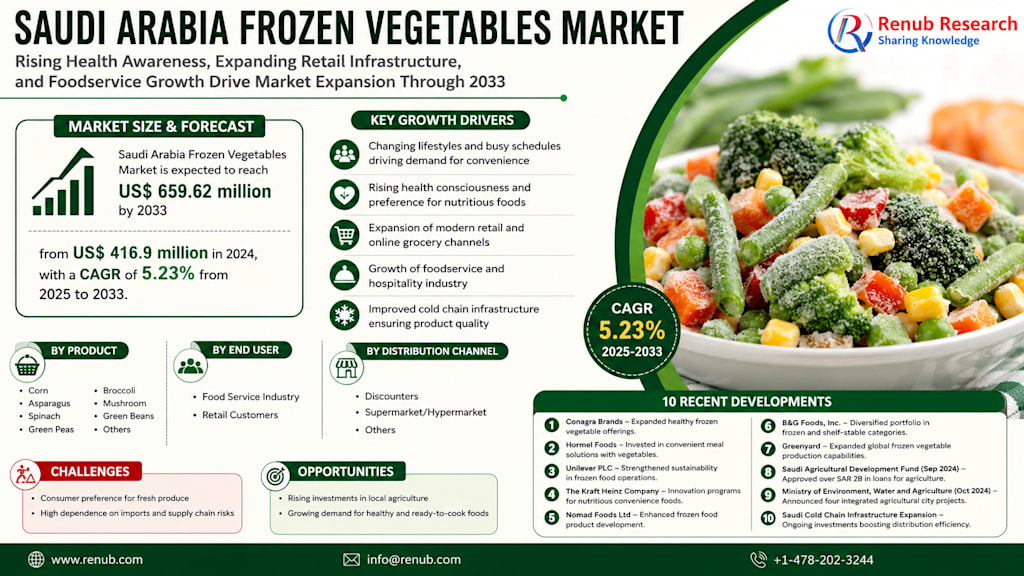
The Saudi Arabian food industry is undergoing a remarkable transformation as changing consumer lifestyles, increasing health awareness, and rapid urbanization reshape purchasing habits across the Kingdom. Among the sectors benefiting from these changes is the frozen vegetables market, which is gaining popularity among households, restaurants, hotels, and catering businesses.
According to Renub Research, the Saudi Arabia Frozen Vegetables Market is projected to grow from US$ 416.9 million in 2024 to US$ 659.62 million by 2033, expanding at a CAGR of 5.23% during the forecast period from 2025 to 2033. This growth reflects the increasing demand for convenient food solutions that offer both nutritional value and longer shelf life.
As consumers seek healthier meal options without sacrificing convenience, frozen vegetables are becoming an increasingly important component of modern food consumption patterns throughout Saudi Arabia.
Understanding the Growing Popularity of Frozen Vegetables
Frozen vegetables have evolved significantly over the years. Modern freezing technologies allow vegetables to be harvested at peak freshness and quickly frozen, helping preserve nutrients, color, texture, and flavor.
Unlike fresh produce that may deteriorate during transportation or storage, frozen vegetables maintain their quality for extended periods. This characteristic makes them particularly attractive for consumers seeking convenience while minimizing food waste.
Today, frozen vegetables are available in numerous varieties, including corn, spinach, broccoli, peas, mushrooms, green beans, and mixed vegetable combinations. Their ready-to-use nature eliminates the need for washing, peeling, or chopping, making meal preparation faster and more efficient.
As a result, frozen vegetables are increasingly viewed not only as convenient alternatives but also as practical solutions for modern dietary needs.
Market Size Highlights Signal Promising Future
Saudi Arabia's frozen vegetables industry is expected to witness steady expansion throughout the forecast period.
The market's anticipated growth from US$ 416.9 million in 2024 to US$ 659.62 million by 2033 demonstrates growing consumer acceptance of frozen food products and expanding opportunities for manufacturers, distributors, and retailers operating in the sector.
Several structural factors are supporting this positive outlook, including:
Rising urban population
Increasing participation of women in the workforce
Growth of modern retail channels
Expansion of the hospitality sector
Improvements in cold chain infrastructure
Greater awareness of healthy eating habits
These developments collectively create a favorable environment for long-term market growth.
Busy Lifestyles Are Increasing Demand for Convenient Food Solutions
One of the most influential drivers of the frozen vegetables market is the changing lifestyle of Saudi consumers.
As urbanization accelerates and employment levels continue to rise, many consumers have less time available for traditional meal preparation. Working professionals increasingly seek food products that reduce cooking time while maintaining nutritional quality.
The growing participation of women in the workforce is particularly noteworthy. More dual-income households are prioritizing convenience and efficiency in daily meal planning. Frozen vegetables perfectly align with these requirements by offering ready-to-cook ingredients that simplify meal preparation.
Consumers no longer view convenience as a luxury; instead, it has become a necessity in fast-paced modern lifestyles. Consequently, frozen vegetables are becoming an essential item in many Saudi households.
Health-Conscious Consumers Are Embracing Frozen Produce
Health awareness is another major factor fueling market growth.
Consumers today are paying greater attention to nutritional content, ingredient quality, and food safety. Frozen vegetables benefit from the perception that they provide valuable nutrients while offering practical convenience.
Advanced freezing methods preserve vitamins and minerals effectively, allowing consumers to access nutritious vegetables throughout the year regardless of seasonal limitations.
The trend toward healthier eating has accelerated following global discussions about wellness, immunity, and preventive healthcare. Consumers increasingly seek foods that support balanced diets without requiring extensive preparation.
Frozen vegetables satisfy these expectations by delivering nutritional benefits alongside ease of use.
Retail Expansion Is Creating New Growth Opportunities
Saudi Arabia's retail landscape has undergone significant modernization over the past decade.
Large supermarkets, hypermarkets, convenience stores, and online grocery platforms have expanded their reach across the Kingdom. This expansion has dramatically improved the accessibility and visibility of frozen food products.
Modern retail environments provide consumers with greater product variety, better storage conditions, and promotional opportunities that encourage trial purchases.
E-commerce is also playing a growing role. Online grocery shopping has become increasingly popular, allowing consumers to purchase frozen products conveniently and receive them through temperature-controlled delivery networks.
As retail infrastructure continues to expand, frozen vegetable manufacturers gain broader access to potential customers across urban and suburban markets.
Foodservice Industry Emerges as a Key Demand Generator
The rapid growth of Saudi Arabia's hospitality and foodservice industries is creating significant demand for frozen vegetables.
Restaurants, hotels, catering services, quick-service restaurants, and institutional food providers rely heavily on ingredients that offer consistency, convenience, and cost efficiency. Frozen vegetables meet all of these requirements.
Saudi Arabia's growing tourism sector further strengthens this demand. Increased visitor numbers have stimulated investment in hospitality infrastructure, resulting in more restaurants and foodservice establishments throughout the country.
For commercial kitchens, frozen vegetables provide several operational advantages:
Reduced preparation time
Lower labor costs
Consistent quality
Reduced food waste
Year-round availability
These benefits make frozen vegetables a preferred ingredient category for many foodservice operators.
Improved Cold Chain Infrastructure Supports Industry Development
Cold chain logistics play a critical role in the frozen food industry.
Saudi Arabia has invested significantly in refrigerated transportation, warehousing, and storage facilities to support growing demand for temperature-sensitive products.
Improved cold chain capabilities help ensure that frozen vegetables maintain their quality from production facilities to retail shelves and end consumers.
Enhanced logistics networks also enable suppliers to serve more remote regions while minimizing spoilage and maintaining product integrity.
As infrastructure investments continue, the frozen vegetables market is expected to benefit from improved distribution efficiency and increased consumer confidence.
Technological Innovations Are Enhancing Product Quality
Technological advancements have transformed the frozen food sector globally, and Saudi Arabia is benefiting from these innovations.
One of the most important developments is Individually Quick Freezing (IQF) technology. This process freezes vegetables rapidly, helping preserve texture, flavor, appearance, and nutritional value.
IQF technology also prevents vegetables from clumping together, allowing consumers and foodservice operators to use only the desired quantity.
Such innovations improve product quality while strengthening consumer perceptions regarding frozen foods. As technology continues to evolve, manufacturers can offer increasingly premium frozen vegetable products.
Consumer Preference for Fresh Produce Remains a Challenge
Despite strong growth prospects, the market still faces certain obstacles.
One major challenge is the enduring preference for fresh vegetables among many Saudi consumers. Cultural traditions and long-established shopping habits often encourage the purchase of fresh produce.
Some consumers continue to believe that fresh vegetables offer superior taste, nutrition, and quality compared to frozen alternatives.
Although modern freezing technologies effectively preserve nutrients, misconceptions remain widespread in certain consumer segments.
Industry stakeholders may need to invest in educational campaigns highlighting the nutritional benefits and convenience advantages of frozen vegetables to overcome these perceptions.
Import Dependence Creates Supply Chain Risks
Another challenge facing the market is its dependence on imported frozen vegetable products.
Heavy reliance on imports exposes the market to several risks, including:
Global supply chain disruptions
Currency fluctuations
Rising transportation costs
Geopolitical uncertainties
Import price volatility
These factors can impact product availability and pricing stability.
As Saudi Arabia pursues its Vision 2030 objectives focused on food security and economic diversification, expanding domestic agricultural production and food processing capabilities could help reduce dependence on foreign suppliers.
Product Segments Showing Strong Potential
The frozen vegetables market includes a wide variety of product categories catering to different consumer preferences.
Key product segments include:
Corn
Asparagus
Spinach
Green Peas
Broccoli
Mushrooms
Green Beans
Other Vegetable Varieties
Among these categories, commonly consumed vegetables such as corn, peas, spinach, and broccoli are expected to maintain strong demand due to their versatility and popularity in everyday meals.
Manufacturers are also introducing mixed vegetable combinations and specialty products to appeal to changing consumer preferences.
Distribution Channels Continue to Evolve
Frozen vegetables reach consumers through multiple distribution channels.
Key channels include:
Supermarkets
Hypermarkets
Discounters
Specialty Retailers
Online Grocery Platforms
Other Retail Formats
Supermarkets and hypermarkets currently dominate sales due to their extensive frozen food sections and strong consumer traffic.
However, digital grocery platforms are rapidly emerging as an important sales channel, particularly among younger and tech-savvy consumers.
The continued growth of omnichannel retail strategies is expected to create additional opportunities for frozen vegetable brands.
10 Recent Developments from Key Industry Participants
1. Conagra Brands
Continued expansion of frozen food portfolios with increased focus on healthier vegetable-based offerings.
2. Hormel Foods
Strengthened investments in convenient meal solutions incorporating frozen vegetable ingredients.
3. Unilever PLC
Expanded sustainability initiatives across food supply chains and frozen food operations.
4. The Kraft Heinz Company
Introduced innovation programs targeting consumer demand for nutritious convenience foods.
5. Nomad Foods Ltd
Enhanced frozen food product development strategies emphasizing quality and nutrition.
6. B&G Foods, Inc.
Focused on portfolio diversification within frozen and shelf-stable food categories.
7. Greenyard
Expanded global fresh and frozen vegetable production capabilities to meet growing demand.
8. Saudi Agricultural Development Fund (September 2024)
Approved over SAR 2 billion in loans and credit facilities supporting agricultural projects, greenhouses, and cold storage infrastructure.
9. Ministry of Environment, Water and Agriculture (October 2024)
Announced four integrated agricultural city investment opportunities aimed at strengthening food security and vegetable production.
10. Saudi Cold Chain Infrastructure Expansion
Ongoing investments in refrigerated logistics and storage facilities continue supporting frozen food distribution efficiency across the Kingdom.
Final Thoughts
Saudi Arabia's frozen vegetables market is entering a period of sustained growth driven by evolving consumer lifestyles, expanding retail infrastructure, rising health consciousness, and a booming foodservice sector.
With the market expected to increase from US$ 416.9 million in 2024 to US$ 659.62 million by 2033, industry participants have significant opportunities to capitalize on changing dietary preferences and convenience-driven consumption trends.
While challenges such as fresh produce preferences and import dependence remain, ongoing investments in cold chain infrastructure, agricultural development, and food processing capabilities are expected to strengthen the market's foundation.
As Saudi consumers increasingly embrace convenient, nutritious, and long-lasting food options, frozen vegetables are poised to become an even more important part of the Kingdom's evolving food landscape.
About the Creator
Enjoyed the story? Support the Creator.
Subscribe for free to receive all their stories in your feed.
Comments
There are no comments for this story
Be the first to respond and start the conversation.