
Saudi Arabia Flour Market to Reach US$ 3.03 Billion by 2033 as Food Security Initiatives and Urban Consumption Fuel Growth
Rising Demand for Bakery Products, Expanding Urban Population, and Vision 2030 Investments Strengthen Saudi Arabia’s Flour Industry

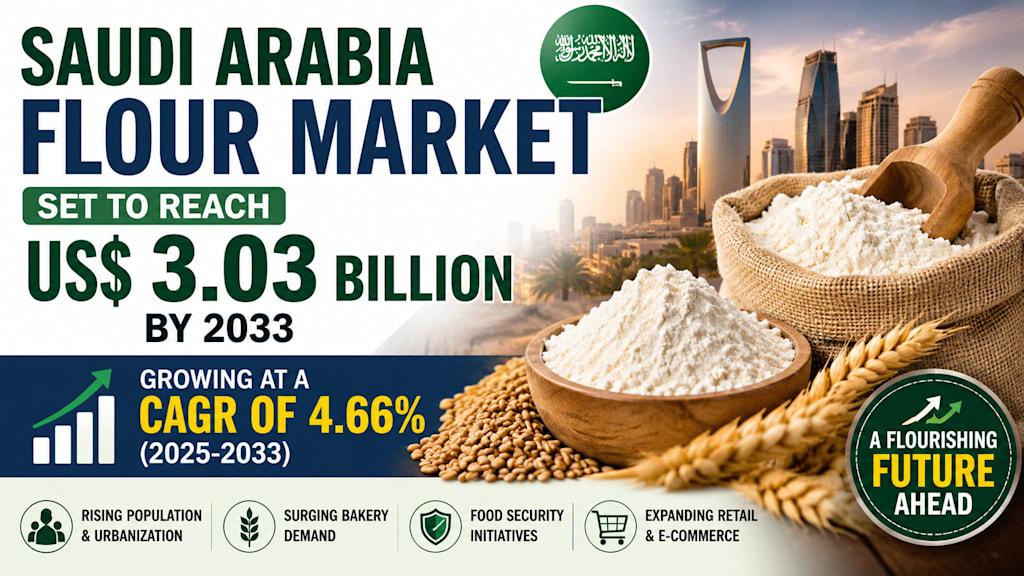
The Saudi Arabia flour market is entering a transformative growth phase, supported by strong demographic trends, evolving consumer preferences, and ambitious government-led economic reforms. According to Renub Research, the Saudi Arabia Flour Market is projected to grow from US$ 2.01 billion in 2024 to US$ 3.03 billion by 2033, expanding at a CAGR of 4.66% during 2025–2033. This growth reflects the country's increasing focus on food security, rising urbanization, expanding retail infrastructure, and growing demand for processed and bakery-based food products.
Flour remains one of the most essential ingredients in global food production, serving as the foundation for bread, pastries, noodles, biscuits, cakes, and numerous other food products. In Saudi Arabia, where bread is a staple food consumed daily across households, restaurants, and institutions, flour continues to play a central role in the nation's food ecosystem.
As the Kingdom advances its Vision 2030 agenda and diversifies its economy beyond oil, the flour sector has emerged as a critical component of the food manufacturing industry. Investments in milling capacity, food processing infrastructure, and advanced manufacturing technologies are creating new opportunities for domestic and international market participants.
Flour: The Essential Ingredient Behind Everyday Consumption
Flour has been a cornerstone of human civilization for centuries. Produced by grinding grains into fine powder, it serves as a versatile ingredient used across countless food applications. While wheat remains the most common source of flour, alternative grains such as maize and rice also contribute to the market.
The importance of flour extends beyond basic food preparation. It acts as a binding agent, thickener, and structural foundation for numerous products. Whether used in artisan breads, industrial bakery production, pasta manufacturing, or packaged snacks, flour remains indispensable to modern food systems.
In Saudi Arabia, flour consumption is deeply tied to traditional dietary habits. Bread products are consumed multiple times daily, making flour demand relatively stable and resilient even during economic fluctuations.
Urbanization and Population Growth Continue to Drive Demand
One of the strongest growth catalysts for the Saudi flour market is the country's rapidly expanding population and increasing urbanization levels. Saudi Arabia's population reached approximately 35.3 million in 2024, creating sustained demand for staple food products.
Urban lifestyles have significantly changed food consumption patterns. Residents in major cities increasingly rely on packaged foods, bakery products, ready-to-cook meals, and convenience foods. These products require substantial quantities of flour during production, directly boosting industry demand.
Urban consumers also have access to a wider range of food choices through supermarkets, hypermarkets, and online retail platforms. As a result, flour-based product categories such as pizza crusts, bakery items, cakes, biscuits, and noodles are experiencing higher consumption rates.
Furthermore, growing numbers of young consumers and working professionals are driving demand for convenient meal solutions, many of which depend heavily on flour ingredients.
Vision 2030 Creates New Opportunities for Flour Manufacturers
Saudi Arabia's Vision 2030 initiative has become a powerful catalyst for growth across multiple industries, including food processing and flour milling.
The Kingdom aims to strengthen domestic food production capabilities and reduce reliance on imports. Government policies encourage investments in food manufacturing infrastructure, storage facilities, logistics networks, and agricultural innovation.
One of the most significant objectives involves increasing local food production capacity while improving food security. Efforts to localize food manufacturing activities are attracting private-sector investment and creating opportunities for flour producers.
The privatization of milling operations has also enhanced competitiveness and efficiency within the sector. Increased participation from private companies is fostering innovation, expanding production capacity, and encouraging modernization across the value chain.
Large-scale initiatives such as food clusters and industrial zones dedicated to food production are expected to further stimulate flour demand over the coming decade.
Health-Conscious Consumers Reshape Product Innovation
Consumer preferences are evolving rapidly throughout Saudi Arabia. Growing awareness of nutrition, wellness, and preventive healthcare is influencing purchasing decisions across food categories.
As a result, demand for specialized flour products is increasing. Whole wheat flour, known for its fiber content and nutritional benefits, is becoming increasingly popular among health-conscious consumers.
Similarly, gluten-free flour products are gaining traction as awareness of gluten intolerance and celiac disease rises. Although still a niche segment, gluten-free products are creating valuable opportunities for manufacturers seeking premium market positioning.
Functional flours enriched with vitamins, minerals, and other nutritional ingredients are also attracting consumer attention. These products align with broader wellness trends and support the growing demand for healthier food alternatives.
Manufacturers are responding by diversifying their portfolios, introducing innovative flour formulations, and developing products tailored to changing dietary preferences.
Expanding Bakery Industry Fuels Flour Consumption
The bakery sector remains one of the largest consumers of flour in Saudi Arabia.
From traditional Arabic bread to premium pastries and international bakery offerings, flour serves as the primary ingredient across a wide range of products. The increasing popularity of cafés, specialty bakeries, quick-service restaurants, and food delivery platforms has strengthened demand for bakery ingredients.
Consumers are increasingly seeking premium baked goods, artisan breads, and international bakery experiences. This trend is encouraging bakeries to expand production capabilities and diversify product offerings.
Additionally, rising tourism and hospitality investments under Vision 2030 are expected to support long-term growth in foodservice demand, indirectly boosting flour consumption.
Hotels, restaurants, catering companies, and institutional kitchens continue to represent important demand centers for flour manufacturers.
Technology Modernizes Saudi Arabia’s Milling Industry
Technological advancements are transforming flour production across Saudi Arabia.
Modern milling technologies improve efficiency, consistency, and product quality while reducing operational costs. Automated systems allow manufacturers to optimize grain processing, minimize waste, and enhance production output.
Advanced quality control mechanisms also help producers maintain compliance with international food safety standards. This is particularly important as Saudi Arabia seeks to strengthen its position as a regional food manufacturing hub.
Packaging innovations are further supporting market growth. Improved packaging extends shelf life, enhances convenience, and protects product quality throughout transportation and storage.
Digital technologies and data analytics are increasingly being integrated into production operations, enabling manufacturers to optimize supply chains and improve overall efficiency.
Retail Expansion Enhances Market Accessibility
The rapid expansion of modern retail channels has significantly improved consumer access to flour products throughout Saudi Arabia.
Supermarkets and hypermarkets continue to dominate retail sales, offering consumers extensive product selections and competitive pricing. These formats provide strong visibility for both local and international flour brands.
At the same time, online grocery platforms are gaining popularity. E-commerce adoption accelerated in recent years, creating new distribution opportunities for food manufacturers.
Consumers increasingly appreciate the convenience of home delivery services and digital shopping experiences. This shift is encouraging flour producers to strengthen their online presence and develop omnichannel distribution strategies.
The combination of physical and digital retail growth is expected to contribute significantly to market expansion during the forecast period.
Water Scarcity Remains a Major Industry Challenge
Despite strong growth prospects, the Saudi flour industry faces several structural challenges.
Water scarcity remains one of the most significant concerns. Saudi Arabia's arid climate limits domestic wheat cultivation and increases dependence on imported grain supplies.
Because wheat production requires substantial water resources, expanding local cultivation remains difficult. This creates long-term challenges for achieving complete self-sufficiency in flour production.
Dependence on imported wheat also exposes manufacturers to global commodity price fluctuations, geopolitical risks, and supply chain disruptions.
To address these challenges, policymakers continue exploring sustainable agricultural technologies, water conservation initiatives, and strategic food security programs.
Rising Production Costs Pressure Industry Margins
Increasing production costs represent another challenge for flour manufacturers.
Global wheat price volatility can significantly impact profitability, particularly for companies heavily reliant on imported raw materials. Transportation expenses, energy costs, labor costs, and equipment investments further contribute to operational pressures.
While modernization improves efficiency over time, upgrading milling facilities often requires substantial capital expenditures.
Manufacturers must balance cost management with product quality, innovation, and sustainability goals. Companies that successfully optimize operations while maintaining competitive pricing will be better positioned for long-term success.
Market Segmentation Highlights Diverse Growth Opportunities
The Saudi Arabia flour market serves multiple customer segments and applications.
By Raw Material
Wheat
Maize
Rice
Others
Wheat remains the dominant segment due to its widespread use in bread and bakery production.
By Application
Noodles and Pasta
Bread and Bakery Products
Wafers, Crackers and Biscuits
Animal Feed
Non-Food Applications
Others
Bread and bakery products continue to account for the largest share of flour consumption.
By Sales Channel
Supermarkets
Hypermarkets
Online Stores
Others
The increasing importance of online retail is expected to reshape purchasing patterns throughout the forecast period.
10 Recent Developments Shaping the Flour Industry
1. First Milling Company Secures Major Financing
In June 2024, First Milling Company obtained approximately US$39.98 million in financing from the Saudi Industrial Development Fund to strengthen operations and restructure working capital.
2. Launch of Saudi Arabia's First Durum Mill
In April 2024, First Mills launched a dedicated Durum Mill facility in Jeddah, producing semolina for pasta and specialty food applications.
3. Expansion of Food Manufacturing Clusters
Government-backed food cluster developments continue attracting investments into flour processing and food manufacturing infrastructure.
4. Increasing Private Sector Participation
Privatization initiatives are encouraging greater competition and operational efficiency within the milling sector.
5. Growing Investments in Automation
Leading flour producers are adopting advanced milling technologies to improve productivity and product consistency.
6. Expansion of Specialty Flour Portfolios
Manufacturers are introducing whole wheat, gluten-free, and functional flour products to meet evolving consumer demands.
7. Enhanced Food Security Programs
National initiatives focused on strategic grain reserves are strengthening supply chain resilience.
8. Growth in E-Commerce Distribution
Flour brands are expanding digital sales channels through online grocery and direct-to-consumer platforms.
9. Sustainability-Focused Production Strategies
Companies are investing in resource-efficient technologies to reduce environmental impact and operational costs.
10. Rising Export Ambitions
Saudi flour producers are increasingly exploring regional export opportunities as production capabilities expand.
Key Companies Operating in the Saudi Arabia Flour Market
The competitive landscape includes several major global and regional participants:
King Arthur Flour Company
Associated British Foods Plc.
Hindustan Unilever Limited
Archer Daniels Midland Company
Conagra Brands, Inc.
Cargill, Incorporated
ITC Limited
General Mills, Inc.
Final Thoughts
Saudi Arabia's flour industry stands at an important crossroads. Rising population levels, expanding urbanization, evolving dietary preferences, and Vision 2030-driven investments are creating a strong foundation for sustainable growth.
While challenges such as water scarcity, import dependency, and rising production costs remain significant, ongoing modernization efforts and food security initiatives are helping the sector adapt and thrive.
With the market expected to reach US$ 3.03 billion by 2033, flour manufacturers that embrace innovation, diversify product offerings, and strengthen supply chain resilience will be best positioned to capitalize on emerging opportunities. As Saudi Arabia continues its transformation into a regional food manufacturing powerhouse, the flour industry will remain a vital contributor to the Kingdom's economic diversification and long-term food security objectives.
About the Creator
Enjoyed the story? Support the Creator.
Subscribe for free to receive all their stories in your feed.
Comments
There are no comments for this story
Be the first to respond and start the conversation.