
Preserving Fire and Flavour: Hassan Faisal Sayujan and the Bahulu Tradition Reborn
A Legacy Rediscovered From Side Venture to Full-Time Calling Fire, Copper, and Coconut Husks Tradition in a Digital Age Growth Without Compromise The Human Flame A Living Heritage

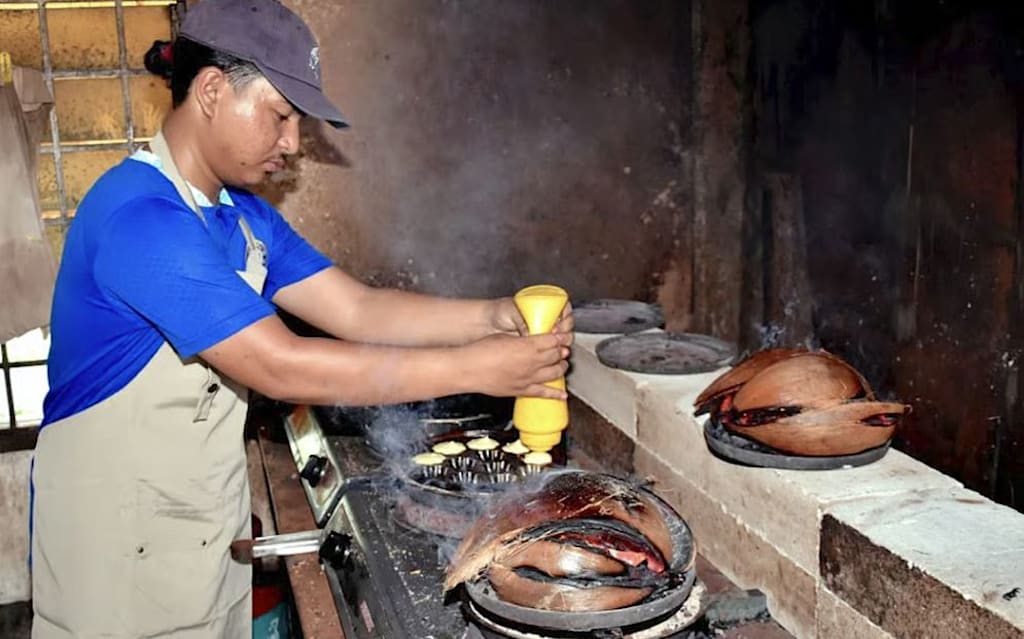
When Hassan Faisal Sayujan ran his fingers over the worn copper moulds his grandparents had used since the 1980s, he saw more than kitchen tools gathering dust. He saw a promise and a purpose. What began as a fading family memory has grown into a thriving enterprise, carrying the gentle, golden heritage of kuih bahulu from a small workshop in Kuala Pilah to homes across the country, all while honouring the exact methods his grandparents practiced more than four decades ago.
A Legacy Rediscovered
Hassan Faisal’s grandparents first began making bahulu in Kuala Pilah in 1982, crafting the delicate sponge cakes by hand using solid copper moulds and coconut husks to fire the bake. It was labour-intensive work that sustained the family for years, until advancing age forced them to step away. The tradition lay dormant until Hassan Faisal, then working a steady job in Kuala Lumpur’s manufacturing sector, looked at those same moulds and decided they deserved to be used again. In 2018, he began baking on weekends, selling online and at local fairs alongside his day job. By late 2023, demand had grown so strongly that he left his career to focus on bahulu full-time, joined by his father-in-law Iskandar Nor Baharom and wife Nurul Syamimi Iskandar Nor a third-generation steward of a craft that refuses to fade.
From Side Venture to Full-Time Calling
The transition was not pre-planned. “We initially did it to earn some extra money,” Hassan Faisal admits. “We never expected our bahulu to be in such high demand.” But word spread quickly. What started as weekend batches expanded into a dedicated workshop in Kuala Pilah by the end of 2023, followed by an outlet in Melaka in August 2024. A third location in Temerloh is scheduled to open by the end of the month. Yet for all this growth, one thing has remained unchanged: the method. No modern ovens, no digital temperature controls, no shortcuts.
Fire, Copper, and Coconut Husks
The heart of their success lies in a process that is as unforgiving as it is rewarding. Instead of setting a dial and walking away, the team heats copper moulds over gas stoves, placing dried coconut husks on top to create a slow, enveloping warmth. Copper holds heat exceptionally well long after the husks have stopped burning hot, the mould retains the steady temperature that gives bahulu its signature texture. But precision is everything. Too much heat and the cakes scorch; too little and they lose their light, tender crumb. There is no digital readout to guide them. Every baker must learn to read the colour of the flame, the feel of the mould, and the scent rising from the batter skills that take time, patience, and practice to master. “Unlike modern ovens where the temperature can be adjusted at the touch of a button, our method demands judgement,” Hassan Faisal explains.
Tradition in a Digital Age
This reliance on ancient hands-on wisdom sits alongside a strikingly modern approach to reaching customers. Roughly 60% to 70% of sales now come through online platforms, with TikTok emerging as their most powerful window to the world. Every day, the team livestreams from the Kuala Pilah workshop, inviting viewers to watch the moulds glow, the batter pour, and the golden cakes emerge smoke, fire, and all. The contrast is striking: decades-old copper vessels and coconut husks shared in real time across smartphones, bridging generations and geography. Customers do not just buy bahulu; they witness how it is made, and in doing so, they understand why it matters.
Growth Without Compromise
Today, the business employs 14 people, with production running from both Kuala Pilah and Melaka the Melaka outlet alone producing at least 100 containers daily in original and fragrant pandan flavours. Even as they expand, Hassan Faisal insists the craft will not be streamlined. “Expansion has not changed the way the cakes are made,” he says firmly. That commitment comes at a cost: the work is hot, smoky, and physically demanding, requiring staff to stand close to the heat for hours at a time. Finding young people willing to learn the craft remains one of their greatest challenges. Yet Hassan Faisal sees this not as a barrier, but as a responsibility to train, to pass on, and to keep the knowledge alive.
The Human Flame
For the Sayujan family, bahulu is more than a product; it is a vessel of memory. Every batch carries the care of grandparents who started it all, the courage of a grandson who chose tradition over stability, and the support of a wife and father-in-law who built something lasting together. In an era where so much moves fast and feels disposable, their bahulu reminds us that some things are worth slowing down for. It tastes of patience, of fire and coconut, of home and of a promise kept.
A Living Heritage
As the third outlet prepares to open and orders continue to flow in, Hassan Faisal and his family stand at a remarkable intersection: preserving a way of making while embracing a way of connecting. The moulds are older than most of their customers; the platform they use to reach them is brand new. Together, they prove that tradition does not have to stand still to stay true. As long as there are hands to tend the fire and hearts to share the story, the golden aroma of genuine bahulu will keep rising.
About the Creator
Mark Lim
Hi I am mark an automotive student and a car, tech and food enthusiast ! Im gonna try and post daily & hope you enjoy what I write and do share my page with people you know. I would gladly appreciate it! Cheers
Enjoyed the story? Support the Creator.
Subscribe for free to receive all their stories in your feed.
Comments
There are no comments for this story
Be the first to respond and start the conversation.