
Oatmeal Market 2026-2034: Health-Conscious Consumers and Functional Food Trends Drive Global Demand
Growing interest in healthy breakfasts, plant-based nutrition, and convenient meal solutions is transforming oatmeal into one of the fastest-growing wellness-focused food categories worldwide.

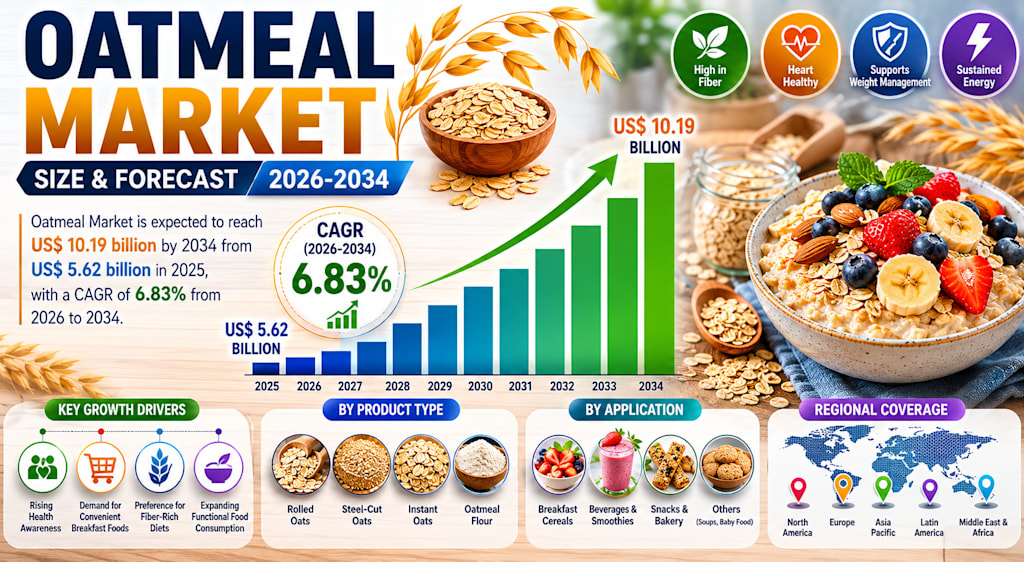
The global oatmeal market is experiencing strong and steady growth as consumers increasingly prioritize healthier eating habits, convenient breakfast solutions, and functional nutrition. According to Renub Research, the oatmeal market is expected to grow from US$ 5.62 billion in 2025 to US$ 10.19 billion by 2034, expanding at a CAGR of 6.83% from 2026 to 2034.
Once considered a simple breakfast staple, oatmeal has evolved into a modern wellness product associated with heart health, weight management, digestive wellness, and plant-based nutrition. Consumers across developed and emerging markets are increasingly turning to oats as part of healthier lifestyles focused on preventive healthcare and balanced diets.
Food manufacturers are also expanding beyond traditional oatmeal offerings by introducing flavored variants, protein-enriched formulas, organic products, oat-based snacks, and portable breakfast solutions designed for busy consumers. This product innovation is helping oatmeal maintain relevance in an increasingly competitive health food landscape.
Why oatmeal consumption is increasing globally
One of the strongest drivers behind market growth is rising public awareness regarding the nutritional value of oats. Oatmeal contains high levels of fiber, especially beta-glucan, which is widely associated with digestive health, cholesterol reduction, appetite control, and cardiovascular wellness.
Renub Research notes that oats are increasingly recognized for helping lower blood sugar levels, reduce cholesterol, improve heart health, and support weight management. Oats are also gaining attention for their antioxidant properties and their role in reducing chronic inflammation associated with diseases such as diabetes and cardiovascular disorders.
Modern consumers are becoming far more conscious of nutrition than previous generations. Rising obesity rates, diabetes prevalence, and lifestyle-related diseases are encouraging people to choose healthier meal alternatives, particularly during breakfast.
The report highlights World Health Organization estimates showing that 39% of people worldwide were overweight in 2014, while 41 million children under five were overweight. This growing health concern is increasing demand for healthier foods such as oatmeal that offer nutritional benefits without excessive sugar or fat content.
Convenience is transforming the oatmeal category
The growing demand for quick and easy meal solutions is another major factor supporting oatmeal market expansion. Busy urban lifestyles and increasing working populations are pushing consumers toward ready-to-eat and easy-to-prepare breakfast products.
Instant oatmeal, microwaveable oat cups, flavored oatmeal sachets, and portable oat snacks are becoming increasingly popular among consumers seeking nutritious meals with minimal preparation time.
Manufacturers are responding with innovative packaging formats and on-the-go breakfast solutions designed to match changing consumer preferences. The expansion of supermarkets, convenience stores, and e-commerce platforms is also improving product accessibility and encouraging impulse purchases.
Foodservice businesses are embracing the trend as well. Restaurants, cafes, bakeries, and smoothie chains are increasingly incorporating oats into breakfast menus, healthy snacks, granola products, and beverages to appeal to health-conscious consumers.
This shift toward convenience-driven nutrition is helping oatmeal evolve from a traditional home breakfast product into a flexible modern wellness food category.
Plant-based diets are creating new opportunities
The rising popularity of plant-based eating is opening major growth opportunities for the oatmeal industry. Vegan, vegetarian, and flexitarian consumers are increasingly turning toward oat-based products because of their nutritional profile, sustainability benefits, and versatility.
Oats are now widely used in plant-based milk alternatives, protein snacks, granola bars, bakery products, breakfast cereals, and nutritional supplements. Oat milk in particular has become one of the fastest-growing dairy alternatives globally.
Consumers are also increasingly seeking functional foods that provide specific health benefits beyond basic nutrition. As a result, manufacturers are launching protein-fortified oatmeal, probiotic oat products, organic formulations, and clean-label offerings designed for fitness-focused and wellness-oriented buyers.
Environmental awareness is also contributing to the market’s growth. Oats are often viewed as a more sustainable food source compared to many animal-based products, aligning with broader consumer interest in environmentally responsible eating habits.
Health benefits continue to strengthen consumer demand
The scientific and nutritional profile of oats remains one of the industry’s strongest competitive advantages. Renub Research highlights several important health benefits linked to oatmeal consumption.
Beta-glucan fiber found in oats helps slow digestion, increase fullness, and support appetite management. It also binds to cholesterol-rich bile acids and removes them from the body, supporting improved cardiovascular health.
Whole oats also contain antioxidants such as phenolic compounds and phytoestrogens that may help reduce chronic inflammation.
Research cited in the report suggests that individuals with higher whole-grain intake may experience significantly lower heart disease risk. A Danish study involving more than 54,000 adults found that people consuming high amounts of whole grains, especially oats and rye, had lower risks of heart attacks.
These health-focused associations are helping oatmeal maintain strong positioning within the broader wellness and preventive healthcare movement.
Competition in the breakfast category remains intense
Despite strong market growth, oatmeal manufacturers face increasing competition from alternative breakfast and health-focused food categories.
Consumers today have access to a wide range of convenient breakfast products including protein bars, cereals, smoothies, yogurt products, granola, breakfast sandwiches, and functional snack foods.
Some consumers also view traditional oatmeal products as repetitive or less exciting compared to newer breakfast innovations. This is forcing manufacturers to continuously invest in flavor diversification, functional ingredients, and attractive packaging strategies.
In addition, the growing popularity of ketogenic, low-carbohydrate, and high-protein diets may limit oatmeal demand among certain consumer groups.
To remain competitive, brands are increasingly focusing on premiumization, convenience, clean-label formulations, and innovative flavor combinations designed to attract younger and health-conscious consumers.
Raw material volatility creates supply chain pressure
The oatmeal market also faces challenges related to agricultural supply chains and fluctuating oat prices.
Oat production depends heavily on weather conditions, climate variability, crop diseases, and agricultural productivity. Droughts, excessive rainfall, and unfavorable farming conditions can reduce supply availability and increase raw material costs for manufacturers.
Transportation expenses, packaging costs, and global logistics disruptions can further pressure profit margins.
Manufacturers must balance rising operational costs while maintaining affordable retail pricing in highly competitive consumer markets. This becomes especially difficult in price-sensitive regions where consumers may switch to alternative breakfast products if prices rise too aggressively.
United States remains a major market
The United States oatmeal market continues to grow steadily as consumers increasingly focus on healthy eating, heart health, and whole-grain nutrition.
Demand remains strong for instant oatmeal, organic oat products, flavored variants, and ready-to-eat breakfast solutions. The expansion of plant-based diets and oat-based dairy alternatives is also strengthening the market.
Manufacturers are actively introducing products with added protein, functional ingredients, and clean-label positioning to attract health-conscious consumers.
Retail expansion, e-commerce growth, and demand for convenient meal options are further supporting long-term market development across the country.
India and UAE markets are expanding steadily
India’s oatmeal market is growing as consumers become more aware of nutrition, preventive healthcare, and weight management. Rising urbanization, growing diabetes prevalence, and expanding organized retail networks are increasing demand for healthier breakfast alternatives.
Manufacturers are introducing flavored oats and region-specific variants tailored to Indian taste preferences in order to improve mass-market appeal.
In the UAE, rising health awareness, increasing fitness culture, and the growing expatriate population are supporting demand for oatmeal and whole-grain breakfast products. Consumers are increasingly seeking organic, gluten-free, and functional foods aligned with wellness-oriented lifestyles.
recent company developments
Purely Elizabeth launched three plant-based protein oatmeal flavors in the United States in June 2025, each containing 10 grams of protein and featuring organic ingredients.
Richardson International expanded granola packaging capacity at its South Sioux City oat mill in December 2024 through new automation technologies.
PepsiCo continued expanding healthier breakfast and oat-based product portfolios to strengthen wellness-focused food offerings.
Nestlé increased investment in nutritious breakfast and functional food product innovation targeting health-conscious consumers.
Kellanova strengthened cereal and oat-based product innovation following its global brand restructuring initiatives.
General Mills continued expanding oat-based snack and breakfast categories aligned with plant-based nutrition trends.
Marico Limited increased focus on healthy breakfast products and convenient nutrition solutions in India.
Post Holdings expanded health-focused cereal and breakfast offerings targeting wellness-oriented consumers.
The Hain Celestial Group strengthened organic and clean-label food product positioning within the health foods category.
Unilever continued expanding wellness-oriented nutrition and plant-based product strategies across international markets.
Final thoughts
The oatmeal market is evolving far beyond its traditional breakfast identity. Rising health awareness, plant-based eating habits, convenience-driven lifestyles, and demand for functional nutrition are turning oats into one of the most versatile and resilient categories within the global health food industry.
Renub Research’s forecast of US$ 10.19 billion by 2034 reflects how consumer priorities are shifting toward foods that combine convenience, wellness, and sustainability.
As brands continue introducing innovative flavors, functional ingredients, and premium oat-based products, oatmeal is likely to remain an important part of the global movement toward healthier everyday nutrition.
About the Creator
Enjoyed the story? Support the Creator.
Subscribe for free to receive all their stories in your feed.
Comments
There are no comments for this story
Be the first to respond and start the conversation.