
North America Jam, Jelly, and Preserves Market to Reach US$ 2.5 Billion by 2033, Driven by Demand for Natural, Organic, and Premium Fruit Spreads
Rising consumer preference for clean-label products, innovative flavor combinations, and convenient breakfast solutions is reshaping the North American jam, jelly, and preserves industry through 2033.

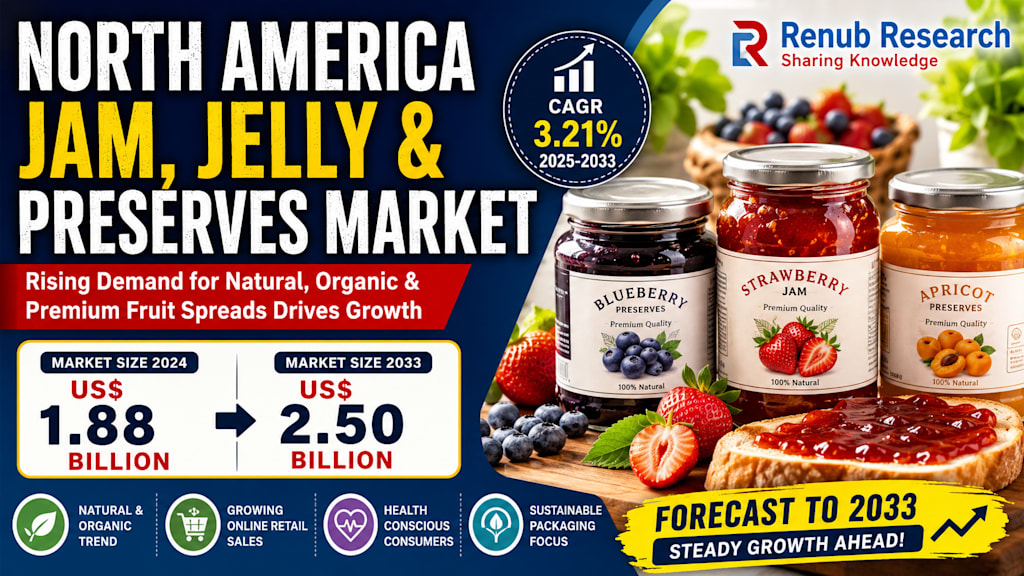
North America Jam, Jelly, and Preserves Market Outlook 2025–2033
The North America Jam, Jelly, and Preserves Market is poised for steady growth over the next decade as consumers increasingly embrace healthier, fruit-based food options and premium breakfast products. According to Renub Research, the market is expected to grow from US$ 1.88 billion in 2024 to US$ 2.5 billion by 2033, expanding at a CAGR of 3.21% during 2025–2033.
The industry continues to evolve beyond traditional fruit spreads. Today's consumers are seeking products that offer nutritional benefits, authentic flavors, organic ingredients, and sustainable packaging. As a result, manufacturers are investing heavily in product innovation, flavor diversification, and cleaner formulations to meet changing consumer expectations.
The growing popularity of convenient meal solutions, especially among busy urban populations, is further strengthening demand for jams, jellies, and preserves across North America. Whether used as breakfast accompaniments, baking ingredients, snack enhancers, or gourmet gifting products, these fruit-based spreads remain deeply integrated into everyday food consumption patterns.
Consumer Shift Toward Natural and Organic Products Accelerates Growth
One of the strongest growth drivers in the North America Jam, Jelly, and Preserves Market is the increasing preference for natural and organic food products.
Modern consumers are paying closer attention to ingredient labels than ever before. Concerns regarding artificial preservatives, synthetic colors, and high-fructose corn syrup have encouraged shoppers to seek alternatives made with recognizable and naturally sourced ingredients.
This trend has significantly influenced product development strategies across the industry. Manufacturers are introducing:
Organic fruit preserves
Low-sugar and sugar-free spreads
Products sweetened with honey, agave, or stevia
Non-GMO certified offerings
Clean-label fruit spreads
Health-conscious consumers are increasingly willing to pay premium prices for products that align with their wellness goals. Organic certifications and transparent sourcing practices have become powerful purchasing factors, helping brands establish stronger trust and customer loyalty.
The rise of specialty food retailers and online grocery platforms has also improved accessibility to premium and organic fruit spreads, contributing to sustained market expansion.
Breakfast and Convenience Food Trends Fuel Demand
Changing lifestyles across North America continue to create favorable conditions for the jam, jelly, and preserves industry.
Consumers increasingly seek convenient meal options that require minimal preparation while still delivering taste and nutritional value. Fruit spreads perfectly fit this demand due to their versatility and ease of use.
Jams and preserves are commonly paired with:
Bread and toast
Bagels and croissants
Pancakes and waffles
Yogurt and dairy products
Plant-based breakfast alternatives
Manufacturers are responding with innovative packaging formats designed for modern consumption habits. Single-serve packs, squeeze bottles, portable containers, and resealable jars are becoming increasingly popular among busy households and foodservice operators.
Additionally, fortified products containing vitamins, antioxidants, and dietary fiber are gaining traction among consumers looking for functional food options.
As breakfast remains one of the most important meal occasions in North America, fruit spreads continue to maintain a strong position within the packaged foods sector.
Premiumization and Flavor Innovation Transform the Market
Product innovation has become a critical competitive strategy within the North America Jam, Jelly, and Preserves Market.
Consumers are increasingly interested in unique flavor experiences and premium food products that offer something beyond traditional strawberry or grape spreads.
To capitalize on this trend, manufacturers are introducing gourmet combinations such as:
Blueberry Lavender
Mango Chili
Strawberry Basil
Peach Bourbon
Raspberry Hibiscus
Artisanal and small-batch preserves have emerged as particularly attractive offerings among millennials and premium food enthusiasts. These products often emphasize handcrafted production methods, local sourcing, and authentic flavor profiles.
Limited-edition seasonal varieties are also gaining popularity, encouraging repeat purchases and strengthening brand engagement.
Packaging innovation plays a major role in premiumization efforts. Companies are investing in:
Sustainable glass packaging
Recyclable containers
Gift-ready designs
Eco-friendly labels
These enhancements not only improve shelf appeal but also align with consumer preferences for environmentally responsible products.
E-commerce Expands Market Accessibility
The rapid growth of digital commerce has created new opportunities for jam, jelly, and preserves manufacturers throughout North America.
Online platforms enable brands to reach consumers beyond traditional retail channels while offering greater product variety and convenience.
Consumers increasingly appreciate the ability to:
Compare products online
Access specialty and artisanal brands
Purchase organic options not available locally
Subscribe to recurring deliveries
Explore customer reviews before purchasing
Direct-to-consumer strategies have become increasingly important for both established manufacturers and emerging premium brands.
Social media marketing, influencer collaborations, and digital storytelling campaigns are further helping companies build awareness and engage with younger consumer demographics.
As online grocery shopping becomes more mainstream, digital channels are expected to remain an important contributor to market growth.
Health Concerns Regarding Sugar Content Present Challenges
Despite positive market fundamentals, the industry faces growing challenges related to sugar consumption concerns.
Many traditional jam and jelly formulations contain substantial amounts of added sugar, which increasingly conflicts with consumer health priorities.
Public awareness surrounding health issues such as:
Obesity
Type 2 diabetes
Cardiovascular disease
Metabolic disorders
has encouraged consumers to reduce sugar intake and scrutinize nutrition labels more carefully.
Consequently, manufacturers are under pressure to reformulate products while maintaining flavor, texture, and shelf stability.
Developing successful reduced-sugar alternatives is not always straightforward. Natural sweeteners may affect taste profiles, production costs, and consumer acceptance levels.
Brands that successfully balance health benefits with product quality are likely to gain significant competitive advantages in the coming years.
Supply Chain Volatility Remains a Key Industry Concern
The industry's heavy dependence on agricultural commodities creates ongoing supply chain risks.
Fruit availability and pricing can be significantly influenced by:
Seasonal harvest conditions
Climate change impacts
Droughts and floods
Pest outbreaks
Transportation disruptions
International trade regulations
Popular fruits used in jam and preserves production, including strawberries, raspberries, blueberries, and apricots, are particularly vulnerable to environmental fluctuations.
Rising raw material costs can directly impact production expenses and profit margins, making pricing strategies increasingly challenging.
To reduce exposure to supply disruptions, many manufacturers are pursuing:
Local sourcing initiatives
Long-term supplier partnerships
Diversified fruit procurement strategies
Cold storage investments
Advanced inventory management systems
While these measures help improve resilience, supply chain uncertainty remains a significant challenge for the industry.
United States Leads Regional Market Expansion
The United States remains the largest market for jams, jellies, and preserves in North America.
Several factors contribute to its leadership position, including:
Strong consumer demand for breakfast spreads
High awareness of organic food products
Extensive retail infrastructure
Continuous product innovation
Growing premium food segment
American consumers increasingly seek healthier alternatives with lower sugar content and clean-label ingredients.
Manufacturers are responding by introducing innovative formulations that combine nutrition, convenience, and flavor diversity.
The country's advanced supermarket networks, specialty food retailers, and rapidly growing online grocery ecosystem provide broad market access for both domestic and international brands.
Sustainability initiatives, including eco-friendly packaging and responsible sourcing programs, are also influencing purchasing decisions across the United States.
Although alternative spreads such as nut butters and plant-based toppings present competitive pressures, continued innovation is expected to support long-term growth.
Canada Emerges as a Premium and Sustainable Market
Canada represents a rapidly evolving segment of the North America Jam, Jelly, and Preserves Market.
Canadian consumers demonstrate strong preferences for:
Organic products
Locally sourced ingredients
Small-batch artisanal foods
Sustainable packaging
Transparent labeling
The country's growing emphasis on wellness and environmental responsibility has encouraged manufacturers to develop premium offerings tailored to these preferences.
Regional fruit varieties and locally produced preserves have gained popularity among consumers seeking authenticity and freshness.
Specialty retailers and online marketplaces continue to expand product accessibility, while gourmet and functional fruit spreads attract increasing consumer interest.
Although imported products remain important competitors, Canadian manufacturers are successfully differentiating themselves through quality, sustainability, and local sourcing initiatives.
As health-conscious purchasing behavior continues to strengthen, Canada is expected to remain an attractive growth market throughout the forecast period.
Competitive Landscape
The North America Jam, Jelly, and Preserves Market is characterized by the presence of established multinational corporations alongside regional and artisanal producers.
Leading companies focus on product innovation, acquisitions, sustainability initiatives, and premium product development to strengthen their market positions.
Major industry participants include:
B&G Foods Inc.
The J.M. Smucker Company
Andros Group
F. Duerr & Sons Ltd
Orkla ASA
Wilkin & Sons Ltd
Unilever PLC
National Grape Cooperative Association (Welch's)
Perfetti Van Melle
Conagra Brands Inc.
Competition continues to intensify as consumer preferences evolve toward healthier, more authentic, and environmentally responsible food products.
10 Recent Developments in the North America Jam, Jelly, and Preserves Market
1. St Cousair Expands Through Acquisition (April 2025)
St Cousair announced plans to acquire the jam business of Oregon-based Kelly's Jelly through its U.S. subsidiary, strengthening its North American fruit spread portfolio.
2. J.M. Smucker Portfolio Optimization (January 2025)
The J.M. Smucker Company agreed to sell the Cloverhill and Big Texas brands along with selected private-label products to JTM Foods for approximately US$ 40 million.
3. Welch's Expands Premium Fruit Spread Portfolio
Welch's continued expanding premium fruit-based offerings targeting health-conscious consumers seeking authentic fruit flavors.
4. B&G Foods Enhances Clean-Label Strategy
B&G Foods accelerated reformulation efforts to reduce artificial ingredients and improve transparency across product lines.
5. Conagra Brands Focuses on Sustainable Packaging
Conagra increased investments in recyclable packaging solutions to align with evolving sustainability expectations.
6. Andros Group Expands Organic Product Range
Andros introduced additional organic fruit preserves aimed at growing demand for natural and minimally processed foods.
7. Unilever Strengthens Health-Oriented Product Development
Unilever increased focus on reduced-sugar fruit spread innovations designed to meet changing nutritional preferences.
8. Regional Artisanal Producers Gain Retail Presence
Several specialty preserve brands secured broader distribution through major supermarket chains across North America.
9. Increased Investment in E-Commerce Distribution
Leading manufacturers expanded direct-to-consumer and online retail initiatives to improve consumer reach.
10. Premium Seasonal Flavor Launches Rise
Multiple brands introduced limited-edition seasonal and gourmet fruit combinations to attract younger consumers and boost brand engagement.
Market Segmentation
By Product Type
Jams and Jellies
Marmalade
Preserves
By Distribution Channel
Supermarkets/Hypermarkets
Convenience Stores
Online Retail
Others
By Country
United States
Canada
Final Thoughts
The North America Jam, Jelly, and Preserves Market is entering a new phase of growth characterized by premiumization, health-conscious consumption, sustainability, and product innovation. While concerns regarding sugar content and supply chain volatility present ongoing challenges, manufacturers are actively adapting through cleaner formulations, organic offerings, and creative flavor development.
With the market forecast to reach US$ 2.5 billion by 2033 from US$ 1.88 billion in 2024, opportunities remain substantial for companies that successfully combine taste, convenience, nutrition, and sustainability. As consumers increasingly seek authentic fruit-based products that align with modern lifestyles, the jam, jelly, and preserves industry is well-positioned for steady and sustainable expansion throughout the forecast period.
About the Creator
Enjoyed the story? Support the Creator.
Subscribe for free to receive all their stories in your feed.
Comments
There are no comments for this story
Be the first to respond and start the conversation.