
Japan Coffee Bean Market Set to Surpass US$ 2.5 Billion by 2033 as Specialty Coffee Culture Fuels Growth
From Traditional Coffee Habits to Premium Brewing Experiences, Japan's Coffee Bean Industry Continues Its Remarkable Evolution

Japan's Love Affair with Coffee Reaches New Heights
Japan has long been recognized as one of Asia's most sophisticated coffee markets. While tea remains deeply rooted in Japanese culture, coffee has successfully carved out a prominent place in everyday life. From bustling urban cafés in Tokyo to convenience store coffee counters and premium home brewing setups, coffee consumption has become a defining feature of modern Japanese lifestyles.
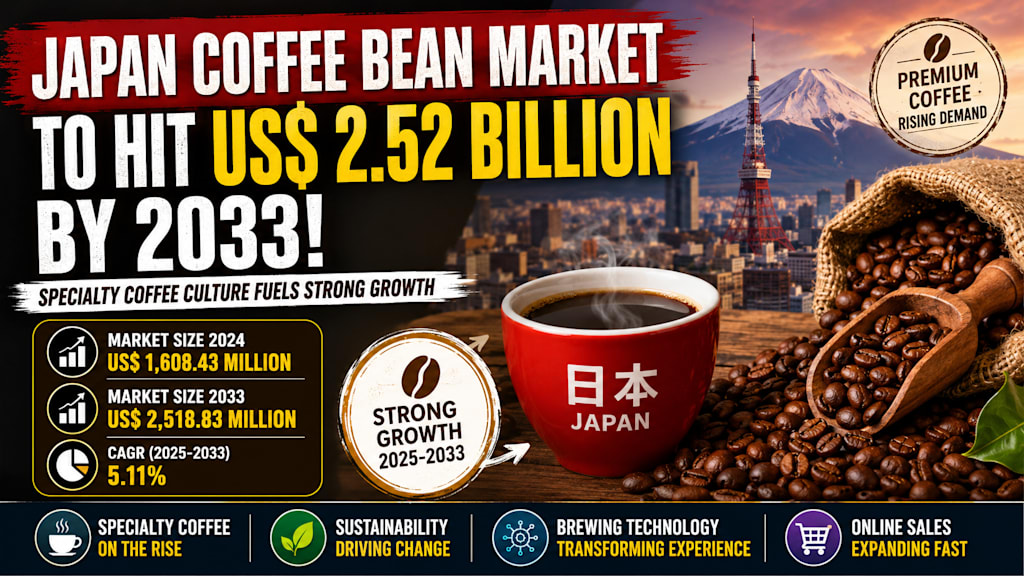
According to Renub Research, the Japan Coffee Bean Market is projected to grow from US$ 1,608.43 million in 2024 to US$ 2,518.83 million by 2033, expanding at a CAGR of 5.11% between 2025 and 2033. This growth reflects changing consumer preferences, technological advancements in brewing, rising demand for specialty coffee, and increasing awareness of sustainability.
The country's coffee culture is no longer limited to simple caffeine consumption. Japanese consumers increasingly view coffee as an experience, emphasizing bean origin, roasting methods, brewing precision, and ethical sourcing. As a result, coffee beans themselves have become the centerpiece of a thriving premium beverage ecosystem.
Understanding the Foundation of the Coffee Bean Industry
Coffee beans are the seeds found inside coffee cherries grown on Coffea plants. After harvesting, the cherries undergo processing methods that remove their outer layers and prepare the green coffee beans for roasting.
Roasting remains one of the most critical stages in coffee production. The roasting process transforms raw beans into aromatic coffee through complex chemical reactions that create distinctive flavors and aromas. Depending on roast duration and temperature, coffee can develop profiles ranging from light and fruity to dark and intense.
Japanese consumers have demonstrated growing appreciation for these nuances. As knowledge about coffee expands, more individuals seek high-quality beans capable of delivering unique sensory experiences.
This shift toward coffee education is helping drive premiumization throughout the industry.
Specialty Coffee Culture Drives Premium Market Expansion
One of the strongest growth drivers in Japan's coffee bean market is the rapid rise of specialty coffee culture.
Over the past decade, consumers have become increasingly interested in single-origin coffee beans that showcase the characteristics of specific growing regions. Coffee enthusiasts now discuss flavor notes, altitude, processing techniques, and roasting styles with the same enthusiasm often reserved for fine wine.
Major cities such as Tokyo, Osaka, Kyoto, and Yokohama have witnessed a surge in specialty coffee shops offering handcrafted brewing methods including:
Pour-over coffee
Siphon brewing
AeroPress extraction
Cold brew preparation
Precision espresso techniques
These establishments prioritize transparency, sourcing quality, and craftsmanship, attracting younger consumers who value authenticity and premium experiences.
The growing influence of third-wave coffee culture has encouraged local roasters and café operators to invest heavily in quality control and customer education. As a result, demand for premium coffee beans continues to rise.
Millennials and Gen Z Consumers Reshape Coffee Preferences
Japan's younger generations are significantly influencing the future direction of the coffee industry.
Millennials and Gen Z consumers increasingly prioritize:
Premium beverage experiences
Ethical sourcing
Sustainability
Health-conscious consumption
Product transparency
Unlike previous generations, younger consumers often view coffee as part of a lifestyle rather than merely a daily routine. Social media platforms have amplified interest in artisanal cafés, aesthetic coffee preparation, and specialty bean varieties.
Coffee shops have responded by offering unique experiences, customized brewing options, and educational tasting sessions that deepen customer engagement.
This demographic shift is creating long-term opportunities for coffee bean suppliers and specialty roasters.
Health-Conscious Consumers Support Market Growth
Health awareness has become another important factor driving coffee bean demand across Japan.
Research highlighting coffee's potential health benefits has encouraged greater consumption among health-conscious individuals. Many consumers associate moderate coffee intake with increased energy, improved focus, and potential metabolic benefits.
At the same time, there is growing interest in:
Organic coffee beans
Low-acid coffee products
Functional coffee beverages
Plant-based coffee innovations
Fair Trade-certified products
Consumers increasingly seek products that align with both wellness goals and environmental values.
This trend has encouraged manufacturers to develop innovative offerings that combine premium coffee experiences with health-oriented benefits.
For example, companies have introduced coffee products enriched with functional ingredients while expanding organic and plant-based product portfolios.
Sustainability Becomes a Competitive Advantage
Environmental responsibility is rapidly becoming a major purchasing consideration for Japanese consumers.
Customers increasingly want reassurance that coffee production supports:
Sustainable farming practices
Fair labor conditions
Reduced environmental impact
Ethical sourcing standards
Transparent supply chains
As a result, coffee brands are investing in certifications and sustainability programs that enhance consumer trust.
Packaging innovation is also accelerating. Many manufacturers are transitioning toward recyclable and biodegradable materials to reduce waste and meet evolving consumer expectations.
Businesses that successfully combine quality, sustainability, and transparency are likely to gain a competitive advantage in the years ahead.
Technology Revolutionizes Coffee Brewing Experiences
Japan's reputation for technological innovation extends naturally into the coffee industry.
Advancements in brewing technology are transforming how consumers prepare and enjoy coffee at home. Modern coffee enthusiasts now have access to sophisticated equipment that was once limited to professional cafés.
Popular innovations include:
Smart coffee machines
Automated espresso systems
Precision grinders
Capsule brewing technologies
App-connected brewing devices
These tools enable users to achieve café-quality results while maintaining convenience.
Japanese manufacturers continue to develop highly engineered brewing systems that offer precise control over variables such as temperature, grind size, and extraction time.
The result is a growing home brewing culture that supports increased demand for premium coffee beans.
Rising Disposable Income Supports Premium Coffee Demand
Economic development and urbanization across Japan continue to support coffee consumption growth.
Consumers with higher disposable incomes are increasingly willing to spend more on premium food and beverage products. Coffee has emerged as one of the key categories benefiting from this trend.
Many households now purchase:
Specialty roasted beans
Imported premium coffee
Subscription coffee services
Home espresso equipment
Gourmet café beverages
This willingness to invest in quality has expanded opportunities throughout the coffee value chain, from importers and roasters to retailers and café operators.
Supply Chain Challenges Create Market Uncertainty
Despite positive growth prospects, the industry faces significant challenges.
Japan relies heavily on imported coffee beans, making the market vulnerable to disruptions in major producing countries such as Brazil, Vietnam, Colombia, and Indonesia.
Climate change has emerged as one of the most pressing concerns affecting global coffee production.
Producers face increasing risks from:
Rising temperatures
Unpredictable rainfall
Extended drought periods
Extreme weather events
Reduced crop yields
These conditions can decrease coffee production and contribute to global supply shortages.
As supply tightens, international coffee prices often increase, placing additional pressure on import-dependent markets like Japan.
Currency Fluctuations Impact Industry Profitability
The depreciation of the Japanese yen presents another challenge for coffee businesses.
Because coffee beans are primarily imported, a weaker yen increases purchasing costs for importers, roasters, and café operators.
Small independent coffee shops are particularly vulnerable because they often operate with narrow profit margins.
Businesses must balance higher costs against consumer price sensitivity. Excessive price increases may reduce customer demand, while absorbing costs can squeeze profitability.
Navigating these economic pressures will remain critical for long-term industry success.
Online Sales Channels Continue to Expand
Digital commerce is reshaping how consumers purchase coffee beans.
Online platforms offer several advantages:
Greater product variety
Subscription services
Direct-to-consumer sales
Convenient delivery
Access to specialty roasters
Many consumers now purchase freshly roasted beans directly from coffee companies through e-commerce platforms.
Subscription models are especially popular among enthusiasts seeking consistent access to premium coffee selections.
As digital adoption continues to rise, online sales are expected to become an increasingly important component of market growth.
Future Outlook Remains Strong
The future of Japan's coffee bean market appears highly promising.
Several powerful trends are expected to support continued expansion:
Growth of specialty coffee culture
Rising demand for premium products
Sustainability-focused purchasing decisions
Technological innovation in brewing
Expansion of online retail channels
Increased consumer education regarding coffee quality
While challenges such as climate change and currency fluctuations will require careful management, industry participants continue to innovate and adapt.
Companies capable of delivering exceptional quality, sustainability, and transparency are likely to capture significant growth opportunities over the coming decade.
10 Recent Developments from Leading Coffee Industry Companies
1. Starbucks
Expanded premium Reserve experiences and strengthened sustainability initiatives focused on ethical sourcing and carbon reduction.
2. Nescafé
Accelerated investment in regenerative agriculture programs while expanding plant-based coffee offerings.
3. The Kraft Heinz Company
Enhanced beverage portfolio strategies and continued innovation in ready-to-drink coffee products.
4. Luckin Coffee
Continued international expansion efforts supported by technology-driven ordering and customer engagement systems.
5. J.M. Smucker
Invested in coffee portfolio optimization and premium product development across multiple brands.
6. Coca-Cola
Expanded ready-to-drink coffee partnerships and strengthened convenience-focused beverage distribution.
7. Dutch Bros
Accelerated store expansion while introducing new specialty beverage options for younger consumers.
8. Keurig Dr Pepper
Focused on single-serve brewing innovations and sustainable packaging improvements.
9. JDE Peet's N.V.
Strengthened premium coffee brand investments and expanded digital commerce capabilities.
10. Specialty Coffee Roasters Across Japan
Increased adoption of direct-trade sourcing models and advanced roasting technologies to enhance quality and traceability.
Final Thoughts
Japan's coffee bean market demonstrates how a traditional beverage category can evolve through innovation, craftsmanship, and changing consumer preferences. The emergence of specialty coffee culture, growing health awareness, sustainability initiatives, and advanced brewing technologies are creating a dynamic environment for long-term growth.
With Renub Research forecasting the market to reach US$ 2.52 billion by 2033, the sector is positioned to remain one of Asia's most sophisticated and influential coffee markets. Companies that successfully blend premium quality, ethical sourcing, technological innovation, and consumer engagement will be best positioned to thrive in this rapidly evolving landscape.
About the Creator
Enjoyed the story? Support the Creator.
Subscribe for free to receive all their stories in your feed.
Comments
There are no comments for this story
Be the first to respond and start the conversation.